Easy Chimichurri Sauce: Bright and Herbaceous
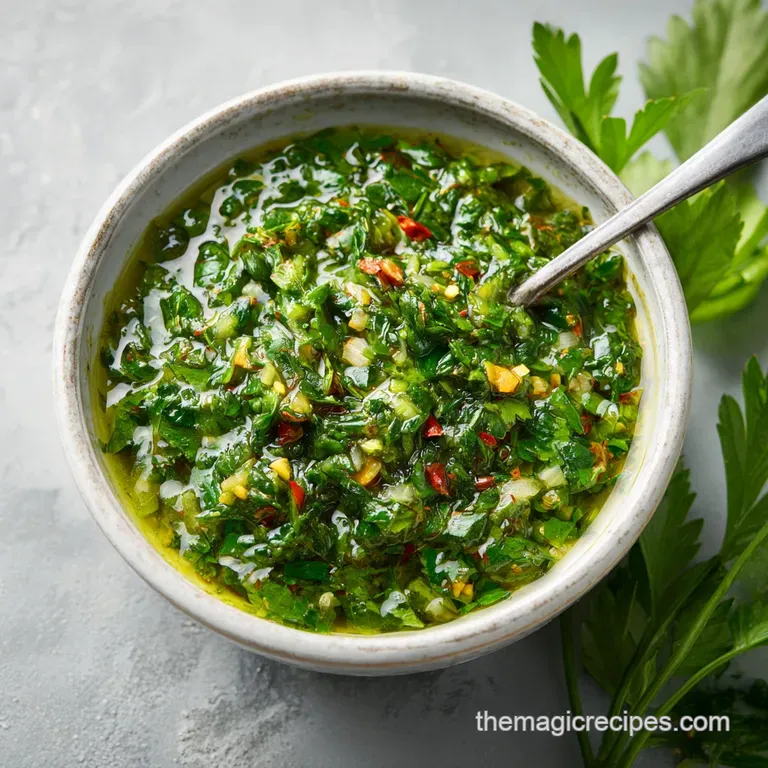
- Time: Active 10 minutes, Passive 0 minutes, Total 10 minutes
- Flavor/Texture Hook: Vibrant, herbaceous, and tangy with a chunky, hand-cut texture
- Perfect for: Backyard barbecues, holiday roasts, and impressive dinner parties
- Master This Easy Chimichurri Sauce Recipe
- Timing Your Global Sauce Prep
- Selecting Authentic Herb Components
- Tools for Precise Hand Chopping
- Step-by-Step Sauce Execution
- Solving Common Sauce Blunders
- Customizing Your Flavor Profile
- Storing and Saving Your Sauce
- Best Pairings for Entertaining
- Recipe FAQs
- 📝 Recipe Card
Master This Easy Chimichurri Sauce Recipe
Imagine the thick, heavy scent of a charcoal grill warming up in the late afternoon sun. There is a specific sizzle that happens when a marbled steak hits the grates, sending up a puff of smoke that smells like summer. But the real magic happens when you spoon a vibrant, emerald green sauce over that hot meat.
The cold vinegar hits the warm fat, releasing a sharp, garlicky aroma that makes your mouth water before you even take a bite.
I remember the first time I saw a true parrillada in Argentina. There were no blenders in sight. Instead, a weathered wooden board was covered in a mountain of flat leaf parsley, being rhythmically reduced to fine ribbons by a heavy knife.
That was the day I realized that the best chimichurri isn't a smooth puree; it’s a rustic, leafy celebration of fresh ingredients. It’s supposed to have texture and a "shatter" of sea salt that wakes up your palate.
We are going to make a version that respects those global roots while staying accessible for your next gathering. This easy chimichurri sauce recipe isn't just about mixing oil and herbs; it’s about the technique of maceration and the patience of hand chopping.
Trust me, once you see the difference in color and taste, you'll never touch a food processor for this again. Let’s get that knife sharpened and dive into why this works so well.
Timing Your Global Sauce Prep
To get this right, we need to understand how the ingredients interact over time. This isn't a "set it and forget it" situation, but a "layer and bloom" process.
- Acidic Maceration: Allowing the garlic and shallots to soak in red wine vinegar first softens their harsh sulfur compounds, creating a mellowed flavor that doesn't overwhelm the delicate parsley.
- Cellular Integrity: Hand chopping instead of blending prevents the "bruising" of herbs, which stops them from oxidizing and turning a dull, swampy brown.
- Oil Infusion: Adding the oil last creates a suspension rather than a thick emulsion, allowing the vinegar to remain the primary flavor driver on the tongue.
| Method | Total Time | Texture | Best Use Case |
|---|---|---|---|
| Traditional hand cut | 10 minutes | Coarse, leafy, vibrant | Premium steaks and guest hosting |
| The "Pulse" Method | 5 minutes | Grainy, slightly bruised | Large batch catering/casual meals |
| Full Puree (Blender) | 2 minutes | Smooth, emulsified, pale | Marinades or salad dressings only |
Choosing the hand cut method is the secret to making this an easy herb sauce for steak that actually looks professional. When you chop by hand, you control the size of every piece of parsley, ensuring it stays bright and flaky rather than becoming a green soup.
Selecting Authentic Herb Components
The ingredients for a homemade chimichurri sauce are simple, but the quality of each one is paramount. We aren't just looking for "green," we are looking for high octane flavor.
| Ingredient | Science Role | Pro Secret |
|---|---|---|
| Red Wine Vinegar | Breaks down garlic enzymes | Use a brand aged in oak for deeper bass notes |
| Flat Leaf Parsley | Provides the herbal foundation | Dry the leaves completely after washing to prevent a watery sauce |
| Extra Virgin Olive Oil | Carries fat soluble flavors | Pick a peppery, cold pressed oil to mimic Argentine styles |
| Sea Salt | Draws out herb moisture | Use coarse flakes to provide a "crunch" in every bite |
- 2 cups Flat Leaf Parsley: Make sure it’s flat leaf (Italian), as curly parsley is too tough. Why this? Flat leaf has a more robust, "peppery" oil content than curly varieties.
- 2 tablespoons Fresh Oregano: Strip the leaves from the woody stems. Why this? Fresh oregano adds a floral, earthy depth that dried herbs simply lack.
- 4 cloves Garlic: Mince these as finely as humanly possible. Why this? Finely minced garlic distributes evenly without leaving spicy, raw chunks.
- 1 small Shallot: Diced into tiny cubes. Why this? Shallots offer a subtle sweetness that balances the sharp garlic bite.
- 1/3 cup Red Wine Vinegar: The backbone of the sauce's tang. Why this? The high acidity is required to cut through the fat of grilled meats.
- 1/2 cup Extra Virgin Olive Oil: Use the good stuff here. Why this? It acts as the vehicle that coats the palate in herbal flavor.
- 1/2 teaspoon Red Chili Flakes: For a gentle, back of-the throat warmth. Why this? Heat stimulates the taste buds to perceive more flavor nuances.
- 0.5 tablespoon Lemon Juice: A tiny splash for brightness. Why this? The citric acid provides a different "top note" than the vinegar.
- 1 teaspoon Sea Salt & 1/2 teaspoon Pepper: For basic seasoning.
Tools for Precise Hand Chopping
You don't need a kitchen full of gadgets for this fresh chimichurri recipe, but you do need one very specific tool: a sharp chef's knife. If your knife is dull, you will end up crushing the parsley rather than slicing it. Crushed parsley leaks its chlorophyll, leading to that "grassy" or bitter taste we want to avoid.
A large glass mixing bowl is also essential. Avoid metal bowls if possible, as the high acidity of the red wine vinegar can sometimes react with certain low quality stainless steels, leaving a metallic aftertaste. A simple mason jar is also fantastic if you plan on shaking the sauce and storing it immediately.
For a truly authentic experience, a wooden cutting board provides the best surface for finely dicing your aromatics without them sliding around.
step-by-step Sauce Execution
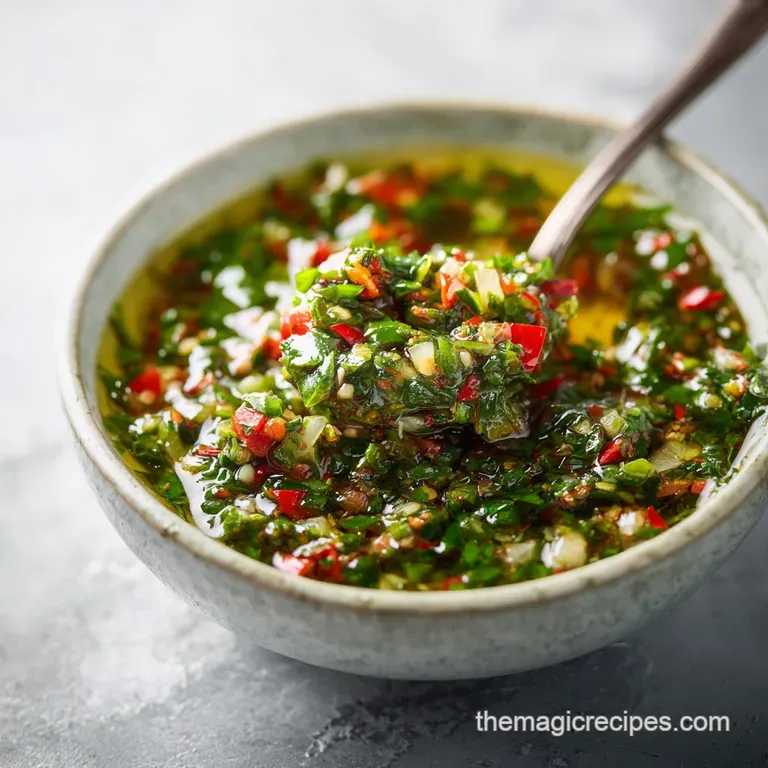
- Mince the aromatics. Finely mince the 4 cloves of garlic and dice the shallot into tiny, uniform pieces.
- Start the maceration. In your glass bowl, combine the garlic, shallots, and 1/3 cup red wine vinegar. Note: This 5 minute soak is non negotiable for mellowing the garlic.
- Prep the parsley. Wash the 2 cups of parsley and dry it thoroughly using a salad spinner or paper towels.
- Remove the stems. Pull the leaves off the parsley and oregano stems; discard the stems or save them for stock.
- Hand chop the herbs. Use a sharp knife to chop the herbs into a coarse, leafy texture. Avoid a blender at all costs to keep the color vibrant.
- Combine the base. Stir the chopped herbs, 1 teaspoon sea salt, 1/2 teaspoon pepper, and 1/2 teaspoon red chili flakes into the vinegar mixture.
- Introduce the fats. Slowly pour in the 1/2 cup extra virgin olive oil and 0.5 tablespoon lemon juice while stirring with a fork.
- Verify the texture. Stir until the sauce is combined but still looks like a chunky herb salad rather than a liquid.
- Let it rest. Allow the sauce to sit for at least 10 minutes at room temperature before serving to let the flavors marry.
- Final taste. Give it a quick stir and add a pinch more salt if the vinegar feels too sharp.
Solving Common Sauce Blunders
The most common mistake people make with an easy chimichurri sauce recipe is rushing the herb prep. If the parsley is wet when you chop it, the water mixes with the oil and vinegar to create a cloudy, unappealing mess. Always make sure your greens are bone dry.
Why Your Sauce Turned Bitter
If your sauce has a sharp, medicinal bitterness, you likely over processed the herbs. When herbs are pulverized in a blender, they release polyphenols that taste quite harsh. Another culprit could be the olive oil. High speed blades can also oxidize extra virgin olive oil, making it taste rancid.
Stick to the knife, and this won't happen.
Why It Looks Dull Green
Chlorophyll is very sensitive to acid and heat. If you add the vinegar and then let the sauce sit for three days, the acid will eventually turn the bright green into an olive drab. For the most "photo ready" results, mix the herbs and oil first, then add the vinegar about an hour before serving.
| Problem | Root Cause | Solution |
|---|---|---|
| Separated Sauce | Oil and vinegar not agitated | Give it a vigorous stir or shake right before serving |
| Overpowering Garlic | Mincing too early/no maceration | Ensure the garlic sits in vinegar for a full 5 minutes |
| Watery Consistency | Herbs were still damp | Spin parsley dry and pat with a towel before chopping |
Common Mistakes Checklist:
- ✓ Never use a blender or food processor (it ruins the texture and flavor).
- ✓ Don't skip the 5 minute maceration of garlic and shallots in vinegar.
- ✓ Avoid using dried parsley; the flavor profile is completely different.
- ✓ Ensure the herbs are completely dry before you start chopping.
- ✓ Use high-quality oil since it makes up a large portion of the sauce.
Customizing Your Flavor Profile
While this is an authentic chimichurri recipe, the beauty of homemade chimichurri sauce is its flexibility. If you want to scale this recipe up for a large party, simply double the ingredients, but keep the salt and chili flakes at 1.5x to start. Spices tend to amplify differently than liquids.
If you are looking for a bit more punch, you can add a teaspoon of smoked paprika for a "chimichurri rojo" vibe. For those who enjoy a bit more heat, similar to my quick garlic hot sauce, you can double the red chili flakes or even mince a fresh Fresno chili into the maceration stage.
- If you want it creamier
- Add half a mashed avocado (note: this changes the shelf life to 4 hours).
- If you want it milder
- Swap half the red wine vinegar for more lemon juice.
- If you want it zestier
- Add the zest of the lemon along with the juice.
Storing and Saving Your Sauce
This sauce is surprisingly hardy thanks to the vinegar and oil acting as natural preservatives. You can store it in a mason jar in the fridge for up to 7 days. Just be aware that the olive oil will solidify in the cold.
To serve, simply take it out 30 minutes early to let the oil liquefy, then give it a good stir.
Zero Waste Tip: Don't throw away those parsley and oregano stems! Since they are packed with the same aromatic oils as the leaves, I like to tie them together with kitchen twine and toss them into a pot of beans or a soup base. They add a massive hit of "freshness" to long simmered dishes. If you have leftover sauce that's starting to lose its color, whisk it into a bit of Greek yogurt for a phenomenal dip or use it as a base for a creamy chicken dish to add a hit of acidity.
Best Pairings for Entertaining
The classic choice is always a skirt steak or a thick ribeye, but don't stop there. This sauce is a "global" superstar that works on grilled shrimp, roasted cauliflower, or even drizzled over a simple bowl of lentils.
Because it’s an easy chimichurri sauce recipe, you can whip it up while the meat is resting, making you look like a pro without much effort.
Myths About Authentic Chimichurri
One major myth is that chimichurri must contain cilantro. In Argentina, using cilantro is actually quite rare; parsley is the undisputed king. Another misconception is that it needs to be a thick sauce. In reality, it should be more of an "herb infused oil" that flows easily over the food.
The Final Presentation
When you're ready to serve, don't just put a bowl on the table. Drizzle the sauce across the sliced meat in a deliberate line, then put the remaining sauce in a small jar with a spoon.
The sight of those fresh green flecks against the dark crust of the meat is visually stunning and tells your guests that everything on their plate was made with intention and care. Enjoy the "velvety" mouthfeel and the "silky" finish that only a hand made sauce can provide.
Recipe FAQs
What ingredients are needed for chimichurri sauce?
You need fresh parsley, oregano, garlic, shallot, red wine vinegar, olive oil, salt, pepper, chili flakes, and lemon juice. These components create a vibrant, herbaceous base that relies on high-quality oil and fresh herbs for the best flavor.
What is the secret to perfect chimichurri?
Hand chop your herbs instead of using a blender. Processing herbs with a blade bruises the leaves, turning the sauce bitter; hand chopping maintains a coarse, fresh texture. If you enjoyed mastering the aromatics here, you will notice the same technique creates depth in our classic Italian soup base.
Is chimichurri ok for diabetics?
Yes, it is generally an excellent choice. The sauce is naturally low in carbohydrates and contains no added sugars, relying instead on vinegar and fresh herbs for flavor.
What can I substitute for chimichurri?
Use a mixture of fresh herbs, olive oil, and citrus as a quick stand-in. While no other sauce matches the specific garlic vinegar punch of authentic chimichurri, a simple herb oil can provide a similar brightness to grilled dishes.
How to mellow the raw garlic bite in this sauce?
Soak the minced garlic and shallots in red wine vinegar for 5 minutes before adding other ingredients. This maceration step is non-negotiable for cutting the harsh heat of raw garlic.
How to store chimichurri if the oil solidifies in the fridge?
Remove the jar from the refrigerator 30 minutes before serving. Letting the sauce sit at room temperature allows the extra virgin olive oil to liquefy, returning the sauce to its proper consistency after a quick stir.
How to avoid a bitter flavor in the final sauce?
Remove all woody stems from the parsley and oregano before chopping. Tough stems carry a different, more bitter flavor profile than the leaves, and failing to remove them will compromise the fresh taste of your final result.
Authentic Chimichurri Sauce
Ingredients:
Instructions:
Nutrition Facts:
| Calories | 132 kcal |
|---|---|
| Protein | 0.7 g |
| Fat | 13.7 g |
| Carbs | 2.3 g |
| Fiber | 0.5 g |
| Sugar | 0.3 g |
| Sodium | 291 mg |
