Fufu: the 15-Minute Authentic West African Dough
- The Essential West African Swallow: Understanding Fufu
- Achieving the Perfect Consistency: Texture Science of Starch Dough
- Sourcing Your Staple: Essential Components for the Dough
- Preparing the Dough: A Step-by-Step Guide to the Modern Method
- Troubleshooting and Mastery: Ensuring Your Swallow Succeeds
- Preparation and Preservation: Making Fufu Ahead of Time
- Cultural Etiquette: Serving and Enjoying the Meal
- Recipe FAQs
- 📝 Recipe Card
The Essential West African Swallow: Understanding Fufu
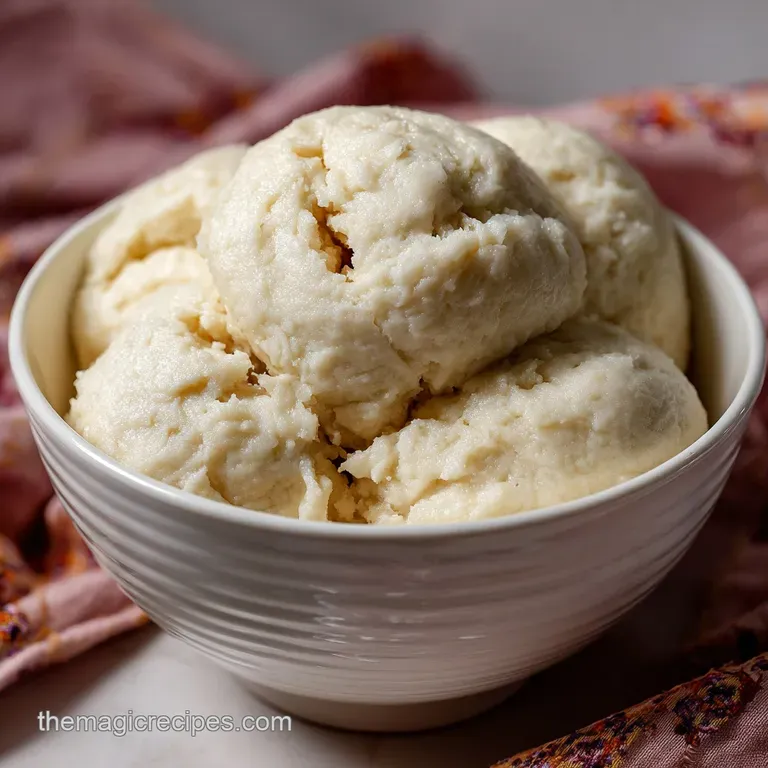
There is nothing quite like the smell of fresh, hot Fufu dough coming off the stove. It’s dense, slightly elastic, and carries that beautiful, earthy scent of root vegetables even when made with flour.
This isn’t bread or mashed potatoes; this is a foundational texture, the ultimate edible sponge designed to scoop up the rich, complex flavors of West African stews.
For years, I avoided making Fufu food at home because the image of traditional pounding looked frankly exhausting. But once I discovered the accessible, modern stove top method which takes barely 15 minutes this dish became a total lifesaver.
It’s ridiculously cheap to make, requires only two main ingredients, and instantly elevates any bowl of spicy soup you’re serving.
So, ditch the guilt about the traditional ways and let’s crack on with making perfect, lump free Fufu . This is the recipe I swear by, the one I text my friends when they ask me how to make fufu without turning it into glue.
Achieving the Perfect Consistency: Texture Science of Starch Dough
Defining "Swallow Food" Culture
Fufu is the king of what are called "swallow foods." They’re intentionally created to be smooth, cohesive doughs that you pinch off, roll into a small ball, indent with your thumb, and then swallow without chewing.
That might sound strange if you’re used to American dinner rules, but this specific action is what allows the dough to deliver the savory soup straight into your mouth. The texture of properly cooked Fufu must be pliable, soft, and easy to slide down.
The Modern Kitchen Approach vs. Traditional Pounding
Traditionally, preparing the starch (like yam or cassava) involved hours of boiling and then vigorous pounding in a massive mortar and pestle until every lump was gone. Honestly? We are home cooks, and we don't need a full body workout before dinner.
This Fufu recipe uses a high-quality flour blend which eliminates 90% of the labor. You still need some serious stirring power consider it your arm workout for the day but the results are fast, reliable, and just as delicious as the classic.
Historical Roots and Regional Variations
While we are focusing on the common cassava based Fufu , it's important to remember that almost every region has its own version. Some use cornmeal (like Ugali), others use specific plantains, or even pounded rice.
The technique here is universally applicable for any powdered starch, but the flavor of true, traditional fufu recipe is typically slightly earthy and subtle, allowing the soup to shine.
Hydration Ratios for Non-Sticky Results
The key to great Fufu is balancing the hydration perfectly. We are using a significant amount of boiling water (2 3/4 cups) and a very small amount of cold water (1/4 cup). This small cold slurry is the secret weapon!
If you put all the dry flour straight into the boiling liquid, the outside of the starch grains gelatinizes immediately, trapping a dry core inside, which results in those dreaded, impossible lumps.
The Role of Heat in Starch Gelatinization
When you add the starchy powder to the hot water and begin stirring, you are forcing the starch molecules to swell and burst, creating that sticky, gel-like texture. If you stop stirring or the heat is too high, the dough will burn on the bottom and seize up unevenly.
Maintaining low heat while you mash and fold the dough ensures that the gelatinization process is complete and uniform throughout the entire Fufu ball.
Why Smoothness is Paramount for Digestibility
Lumps aren't just an aesthetic failure; they are signs of poorly hydrated starch. A perfect, smooth ball of homemade Fufu is easier to "swallow" as intended, and it digests far more smoothly.
If your finished dough feels grainy, you need more heat and more mashing to break down those remaining starch pockets.
Sourcing Your Staple: Essential Components for the Dough
You only need two items here, but getting the right kind of flour makes all the difference in this simple Fufu recipe easy .
Selecting the Right Cassava Flour (or Semolina/Plantain)
For the best texture, look specifically for pre-mixed "Fufu Mix," "Pounded Yam Flour," or "Cassava Flour" in an international market. These are specifically processed to handle the hot water cooking method. Avoid regular cassava or tapioca flour, which can turn into a clear, sticky mass rather than an opaque dough.
| Ingredient | Your Best Option | Viable Substitute |
|---|---|---|
| Fufu Flour Mix | Pounded Yam Flour or Cassava Mix | Semolina or Coarse Cornmeal (texture will be firmer) |
| Water | Filtered Water | Vegetable or Chicken Stock (adds savory depth) |
Water Quality and Temperature
Temperature is critical. The 2 3/4 cups of water must be at a rolling boil right before you use it. Use a kettle for speed, and keep it hot! The small amount of cold water for the initial slurry can be tap water, as its purpose is simply to keep the starch grains separate initially.
Navigating Pre-mixed vs. Single Source Flours
I prefer the pre-mixed blends, like those combining yam and cassava, because they often yield a dough that is both pliable (from the cassava) and slightly airy (from the yam). If you are using a single source flour, like pure Plantain Flour, you may need slightly less water than the recipe calls for, so start conservatively.
Understanding Optional Fermentation for Flavor Depth
Some traditional preparations call for fermenting the root vegetable before processing it into flour. While we aren't doing that here (we want fast Fufu !), if you buy a pre-fermented flour, you will notice a slightly sour, tangy flavor.
This is intentional and highly prized by those who love that distinct taste.
Chef’s Note: Do not add salt to the Fufu dough. It is supposed to be the blank canvas that absorbs the intensely seasoned flavors of your soup, like Fufu and Egusi soup.
Preparing the Dough: A step-by-step Guide to the Modern Method
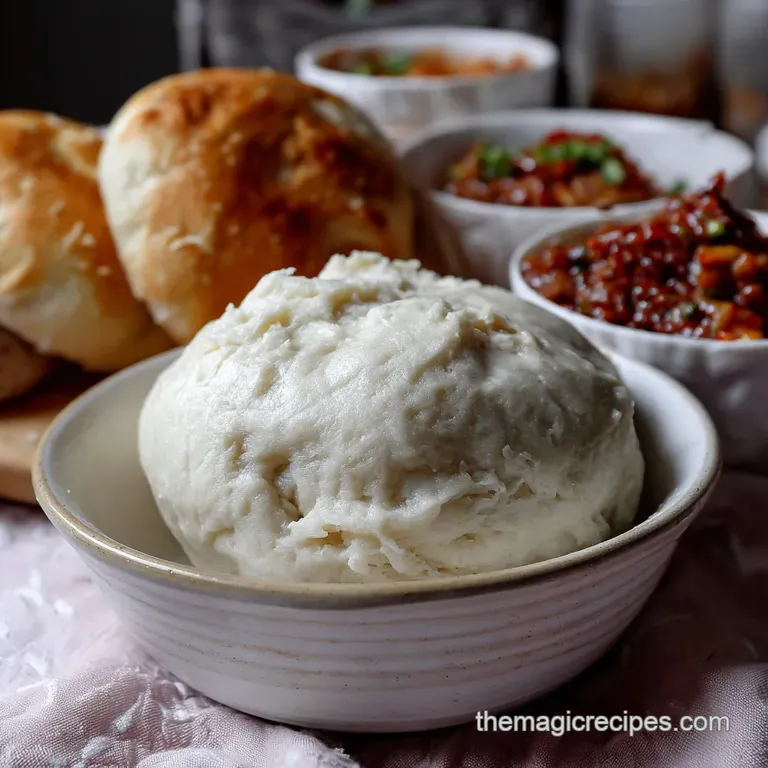
This is where the magic happens, but it’s also where you realize why people used to pound this stuff for hours. Get ready to stir!
Mixing the Dry Base and Initial Liquid
First, get organized. Measure out all your flour and bring that big batch of water (2 3/4 cups) to a rapid boil. Now, take your 1/4 cup cold water and mix it with just 1/2 cup of the Fufu flour to create a thin, smooth slurry. This cold slurry is your lump insurance.
Heating and Vigorous Folding (The Arm Workout)
Remove your heavy bottomed saucepan from the heat. This is crucial: we don't want to burn the starches. Now, quickly pour the remaining 1 1/2 cups of dry Fufu flour directly into the hot, non-boiling water. Grab your strongest wooden spoon and stir, stir, stir!
The mixture will look rough, crumbly, and seriously shaggy at first.
Kneading and Shaping the Dough Balls
Put the pot back over very low heat. Pour in your cold slurry. Now, the real workout begins. Continuously stir, mash, and fold the dough against the sides of the pot for 5 to 7 minutes straight. You are essentially 'kneading' the dough with the spoon.
Listen for the sound of the thick dough pulling away from the sides; it should sound heavy and sticky. The Fufu will turn opaque white, firm up, and become smooth and stretchy.
The 15 Minute Test: Knowing When It's Ready
You know the Fufu is ready when it forms a cohesive, glossy, dense ball that is difficult to stir. When you press the back of the spoon against the surface, it should look uniformly smooth without any grainy spots.
Remove the pot from the heat and fold the dough over itself repeatedly this final motion ensures a perfectly glossy exterior. Divide the dough into four equal portions and quickly roll them into smooth spheres while they are still hot.
Troubleshooting and Mastery: Ensuring Your Swallow Succeeds
Preventing Lumps and Clumps
The single most common mistake is impatience. If you have lumps, it means you didn't stir fast enough when the dry flour met the hot water, or you skipped the cold slurry step. Fix it: Place the lumpy dough back on low heat and add 1 2 tablespoons of boiling water.
Mash the dough against the side of the pot vigorously until the trapped dry starches dissolve.
Addressing Dough That is Too Hard or Too Soft
If your Fufu is rock hard and cracking, it means you used too much flour or cooked it too long, evaporating too much moisture. Add a small splash of boiling water and mash it back into the dough.
If it's too soft and sticky, return it to low heat and cook it for another two minutes, stirring constantly to release excess steam.
Managing Consistency When Using Different Starches
Pounded Yam flour generally requires slightly more water and produces a lighter, fluffier Fufu dough compared to cassava, which is heavier and stickier. If substituting, always hold back 1/4 cup of the liquid and slowly incorporate it as the dough cooks, just in case your specific starch absorbs less water than mine.
Safety Tips for Working with Hot Dough
The dough is truly piping hot and retains heat incredibly well, so be cautious when kneading and shaping. Use cling film (plastic wrap) to help shape the individual balls; this prevents you from burning your hands and keeps the shape beautifully smooth until serving time.
Preparation and Preservation: Making Fufu Ahead of Time
Best Practices for Refrigerated Storage
Fufu is always best served immediately, straight from the pot, but life happens. If you must store it, wrap the smooth, individual portions tightly in cling film while they are still warm, then place them in an airtight container.
Refrigerated Fufu will keep for 3 4 days, but expect it to firm up considerably.
Freezing Individual Portions Correctly
But does homemade Fufu freeze well? You bet! Once the individual balls are wrapped in cling film and cooled completely, transfer them to a freezer safe bag. They can be frozen for up to 3 months.
To reheat: Unwrap the frozen portion and place it in a microwave safe bowl with 1 tablespoon of water. Cover loosely and heat for 1– 2 minutes, then mash it back into a smooth, pliable texture.
Cultural Etiquette: Serving and Enjoying the Meal
Fufu is meant to be the support system for a robust, intensely flavored soup. This starch dough is traditionally eaten with the right hand, using only three fingers to pinch off a manageable piece, roll it, dip it deep into the soup, and swallow. No cutlery needed!
It’s such an enjoyable, communal experience.
We always pair our Fufu and Egusi (ground melon seed soup), but these pairings are also incredible:
- Groundnut (Peanut) Soup: The creamy, savory richness of the peanut base perfectly coats the mild Fufu food .
- Okra Soup (Obe Ata): The natural viscosity of the Okra soup is fantastic for helping the dough slide down easily, which is exactly the point!
This Fufu recipe is truly one of the most rewarding staples you can master. Enjoy the process and the arm workout and get ready to enjoy a deeply satisfying, incredibly flavorful meal.

Recipe FAQs
Why is my Fufu sticky and lumpy instead of smooth and firm?
Lumps usually result from adding the flour too quickly or not stirring vigorously enough during the initial thickening phase when the starch is setting. To salvage a lumpy batch, remove the pot from the heat and use a wooden spoon or potato masher to work the dough against the side of the pot until the lumps dissolve, then return it to low heat to finish cooking and kneading.
My Fufu seems too stiff or dry; how do I adjust the consistency?
If your Fufu is too stiff, incorporate small amounts of very hot water, one tablespoon at a time, while kneading vigorously with a strong wooden spoon over low heat. Continue this process until the dough reaches the desired smooth, elastic consistency that is soft enough to scoop but firm enough to hold its shape.
What starchy flours can I use if I cannot find a pre-made Fufu mix?
Absolutely; traditional Fufu uses various starches often blended together. Common alternatives include pounded yam flour (Iyán), cassava flour (Lafun), or processed plantain flour (Elubo Ogede). The key is using a fine, starchy flour that absorbs the hot water thoroughly to form a cohesive, pliable dough.
Can I make Fufu ahead of time, and how should I store leftovers?
Fufu is best consumed immediately, but leftovers can be stored tightly wrapped in plastic wrap or an airtight container in the refrigerator for up to 3 days. To reheat, wrap the Fufu ball tightly in plastic wrap or foil and steam it gently until it is completely soft and pliable again, avoiding the microwave if possible to maintain texture.
Is continuous stirring truly necessary while making the Fufu dough?
Yes, continuous and robust stirring is crucial, especially once the mixture begins to thicken, to prevent the flour from scorching at the bottom of the pot. This vigorous kneading also helps ensure that the starch hydrates evenly, preventing the formation of stubborn dry lumps and creating a homogenous dough.
What is the traditional way to eat Fufu with soup?
Fufu is traditionally eaten by hand: tear off a small, manageable piece, indent it with your thumb, and use it like a scoop to pick up soup or stew. It is generally swallowed whole or with minimal chewing, as the Fufu acts primarily as a neutral vehicle to carry the flavor of the accompanying highly seasoned soup.
Can I add salt, butter, or other flavorings to the Fufu dough itself?
Traditional Fufu is intentionally bland, serving as a neutral canvas to complement the intense complexity of West African soups and sauces. While you may add a small pinch of salt if you prefer, adding butter or strong flavorings is generally discouraged as it distracts from the rich flavors of the accompanying dish.
Authentic Fufu Dough 15 Minutes
Ingredients:
Instructions:
Nutrition Facts:
| Calories | 0 kcal |
|---|---|
| Protein | 0.0 g |
| Fat | 0.0 g |
| Carbs | 0.0 g |
