Authentic Poke Receta: Sashimi Grade Fish
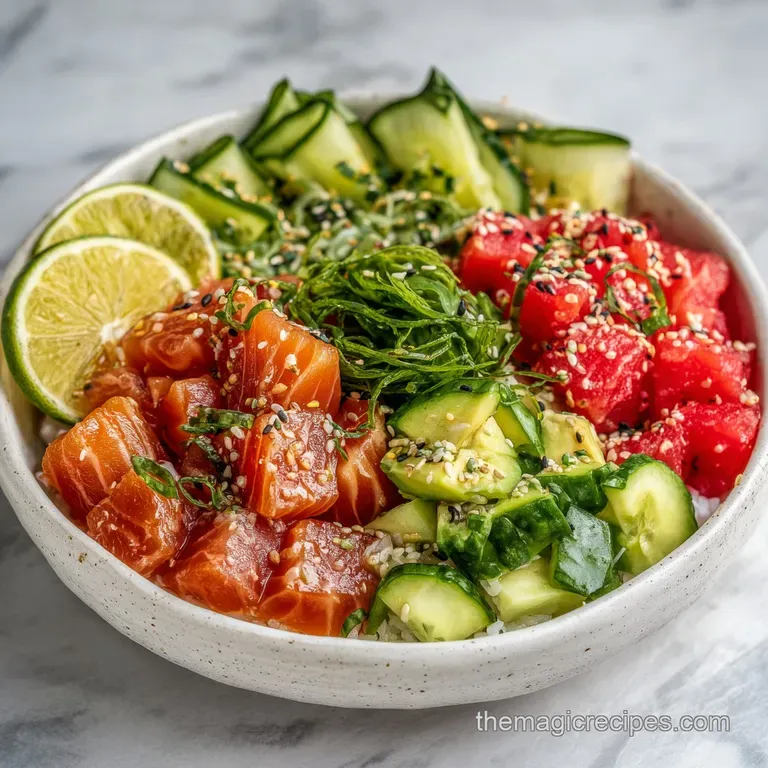
- Time: Active 20 minutes, Passive 20 minutes, Total 40 minutes
- Flavor/Texture Hook: Velvety fish and tangy, translucent rice grains
- Perfect for: An impressive date night or a high protein, vibrant meal prep
- Unlock Global Flavors with this Poke Receta
- The Physics of the Flash Marinate
- Component Analysis for Bold Results
- Essentials for Your Poke Bowl
- Simple Tools for Bold Results
- Crafting Your Authentic Poke Bowl
- Navigating Common Cooking Pitfalls
- Adjusting for More Eaters
- Tailoring the Dish to You
- Debunking Kitchen Myths
- Handling Leftovers Safely
- Three Ways to Plate Beauty
- Very High in Sodium
- Recipe FAQs
- 📝 Recipe Card
Unlock Global Flavors with this Poke Receta
The first time I really understood the magic of a poke bowl recipe was at a tiny, salt crusted shack on the North Shore. I can still smell the mix of hibiscus and toasted sesame oil drifting through the humid air.
The vendor handed me a container where the tuna was so vibrant it looked like rubies, and the rice was still slightly warm, providing this incredible contrast to the cold, buttery fish. That single bite, eaten on a wooden bench with sand between my toes, changed how I viewed "raw" food forever.
Since then, I've spent years trying to replicate that specific feeling of freshness in my own kitchen. I've realized that a great poke receta isn't just about throwing fish in a bowl; it's about the temperature contrast and the balance of acidity.
If your rice is too hot, it wilts the fish; if it’s too cold, it turns hard and grainy. We are looking for that sweet spot where every component feels intentional and bold.
Today, we're skipping the standard supermarket shortcuts. We're talking about the real deal sashimi grade Ahi Tuna and Atlantic Salmon. I’ve made the mistake of using "regular" fish before, and trust me, your palate knows the difference.
We’re aiming for a dish that feels like a global adventure but remains grounded in simple, honest techniques. Let’s get our knives sharpened and get to work.
The Physics of the Flash Marinate
Starch Retrogradation: Cooling the poke receta arroz properly allows the amylose molecules to realign, creating a firm, distinct grain that doesn't turn into a sticky paste when the sauce hits it.
Protein Denaturation: The salt in the soy sauce and the acid in the rice vinegar perform a "flash cure" on the fish, tightening the exterior just enough to give it a satisfying, bouncy texture without losing the velvety raw interior.
Emulsification Stability: The ginger in the poke bowl sauce recipe acts as a natural emulsifier, helping the toasted sesame oil and soy sauce stay integrated rather than separating into greasy droplets on the fish.
| Prep Method | Active Time | Resulting Texture | Best For |
|---|---|---|---|
| Traditional Stovetop | 20 minutes | Fluffy, individual grains | Most authentic mouthfeel |
| Rice Cooker | 2 minutes (hands on) | Consistent, tender | Busy weeknight prep |
| Oven Steaming | 25 minutes | Uniform, less sticky | Large batches/meal prep |
The choice of cooking method for your rice significantly impacts the final structural integrity of your bowl. While the stovetop allows for the most control over the "sizzle" of the steam, a rice cooker is a reliable ally when you're focusing on the precision of your knife work for the fish.
Component Analysis for Bold Results
| Ingredient | Science Role | Pro Secret |
|---|---|---|
| Short grain Rice | High starch content provides the necessary "cling" for seasonings. | Rinse until water is crystal clear to prevent gummy clumps. |
| Sashimi grade Fish | High fat and moisture content ensures a buttery, melt in-mouth feel. | Keep it on a bed of ice even while cubing to maintain structural integrity. |
| Toasted Sesame Oil | Provides the aromatic lipid base that carries fat soluble flavor compounds. | A little goes a long way; too much masks the delicate sweetness of the salmon. |
If you love the salty sweet profile we are building here, you might enjoy my Pollo Teriyaki Receta recipe for a warm alternative that uses similar flavor foundations.
Essentials for Your Poke Bowl
- 300g short grain sushi rice: Use Calrose or similar. Why this? It has the right starch ratio to stay chewy yet soft.
- Substitute: Quinoa (adds a nutty, earthy flavor but lacks the classic stickiness).
- 200g sashimi grade Ahi Tuna, cubed: Must be high-quality. Why this? Lean and firm, it absorbs the marinade without falling apart.
- Substitute: Firm tofu (press it well to ensure it soaks up the sauce).
- 200g sashimi grade Atlantic Salmon, cubed: Adds rich fats. Why this? Its buttery texture balances the leaner tuna.
- Substitute: Cooked shrimp (a great entry point if raw fish isn't your thing).
- 60ml low sodium soy sauce: The salty backbone. Why this? Regular soy is too aggressive; low sodium lets the fish shine.
- Substitute: Tamari (for a gluten-free option with a deeper flavor).
- 15ml toasted sesame oil: For that signature nutty aroma. Why this? It provides the "gloss" and depth required for authentic poke.
- Substitute: Perilla oil (common in Korean cuisine, offers a similar earthy punch).
- 5g freshly grated ginger: Adds a spicy, clean lift. Why this? Cutting through the fat of the salmon is essential.
- Substitute: Galangal (more citrusy and sharp, use slightly less).
Chef's Tip: Freeze your fish for just 15 minutes before slicing. This firms up the fats and allows you to cut perfectly sharp, clean edges that won't "shatter" or look ragged in the bowl.
Simple Tools for Bold Results
For this poke receta easy approach, you don't need a professional sushi bar, but a few specific items help. You’ll want a very sharp chef's knife blunt blades will bruise the delicate fish fibers rather than slicing through them.
A wooden bowl for the rice (a hangiri) is traditional because it absorbs excess moisture, but a wide glass bowl works too.
| Feature | Stovetop | Oven |
|---|---|---|
| Temperature Control | High (manual adjustment) | Medium (ambient heat) |
| Moisture Retention | Best with a tight lid | Good, but can dry on top |
| Cleanup | One pot | Baking dish + foil |
While this dish is fresh and light, sometimes you want something heartier for a gathering; that's when I turn to my New Years Dinner recipe for a completely different kind of "wow" factor.
Crafting Your Authentic Poke Bowl
- Rinse the rice. Wash 300g short grain rice in a fine mesh sieve until the water runs clear. Note: This removes excess surface starch that makes rice gummy.
- Cook the base. Combine rice with 350ml filtered water in a pot. Bring to a boil, then simmer on low for 15 minutes until the water is absorbed and small steam vents appear.
- Season the grains. Mix 45ml rice vinegar, 10g sugar, and 5g sea salt. Fold this into the warm rice using a slicing motion with a spatula. Let it cool to room temperature.
- Prepare the proteins. Cube 200g Ahi Tuna and 200g Atlantic Salmon into 1.5cm pieces until they look like uniform, shimmering jewels.
- Whisk the dressing. Combine 60ml soy sauce, 15ml toasted sesame oil, 10ml rice vinegar, 5g grated ginger, and 5g sriracha.
- Marinate the fish. Toss the cubed fish in the poke bowl sauce recipe until every surface is glossy and coated. Note: Only do this for 5 minutes to keep the texture firm.
- Prep the toppings. Slice 1 cucumber, 1 avocado, and 2 green onions. Steam 20g edamame until they are bright green and tender.
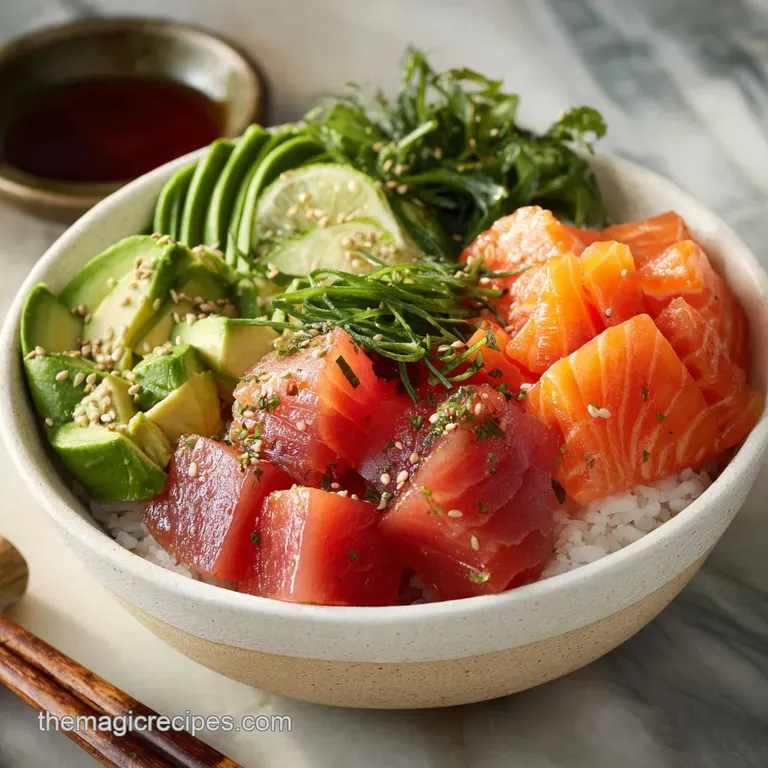
- Build the bowl. Place a generous scoop of rice in a bowl, then arrange the marinated poke receta atun and salmon on top.
- Garnish and serve. Sprinkle with 10g shredded nori, 5g toasted sesame seeds, and the sliced onions.
Navigating Common Cooking Pitfalls
Why Your Rice Is Too Sticky
If the rice feels like a solid block rather than individual grains, you likely skipped the rinsing stage or used too much water. Rice science is about the ratio. If you find yourself with a mushy mess, you can't really "fix" it for sushi, but you can turn it into a rice pudding or a thick congee.
For next time, use a 1:1.15 rice to water ratio.
Handling the "Fishy" Aroma
high-quality sashimi grade fish should smell like the ocean, not like "fish." If the scent is overwhelming, the fish is past its prime or wasn't stored at the correct temperature. You can sometimes neutralize minor odors by rinsing the fish in cold water and patting it extremely dry with paper towels before marinating, but always trust your nose.
| Problem | Root Cause | Solution |
|---|---|---|
| Grainy Rice | Underboiled or old rice | Add 1 tbsp water and steam for 3 more mins |
| Soggy Fish | Marinated too long | Drain excess sauce and add fresh toppings for crunch |
| Dull Colors | Oxidation (common with tuna) | Keep fish covered and cold until the very second of serving |
Common Mistakes Checklist
- ✓ Never use warm rice under raw fish; it breeds bacteria and ruins the texture.
- ✓ Avoid over mixing the fish once the sauce is added to prevent bruising.
- ✓ Don't skip the sugar in the rice vinegar mix; it's vital for that "glassy" grain look.
- ✓ Ensure the avocado is ripe but firm enough to hold its shape when sliced.
- ✓ Always use filtered water for the rice to avoid chlorine tastes in the final dish.
Adjusting for More Eaters
When you want to scale this poke receta original for a party, the math isn't just a straight double. For the rice, if you double the volume, reduce the total water by about 10% to prevent the bottom layer from becoming waterlogged.
For the spices and the sriracha in the dressing, increase them by 1.5x rather than 2x; spices tend to amplify quickly in large volumes.
If you're scaling down for a solo lunch, you can cook the full amount of rice and keep the unseasoned portion in the fridge. However, never scale down the fish prep freshness is the entire point. If you find you have leftover components, they work beautifully tucked into a wrap the next day.
Tailoring the Dish to You
| Original Ingredient | Substitute | Why It Works |
|---|---|---|
| Ahi Tuna | Golden Beets (roasted/peeled) | Similar density and "earthy" sweetness. Note: Best for a vegan poke bowl. |
| Rice Vinegar | Apple Cider Vinegar | Provides necessary acidity. Note: Adds a fruity note that can be slightly distracting. |
| Sriracha | Chili Garlic Sauce | Adds heat and texture. Note: More fermented funk than the smooth heat of sriracha. |
While this recipe is naturally quite healthy, if you're looking for a warm, comforting alternative that is still veggie forward, check out this Chicken and Broccoli Casserole recipe. It's the polar opposite in terms of temperature but shares that soul satisfying balance of protein and greens.
Debunking Kitchen Myths
"The longer you marinate the fish, the better it tastes." This is actually false for a poke receta. Because the fish is cut into small cubes, the surface area to volume ratio is very high.
A long soak (over 15-20 minutes) will cause the salt to pull too much moisture out, leaving the fish rubbery and gray. Five to ten minutes is the gold standard.
"Sushi rice must be served cold." Not true! Authentic poke is often served with "body temperature" rice. This subtle warmth makes the rice more aromatic and provides a stunning contrast to the chilled fish. If the rice is cold from the fridge, it feels hard and unappealing.
Handling Leftovers Safely
Storage: Raw fish poke should really be eaten the day it's made. However, if you have leftovers, store the fish and rice in separate airtight containers in the fridge for no more than 24 hours.
The fish will continue to "cook" in the acid of the sauce, so the texture will be firmer the next day.
Zero Waste: Don't throw away the broccoli like stems of your green onions or the scraps of nori. Those onion ends can be tossed into a freezer bag for stock, and nori scraps can be blended with sea salt to create a "furikake" seasoning for future bowls.
If you have extra avocado that's starting to brown, mash it with a little lime juice and use it as a creamy base for a toast the next morning.
Three Ways to Plate Beauty
When you want to take your poke recetas faciles to the next level, presentation is everything. It’s the difference between a "bowl of food" and a "culinary experience."
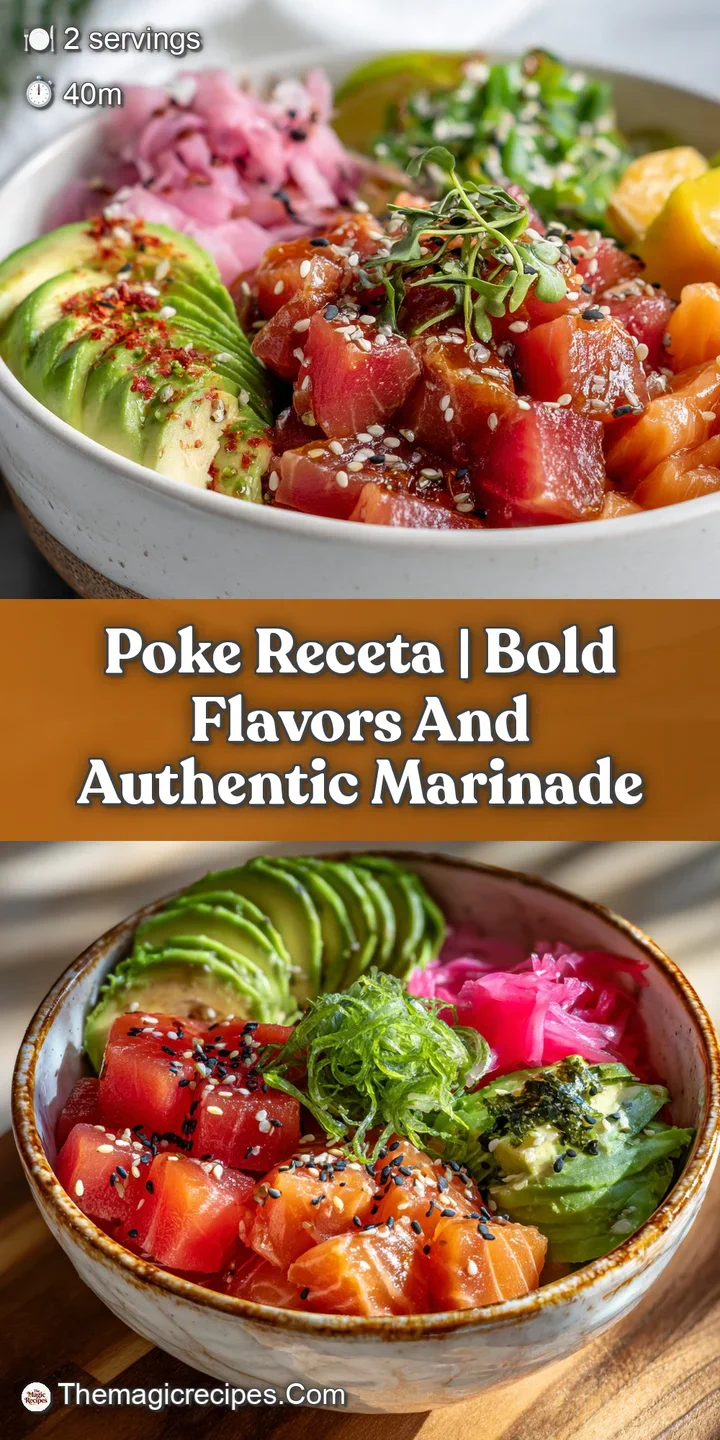
- Level 1: The Family Bowl: Simply layer the rice, top with the fish mix, and scatter the garnishes. It’s rustic, bold, and invites everyone to dig in.
- Level 2: The Polished Café: Use a ring mold for the rice to create a clean circle. Fan the avocado slices perfectly around the edge and place the fish in the center. Use a squeeze bottle for the sauce.
- Level 3: The Restaurant Masterpiece: Use a wide, shallow bowl. Create "islands" of ingredients a mound of tuna, a separate mound of salmon, a small pile of edamame leaving negative space between them. Garnish with microgreens and a few drops of pure toasted sesame oil for a glossy finish.
| Plating Level | Visual Goal | Key Tool |
|---|---|---|
| Simple | Abundance | Large serving spoon |
| Polished | Symmetry | Avocado fan technique |
| Restaurant | Artistry | Precision tweezers |
This poke receta is your canvas. Whether you’re eating it standing up in your kitchen or serving it at a carefully set table, the bold, clean flavors are what will keep you coming back. Trust the process, respect the fish, and don't be afraid to make it your own. Enjoy!
Very High in Sodium
1650 mg mg of sodium per serving (72% of daily value)
The American Heart Association recommends limiting sodium intake to about 2,300mg per day.
Tips to Reduce Sodium in Your Sushi Bowl
-
Swap Soy Sauce-30%
Replace regular soy sauce with a no-sodium or reduced sodium version. This simple swap can significantly decrease the sodium content of your sauce.
-
Reduce Added Salt-25%
Decrease the amount of sea salt added to the rice. Start by using half the amount (2.5g) or eliminating it entirely, and adjust to taste.
-
Control Sriracha-20%
Use sriracha sparingly or replace it with a homemade alternative using fresh chili peppers for heat and less sodium.
-
Enhance with Acid-10%
Increase the amount of rice vinegar (without sodium) in the sauce and add a squeeze of fresh lemon or lime juice to brighten the flavor and reduce the need for salt.
-
Spice It Up Naturally
Experiment with herbs and spices like garlic powder, onion powder, dried seaweed flakes, or black pepper to enhance the flavor of your sushi bowl without adding sodium.
Recipe FAQs
What ingredients does the original poke recipe require?
Cubed, raw, sashimi grade fish is the mandatory core ingredient, traditionally served over seasoned rice. The original typically includes soy sauce, sesame oil, and onion, though modern interpretations add many more elements.
What additions can I put in my poke bowl?
Yes, you can add almost any crunchy or soft topping you prefer for texture contrast. Common additions include avocado, cucumber, edamame, seaweed salad, crispy onions, or mango for sweetness.
What are the essential ingredients for a classic poke bowl?
Sashimi grade fish, seasoned sushi rice, soy sauce, and toasted sesame oil form the essential base components. Achieving the correct balance between the salty marinade and the slightly vinegared rice is crucial for authenticity.
What are the ingredients for a salmon poke bowl?
Sashimi grade Atlantic salmon, sushi rice, soy sauce, sesame oil, and fresh ginger are the key players for a salmon focused bowl. If you master the flavor balancing in this marinade, you'll find the same acidic lift translates perfectly to our Recetas de Salmon Fresco: Pan-Seared in 25 Minutes.
How long should I marinate the raw fish before serving?
Marinate the fish for no more than 10 to 20 minutes, depending on the cube size. Over marinating causes the salt and acid to cure the protein too aggressively, resulting in a tough, rubbery texture rather than a tender bite.
Is it true that I must use expensive sushi grade rice for the base?
No, this is a common misconception. While you need short grain rice for the stickiness, you should focus more on rinsing the starch off thoroughly than the rice's specific label. If you are worried about dough consistency in other recipes, remember that rinsing starch is a key technique; see how that concept helps with dough structure in our Bisquick Dumplings: Cloud Soft Comfort in Just 30 Minutes.
How do I keep my rice from getting gummy when I add the sauce?
Cool the seasoned rice completely to room temperature before assembling the bowl. Warm rice creates condensation, which mixes with the marinade to create a sticky, paste like coating on the fish and rice grains.
Authentic Poke Receta Bowl
Ingredients:
Instructions:
Nutrition Facts:
| Calories | 1113 kcal |
|---|---|
| Protein | 58 g |
| Fat | 35 g |
| Carbs | 135 g |
| Fiber | 7 g |
| Sugar | 9 g |
| Sodium | 1650 mg |
