Beef Potato Casserole: Savory Ground Beef Bake
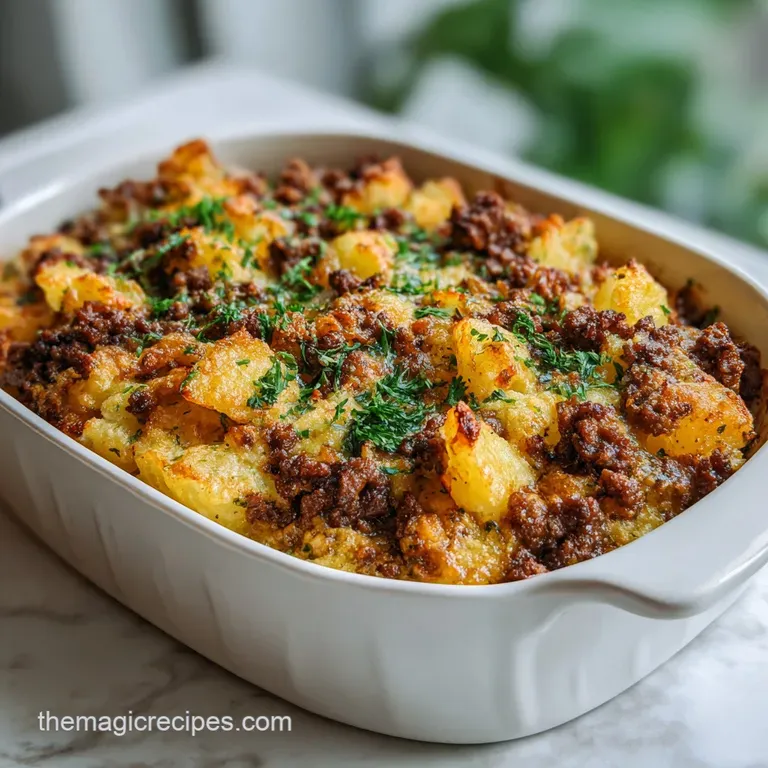
- Time: Active 20 minutes, Passive 50 minutes, Total 1 hours 10 mins
- Flavor/Texture Hook: Savory, smoky beef layers topped with a golden, bubbly cheddar crust.
- Perfect for: Stress free weeknight dinners or budget conscious meal prepping.
- Mastering the Cozy Layers of This Beef Potato Casserole
- Key Preparation Benchmarks and Serving Details
- Analyzing the Science Behind Every Layered Component
- Essential Tools for a Perfectly Baked Casserole
- Step by Step Assembly for Maximum Flavor
- Troubleshooting Common Issues
- Proactive Steps to Prevent Common Baking Errors
- Smart Swaps for Different Diets and Budgets
- Scaling the Recipe for Any Crowd
- Myths About Potato Casseroles
- Preserving Quality and Managing Leftover Portions
- Choosing the Right Sides for a Complete Meal
- Recipe FAQs
- 📝 Recipe Card
Mastering the Cozy Layers of This Beef Potato Casserole
The sizzle of 1.5 lbs ground beef hitting a hot cast iron skillet is the official sound of the workday ending in my kitchen. There is an immediate, comforting aroma that fills the room as the beef fat renders, mingling with the sharp scent of diced yellow onion and minced garlic.
I remember the first time I tried to make a Beef Potato Casserole without a plan; I ended up with a watery, bland mess that even the dog looked at with suspicion. It was a humbling moment that taught me everything about the importance of potato starch and fat ratios.
We often think of casseroles as just "dump and bake" meals, but the magic happens in the small details. By taking the time to properly brown the meat and slice the potatoes to a specific thickness, you transform basic ingredients into something truly special.
This isn't just about filling bellies; it is about creating that velvety, rich mouthfeel that makes everyone at the table reach for seconds. It is a practical, work focused recipe that fits into a busy lifestyle while still feeling like a slow cooked labor of love.
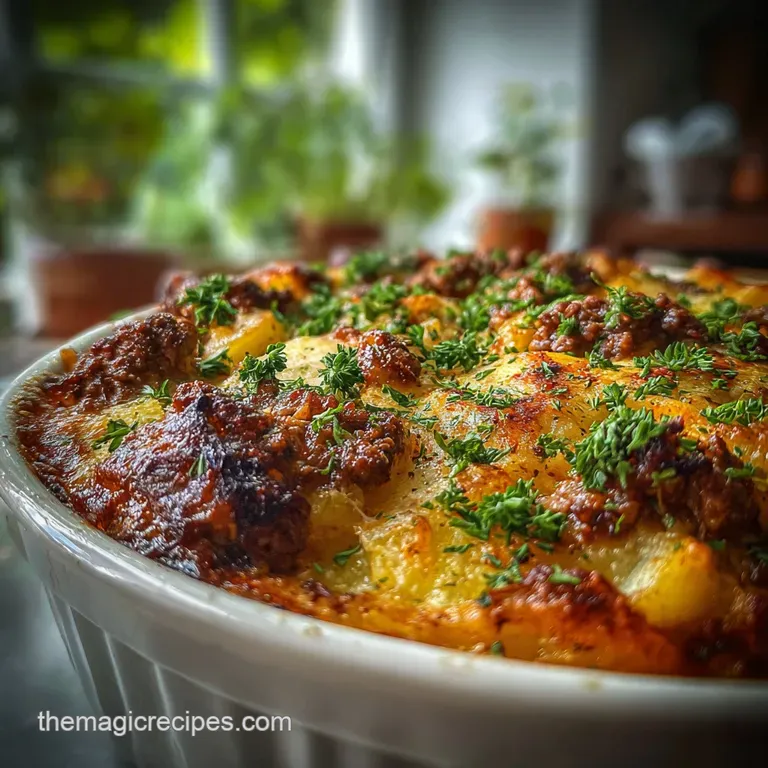
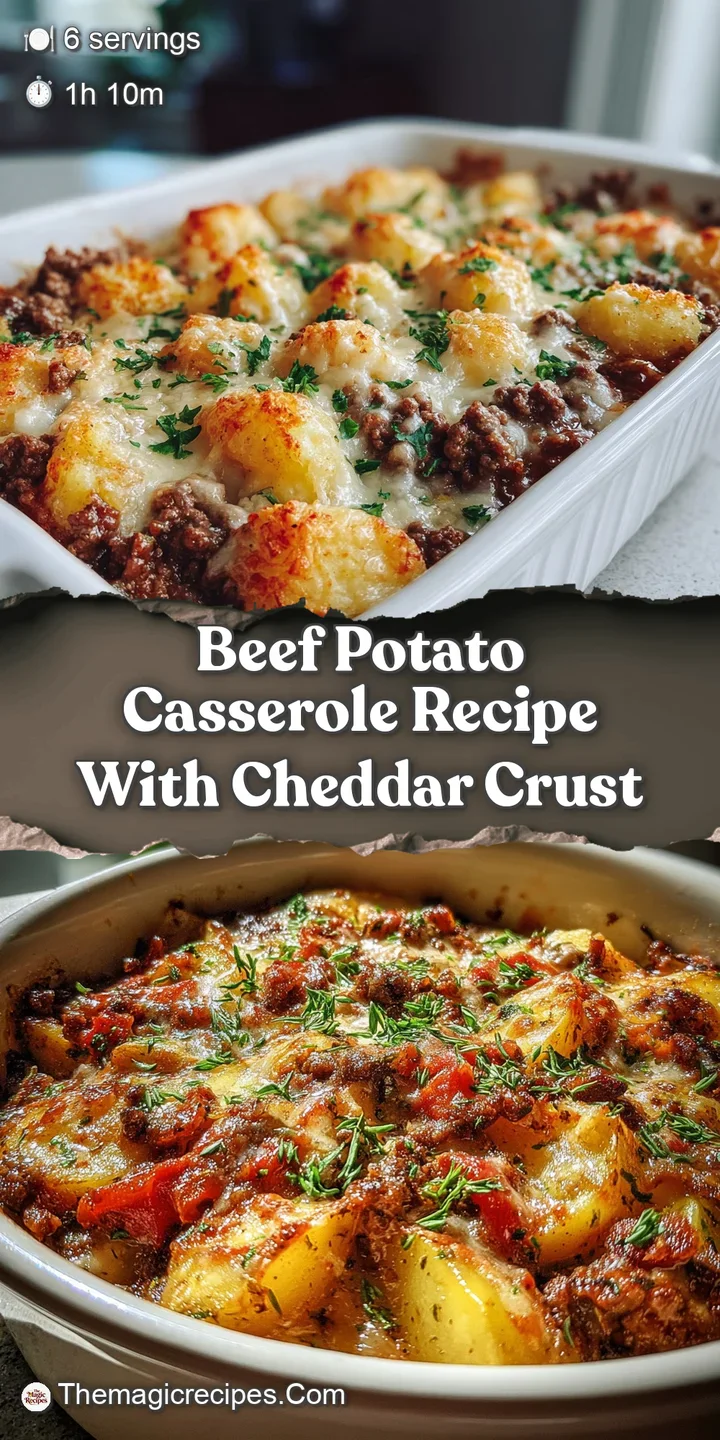
You are going to love how the sharp cheddar cheese creates a molten blanket over the tender Yukon Golds. Every bite offers a mix of textures the slight bite of the beef, the creamy softness of the potatoes, and that crispy, salty cheese edge that everyone fights over.
We are keeping things simple, using smart ingredient choices to maximize flavor without an expensive grocery bill. Let's get into what makes this specific bake a staple in my weekly rotation.
Key Preparation Benchmarks and Serving Details
Building a meal for a crowd requires a bit of math before you even turn on the oven. I always check my servings first so I don't end up with half a pan of leftovers or, even worse, hungry kids.
This dish scales beautifully, but you have to keep the pan size in mind to ensure the heat penetrates those dense potato layers evenly.
| Servings | Ingredient Adjustments | Pan Size | Cook Time |
|---|---|---|---|
| 3 people | Halve all ingredients | 8x8 inch square | 40 minutes |
| 6 people | Use Schema quantities | 9x13 inch rectangle | 50 minutes |
| 12 people | Double all ingredients | Two 9x13 pans | 60 minutes |
Finding the right balance between the meat and the starch is essential. If you want to lean into the beefy side of things, you can always check out my Ground Beef Enchilada recipe for a different flavor profile using similar base proteins. For this casserole, we are focusing on the synergy between the earthy potatoes and the smoky paprika seasoning.
Analyzing the Science Behind Every Layered Component
Starch Gelatinization: As the 1/8 inch potato slices bake in the 1/2 cup heavy cream, they release starches that thicken the liquid into a natural, velvety sauce.
Maillard Reaction: Browning the beef and onions before layering develops complex flavor compounds that raw meat simply cannot provide during a standard bake.
Fat Cap Insulation: The 2.5 cups of sharp cheddar act as a thermal barrier, trapping steam within the potato layers to ensure they soften without drying out the meat.
Emulsification Stability: The Worcestershire sauce and heavy cream bind with the rendered beef juices to create a cohesive sauce that clings to every slice.
| Ingredient | Science Role | Pro Secret |
|---|---|---|
| Yukon Gold Potatoes | High starch/moisture balance | Don't soak them; you need that surface starch for the sauce. |
| 80/20 Ground Beef | Flavor and moisture carrier | The 20% fat provides the necessary "lube" for the potato layers. |
| Heavy Cream | Emulsifier and softener | Room temperature cream prevents curdling when it hits the hot beef. |
| Sharp Cheddar | Structural topping | Grate it yourself; pre shredded cheese is coated in starch that prevents melting. |
The interaction between the heavy cream and the Yukon Golds is the most critical part of this equation. Unlike Russets, which can fall apart into mush, Yukons hold their shape while absorbing the savory juices. It’s the same principle I use when making my twice baked potatoes recipe to get that signature interior texture.
Essential Tools for a Perfectly Baked Casserole
You don't need a high end kitchen to pull this off, but a few specific tools make the process much faster. A sharp chef's knife or a mandolin is your best friend here. If those potato slices aren't uniform, you'll end up with some that are crunchy and others that are falling apart.
I personally use a simple hand held mandolin to fly through the 2 lbs of potatoes in under three minutes.
A heavy bottomed skillet, such as a Lodge cast iron, is perfect for browning the 1.5 lbs of ground beef. It holds heat better than thin stainless steel, ensuring you get a good sear rather than just boiling the meat in its own juices. For the actual baking, a standard 9x13 glass or ceramic casserole dish works wonders.
Glass is great because you can actually see if the bottom layers are bubbling and cooked through.
step-by-step Assembly for Maximum Flavor
Troubleshooting Common Issues
| Issue | Solution |
|---|---|
| Prep the Foundation | 1. Preheat your oven to 375°F (190°C). Note: A hot oven ensures the cheese bakes into a crust rather than just sweating. 2. Brown 1.5 lbs ground beef in a large skillet over medium high |
| What is the Best Way to Layer for Maximum Flavor | 6. Grease your 9x13 baking dish lightly with butter or oil. 7. Layer half of the sliced 2 lbs Yukon Gold potatoes in the bottom of the dish. Note: Overlap them slightly like shingles on a roof. |
| Achieve That Velvety Texture | 10. Whisk together 1/2 cup heavy cream and 1 tsp dried thyme in a small bowl. 11. Pour the cream mixture slowly over the potatoes, ensuring it seeps into the gaps. 12. Cover the dish tightly with alum |
| When Do I Add the Final Golden Crust | 13. Remove the foil and sprinkle 2.5 cups sharp cheddar cheese over the top. 14. Bake uncovered for another 15 minutes until the cheese is bubbling and golden brown. 15. Garnish with |
Proactive Steps to Prevent Common Baking Errors
The biggest frustration with a Beef Potato Casserole is the "hard potato" syndrome. It happens to the best of us. Usually, it's because the slices were too thick or the dish wasn't covered tightly enough to trap the steam. Remember, potatoes need moisture and heat to break down their cellular structure.
Why Are My Potatoes Still Hard?
If you pull the casserole out and the potatoes have a "crunch," the heat didn't reach the center effectively. This often happens if the potatoes were cold from the fridge or if the slices exceeded 1/8 inch. Next time, try to slice them thinner or extend the covered baking time by 10 minutes.
Why Is My Casserole Soupy?
A watery bottom is usually caused by the onions releasing too much moisture or using a beef blend with too much water content. To fix this, ensure you sauté the onions until they are fully softened and slightly browned before adding them to the dish.
| Problem | Root Cause | Solution |
|---|---|---|
| Greasy Texture | Didn't drain beef fat | Drain all but 1 tbsp of fat after browning the meat. |
| Burnt Cheese | Added cheese too early | Only add cheese for the final 15 minutes of baking. |
| Bland Flavor | Under seasoned beef | Taste your beef mixture; it should be slightly "over seasoned" to flavor the potatoes. |
Common Mistakes Checklist
- ✓ Never skip the foil; it is essential for steaming the potatoes through.
- ✓ Don't use low-fat milk; the heavy cream is needed to prevent curdling.
- ✓ Avoid Russet potatoes if possible; they fall apart too easily in this specific bake.
- ✓ Let the dish rest for 10 minutes after baking to allow the sauce to set.
- ✓ Ensure the oven is fully preheated before the dish goes in.
Smart Swaps for Different Diets and Budgets
We all have those weeks where the grocery budget is tight or a specific ingredient is missing. This Beef Potato Casserole is incredibly forgiving. If you can't find Yukon Golds, you can use Red Bliss potatoes. They have a similar waxy texture that holds up well under the weight of the beef.
| Original Ingredient | Substitute | Why It Works |
|---|---|---|
| Heavy Cream (1/2 cup) | Whole Milk + 1 tbsp Flour | Creates a thinner but still creamy sauce. Note: Will be less rich. |
| Ground Beef (1.5 lbs) | Ground Turkey or Pork | Similar protein structure. Note: Turkey needs more seasoning. |
| Sharp Cheddar | Monterey Jack or Gouda | Both melt beautifully. Note: Gouda adds a nuttier, smoky profile. |
If you're looking for a different starch base entirely for a future meal, our Hash Brown Casserole recipe is a fantastic budget friendly alternative that uses frozen potatoes to save time.
Scaling the Recipe for Any Crowd
When scaling down for two people, use a loaf pan or an 8x8 dish. You'll want to reduce the cook time by about 20%, but keep a close eye on it. The depth of the layers determines the cook time more than the total volume. If the layers are deep, it still needs that full 50 minutes to get tender.
For a massive potluck, doubling the recipe into two 9x13 pans is safer than one giant, deep pan. If the casserole is too deep, the middle will stay raw while the edges burn. When baking two pans at once, rotate them halfway through the cooking time to account for hot spots in your oven.
| Method | Time | Texture | Best For |
|---|---|---|---|
| Oven (Standard) | 50 minutes | Crispy top, creamy center | Traditional family dinner |
| Stovetop (Skillet) | 30 minutes | Soft throughout, no crust | Quick weeknight "hash" style |
| Slow Cooker | 6 hours (Low) | Extremely tender beef | Set and forget meal prep |
Myths About Potato Casseroles
One of the biggest myths is that you need to par boil the potatoes before baking. This is a total waste of time and extra dishes. If you slice them thin enough (1/8 inch), the 50 minute bake time is more than enough to get them buttery soft.
Par boiling often leads to the potatoes breaking apart during the layering process.
Another misconception is that you should rinse the sliced potatoes to "get rid of the starch." In this recipe, that starch is your best friend. It acts as a natural thickener for the heavy cream and beef juices. If you rinse it away, you’ll likely end up with a watery sauce at the bottom of your pan.
Preserving Quality and Managing Leftover Portions
This bake is actually one of those rare dishes that tastes even better the next day. The flavors have time to mingle, and the sauce thickens further as it cools.
- Storage
- Keep leftovers in an airtight container in the fridge for up to 4 days.
- Freezing
- You can freeze this dish, but do it before the final cheese bake. Thaw in the fridge overnight before finishing in the oven. It will stay good in the freezer for up to 3 months.
- Reheating
- Use the oven at 350°F to maintain the texture of the potatoes. The microwave works in a pinch, but the cheese can get a bit rubbery.
- Zero Waste
- If you have leftover beef and potato mix but not enough for a full meal, fry it up in a pan the next morning with a couple of over easy eggs on top. It makes the ultimate breakfast hash.
Choosing the Right Sides for a Complete Meal
Since this Beef Potato Casserole is quite heavy and rich, I always pair it with something bright and acidic. A simple green salad with a lemon vinaigrette is usually my go to. It cuts through the fat of the cheddar and heavy cream, refreshing your palate between bites.
What Green Sides Pair Best?
Steam some broccoli or roasted green beans with a splash of balsamic vinegar. The crunch of the vegetables provides a nice contrast to the soft, velvety texture of the casserole. You want something that doesn't compete for the "comfort food" spotlight.
Is There a Good Bread Pairing?
Honestly, with 2 lbs of potatoes, you might not need more carbs. But if you’re feeding a group of teenagers, a crusty baguette or some garlic bread is never a bad idea. Use it to swipe up any of that creamy, savory sauce left on the plate. Trust me, you won't want to leave a single drop behind. For a meatier accompaniment, you could even serve small portions alongside an Instant Pot Corned Beef recipe if you're hosting a massive feast.
Recipe FAQs
What oven temperature is required for a fully cooked Beef Potato Casserole?
375°F (190°C). This temperature ensures the potatoes steam properly under the foil while developing a golden, crisp cheese crust during the final uncovered bake.
How do I prevent the potatoes from being hard after baking?
Slice them consistently thin (1/8 inch) and keep the dish covered tightly. The foil traps the steam released by the cream and beef juices, which is necessary to soften the potato starch evenly.
Can I substitute Yukon Gold potatoes with Russets in this bake?
No, stick with Yukon Golds or Red Bliss for the best texture. Russets are too high in starch; they tend to absorb too much liquid and fall apart, resulting in a mushy bottom layer.
How long should the casserole bake covered versus uncovered?
Bake covered for approximately 35 minutes and uncovered for 15 minutes. The covered time steams the potatoes, while the uncovered time focuses on melting and browning the cheese topping for that necessary contrast.
Is it true that using pre-shredded cheese yields a better melt?
False. Pre-shredded cheese contains anti caking agents that inhibit smooth melting. Always grate sharp cheddar yourself; this technique ensures you get the pure, molten texture seen in recipes like our Hashbrown Casserole recipe.
How should I adjust the cook time if I use an 8x8 dish instead of a 9x13?
Reduce the total covered baking time by about 10 minutes. Since the layers will be deeper in the smaller dish, you need to ensure that the center reaches temperature without drying out the edges.
Why is my casserole watery at the bottom?
This usually means the beef or onions were not properly sautéed and drained. Searing the beef until the moisture evaporates concentrates the flavor and reduces excess liquid that would otherwise thin out your potato sauce.
Beef Potato Casserole Bake
Ingredients:
Instructions:
Nutrition Facts:
| Calories | 653 kcal |
|---|---|
| Protein | 36 g |
| Fat | 42 g |
| Carbs | 28 g |
| Fiber | 3 g |
| Sugar | 3 g |
| Sodium | 685 mg |
