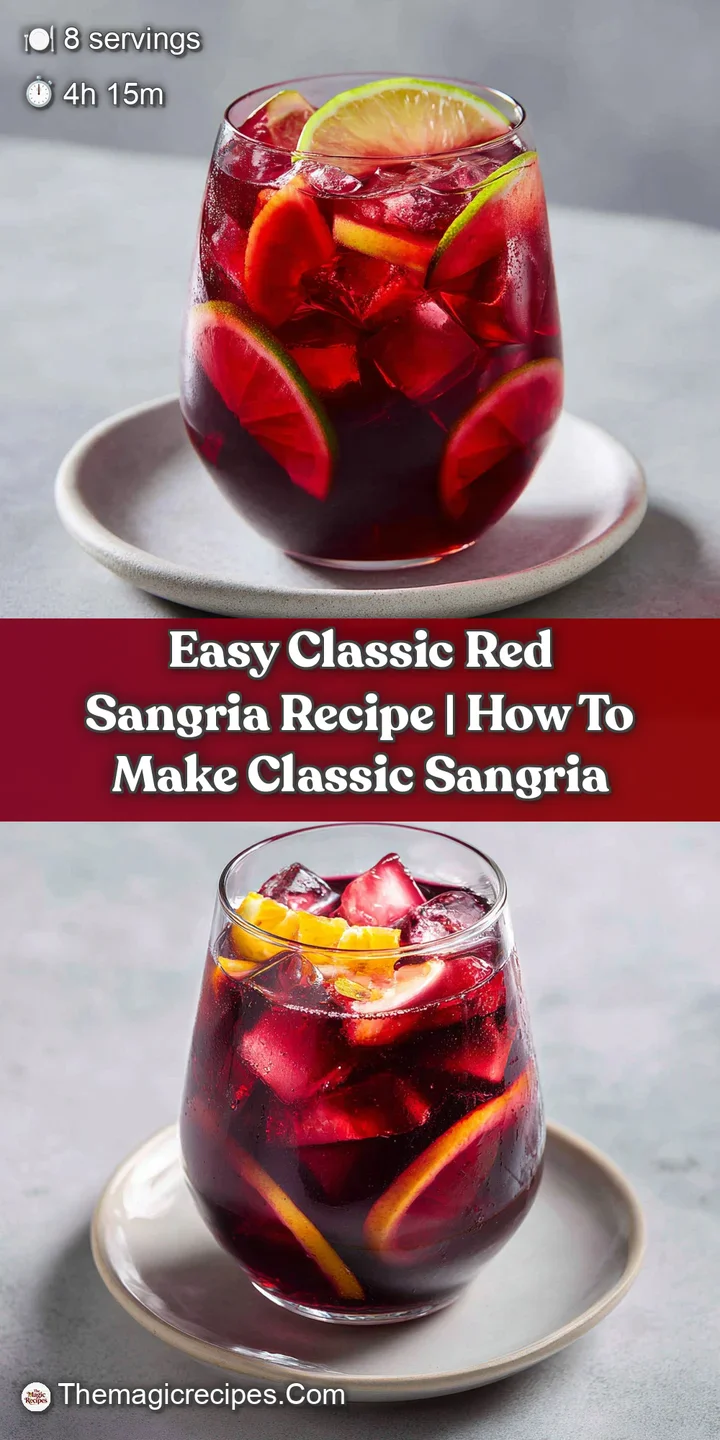
Classic Red Sangria: Traditional Spanish Recipe
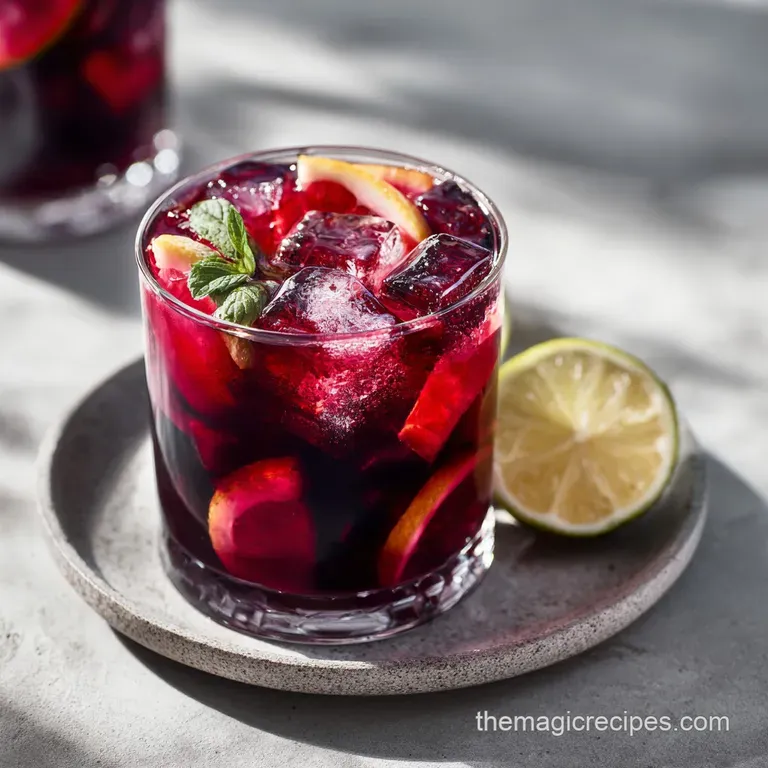
- Time: Active 15 minutes, Passive 240 minutes, Total 255 minutes
- Flavor/Texture Hook: Crisp Honeycrisp apples meet velvety Spanish red wine with a bright, citrusy finish.
- Perfect for: Summer garden parties, festive family gatherings, or a relaxed weekend brunch.
- Master This Easy Classic Red Sangria Recipe
- The Cultural Roots of This Authentic Red Wine Punch
- Why This Fruit and Wine Combination Works
- Component Analysis of the Traditional Sangria Base
- The Essential Elements for Your Perfect Sangria Base
- Tools and Equipment for Flawless Drink Preparation
- The Step by Step Guide to Crafting Authentic Sangria
- Resolving Common Textural and Flavor Imbalances
- Guidelines for Scaling Up or Down Effectively
- Comparing Instant Heat Infusion Against Traditional Cold Maceration
- Popular Variations and Creative Twists for Every Season
- Storage and Waste Reduction Strategies
- Plating Techniques for Every Occasion
- Common Misconceptions About Making Traditional Red Wine Punch
- Recipe FAQs
- 📝 Recipe Card
Master This Easy Classic Red Sangria Recipe
Close your eyes and think about the last time you walked through an open air market in Madrid. The air is thick with the scent of sun ripened oranges, dusty earth, and the faint, sweet aroma of fermenting grapes.
Sangria isn't just a "party drink" in Spain; it’s a cultural staple that represents hospitality and the art of slowing down. It’s the "sangre" (blood) of the celebration, traditionally made with whatever fruit was local and whatever wine was open.
I used to think making this was just about dumping a bottle of cheap wine into a bowl with some sugar. I was so wrong. The first time I had a real version at a tiny taberna in Seville, I realized the fruit wasn't just a garnish it was the soul of the drink.
They used a dry, punchy Rioja and let it sit until the apples were literally heavy with wine. It was a revelation. This easy classic red sangria recipe is my tribute to that experience, stripped of the neon colored syrups and focused on the actual fruit.
We're going to use Honeycrisp apples because they hold their crunch even after hours in liquid, and we're swapping grainy white sugar for maple syrup. Why? Because maple syrup is an invert sugar that integrates instantly into cold wine, meaning you won't find a gritty pile of crystals at the bottom of your pitcher.
Let's get into the details of how to make this work every single time.
The Cultural Roots of This Authentic Red Wine Punch
Historically, the concept of mixing wine with spices and fruit dates back to the Romans, who traveled across the Iberian Peninsula. They called it "hippocras." Fast forward to the 1964 World's Fair in New York, and the Spanish Pavilion introduced Americans to the version we know today.
It’s a drink born of necessity making young, harsh wines drinkable by adding sweetness and citrus.
Today, if you ask three Spanish grandmothers how to make "the best" sangria, you’ll get four different answers. Some swear by a splash of lemon lime soda, others insist on peach schnapps. But the core remains the same: a solid Spanish red (like Tempranillo), a fortifying spirit (brandy), and time.
That 4 hours of waiting isn't just a suggestion; it’s when the chemistry happens.
In this version, we focus on the "Garnacha" or "Rioja" styles. These wines are known for their berry forward notes and moderate tannins, which play beautifully with the acidity of fresh orange juice. We aren't trying to hide the wine; we're trying to make it sing.
It's a balance of ethnic tradition and modern, accessible ingredients that you can find at any local grocery store.
Why This Fruit and Wine Combination Works
- Solvent Infusion: The 12% to 14% alcohol in the wine acts as a solvent, extracting the essential oils from the orange rinds and the esters from the apple skins.
- Cold Press Maceration: Using maple syrup creates an osmotic pressure that draws the natural juice out of the fruit pieces and replaces it with the brandy infused wine.
- Fortification Balance: The 0.5 cup of brandy provides a structural "spine" to the drink, preventing the wine from tasting watered down once the ice and sparkling water are added.
- Polyphenol Softening: The oxygen introduced during the 30 second muddling process helps soften the harsh tannins in younger red wines, making the final sip feel velvety rather than astringent.
| Servings | Ingredient Adjustments | Pitcher Size | Chill Time |
|---|---|---|---|
| 4 People | 375 ml wine, 0.25 cup brandy | 1 Liter | 240 minutes |
| 8 People | 750 ml wine, 0.5 cup brandy | 2 Liters | 240 minutes |
| 16 People | 1.5 L wine, 1 cup brandy | 4 Liters | 240 minutes |
While you're waiting for those flavors to meld, you might find yourself craving other fruit forward treats. The way the apples soak up the wine in this recipe actually reminds me of a Classic easy charoset recipe I make every spring, where the wine and fruit become one.
Component Analysis of the Traditional Sangria Base
| Ingredient | Science Role | Pro Secret |
|---|---|---|
| Spanish Red Wine | Tannin & Acid Base | Use a "Crianza" level Rioja; it has enough oak to provide vanilla notes but remains fruity. |
| Brandy | Fortification | This prevents the fruit juices from diluting the "boozy" mouthfeel of the cocktail. |
| Honeycrisp Apple | Structural Fruit | This specific apple has a cell structure that doesn't collapse, staying crisp for 24 hours. |
| Cinnamon Stick | Aromatic Bridge | It ties the wood notes of the wine to the sweetness of the maple syrup. |
If you ever find yourself out of red wine but still want that tropical, fruit heavy vibe for a party, you'll love this Blue Hawaiian Cocktail recipe as a creamy, bright alternative.
The Essential Elements for Your Perfect Sangria Base
- 750 ml Spanish Red Wine: Look for Rioja or Garnacha. Why this? These grapes have high fruit concentrations that don't get lost when mixed.
- Substitute: Malbec (Same body, slightly more plum notes).
- 0.5 cup Brandy: This adds the necessary kick and depth. Why this? It's a grape based spirit that naturally complements the wine base.
- Substitute: Cognac (Higher quality, adds toasted nut flavors).
- 0.5 cup Fresh Squeezed Orange Juice: Avoid the carton stuff if you can. Why this? Fresh acidity balances the sugar better than pasteurized juice.
- Substitute: Pineapple juice (Adds a tropical, tart edge).
- 1 large Honeycrisp Apple: Cored and chopped into 1.27 cm (1/2 inch) cubes. Why this? It stays firm and absorbs the wine without turning into mush.
- Substitute: Fuji Apple (Similar sweetness but slightly softer texture).
- 1 large Organic Orange: Sliced into thin half moons. Why this? Organic rinds lack the waxy coating, allowing oils to release easier.
- Substitute: Two blood oranges (Adds a stunning deep pink hue).
- 2 tablespoons Maple Syrup: Our secret weapon for instant sweetness. Why this? It dissolves perfectly in cold liquid unlike granulated sugar.
- Substitute: Agave nectar (Neutral flavor, also dissolves instantly).
- 1 whole Cinnamon Stick: For a subtle warmth. Why this? It provides a slow release spice that doesn't overwhelm the fruit.
- Substitute: 0.25 teaspoon ground cinnamon (Warning: may make liquid cloudy).
- 0.5 cup Chilled Sparkling Water: Add this at the very last second. Why this? The carbonation lifts the heavy wine and refreshes the palate.
- Substitute: Club soda (Same effect, zero added flavor).
Tools and Equipment for Flawless Drink Preparation
You don't need a professional bar setup for an easy classic red sangria recipe, but a few specific items make the process much smoother. First, grab a 2 quart glass pitcher. Glass is essential because the acidity in the wine and orange juice can react with certain metals or cheap plastics, leaving a "tinny" aftertaste that ruins the fruit.
Plus, you want everyone to see those beautiful layers of citrus and apple!
A long handled wooden spoon is your best friend here. You need the reach to get to the bottom of the pitcher for that 30 second muddle. Unlike metal spoons, wood is gentle on the fruit, allowing you to release the oils from the orange skins without completely pulverizing the segments.
Finally, ensure you have plenty of large ice cubes. Small ice melts too fast, turning your carefully macerated sangria into a watery mess within ten minutes of serving.
The step-by-step Guide to Crafting Authentic Sangria
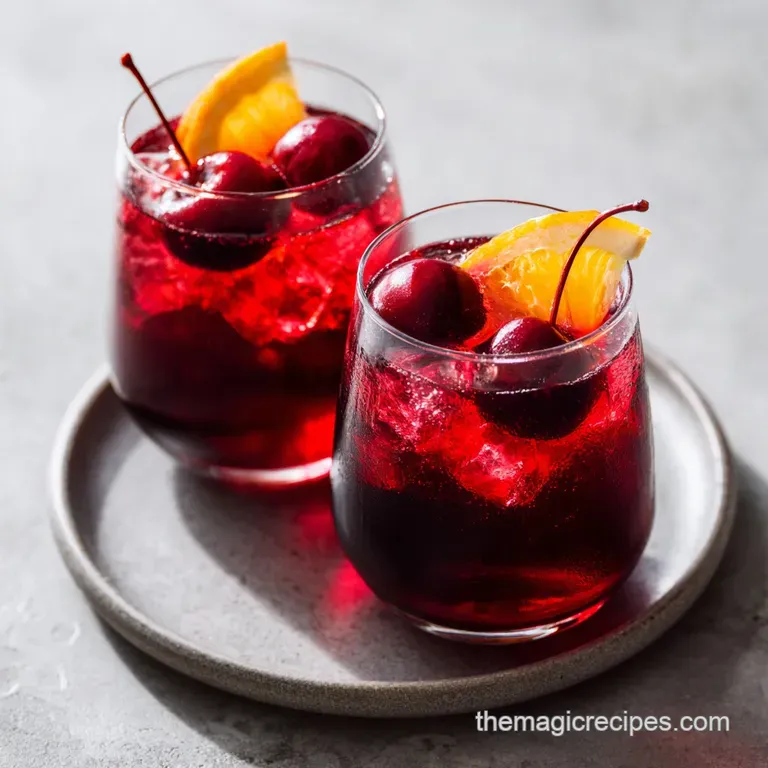
- Prep the fruit base. Place the chopped Honeycrisp apples, orange half moons, and 2 tablespoons of maple syrup into the bottom of your glass pitcher.
- Release the aromatics. Use your wooden spoon to lightly muddle the fruit for 30 seconds. Note: You're looking to bruise the orange peels slightly to release those fragrant oils.
- Integrate the spirits. Pour in the 0.5 cup of brandy and the 0.5 cup of fresh orange juice.
- Stir the sweetener. Mix the contents thoroughly until the maple syrup is completely incorporated into the juice and brandy.
- Add the wine. Pour the entire 750 ml bottle of Spanish red wine into the pitcher.
- Spice it up. Drop in the whole cinnamon stick and give the mixture one gentle, final stir to distribute the fruit.
- Begin the maceration. Cover the pitcher with plastic wrap or a lid and place it in the fridge for 240 minutes. Note: This is the critical stage where the fruit and wine exchange flavors.
- The final touch. Just before you are ready to serve, pour in the 0.5 cup of chilled sparkling water.
- Serve with style. Fill glasses with large ice cubes and pour the sangria, ensuring a mix of fruit lands in every glass.
Resolving Common Textural and Flavor Imbalances
The most common issue I hear about is the "bitter finish." This usually happens when the orange pith (the white part under the skin) sits in the wine for too long over 24 hours.
If you're planning on a long soak, consider peeling the orange and adding just the segments and a few strips of zest without the white pith.
Another frustration is the "watered down" effect. This happens when the sparkling water is added too early or too much ice is used in the pitcher itself. Always add ice to the individual glasses, never the pitcher, to keep the core batch concentrated.
| Problem | Root Cause | Solution |
|---|---|---|
| Too Bitter | Oranges soaked over 24 hours | Remove orange slices after the initial 4 hour maceration. |
| Too Weak | Not enough brandy or too much ice | Stick to the 0.5 cup brandy ratio and ice only the glasses. |
| Gritty Texture | Using granulated sugar | Swap for maple syrup or simple syrup for total integration. |
Common Mistakes Checklist
- ✓ Don't use "cooking wine" if you wouldn't drink a glass of it, don't put it in your sangria.
- ✓ Ensure your sparkling water is ice cold before adding to avoid warming up the batch.
- ✓ Avoid over muddling; you want to release oils, not turn the fruit into a smoothie.
- ✓ Never skip the 4 hour rest; the wine needs time to penetrate the density of the apples.
- ✓ Use a Honeycrisp or Granny Smith apple soft apples like Red Delicious will disintegrate.
Guidelines for Scaling Up or Down Effectively
If you're hosting a massive bash, you can easily double or triple this recipe. When scaling up to a 1.5 L or 3 L batch, I recommend keeping the cinnamon sticks to a 1.5x ratio rather than doubling them linearly. Cinnamon can become quite aggressive over time, and you don't want it to taste like a liquid spice rack.
For the sparkling water, keep it on the side and let guests top off their own glasses; this keeps the "fizz" alive much longer during a party.
For a solo night in, you can halve the recipe by using 375 ml of wine. Since half an egg isn't an issue here, the real trick is the orange. Use half an orange for the juice and the other half for the slices.
Use a smaller 1 liter pitcher to ensure the fruit remains submerged in the wine; if there's too much air in the container, the fruit at the top might brown before it has a chance to macerate properly.
Comparing Instant Heat Infusion Against Traditional Cold Maceration
While the easy classic red sangria recipe officially calls for a cold soak, some people try to speed up the process using the stovetop. Let's look at why you might choose one over the other.
| Method | Time | Texture | Best For |
|---|---|---|---|
| Traditional Cold | 240 minutes | Fresh, crisp, bright | Authentic flavor and best fruit texture. |
| Stovetop Warm | 15 minutes | Jammy, spiced, mulled | Last minute guests or a winter "warm sangria" vibe. |
Chef's Tip: If you absolutely must have sangria in 20 minutes, gently warm the brandy, maple syrup, and cinnamon on the stove for 5 minutes (don't boil!). Pour this warm mixture over the fruit to "flash extract" the flavors, then add the cold wine and a lot of ice.
It’s a solid hack when you're in a pinch!
Popular Variations and Creative Twists for Every Season
If you want to move away from the traditional, try a "Rosé Sangria." Swap the red wine for a dry Spanish Rosado and use strawberries and raspberries instead of apples and oranges. It’s lighter, punchier, and looks incredible in the sun.
For a fall version, keep the Honeycrisp apples but swap the sparkling water for a splash of hard apple cider. It doubles down on that orchard flavor and adds a beautiful autumnal depth.
Another fun twist is the "Boozy Berry" version. Add a handful of frozen blackberries to the pitcher. As they thaw, they release a deep purple juice that turns the sangria into a dark, moody masterpiece. Just remember: if you change the fruit, keep the brandy.
The brandy is the "glue" that holds all these different flavors together.
Storage and Waste Reduction Strategies
Leftover sangria is a gift. It will stay fresh in the fridge for up to 2 days. After 48 hours, the fruit starts to get a bit soft, and the wine can begin to oxidize. If you find yourself with half a pitcher left, strain out the fruit and store the liquid in a sealed glass bottle.
Zero Waste Tip: Don't throw away that wine soaked fruit! The apples and oranges are essentially "drunken fruit." You can chop them up and serve them over vanilla bean ice cream, or even blend them into a boozy fruit compote for pancakes the next morning.
If you have leftover orange peels, zest them before juicing and freeze the zest in an airtight bag for your next baking project.
Plating Techniques for Every Occasion
Presentation is half the battle with a drink this beautiful. Depending on your event, you can scale the "vibe" from casual to high end.
- Simple (The Backyard Hang): Serve in a sturdy glass pitcher with a stack of mason jars. No fancy garnishes just make sure everyone gets a big scoop of fruit in their jar. It feels approachable and rustic.
- Polished (The Dinner Party): Use stemmed wine glasses. Rim the edge of the glass with a mixture of cinnamon and sugar before pouring. Add a single, fresh half moon orange slice to the rim.
- Restaurant (The Showstopper): Use large Bordeaux glasses. Instead of regular ice, use frozen red grapes as "ice cubes" to prevent dilution. Place a fresh sprig of mint or rosemary near the rim the herb's aroma hits the nose as you sip, creating a complex sensory experience.
| Level | Focus | Primary Element |
|---|---|---|
| Simple | Utility | Large glass pitcher and mason jars |
| Polished | Elegance | Cinnamon sugar rim and stemmed glassware |
| Restaurant | Sensory | Frozen grape ice and aromatic herb sprigs |
Common Misconceptions About Making Traditional Red Wine Punch
Many people believe that "expensive wine makes better sangria." This is a total myth. In fact, a very expensive, highly complex aged wine (like a Gran Reserva) can actually be ruined by the fruit and sugar. The subtle notes of tobacco and leather in an old wine get drowned out.
You want a "workhorse" wine something mid range, fruity, and bold.
Another myth is that you must use white sugar. As we discussed, white sugar is actually the worst choice because it struggles to dissolve in cold alcohol. Using a liquid sweetener like maple syrup or agave isn't just a "healthy swap" it’s a functional one that ensures a consistent flavor from the first sip to the last.
Finally,, don't believe that you can't over macerate. If you leave it for 3 days, it will start to taste like vinegar. Stick to that 4 to 24 hour window for the peak experience!
Recipe FAQs
How to avoid a bitter taste in my sangria?
Muddle the fruit gently for only 30 seconds. Excessive pressure releases too many oils from the orange peels, which can make the wine profile taste harsh rather than refreshing.
Is it necessary to use expensive wine for this recipe?
No, avoid expensive bottles but never use cooking wine. Select a drinkable Spanish Rioja or Garnacha; if you wouldn't enjoy a glass on its own, it will not improve your pitcher.
How to keep the apples from falling apart?
Stick to firm varieties like Honeycrisp. Softer apples like Red Delicious will disintegrate during the 4-hour maceration period, affecting the texture of your final pour.
Can I serve this immediately after mixing?
No, the 4-hour rest is essential for flavor development. Skipping this time prevents the wine from penetrating the fruit, leaving you with a shallow flavor profile. If you enjoyed the way we balance acidity and sweetness here, see how we apply similar flavor balancing techniques in our other recipes.
How to keep the drink from tasting watered down?
Add the sparkling water only immediately before serving. Ensure your water is ice-cold so it doesn't raise the temperature of the batch, and stir just enough to incorporate.
How to store leftovers effectively?
Refrigerate the mixture for up to 48 hours. Beyond two days, the wine begins to oxidize and the fruit loses its structure, so strain out the solids if you plan to keep it longer.
Is it true I should add ice to the pitcher?
No, this is a common misconception. Adding ice to the pitcher dilutes the sangria as it melts; always pour over fresh ice cubes in individual glasses instead.
Classic Red Sangria
Ingredients:
Instructions:
Nutrition Facts:
| Calories | 156 calories |
|---|---|
| Protein | 0.6 g |
| Fat | 0.1 g |
| Carbs | 13.5 g |
| Fiber | 1.1 g |
| Sugar | 9.8 g |
| Sodium | 4 mg |
