Classic Sweet Potato Pie: Silky & Spiced
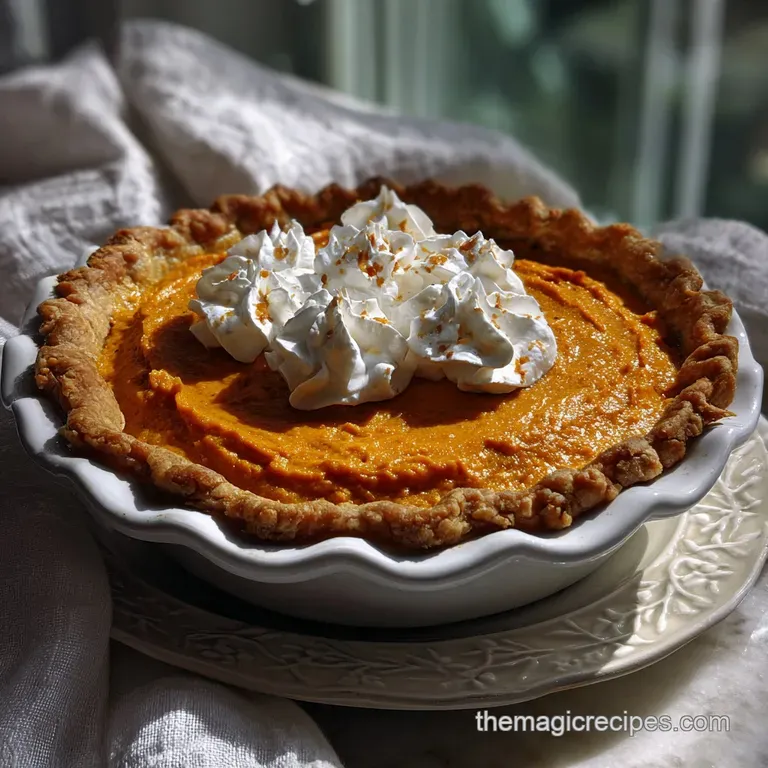
- Time: Active 20 minutes, Passive 55 minutes, Total 1 hours 15 mins
- Flavor/Texture Hook: Velvety, spiced filling with a flaky, buttery finish
- Perfect for: Holiday gatherings, Sunday dinners, or a cozy weekend baking project
- Bake the Ultimate Indulgent Classic Sweet Potato Pie
- The Culinary Magic Behind a Velvety Filling
- Timing and Yield for Your Next Dessert
- The Essential Components for a Decadent Treat
- Tools Required for Bakery Quality Results
- Mastering the Steps for a Silky Texture
- Solving Common Problems for a Flawless Finish
- Adapting Your Recipe for Different Needs
- Myths About the Perfect Potato Pie
- Storage and Zero Waste Guidelines
- Elegant Presentation Ideas for Your Dessert Table
- Recipe FAQs
- 📝 Recipe Card
Bake the Ultimate Indulgent Classic Sweet Potato Pie
Right then, let's talk about the scent that defines my kitchen every autumn. You know that specific aroma of charred sugar and warm nutmeg that hangs in the air? That is the promise of a classic sweet potato pie. For the longest time, I struggled with fillings that were either too stringy or, frankly, just a bit soggy.
It was frustrating because I wanted that bakery quality density without the professional kitchen stress.
I eventually realized that the secret isn't in some fancy additive, but in how we treat the potatoes themselves. Most recipes tell you to boil them, but that just waterlogs the flavor. We want intensity. We want something so rich it feels like a hug on a plate.
This version is exactly that, using evaporated milk for a dense, luscious mouthfeel that makes every bite feel like a special occasion.
We are going to build this from the ground up, starting with a crust that uses frozen butter for maximum flakiness. Trust me on this, once you see those layers shatter under your fork, you will never go back to store-bought. It’s an indulgent treat that rewards patience with a texture so silky it almost melts.
Let's get into the details of why this specific method works so well.
The Culinary Magic Behind a Velvety Filling
The Science of Why it Works: Roasting the potatoes triggers the Maillard reaction, converting starches into complex sugars while evaporating excess water to concentrate flavor. Meanwhile, the proteins in the eggs and evaporated milk denature and bond during baking to create a stable, creamy custard structure.
| Method | Texture Result | Flavor Profile | Best For |
|---|---|---|---|
| Roasting (My Pick) | Dense and velvety | Caramelized, deep sweetness | Maximum indulgence |
| Boiling | Light but watery | Mild and simple | Quick prep only |
| Steaming | Soft and smooth | Pure potato taste | Subtle spice dishes |
Roasting is my absolute non negotiable step. When you boil a sweet potato, you are essentially diluting the very thing that makes the classic sweet potato pie so iconic. By letting them caramelize in their own skins in a hot oven, you develop these deep, toffee like notes that play beautifully with the cinnamon and ginger.
It's a small change that yields a massive difference in the final result.
You might be tempted to use canned puree to save time, but I find the texture is never quite right. It lacks the body needed to support the heavy creaminess of the evaporated milk.
If you are going for that authentic, old-fashioned feel, the extra 45 minutes of roasting time is the best investment you can make for your dessert table.
Timing and Yield for Your Next Dessert
When you are planning a big dinner, knowing exactly how much you’ll end up with is vital. This recipe is designed for a standard 9 inch pie plate. I’ve found that one pie comfortably serves eight people, especially when you are serving it alongside other treats.
If you are hosting a larger crowd, it’s often easier to bake two pies side-by-side than to try and scale up the filling into a larger, deeper dish which might not set correctly in the middle.
| Servings | Ingredient Adjustments | Pan Size | Cook Time |
|---|---|---|---|
| 4 people | Half recipe | 6 inch deep dish | 40 minutes |
| 8 people | Standard recipe (as listed) | 9 inch pie plate | 55 minutes |
| 16 people | Double recipe | Two 9 inch plates | 60 minutes |
Because this is such a rich, indulgent treat, smaller slices usually do the trick. The filling is quite dense, similar to the texture you might find in a high-quality Butter Cake recipe, though with that distinct custard wobble. If you find yourself with leftovers, they hold up remarkably well in the fridge, making this a great candidate for meal prep desserts.
I usually recommend making the dough a day ahead if you can. Letting the flour hydrate properly in the fridge makes the crust much easier to roll out and prevents it from shrinking during the bake. It's these little pockets of "waiting time" that actually do the heavy lifting in creating a professional grade crust.
The Essential Components for a Decadent Treat
Selecting the right ingredients is where the magic starts. For the crust, we are using 185g of all purpose flour. This provides enough gluten for structure without making the pastry tough. The 115g of unsalted butter must be frozen.
I like to grate it directly into the flour; it ensures the fat stays cold and creates those beautiful, flaky layers.
The filling relies on 450g of fresh sweet potatoes. Look for the ones with deep orange flesh, like Beauregard or Jewel varieties, as they have the best sugar to starch ratio. The 120ml of evaporated milk is the secret to that "old-fashioned" taste.
It has less water than regular milk, which means the filling stays stable and doesn't weep after it's cut.
| Ingredient | Science Role | Pro Secret |
|---|---|---|
| Frozen Butter (115g) | Creates steam pockets for lift | Grate it while frozen to keep it from melting |
| Evaporated Milk (120ml) | Provides fat density without excess water | Use full fat for the most velvety mouthfeel |
| Large Eggs (2) | Binds the custard through protein network | Room temperature eggs emulsify more smoothly |
Main Ingredients and Substitutes:
- 185g All purpose flour: The base of our flaky crust. Why this? Provides the ideal protein balance for a tender yet sturdy pastry shell.
- Substitute: Pastry flour for an even more delicate, crumbly texture.
- 115g Unsalted butter (frozen): Provides the fat for the crust. Why this? Frozen fat creates distinct layers that shatter upon baking.
- Substitute: high-quality lard for a more traditional, savory crust profile.
- 450g Fresh sweet potatoes: The heart of the filling. Why this? Roasting fresh tubers yields a concentrated, natural sweetness.
- Substitute: Canned yams (drained well), though the flavor will be less complex.
- 150g Granulated sugar: Sweetens the custard. Why this? Provides sweetness without altering the vibrant orange color.
- Substitute: Light brown sugar for a deeper, molasses like undertone.
- 120ml Evaporated milk: The liquid base for the filling. Why this? Higher solids content creates a much richer, smoother custard.
- Substitute: Heavy cream for an even more decadent, albeit heavier, finish.
- 1 tsp Vanilla extract: Enhances all other flavors. Why this? Rounds out the spices and adds a bakery style aroma.
- Substitute: Bourbon for a sophisticated, smoky edge to the filling.
Chef Tip: Add a pinch of espresso powder to the crust flour. You won't taste coffee, but it deepens the buttery notes of the pastry significantly.
Tools Required for Bakery Quality Results
You don't need a kitchen full of gadgets, but a few specific tools make the process much smoother. A box grater is my favorite way to handle the frozen butter. It keeps your warm hands away from the fat, ensuring it stays solid until it hits the oven. For the filling, a fine mesh sieve is your best friend.
Pressing the mashed potatoes through the sieve removes any fibrous "strings" that can ruin the velvety texture.
A glass pie plate is actually better than metal for this recipe. It allows you to see the bottom of the crust so you can ensure it’s fully baked and golden before taking it out. Nobody wants a soggy bottom! If you have a food processor, it can make quick work of the crust, but be careful not to over process.
You want to see chunks of butter the size of peas.
Finally, a digital thermometer is the most reliable way to check for doneness. While the "jiggle test" is traditional, a thermometer takes the guesswork out of it. You are looking for an internal temperature of 175°F.
At this point, the eggs have set, but the custard remains creamy rather than rubbery.
Mastering the Steps for a Silky Texture
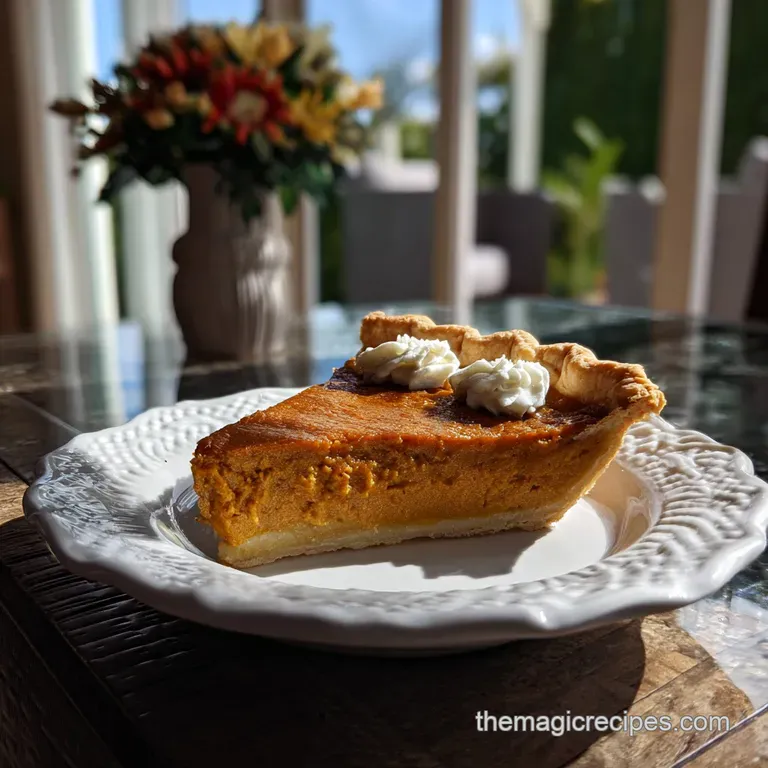
1. The over High heat Roasting Advantage
Preheat your oven to 400°F. Prick the 450g of sweet potatoes with a fork and place them on a baking sheet. Roast for 45-50 minutes until the skins are blistered and juice is oozing out.
Note: This concentrated syrup is pure flavor; don't wipe it away.
2. The Crust Construction
While potatoes roast, whisk 185g flour, 1 tsp sugar, and 1 tsp salt. Grate 115g frozen butter into the mix. Use your fingers to toss until coated, then add 4 tbsp ice water one spoon at a time until the dough just barely holds together when squeezed.
Wrap in plastic and chill for at least 30 minutes.
3. The Velvet Filling Blend
Peel the warm potatoes and mash them thoroughly. For a truly professional finish, press the mash through a fine mesh sieve. In a large bowl, whisk the mashed potatoes with 55g melted butter and 150g sugar until the mixture looks glossy and smooth.
4. The Spice Infusion
Stir in 120ml evaporated milk and 1 tsp vanilla. Add 1 tsp cinnamon, 0.5 tsp nutmeg, and 0.25 tsp ginger. Note: Using freshly grated nutmeg provides a much more vibrant aroma than the pre ground stuff.
5. Incorporating the Bind
Add the 2 large eggs one at a time, whisking gently. You want to combine them without whipping in too much air, which could cause the pie to puff up and then crack. The mixture should smell like a warm, spiced hug at this stage.
6. Rolling and Chilling
On a floured surface, roll the chilled dough into a 12 inch circle. Ease it into your 9 inch pie plate without stretching it. Trim the edges and crimp as desired. Place the crust in the freezer for 10 minutes until it feels firm to the touch.
7. The Precision Bake
Pour the filling into the chilled crust. Lower the oven temperature to 350°F. Bake for 50-55 minutes until the edges are set but the center still has a slight, rhythmic jiggle. The aroma of toasted cinnamon should be filling your entire home.
8. The Essential Rest
Remove the pie from the oven and place it on a wire rack. Let it cool completely for at least 2 hours. Note: The residual heat continues to set the custard; cutting it too early will result in a runny filling.
Solving Common Problems for a Flawless Finish
Why Your Pie Has a Soggy Bottom
A pale, limp crust is usually the result of the filling soaking into the raw dough before it has a chance to crisp up. This often happens if the oven temperature is too low or if the dough wasn't cold enough when it went in. Using a glass pie dish helps you monitor the color of the base.
| Problem | Root Cause | Solution |
|---|---|---|
| Soggy Crust | Moisture migration from filling | Chill the crust in the freezer for 10 mins before filling |
| Cracked Surface | Overbaking or too much air | Pull the pie when the center still jiggles slightly |
| Stringy Filling | Fibrous potato strands | Pass the potato mash through a fine mesh sieve |
Another factor is the potato prep. If you boil the potatoes, they retain a lot of water, which then leaks into the crust during the bake. Roasting avoids this entirely. If you’re really worried, you can "blind bake" the crust for 10 minutes with pie weights before adding the filling, though a well chilled crust usually does fine without it.
Why Your Filling is Grainy
Texture is everything in a classic sweet potato pie. If the filling feels grainy or gritty, it’s usually because the sugar wasn't fully incorporated or the potatoes weren't mashed while still warm. Warm potatoes absorb the butter and sugar much more effectively, creating a cohesive emulsion.
Common Mistakes Checklist
- ✓ Grate the butter while it is rock hard frozen to ensure a flaky crust.
- ✓ Don't skip the sieve; it is the only way to get that bakery style silkiness.
- ✓ Use room temperature eggs so they blend seamlessly into the potato base.
- ✓ Always let the pie cool completely; the texture is much better the next day.
- ✓ Avoid over mixing once the eggs are in to prevent unsightly surface cracks.
Adapting Your Recipe for Different Needs
Scaling this recipe down is quite simple. If you want to make a small 6 inch pie for a quiet night in, simply halve all the ingredients. For the egg, beat one whole egg in a small cup and use exactly half of the liquid. The bake time will drop to about 35-40 minutes, so keep a close eye on that jiggle!
If you are scaling up for a big party, don't just double the spices. Spices can become overwhelming when multiplied linearly. I recommend using 1.5x the spices for a double batch and tasting the batter (before the eggs are added) to see if you want more.
This prevents the ginger or nutmeg from masking the natural sweetness of the potatoes.
| Feature | Fresh Potatoes | Canned Puree |
|---|---|---|
| Flavor Depth | High (caramelized) | Moderate (earthy) |
| Texture | Substantial/Velvety | Softer/Thinner |
| Sugar Control | Natural sugars shine | May need less added sugar |
When doubling, I also suggest reducing the total liquid by about 10%. Large batches of custard can sometimes struggle to set in the center if there is too much moisture. Working in batches for the crust is also a good idea; it’s hard to keep a giant mound of dough cold enough to stay flaky.
If you enjoy the caramelized notes of this pie, you might also love my Fried Apples recipe, which uses a similar over high heat technique to bring out the natural sugars in fruit. It makes a fantastic side dish for a holiday brunch.
Myths About the Perfect Potato Pie
One of the biggest misconceptions is that you need to use "yams." In North American grocery stores, what are labeled as yams are almost always just a variety of sweet potato with darker skin. True yams are starchy, white fleshed tubers from Africa and Asia and won't give you the same sweet, creamy result.
Stick to the orange fleshed sweet potatoes for that classic look and taste.
Another myth is that adding more eggs makes the pie richer. While eggs provide structure, adding too many can actually make the pie taste "eggy" or give it a rubbery, sponge like texture. The richness should come from the butter and the evaporated milk, not from an excess of protein.
Two large eggs are the perfect amount for a 9 inch pie to ensure it sets while remaining delicate.
Finally,, some believe you must use brown sugar for an authentic southern feel. While brown sugar adds a lovely molasses note, it also contains more moisture, which can make the filling softer.
I prefer granulated sugar for this specific recipe because it allows the roasted flavor of the potatoes to be the star, and it keeps the color vibrant and bright.
Storage and Zero Waste Guidelines
Storage: This pie is a champion of longevity. Once cooled, wrap it tightly in plastic wrap and store it in the fridge for up to 4 days. In fact, many people (including me!) think it tastes even better on day two once the spices have had time to fully bloom.
For longer storage, you can freeze the baked pie for up to 2 months. Thaw it overnight in the fridge before serving.
Zero Waste: Don't throw away those roasted potato skins! They are packed with nutrients and flavor. I like to toss them with a little olive oil, salt, and smoked paprika, then air fry them until they are crispy. They make a fantastic salty snack that balances the sweetness of the pie.
If you have leftover evaporated milk, use it in your morning coffee or stir it into a batch of oatmeal for extra creaminess.
Elegant Presentation Ideas for Your Dessert Table
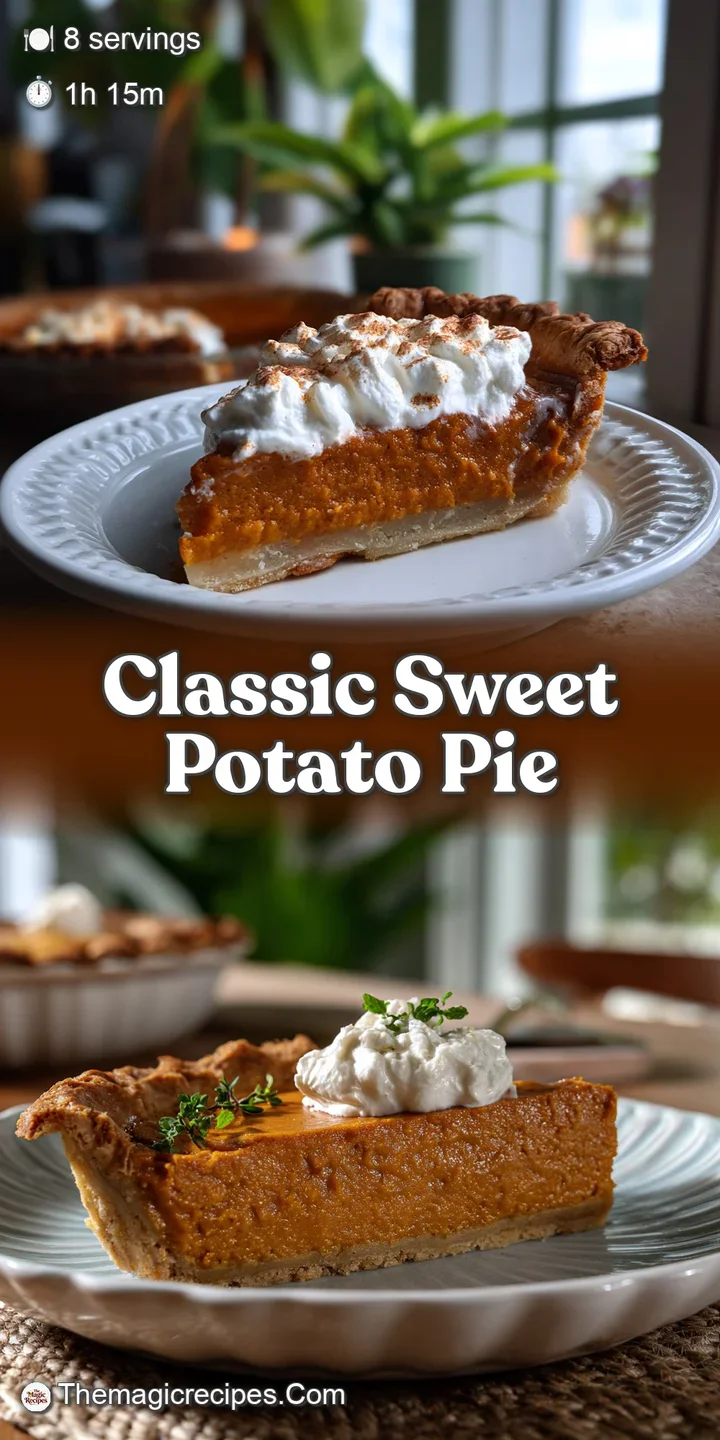
Serving a classic sweet potato pie doesn't have to be complicated. A simple dollop of whipped cream is the traditional choice, but I like to stabilize my cream with a little mascarpone for a thicker, more indulgent finish.
If you want to get fancy, a drizzle of maple syrup or a sprinkle of toasted pecans adds a wonderful textural contrast to the silky filling.
Temperature is also key. While some like it warm, I find that a slightly chilled or room temperature pie has the best flavor. Cold temperatures can mute the spices, so if it's been in the fridge, let it sit on the counter for 30 minutes before slicing.
Use a sharp, thin knife dipped in hot water to get those clean, professional looking slices.
For a final touch, a light dusting of freshly grated nutmeg right before serving revives that amazing aroma we talked about at the start. It's an indulgent treat that looks just as good as it tastes. Whether it's a holiday or just a Tuesday that needs a little sweetness, this pie never fails to impress. For another classic festive option, you might consider my Charoset recipe, which offers a completely different but equally traditional fruit and nut profile.
Recipe FAQs
What are the ingredients in a sweet potato pie?
The core ingredients include: Fresh sweet potatoes, granulated sugar, evaporated milk, eggs, butter, flour for the crust, and warm spices like cinnamon and nutmeg. We use freshly roasted sweet potatoes for the most concentrated flavor and a velvety texture, avoiding canned versions.
What does Patti LaBelle put in her sweet potato pie?
While recipes vary, Patti LaBelle's famous pie typically includes: Sweet potatoes, evaporated milk, sugar, butter, cinnamon, nutmeg, and vanilla extract. Some versions also incorporate lemon zest for brightness and often use a homemade or store-bought pie crust.
What are some common mistakes when making sweet potato pie?
Common mistakes include: Using watery potatoes (boiling instead of roasting), overbaking which leads to cracking, not letting the pie cool completely before slicing causing a runny center, and not sieving the potato mash for a silky smooth texture.
Aiming for roasting the potatoes instead of boiling locks in flavor and moisture.
What state is known for sweet potato pie?
The Southern United States, particularly states like North Carolina and Louisiana, are strongly associated with sweet potato pie. These regions have a long tradition of using sweet potatoes in various dishes, and the pie has become a beloved dessert, especially during holidays.
Can I use canned sweet potato puree instead of fresh?
Yes, but it's not ideal for the best flavor and texture. Canned puree can be more watery and lack the depth of flavor that comes from roasting fresh sweet potatoes, which concentrates their natural sugars and results in a silkier filling.
Why does my sweet potato pie crack on top?
Cracking is usually due to overbaking or incorporating too much air into the filling. Try pulling the pie from the oven when the edges are set but the center still has a slight, rhythmic jiggle; residual heat will finish the cooking.
Using room temperature eggs also helps them emulsify more smoothly, reducing the chance of cracking.
How do I get a flaky crust for my sweet potato pie?
Keep your butter as cold as possible and incorporate it into the flour using a box grater or by cutting it in with a pastry blender. Cold butter creates steam pockets during baking, which results in distinct, shatteringly flaky layers. If you enjoyed mastering this technique, see how the same principle of keeping fats cold for texture applies in our Country Gravy Recipe: Velvety White Sauce.
Classic Sweet Potato Pie
Ingredients:
Instructions:
Nutrition Facts:
| Calories | 402 kcal |
|---|---|
| Protein | 6.2 g |
| Fat | 20.1 g |
| Carbs | 50.4 g |
| Fiber | 1.9 g |
| Sugar | 23.2 g |
| Sodium | 312 mg |
