Easy Creamy Lemon Shrimp Pasta: Velvety & Zesty
- Time: Active 10 minutes, Passive 10 minutes, Total 20 minutes
- Flavor/Texture Hook: Zesty, velvety sauce with snap crisp shrimp
- Perfect for: Busy weeknights or a quick date night meal
- Quick and Easy Creamy Lemon Shrimp Pasta
- Science Behind the Silky Sauce Emulsion
- Performance Metrics and Cooking Timelines
- Component Analysis and Key Ingredient Roles
- Fresh Elements for Your Pantry List
- Essential Tools for Efficient Cooking
- Detailed Stovetop Steps and Visual Cues
- Troubleshooting Texture and Flavor Flaws
- Creative Adaptations and Scaling Advice
- Fridge Storage and Waste Solutions
- Finishing Touches for Better Visuals
- Recipe FAQs
- 📝 Recipe Card
Quick and Easy Creamy Lemon Shrimp Pasta
The kitchen currently smells like a dream because I just finished a pan of this. You know that specific sound when butter hits a hot skillet and starts to sizzle and foam? That was my starting gun ten minutes ago.
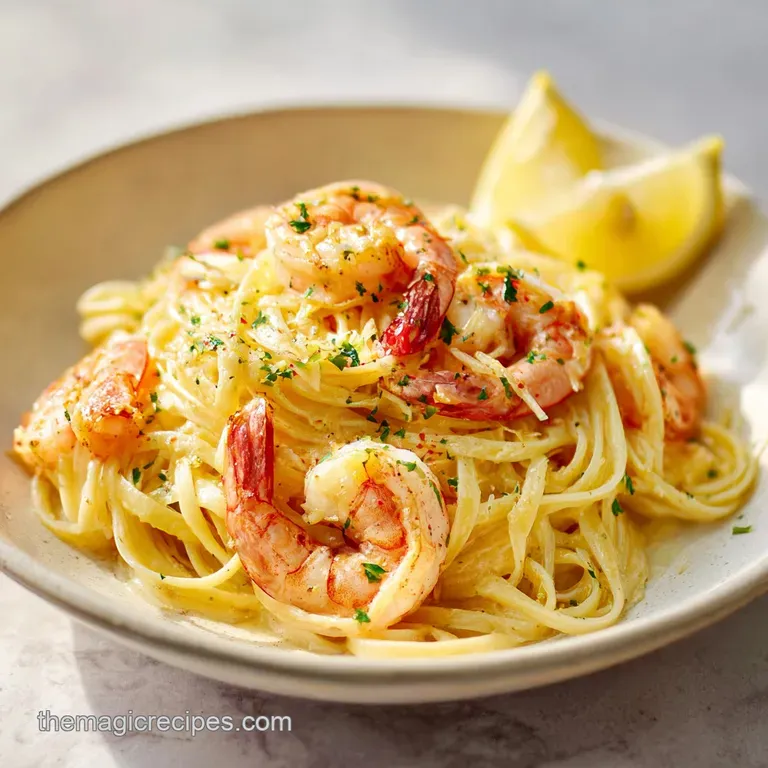
Now, there is a mountain of linguine glistening in a bright, citrusy sauce, topped with pink, curled shrimp that look absolutely vibrant.
I used to overthink pasta. I’d spend way too long simmering sauces or worrying that the cream would break. But honestly, we’ve all been there, staring at a split sauce or rubbery seafood. This recipe is the result of those messy experiments.
It is the kind of dish that makes you feel like a pro even when you are just wearing your favorite old hoodie and cooking between work calls.
Trust me on this, you don't need a massive list of tools or hours of prep to get a restaurant quality result. This Easy Creamy Lemon Shrimp Pasta is about working smart, not hard. We are focusing on high impact ingredients like fresh lemon and garlic to do the heavy lifting.
Right then, let’s get into why this actually works so you can get cooking.
Science Behind the Silky Sauce Emulsion
Understanding the "how" helps us avoid the common pitfall of a greasy or curdled sauce. It is not just about tossing things in a pan; it is about managing temperature and fat. This reminds me of the logic behind my Shrimp Risotto Recipe, where texture is everything.
- Stabilized Emulsification: The cream cheese acts as a stabilizer, surrounding fat droplets to prevent the acidic lemon juice from curdling the heavy cream.
- Starch Binding: Linguine releases surface starch into the boiling water, which acts as a bridge between the watery lemon juice and the fatty cream.
- Protein Denaturation: Searing shrimp quickly at high heat ensures the exterior browns (Maillard reaction) while the interior stays tender and moist.
- Alcohol Volatilization: Deglazing with white wine dissolves flavor compounds that are soluble only in alcohol, adding a layer of complexity.
| Method | Time | Texture | Best For |
|---|---|---|---|
| Stovetop | 20 minutes | Silky sauce, snappy shrimp | Speed and control |
| Oven Finish | 25 minutes | Toasted top, softer shrimp | Batch cooking/Casseroles |
Cooking this on the stove is my go to because you have total control over the shrimp's doneness. If you leave them in the oven too long, they turn into little rubber erasers. Nobody wants that.
The stovetop method allows the sauce to emulsify perfectly as you toss the pasta, creating that velvety coating we’re after.
Performance Metrics and Cooking Timelines
To make sure this works every single time, I follow a few specific checkpoints. We are aiming for efficiency, so keep your timer handy. It is a lot like the timing required for a Spring Meals recipe where fresh greens need just a flash of heat.
| Checkpoint | Target Metric | Purpose |
|---|---|---|
| Shrimp Temp | 50°C (122°F) | Pull from heat to avoid overcooking |
| Pasta Texture | Al Dente (minus 1 min) | Finish cooking inside the sauce |
| Sauce Reduction | Coats back of spoon | Ensures it clings to the linguine |
Chef's Tip: Freeze your butter for 10 minutes before you start. Grating cold butter into the sauce at the very end adds a glossy finish that won't break as easily as room temperature fat.
Component Analysis and Key Ingredient Roles
Every ingredient in this Easy Creamy Lemon Shrimp Pasta has a specific job. We aren't just adding things for the sake of it. When you understand the role of the cream cheese versus the parmesan, you can make better decisions if you need to swap something out later.
| Ingredient | Science Role | Pro Secret |
|---|---|---|
| Cream Cheese | Emulsifier | Use full fat for the most stable, silky texture |
| Lemon Juice | Brightener | Adds acid to cut through the heavy cream's fat |
| Heavy Cream | Fat Base | Provides the velvety mouthfeel and carries flavor |
| Pasta Water | Thickener | The starch helps the sauce "grip" the linguine |
Adding the lemon zest at the very end is another little trick I learned the hard way. If you cook zest for too long, it can turn bitter. By tossing it in at the finish, you keep those bright, floral citrus notes front and center. It is a small change that makes a massive difference in the final flavor profile.
Fresh Elements for Your Pantry List
Here is exactly what you need to grab. Stick to the quantities listed to keep the balance of fat and acid just right.
- 12 oz dry linguine pasta: The flat surface area is ideal for holding onto the cream sauce.
- 1 lb large shrimp: Make sure they are peeled and deveined to save you a headache. Why this? Large shrimp stay juicier than small ones during the over high heat sear.
- 1 tbsp unsalted butter: For sautéing the aromatics.
- 4 cloves garlic: Minced finely. Don't use the pre jarred stuff; it lacks the zing.
- 1 small shallot: Adds a subtle sweetness that onions can't match.
- 0.25 cup dry white wine: Pinot Grigio or Sauvignon Blanc work well. Why this? The acidity balances the richness of the cream cheese.
- 1 cup heavy cream: The heart of our sauce.
- 2 oz cream cheese: Softened at room temperature.
- 1 large lemon: We will use both the juice and the zest.
- 0.5 cup freshly grated Parmesan cheese: Avoid the green can; you need the real melt.
- 0.25 cup fresh basil: Sliced into thin ribbons (chiffonade).
- 0.5 tsp sea salt: To enhance all the other flavors.
- 0.25 tsp cracked black pepper: For a little bit of back of-the throat heat.
- 0.5 tsp paprika: Gives the shrimp a beautiful golden red tint.
| Original Ingredient | Substitute | Why It Works |
|---|---|---|
| Dry White Wine | Chicken Broth + 1 tsp Vinegar | Provides acidity and depth without the alcohol |
| Heavy Cream | Full fat Coconut Milk | Similar fat content. Note: Adds a slight tropical nutty flavor |
| Linguine | Fettuccine or Spaghetti | Any long pasta works; wider noodles hold more sauce |
If you decide to use the coconut milk substitute, just be aware that it will change the vibe of the dish. It is still tasty, but it definitely leans more toward a fusion style than a classic Italian inspired cream sauce.
Essential Tools for Efficient Cooking
You don't need a kitchen full of gadgets for this. I'm a big believer in the "less is more" philosophy when it comes to washing up.
- Large Skillet: A wide surface area is key for searing shrimp without crowding them. A 30cm stainless steel or cast iron pan is perfect.
- Pasta Pot: Something large enough to let the linguine dance around so it doesn't stick together.
- Microplane: This is the best tool for getting fine zest without hitting the bitter white pith of the lemon.
Detailed Stovetop Steps and Visual Cues
Let's get to the fun part. Follow these steps, and you will have a stunning meal in about 20 minutes.
- Boil the water. Use a large pot with plenty of salt. Cook 12 oz linguine until it is just shy of al dente. Note: It will finish cooking in the sauce later.
- Prep the shrimp. Pat 1 lb large shrimp dry with paper towels. Season with 0.5 tsp sea salt, 0.25 tsp pepper, and 0.5 tsp paprika.
- Sear the seafood. Heat 1 tbsp butter in your skillet over medium high heat. Cook shrimp for 2 minutes per side until they are opaque and pink with a slight crust. Remove and set aside.
- Sauté aromatics. In the same pan, add 1 small diced shallot and 4 cloves minced garlic. Sauté for 1 minute until you smell the fragrant garlic without letting it brown.
- Deglaze the pan. Pour in 0.25 cup dry white wine. Simmer for 2 minutes until the liquid reduces by half, scraping up the brown bits from the bottom.
- Build the base. Stir in 1 cup heavy cream and 2 oz softened cream cheese. Whisk constantly until the cream cheese melts into a smooth, bubbling liquid.
- Add flavor. Stir in the zest and juice of 1 lemon and 0.5 cup parmesan cheese. Whisk for 1 minute until the sauce thickens enough to coat a spoon.
- The marriage. Toss the cooked linguine and seared shrimp back into the pan. Mix for 1-2 minutes until every strand is shimmering and coated in velvet.
- Finish and serve. Garnish with 0.25 cup fresh basil. Serve immediately while the sauce is at its creamiest.
Chef's Tip: If the sauce looks too thick after adding the pasta, splash in 2-3 tablespoons of the hot pasta water. The starch will loosen the sauce while keeping it creamy.
Troubleshooting Texture and Flavor Flaws
Even the best cooks hit a snag sometimes. If your Easy Creamy Lemon Shrimp Pasta isn't looking quite right, don't panic. Most things are fixable.
| Issue | Solution |
|---|---|
| Why Your Sauce Is Grainy | This usually happens if you add the parmesan cheese when the sauce is boiling too hard. High heat causes the proteins in the cheese to clump together instead of melting smoothly. To fix this, turn the |
| Why Your Shrimp Are Rubbery | Overcooking is the culprit here. Shrimp only need about 4-5 minutes total. If they have curled into a tight "O" shape, they are likely overdone. Aim for a "C" shape. If they are already tough, you can |
| Why the Lemon Flavor Is Muted | Heat can kill the brightness of lemon juice. If your pasta tastes a bit flat, it might just need a tiny hit of fresh juice right before serving. The acid wakes up all the other flavors in the heavy cr |
Creative Adaptations and Scaling Advice
One of the things I love about this recipe is how flexible it is. If you have leftovers in the fridge, you can easily tweak the profile.
If you want more crunch, add toasted breadcrumbs. Sauté a handful of panko in butter until golden and sprinkle them over the top right before serving. It provides a fantastic contrast to the silky pasta.
If you want a vegetable boost, add spinach. Toss two handfuls of baby spinach into the sauce at the same time as the pasta. The heat from the linguine will wilt it in seconds without needing extra cooking time.
Scaling Guidelines:To double (8 servings): Use two skillets. If you crowd 2 lbs of shrimp into one pan, they will release too much juice and won't get that golden sear. Increase spices to 1.5x rather than doubling exactly to keep the balance.
To halve (2 servings): Use the same sized pan to ensure the sauce reduces correctly. You can use one whole egg yolk added to the cream for extra richness if you find the smaller amount of sauce dries out too fast.
Fridge Storage and Waste Solutions
If you end up with leftovers, you can keep them in an airtight container in the fridge for up to 2 days. However, cream based sauces can be finicky when reheated.
Reheating Tips: Don't use the microwave if you can help it; it tends to make the shrimp rubbery and separates the sauce. Instead, put the pasta in a skillet over low heat with a splash of milk or water. Stir gently until it becomes creamy again.
Zero Waste Idea: Don't throw away that lemon peel! If you didn't zest the whole thing, you can use the leftover rinds to clean your wooden cutting board or toss them into a jar of white vinegar to make a natural, citrus scented surface cleaner.
For the shrimp shells, if you bought them whole, boil them with some onion and celery for 20 minutes to create a quick seafood stock for your next risotto.
Finishing Touches for Better Visuals
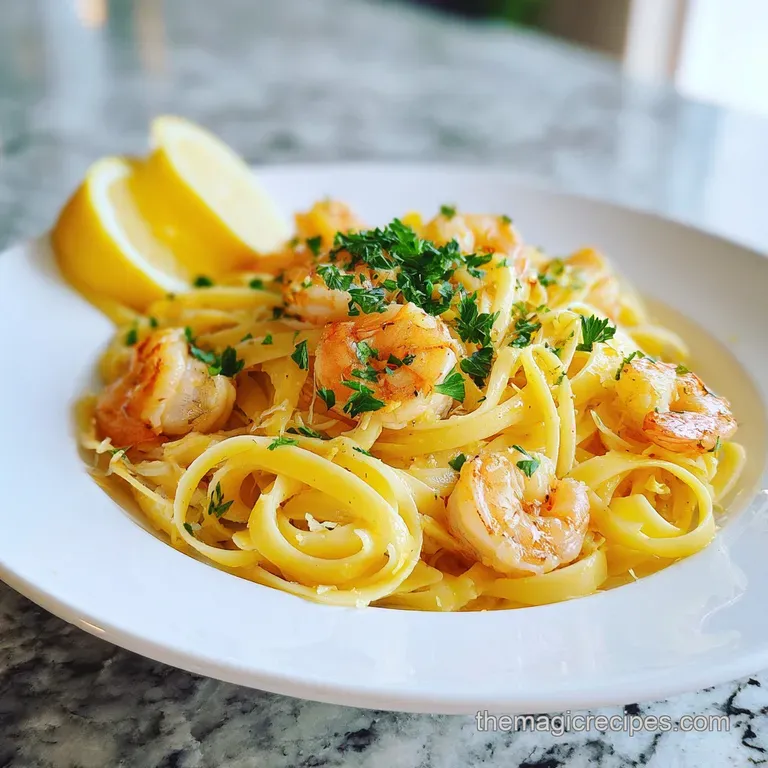
We eat with our eyes first, right? To make this look like it came out of a professional kitchen, focus on the height of the pasta. Use a pair of tongs to twirl the linguine into a "nest" in the center of the bowl.
Place the shrimp on top of the nest rather than buried inside it. This keeps the golden paprika crust visible. Finally, don't just sprinkle the basil; scatter it from a height for an even distribution. A final crack of black pepper and a light dusting of fresh zest will catch the light and make the whole dish pop.
It is a simple, functional meal that looks far more complicated than it actually is. That is the magic of a good weeknight hero. Get your skillet ready and enjoy every bite!
Recipe FAQs
What is the secret to creamy pasta sauce?
Starch and fat emulsification. The key is using reserved, starchy pasta water to bind the fat (cream/butter) with the liquid (lemon juice). If you mastered the stable emulsion here, you'll see that same principle applied when making a rich dressing in our Coleslaw Recipe.
What can I add to pasta to make it creamy?
Cream cheese or mascarpone are excellent additions. These soft cheeses are stable emulsifiers that prevent acidic ingredients, like lemon juice, from curdling the heavy cream base, ensuring a velvety texture.
What's the secret to flavorful shrimp pasta?
Searing the shrimp quickly and using aromatics aggressively. Sear shrimp over high heat to develop surface flavor (Maillard reaction), then deglaze the pan with wine or stock to capture those browned bits.
What do I need to make creamy shrimp pasta?
You require long pasta, quality seafood, heavy cream, cream cheese, and fresh lemon. The cream cheese acts as the binder, while the lemon provides necessary acidity to cut through the richness of the dairy base.
How do I prevent my lemon cream sauce from splitting or curdling?
Remove the pan from the heat before adding acidic ingredients. Stir in lemon juice and zest off-heat, incorporating them slowly into the warmed cream mixture, and let the residual heat gently incorporate the acid.
What pasta shape is best for holding a velvety, lighter lemon sauce?
Linguine or fettuccine are ideal choices. Their flat, wide surfaces allow the thin, velvety sauce to cling evenly without pooling at the bottom of the bowl, unlike thinner shapes like angel hair.
Can I substitute the heavy cream with milk to make it lighter?
No, avoid plain milk for the main liquid component. Milk lacks the necessary fat content to form a stable emulsion with the acid, resulting in a thin, watery sauce that will likely split.
Creamy Lemon Shrimp Pasta
Ingredients:
Instructions:
Nutrition Facts:
| Calories | 766 calories |
|---|---|
| Protein | 41 g |
| Fat | 35 g |
| Carbs | 69 g |
| Fiber | 3 g |
| Sugar | 3 g |
| Sodium | 678 mg |
