Beer Batter Haddock: Proper Pub Grub Fish and Chips Recipe
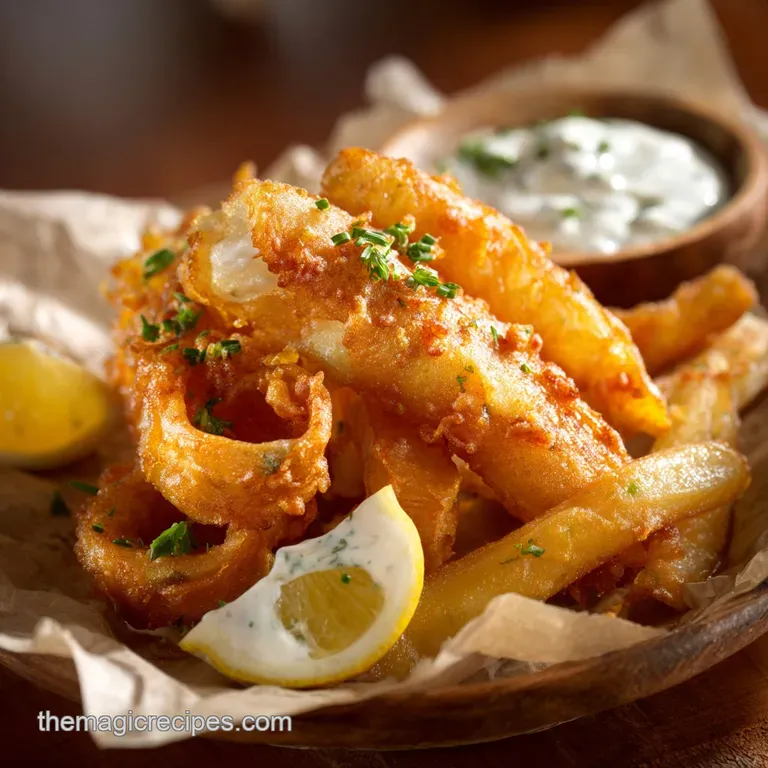
- Proper Pub Grub: Achieving the Perfect Crispy Crust
- The Science Behind the Shatteringly Crisp Beer Batter
- Selecting the Best Ingredients for Your Classic Beer Batter
- Step-by-Step Guide to Mixing and Frying the Batter
- Troubleshooting Your Beer Batter: Chef's Essential Frying Tips
- Storage and Reheating Guide for Fried Haddock and Chips
- Perfect Pairings: Traditional Sides for Beer-Battered Haddock
- Recipe FAQs
- 📝 Recipe Card
Proper Pub Grub: Achieving the Perfect Crispy Crust
That smell. You know the one the sharp scent of vinegar hitting salty steam, the deep, yeasty aroma of frying beer batter. It instantly transports you to a windy seaside town or a perfectly cozy British pub, ready for the best takeaway meal of your life.
That golden, lacy edge and the audible shatter of the crust are precisely what we are chasing here.
Look, making proper deep fried pub food sounds intimidating, but this specific beer batter recipe is actually stupidly easy and lightning fast to whip up. It uses cheap pantry staples and whatever light beer is hiding in the back of your fridge, turning simple white fish into a masterpiece.
Seriously, mastering this batter means you never have to tolerate soggy takeout again.
I spent years fiddling with flour ratios and temperatures, ending up with greasy sadness more times than I care to admit, honestly. This final formula is the winner, trust me. Let’s forget the fancy chef talk and get straight into the actual mechanics that create maximum, satisfying crispness.
The Science Behind the Shatteringly Crisp Beer Batter
What Defines Authentic Chippy Batter?
It’s all about lift and extreme texture contrast. The goal is creating an immediate, violent reaction when the batter hits the hot oil. We want the result to be light and porous , almost ethereal, not dense and heavy like a fried pancake wrapper.
The Role of Carbonation: Why Ice-Cold Beer is Essential
This is the real secret ingredient, my friend, so pay attention. The ice-cold temperature serves two main purposes: it drastically slows down gluten development, keeping the batter tender, and it traps the maximum amount of carbon dioxide.
Crucially, the fizz trapped in that cold liquid expands instantly and violently when exposed to 375°F oil, creating millions of tiny air pockets. That rapid, intense expansion leads directly to that coveted shatteringly crisp, lacy crust.
Balancing Act: The Optimal Flour-to-Starch Ratio
Using only all-purpose flour often results in a tougher, denser shell because the gluten develops quickly. That is why we bring in corn starch. Corn starch, which is naturally gluten-free, works brilliantly to dilute the gluten network and crisps up far harder than flour does, guaranteeing maximum, enduring crunch.
Selecting the Best Ingredients for Your Classic Beer Batter
Optimal Beer Choices: Lagers vs. Pale Ales (and what to avoid)
You need to go light and crisp here. A cheap, cold pale lager or a session ale works perfectly because they have high carbonation and a relatively neutral flavor profile that won’t interfere with the fish.
Avoid anything dark or heavy , like stouts or high hopped IPAs, as those sugars can burn quickly in the fryer, leaving a bitter or acrid taste.
Essential Dry Ingredients: Baking Powder vs. Self Rising Flour
We use a mix of plain (all-purpose) flour plus a dedicated teaspoon of baking powder. The baking powder acts as a reliable secondary leavener alongside the beer’s carbonation.
Honestly, self rising flour often has too much salt and not enough oomph for this specific application, so sticking to plain flour plus added baking powder gives you maximum control over the rise.
Substitutions for a Non-Alcoholic Crispy Coating
Need to skip the alcohol but still want the ultimate crunch? No problem; the physics are still on your side. The essential part is the extreme cold and the bubbles, not the alcohol content itself.
You should substitute the beer 1:1 with ice-cold sparkling water (soda water) or, for a slightly sweeter flavour, cold ginger ale.
| Ingredient | Substitute With | Notes |
|---|---|---|
| Cold Lager/Ale | Ice-Cold Sparkling Water | Provides carbonation without alcohol. |
| Corn Starch | Potato Starch or Rice Flour | Excellent alternatives for enhanced crispness. |
step-by-step Guide to Mixing and Frying the Batter
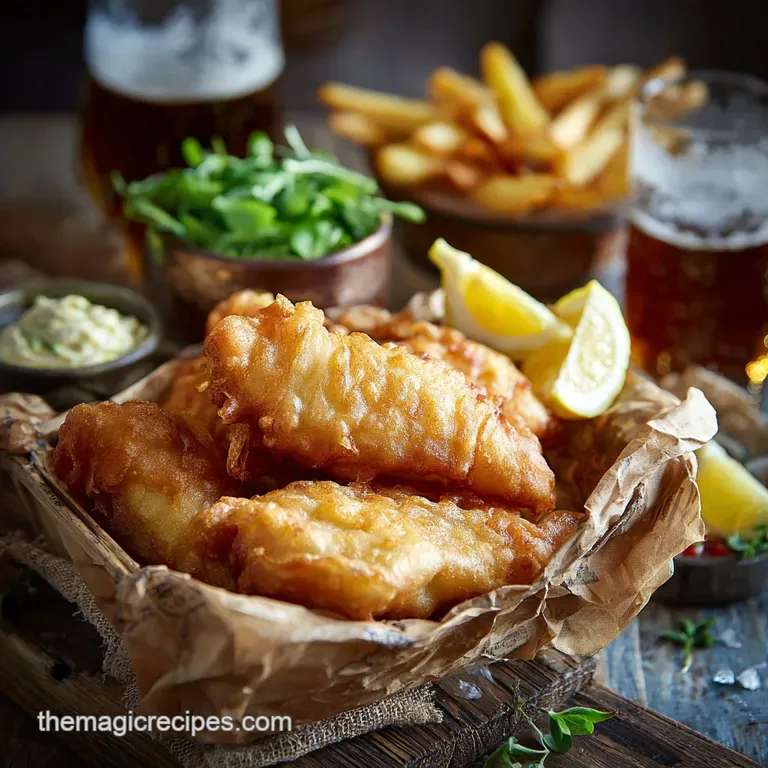
The Quick Mix Method: Avoiding Gluten Activation
Measure the dry ingredients flour, corn starch, baking powder, salt, pepper and whisk them together thoroughly first. Then, pour in the ice-cold beer all at once and whisk minimally. I mean, maybe 10 seconds total, just until the dry bits are incorporated.
Chef’s Note: Whisking too long activates gluten, which is the singular enemy of light, crispy beer batter. A few small lumps are perfectly fine ; they are far superior to a perfectly smooth, tough batter.
Achieving Frying Consistency: The Dip Test
Your finished batter should be slightly thicker than heavy cream, easily coating the back of a spoon but not feeling gloppy or heavy. If it runs off instantly, try whisking in a tablespoon more flour. If it seems too thick, splash in a little more cold beer.
The consistency needs to cling securely to the fish but still drop excess easily back into the bowl.
Proper Deep Frying: Managing the Oil Temperature Gradient
You must maintain your oil temperature consistently at 375°F (190° C) . If the oil is too cool, the batter won’t set instantly, and it will soak up the fat, resulting in a soggy, tragic, greasy mess.
The initial thermal shock is what creates the perfect crust, so keep that thermometer handy and monitor it constantly.
Finishing the Fish: Drain, Season, and Hold
Once the fish is gloriously golden brown (about 4– 6 minutes), remove it quickly and place it immediately on a wire cooling rack set over a baking sheet. Do not, under any circumstances, place it directly on paper towels.
Paper towels trap steam, which immediately starts dissolving your perfect crust. Season heavily with fine salt the moment it comes out of the oil.
Troubleshooting Your Beer Batter: Chef's Essential Frying Tips
Preventing Soggy Batter: Common Deep Frying Mistakes
Sogginess nearly always boils down to one of two issues: low oil temperature or resting the fish incorrectly after frying. If the oil is below 360°F, the batter takes too long to solidify and absorbs too much oil. The fix? Use a thermometer and always drain the fish on a wire rack.
Handling Large Batches: Maintaining Oil Temperature Consistency
If you are cooking for a party, you absolutely must fry in small batches. When you drop cold fish into the pot, the oil temperature instantly plummets, sometimes by 20 30 degrees. You must give the oil time to recover back to 375°F before frying the next piece.
Trying to crowd the fryer is the fastest way to ruin a batch.
Achieving That Signature Lacy Edge
Want that professional, delicate, airy webbing? When lowering the battered fish into the oil, hold the fillet mostly submerged, but briefly drag the edge of the fish along the very surface of the oil for a split second before fully submerging it.
This small splash of thin batter quickly hardens, creating those amazing, delicate, airy ribbons around the edges.
Storage and Reheating Guide for Fried Haddock and Chips
Best Practices for Keeping Batter Crisp Post Fry
Fried food truly is best eaten instantly, but if you need to hold it for guests, you can keep the pieces crisp. Place the fried fish and chips on a wire rack over a baking sheet in a warm oven, set around 200°F (95°C).
The wire rack is vital here because it prevents steam build-up, keeping the crust dry and relatively warm.
Reheating Fried Fish Without a Microwave
Please, promise me you will never use a microwave for fried food; it turns that beautiful crispness into chewy rubber. To regain that glorious crunch the next day, preheat your oven or toaster oven to 375°F (190° C) .
Place the fish directly on a wire rack over a tray and reheat for 10– 12 minutes. Listen closely for the fat re-crisping; that’s when you know it’s ready.
Perfect Pairings: Traditional Sides for Beer Battered Haddock
Quick Pickled Onions and Tartare Sauce Preparation
You absolutely need some sharp, creamy contrast to cut through the richness of the fried meal. A simple, punchy homemade tartare sauce is essential: mix mayonnaise with finely chopped capers, gherkins, plenty of fresh dill, and a healthy squeeze of lemon juice.
For quick pickled onions, slice them super thinly, then submerge them in warmed malt vinegar mixed with a spoonful of sugar and a pinch of salt. Let them sit for 30 minutes. That sharp acidity is the perfect foil for the fish and chips.
Recipe FAQs
Why did my beer batter turn out soggy instead of shatteringly crispy?
The main culprits are insufficient oil temperature or crowding the fryer. Ensure your oil stays consistently between 350°F and 375°F (175°C 190°C); if it's too cool, the batter absorbs oil instead of setting quickly.
Always fry in small batches to prevent the oil temperature from dropping and allow steam to escape efficiently from the cooking pieces.
What is the best type of beer to use for optimal crispness and flavor?
Use a light, highly carbonated beverage like a pale lager, pilsner, or even soda water. The high carbonation is crucial as the bubbles expand rapidly during frying, creating air pockets for a lighter, lacy texture.
Crucially, ensure the beer is ice-cold, as temperature shock helps inhibit gluten development in the flour.
Can I make the beer batter ahead of time, or should it be prepared immediately before use?
The batter should be used immediately after mixing or within 30 minutes at most. Once the carbonated liquid is mixed with the flour, the carbon dioxide starts escaping, which reduces the final crispness potential.
If you need to prep early, combine the dry ingredients and store the beer separately until just before you are ready to fry.
My batter seems too thick or heavy how do I fix the consistency?
The ideal consistency should resemble thin pancake batter, coating the back of a spoon lightly but dripping off easily. If it’s too thick, slowly whisk in a tiny amount of additional ice-cold beer or water until the desired flow is achieved.
Remember to avoid overmixing, as excessive whisking develops gluten, resulting in a tougher, chewy crust.
Is it possible to make this beer batter recipe gluten-free?
Yes, you can successfully adapt this recipe by substituting the standard flour with a high-quality 1:1 gluten-free baking blend that contains xanthan gum for structure. You must also ensure you use a certified gluten-free lager or an extra carbonated hard cider.
The starches and cold temperature remain the most vital elements for maintaining structure and crispness.
How do I store and properly reheat leftover beer battered fish?
Leftovers should be stored covered in the refrigerator and consumed within two days, though they are best eaten immediately. To re-crisp the batter, place the fish on a wire rack on a baking sheet and heat in a preheated oven at 400°F (200°C) for 10 15 minutes until hot throughout.
Do not reheat in the microwave, as this will make the exterior soggy and rubbery.
Crispy Beer Batter Fish Chips
Ingredients:
Instructions:
Nutrition Facts:
| Calories | 750 kcal |
|---|---|
| Fat | 42 g |
| Fiber | 4 g |
