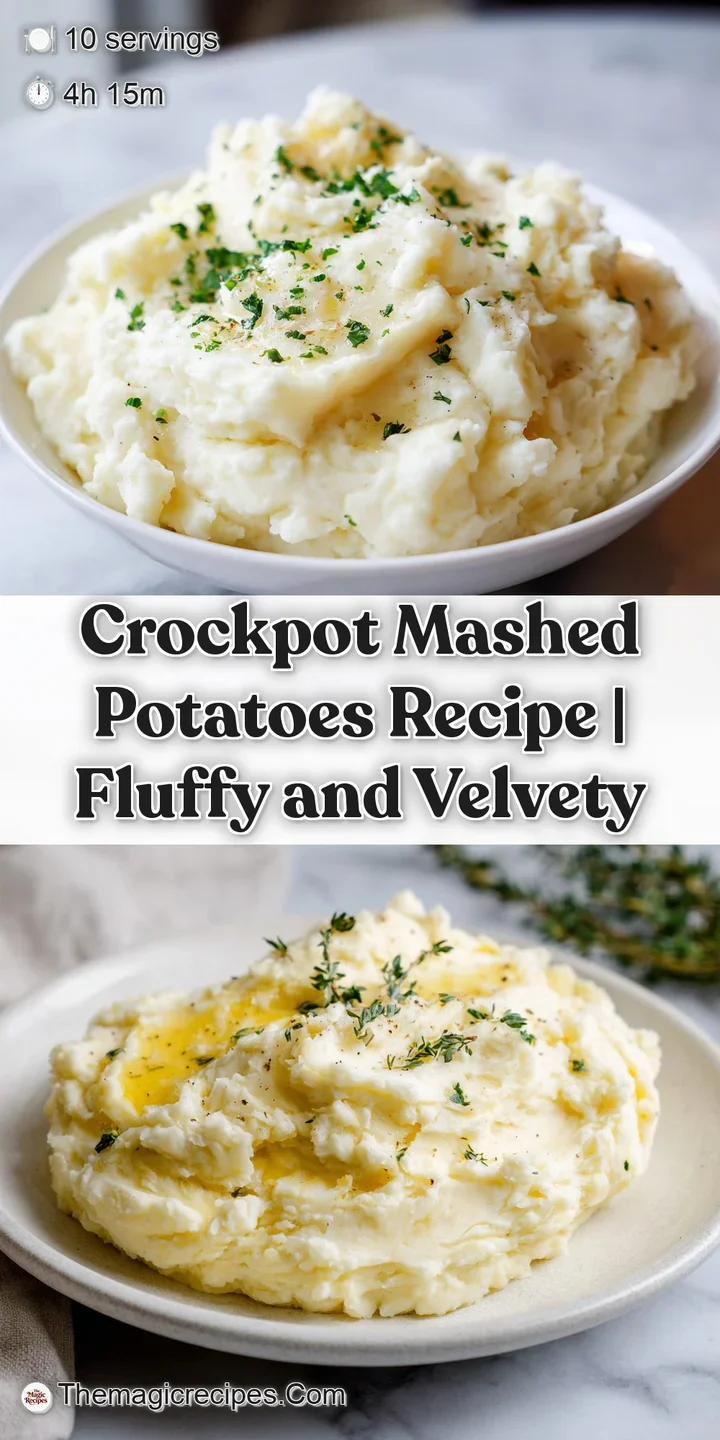
Crockpot Mashed Potatoes: Velvety Garlic Flavor
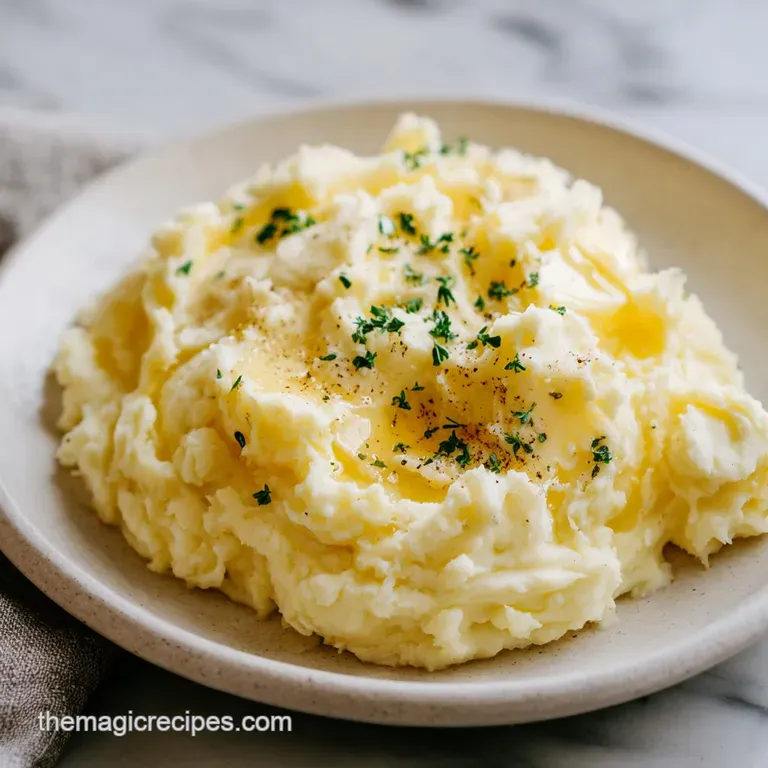
- Time: Active 15 minutes, Passive 4 hours, Total 4 hours 15 mins
- Flavor/Texture Hook: Fluffy, velvety, and infused with garlic
- Perfect for: Thanksgiving dinner, meal prep, or beginner friendly Sunday roasts
- Effortless Crockpot Mashed Potatoes
- Why Slow Cooking Works
- Essential Recipe Statistics
- The Core Ingredients
- Required Kitchen Tools
- Simple Cooking Instructions
- Fixing Common Problems
- Flavorful Recipe Variations
- Debunking Kitchen Myths
- Storage and Reheating
- Best Serving Suggestions
- Recipe FAQs
- 📝 Recipe Card
Effortless Crockpot Mashed Potatoes
The heavy thud of a five pound bag of Yukon Golds hitting my kitchen counter used to signal a looming workout. I would stand over a steaming pot, dodging boiling splashes and frantically checking for fork tenderness while trying to time the rest of the meal. It was chaotic, messy, and frankly, a bit of a chore.
Then I discovered the magic of slow cooking them.
Imagine waking up, peeling your potatoes, and letting the Crockpot do the heavy lifting while you go about your day. By the time the afternoon rolls around, the earthy aroma of garlic and softened potatoes fills the house. You aren't rushing to drain a massive pot of scalding water into the sink.
Instead, you're just ready to mash and serve.
We have all been there, trying to mash cold butter into lukewarm potatoes and ending up with a lumpy mess. This recipe changes that dynamic entirely. It is a reliable, family friendly workhorse that guarantees a smooth, velvety result every single time without the stovetop drama.
Why Slow Cooking Works
- The Starch Swelling Secret: Cooking at a consistent, low temperature allows starch granules to hydrate and swell slowly without bursting prematurely, which prevents that dreaded gluey texture.
- Flavor Infusion: Unlike boiling in water where flavor is drained away, the potatoes sit in a shallow bath of chicken broth and garlic, absorbing savory notes into their very core.
- Enzymatic Breakdown: The extended time at a lower heat allows for a more thorough breakdown of the cell walls, ensuring the potatoes are consistently soft from the edge to the center.
- Moisture Retention: The sealed environment of the slow cooker traps steam, keeping the potatoes moist so you need less added fat to achieve a silky mouthfeel.
| Method | Total Time | Hands on Effort | Texture Profile | Best For |
|---|---|---|---|---|
| Stovetop | 45 mins | High (boiling/draining) | Classic, clean | Quick fix |
| Crockpot | 4 hours 15 mins | Low (set and forget) | Deeply infused, velvety | Large crowds |
| Pressure Cooker | 30 mins | Medium (manual venting) | Light, airy | Last minute |
Choosing the right method often depends on your schedule, but the slow cooker version is the only one that lets you reclaim your afternoon. It is particularly helpful when your stovetop is already crowded with pans of gravy or sautéed greens.
Essential Recipe Statistics
When you are planning a big meal, knowing the exact numbers helps keep the kitchen running like a well oiled machine. This recipe is designed to feed a family of ten, but it scales beautifully if you have a smaller slow cooker.
- 1. Potato Weight
- 2.25 kg (5 lbs) of Yukon Golds provides the perfect starch to liquid ratio for a 6 quart Crockpot.
- 2. Temperature Target
- The potatoes are ready when they reach an internal temperature of approximately 98°C, which usually takes 4 hours on high.
- 3. Liquid Volume
- 355 ml (1.5 cups) of broth is the "goldilocks" amount enough to steam without turning the dish into potato soup.
| Component | Science Role | Pro Secret |
|---|---|---|
| Yukon Gold Potatoes | High starch, medium wax | Don't peel too thinly; the layer just under the skin holds the most flavor. |
| Chicken Broth | Liquid medium | Use low sodium broth to control the final seasoning level more precisely. |
| Garlic Cloves | Aromatic infusion | Smash the cloves rather than mincing to avoid burnt bits during the long cook. |
| Cream Cheese | Emulsifier and fat | Room temperature is non negotiable for a lump free integration. |
The chicken broth does more than just cook the potatoes; it seasons them from the inside out. If you've ever found stovetop potatoes to be bland even after salting the water, this method will be a revelation.
The Core Ingredients
- 2.25 kg (5 lbs) Yukon Gold potatoes: Peeled and cubed into 2 cm chunks. Why this? They have a naturally buttery flavor and the best texture for mashing.
- Substitute: Russet potatoes (results in a fluffier, drier mash).
- 355 ml (1.5 cups) chicken broth: The cooking liquid. Why this? Provides more depth than plain water.
- Substitute: Vegetable broth or water with a bouillon cube.
- 4 cloves garlic: Smashed whole. Why this? Releases oils slowly over the 4 hour cook time.
- Substitute: 1 tsp garlic powder (add at the mashing stage).
- 5 ml (1 tsp) fine sea salt: To enhance the natural flavors. Why this? Fine salt dissolves more evenly than coarse grains.
- Substitute: Kosher salt (use 1.5 tsp).
- 115 g (0.5 cup) unsalted butter: Softened and cubed. Why this? Controls the saltiness while adding rich mouthfeel.
- Substitute: Salted butter (reduce added sea salt by half).
- 225 g (8 oz) full fat cream cheese: Room temperature. Why this? Adds a tangy thickness that milk alone can't achieve.
- Substitute: Mascarpone for a milder, sweeter finish.
- 120 ml (0.5 cup) sour cream: Adds acidity and creaminess. Why this? Cuts through the heavy starch and fat.
- Substitute: Plain Greek yogurt (adds a slight tang and more protein).
- 120 ml (0.5 cup) whole milk: Warmed before adding. Why this? Adjusts the final consistency without cooling the dish.
- Substitute: Heavy cream for an even more luxurious texture.
- 1.25 ml (0.25 tsp) fresh cracked black pepper: For a subtle bite. Why this? Freshly cracked pepper has much more aroma than pre ground.
- Substitute: White pepper (keeps the mash looking pristine and white).
Required Kitchen Tools
You don't need fancy gadgets, but a 6 quart slow cooker is the ideal size for this volume. If you use a smaller 4 quart model, you might need to cut the recipe in half to ensure even cooking. A sharp vegetable peeler and a sturdy chef's knife make the prep work fly by in about 15 minutes.
For the mashing part, I usually reach for a traditional wire masher. It leaves a few tiny "rustic" bits that prove they are homemade. However, if you want that velvety, restaurant style finish, a hand mixer such as a KitchenAid is the way to go.
Just be careful not to over mix, or you will turn those beautiful starches into a gummy paste.
This dish pairs beautifully with a Crockpot Roast recipe for a complete "set it and forget it" Sunday dinner. You can even use the juices from the roast to make a quick gravy while you're mashing the potatoes.
Simple Cooking Instructions
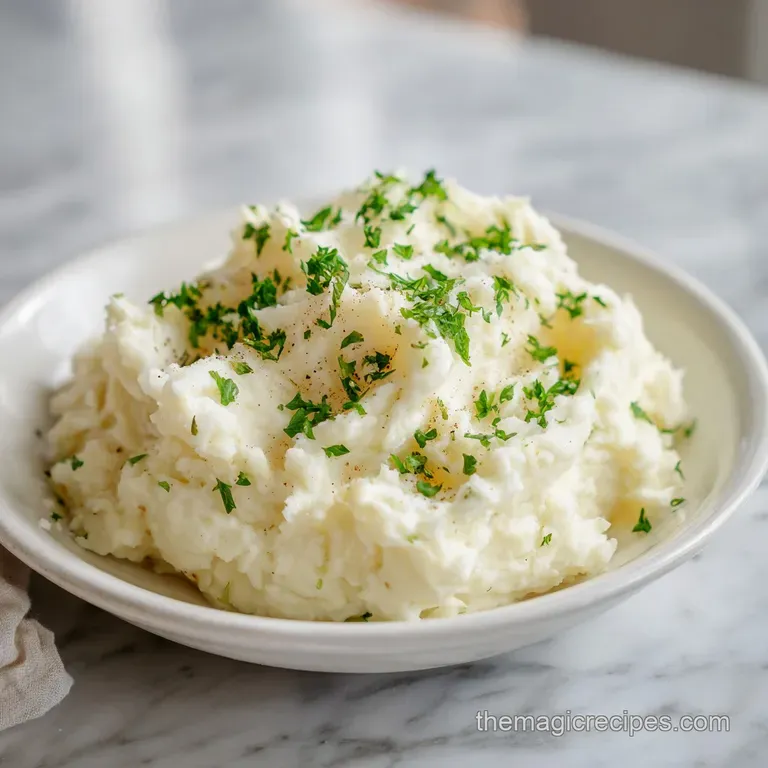
- Prep the potatoes. Peel the 2.25 kg of Yukon Golds and cut them into uniform 2 cm cubes. Note: Uniform size ensures every piece cooks at the same rate.
- Combine in Crockpot. Place the potato cubes, 355 ml of chicken broth, 4 smashed garlic cloves, and 5 ml of sea salt into the slow cooker.
- Start the cook. Cover and cook on High for 4 hours until the potatoes are tender and easily pierced with a fork.
- Drain cautiously. Check the bottom of the pot. If there is more than a thin layer of liquid left, drain all but about 60 ml. Note: Too much leftover broth can make the mash watery.
- Incorporate fats. Add the 115 g of softened butter and 225 g of room temperature cream cheese directly onto the hot potatoes.
- Begin mashing. Use a potato masher to crush the potatoes, garlic, butter, and cream cheese together until no large chunks remain.
- Add creaminess. Stir in the 120 ml of sour cream and the 1.25 ml of black pepper.
- Adjust consistency. Slowly pour in the 120 ml of warmed whole milk while mashing until the mixture is velvety and smooth.
- Taste and season. Give it a final taste. Add a pinch more salt or pepper if the flavors need a boost.
- Keep warm. Switch the slow cooker to the "Warm" setting if you aren't serving immediately.
Chef's Tip: Always warm your milk and melt your butter slightly before adding them to the potatoes. Adding cold dairy to hot starch creates a temperature shock that can make the texture grainy rather than silky.
Fixing Common Problems
Why Your Mash Is Gummy
If your potatoes feel more like glue than fluff, you have likely overworked the starch. This happens most often with hand mixers or food processors. When starch cells are ruptured too violently, they release amylose, which creates that sticky, elastic texture.
Balancing Thin Consistency
Sometimes, potatoes hold more water than expected, or you didn't drain enough broth. If the mixture looks like soup, don't panic. You can stir in a few tablespoons of instant potato flakes as a "binder," or let the pot sit uncovered on the "Warm" setting for 20 minutes to allow some moisture to evaporate.
| Problem | Root Cause | Solution |
|---|---|---|
| Lumpy Mash | Under cooked potatoes | Cook for another 30 mins on High before mashing. |
| Bland Flavor | Lack of salt/acidity | Add a splash of lemon juice or extra salt. |
| Grey Color | Oxidation | Keep potatoes submerged in water if prepping ahead. |
Common Mistakes Checklist
- ✓ Ensure potatoes are cut into uniform cubes so they finish at the same time.
- ✓ Don't skip the cream cheese; it provides the structural "body" that holds the mash together.
- ✓ Avoid the "Low" setting for potatoes if you can the faster High heat helps break down the pectin better.
- ✓ Never use a blender or food processor, as the high speed will turn them into glue.
- ✓ Always use room temperature cream cheese to prevent white flecks in the final dish.
Flavorful Recipe Variations
For those days when you need a heartier meal, this also works alongside a Beef Stew Crockpot recipe. The creamy texture of the potatoes is the perfect base for soaking up a rich, beefy gravy.
If you want to change the flavor profile, here is a quick decision shortcut: If you want a savory depth, add 100 g of shredded sharp cheddar and 4 slices of crumbled bacon at the end.
If you want a lighter version, swap the milk and cream cheese for 240 ml of plain Greek yogurt and extra broth. If you want a herb forward dish, stir in 30 g of fresh chopped chives and 1 tbsp of fresh thyme leaves after mashing.
When scaling the recipe, the rules are simple. If you are cutting it in half (2.5 lbs of potatoes), reduce the cook time by about 20% but keep a close eye on it at the 3 hour mark.
If you are doubling it for a massive party, work in two separate slow cookers rather than overfilling one, as the middle won't cook through properly.
| Serving Size | Potato Weight | Broth Amount | Cook Time (High) |
|---|---|---|---|
| 4-5 people | 1.1 kg | 175 ml | 3 hours 30 mins |
| 10 people | 2.25 kg | 355 ml | 4 hours |
| 20 people | 4.5 kg | 710 ml | 4 hours (2 pots) |
Debunking Kitchen Myths
A common misconception is that you must boil potatoes in salted water to season them. In reality, the slow cooker method is more efficient because the salt isn't diluted in liters of water that get poured down the drain. The salt stays in the pot and is absorbed directly.
Another myth is that Yukon Golds don't need as much fat because they are "naturally buttery." While they do have a richer flavor, they still require fats like cream cheese and butter to create a stable emulsion. Without these, even Yukon Golds can turn out dry or crumbly once they cool down.
Finally,, many believe you can't overcook potatoes in a slow cooker. You absolutely can. If they go for 6 or 7 hours on High, they will begin to turn brown and develop a slightly fermented, sweet smell as the sugars caramelize too much. Stick to the 4 hour window for the cleanest flavor.
Storage and Reheating
These Crockpot Mashed Potatoes keep beautifully in the fridge for up to 4 days. Store them in an airtight glass container to prevent them from picking up other fridge odors. For long term storage, you can freeze them for up to 2 months.
To freeze, scoop individual portions onto a baking sheet, freeze until solid, then transfer to a freezer bag.
Reheating is where most people go wrong. Don't just throw them in the microwave. Instead, place them back in the slow cooker on "Low" with a splash of extra milk, or heat them in a saucepan over low heat. The goal is to gently loosen the fats without causing the butter to separate.
For a zero waste approach, use any leftovers to make potato pancakes (latkes) or as a topping for a shepherd's pie. If you have just a small amount left, stir it into a soup to act as a natural thickener.
Even the potato peels can be tossed with olive oil and salt and air-fried for a crispy snack while the main dish cooks.
Best Serving Suggestions
Presentation is everything, especially if you are serving these for a holiday meal. Transfer the finished mash to a large ceramic bowl and use the back of a spoon to create deep swirls across the surface. This isn't just for looks those valleys are the perfect place to pool melted butter or gravy.
Sprinkle a handful of fresh chives or a dusting of smoked paprika over the top to add a pop of color. The green against the pale gold potatoes looks incredibly appetizing. If you are hosting a buffet, you can actually serve them right out of the slow cooker; just keep it on the "Warm" setting and give them a quick stir every 30 minutes to prevent a skin from forming on top.
These potatoes are robust enough to stand up to heavy meats like brisket or a Southern Slow Cooker recipe featuring ham hocks. They are the ultimate comfort food canvas, ready to be painted with whatever flavors your meal demands. Trust me, once you go the slow cooker route, you will never go back to the boiling pot again.
Recipe FAQs
Can you make mashed potatoes in a slow cooker?
Yes, absolutely. Slow cooking steams the potatoes in broth, resulting in deeply infused flavor and an incredibly creamy texture with minimal hands-on effort.
Do you need to boil potatoes before putting them in a slow cooker?
No, boiling is unnecessary. The slow cooker acts as a steamer; the liquid base cooks the raw, cubed potatoes over several hours until they are fork tender.
What's the secret to good mashed potatoes?
Use room temperature dairy and avoid over mixing the starch. Adding cold ingredients shocks the starch cells, causing them to become gummy. If you enjoyed mastering this gentle cooking method, see how the same principle of careful blending improves texture in our Country Gravy Recipe.
How long does it take for potatoes to cook in a slow cooker?
Expect 3.5 to 4 hours on High. This time allows the starch granules to hydrate fully in the broth without bursting, ensuring uniform tenderness throughout the cubes.
Is it true that slow cooker potatoes absorb less flavor than boiled ones?
False. Boiling leaches flavor out into the water you discard; the slow cooker method steams the potatoes in the seasoned broth, maximizing flavor absorption.
What is the ideal potato variety for this slow cooker method?
Yukon Golds are ideal for velvety texture. They strike a perfect balance between starchiness and moisture, yielding a naturally buttery mash without becoming gluey.
How should I reheat leftovers to maintain the creamy texture?
Reheat gently on the stovetop or in the slow cooker on Warm. Stir in a small splash of warmed milk or cream as you heat to reintroduce moisture lost during refrigeration, preventing a dry or stiff result.
Crockpot Mashed Potatoes
Ingredients:
Instructions:
Nutrition Facts:
| Calories | 367 kcal |
|---|---|
| Protein | 7.2 g |
| Fat | 20.2 g |
| Carbs | 42.1 g |
| Fiber | 4.8 g |
| Sugar | 3.1 g |
| Sodium | 342 mg |
