Easy Homemade Alfredo Sauce Recipe
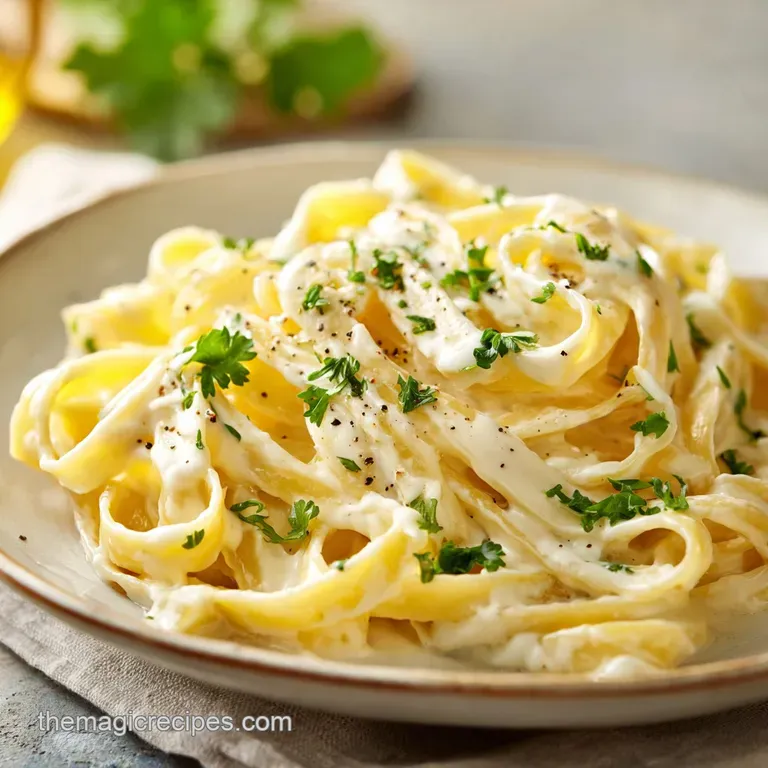
- Time: Active 10 minutes, Passive 5 minutes, Total 15 minutes
- Flavor/Texture Hook: Velvety, rich, and garlicky with a sharp Parmesan finish
- Perfect for: Quick weeknight dinners or an easy date night solution
- The Secret to Silky Quick Alfredo Sauce
- The Science Behind a Perfect Emulsified Sauce
- Crucial Checkpoints for Your 15 Minute Sauce
- Simple Ingredients for a Luxurious Homemade Result
- The Only Kitchen Tools You Actually Need
- Step by Step Guide to Sauce Perfection
- Avoid These Common Homemade Sauce Mistakes
- Creative Ways to Customize Your Creamy Base
- How to Scale Your Sauce Production
- Kitchen Myths About Cream Sauce
- How to Store and Reheat Leftover Sauce
- The Best Ways to Serve Your Masterpiece
- Recipe FAQs
- 📝 Recipe Card
The Secret to Silky Quick Alfredo Sauce
You know that sound when you pull a container of jarred pasta sauce out of the fridge and it hits the pan with a dull, gelatinous thud? That was my life for years. I thought homemade sauce was some high wire act involving double boilers and expensive equipment.
Then, one Tuesday night, I watched a stick of butter sizzle and foam in my skillet, smelled the sharp, punchy aroma of fresh garlic hitting the fat, and realized I'd been doing it wrong the whole time.
The magic happens the moment the heavy cream meets that garlic infused butter. It starts to bubble gently at the edges, thickening into something glossy and rich. When you whisk in the hand grated Parmesan, it doesn't clump into a rubbery mess; it melts away, creating a sauce that is velvety and smooth.
Honestly, once you hear that gentle simmer and see the sauce coat the back of your spoon, you'll never go back to the pre made stuff. It is light years better and takes less time than boiling a pot of water.
The Science Behind a Perfect Emulsified Sauce
The Physics of the Velvet Emulsion: Casein proteins in the Parmesan act as a natural emulsifier, binding the water in the cream to the fat in the butter. This creates a stable, homogenous liquid that won't break into an oily mess as long as you keep the heat below a boil.
| Cooking Method | Active Time | Texture Outcome | Best Used For |
|---|---|---|---|
| Traditional (Butter/Cheese) | 5 mins | Very light, thin | Authentic Roman style |
| Fast & Creamy (Our Recipe) | 10 mins | Thick, velvety, rich | Crowd pleasing family dinners |
| Slow Simmer | 25 mins | Deeply caramelized | Richer, more intense flavor |
Choosing the right approach depends on your schedule, but the cream based method offers the most stability for home cooks. It's much more forgiving if you need to step away from the stove for a second to wrangle the kids or find the colander.
Crucial Checkpoints for Your 15 Minute Sauce
To ensure success every time you make this Alfredo sauce, keep these three precision checkpoints in mind. First, keep your heat at a medium low setting; we want a gentle simmer, never a violent boil. Second, use a whisk rather than a spoon to keep the molecules moving and the emulsion tight.
Third, always grate your own cheese. Pre shredded bags are coated in potato starch or cellulose, which will turn your sauce gritty and thick in all the wrong ways.
Component Analysis
| Ingredient | Science Role | Pro Secret |
|---|---|---|
| Heavy Cream | Liquid base and fat source | Use room temp cream to prevent the butter from seizing up. |
| Parmesan Reggiano | Emulsifier and flavor | Grate it on the finest hole of your box grater for instant melting. |
| Unsalted Butter | Flavor carrier | Let it reach a "nutty" aroma before adding cream for extra depth. |
The interaction between these three is what creates that signature mouthfeel. If you are looking for ways to use this base, it works beautifully in my Chicken Fettuccine Alfredo recipe, where the protein adds a nice savory contrast to the cream.
Simple Ingredients for a Luxurious Homemade Result
- 1/2 cup unsalted butter: Provides the fat base. Why this? Using unsalted lets you control the final seasoning perfectly.
- Substitute: Salted butter (just skip the extra sea salt later).
- 3 cloves fresh garlic, minced: The aromatic backbone. Why this? Fresh garlic has oils that jarred versions simply lack.
- Substitute: 1 teaspoon garlic powder (adds flavor without the texture).
- 1.5 cups heavy cream: For the rich, thick body. Why this? Higher fat content means the sauce is less likely to break.
- Substitute: Whole milk + 1 tbsp flour (will be thinner and less stable).
- 1.5 cups Parmesan Reggiano, freshly grated: The "glue" and salt. Why this? high-quality aged cheese melts into a smoother liquid.
- Substitute: Pecorino Romano (yields a saltier, tangier profile).
- 1 pinch nutmeg, freshly grated: The secret "I can't put my finger on it" spice. Why this? Nutmeg amplifies the dairy notes.
- Substitute: A tiny pinch of mace or just omit.
- 0.25 tsp fine sea salt: To brighten the flavors.
- Substitute: Kosher salt (use a slightly larger pinch).
- 0.25 tsp white pepper: Provides heat without black flecks.
- Substitute: Cracked black pepper (adds a more rustic look).
The Only Kitchen Tools You Actually Need
You don't need a high end French kitchen to pull this off. I usually grab my heavy bottomed stainless steel skillet because it distributes heat evenly, preventing those annoying scorched spots.
A silicone whisk is your best friend here; it gets into the corners of the pan and incorporates the cheese much faster than a wooden spoon ever could.
If you're planning on making a larger meal, like a Ground Beef Alfredo recipe, you might want a larger pot, but for a standard batch of sauce, a 10 inch skillet is just fine. Just make sure whatever you use has enough surface area for the cream to reduce slightly, which concentrates the flavor.
step-by-step Guide to Sauce Perfection
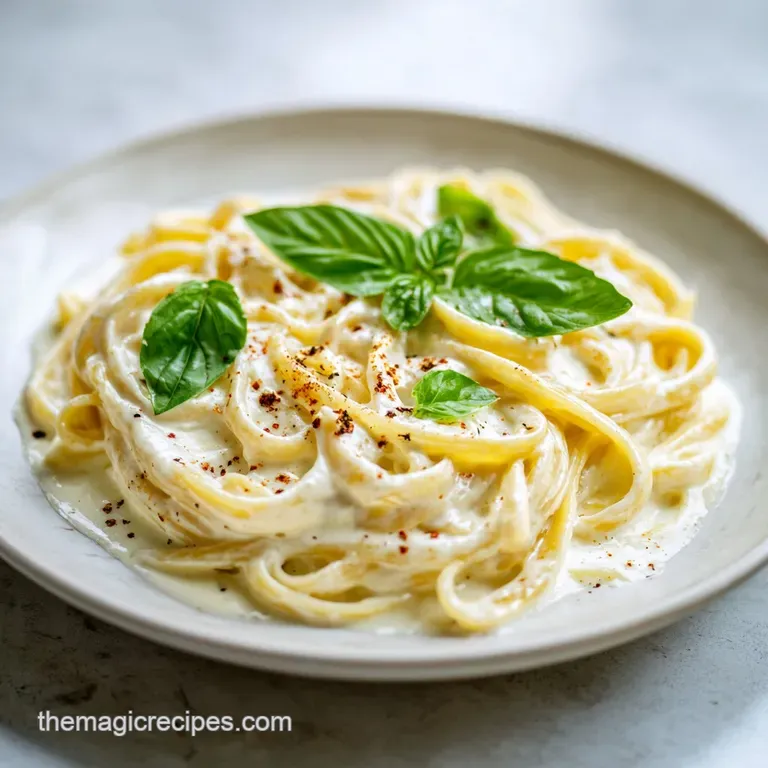
- Melt the butter. Place the 1/2 cup unsalted butter in a large skillet over medium low heat until it starts to foam and sizzle. Note: Don't let it brown; we want a clean, milky flavor.
- Sauté the garlic. Add the 3 cloves of minced garlic to the butter. Cook for 1 minute until the aroma fills the kitchen.
- Pour in the cream. Slowly whisk in the 1.5 cups of heavy cream.
- Reduce the heat. Bring the mixture to a very gentle simmer until tiny bubbles form around the edges.
- Simmer and thicken. Let the cream cook for about 3 to 4 minutes. You'll see it start to reduce slightly and coat the back of a spoon.
- Add the seasonings. Whisk in the 0.25 tsp fine sea salt, 0.25 tsp white pepper, and that essential pinch of nutmeg.
- Incorporate the cheese. Turn the heat to low and add the 1.5 cups of Parmesan Reggiano in three separate batches.
- Whisk until smooth. Continue whisking until the cheese is fully melted and the sauce is velvety.
- Final check. Taste the sauce. If it's too thick, add a tablespoon of pasta water; if too thin, simmer for another minute.
- Serve immediately. Toss with your favorite pasta or use as a dip for crusty bread.
Avoid These Common Homemade Sauce Mistakes
Why Your Alfredo Sauce Is Gritty
This usually happens for two reasons: the heat was too high or you used pre shredded cheese. When cheese is heated too quickly, the proteins tighten up and squeeze out the fat, leaving you with sandy bits.
| Problem | Root Cause | Solution |
|---|---|---|
| Oily Separation | Heat was too high | Remove from heat and whisk in a splash of cold cream. |
| Sauce is too thin | Didn't reduce the cream | Simmer for 2 extra minutes before adding cheese. |
| Grainy texture | Pre shredded cheese | Always use a block of Parmesan and grate it yourself. |
Common Mistakes Checklist
- ✓ Grate the cheese immediately before using to keep the moisture in.
- ✓ Keep the burner on medium low; high heat is the enemy of dairy.
- ✓ Whisk constantly while adding cheese to ensure a smooth bond.
- ✓ Season at the very end, as the saltiness of Parmesan can vary wildly.
- ✓ Use a heavy bottomed pan to prevent the bottom from scorching.
Creative Ways to Customize Your Creamy Base
If you want to move beyond the classic profile, there are so many ways to play with this. For a zesty twist, I love whisking in the zest of one lemon and a teaspoon of cracked black pepper right at the end. It cuts through the richness of the fat perfectly.
If you are feeling bold, a tablespoon of nutritional yeast added with the Parmesan gives it an almost "aged" funk that is quite addictive.
For a smoky version, try adding half a teaspoon of smoked paprika and some chopped sun dried tomatoes. It changes the color to a beautiful pale orange and pairs incredibly well with grilled shrimp. You can also mix in a dollop of pesto for a "Best of Both Worlds" green Alfredo that kids absolutely love.
How to Scale Your Sauce Production
Scaling this recipe is fairly straightforward because the ratios are so simple. If you're cooking for a crowd, you can easily double the recipe, but keep an eye on your skillet size.
- To double (8 servings): Use 1 cup butter, 3 cups cream, and 3 cups cheese. You may need an extra 2-3 minutes of simmering time to reduce the larger volume of liquid.
- To halve (2 servings): Use 1/4 cup butter, 3/4 cup cream, and 3/4 cup cheese. Since there is less liquid, it will thicken very quickly, so watch the pan closely.
- For Large Parties: Use a Dutch oven instead of a skillet. This keeps the heat more consistent and prevents the sauce from cooling down too fast while you're serving.
| Servings | Butter | Heavy Cream | Parmesan | Pan Size |
|---|---|---|---|---|
| 2 People | 1/4 cup | 3/4 cup | 3/4 cup | 8 inch skillet |
| 4 People | 1/2 cup | 1.5 cups | 1.5 cups | 10 inch skillet |
| 8 People | 1 cup | 3 cups | 3 cups | 5 quart pot |
Kitchen Myths About Cream Sauce
One of the biggest myths is that you need flour or a roux to make Alfredo sauce thick. In reality, a true Alfredo relies on the reduction of the cream and the melting of the cheese to provide body. Adding flour often makes the sauce taste "pasty" and mutes the sharp flavor of the Parmesan.
Another common misconception is that you can't reheat Alfredo. While it is finicky, you absolutely can. The trick is to avoid the microwave at all costs, which vibrates the fat molecules so fast they separate from the solids.
A over low heat stovetop approach with a little extra liquid will bring it back to life every time.
How to Store and Reheat Leftover Sauce
Storage: This sauce will keep in an airtight container in the fridge for up to 3 days. I don't recommend freezing it; the emulsion is delicate, and the freezing/thawing process usually causes the fat to separate completely, leaving you with a grainy, oily mess.
Reheating: To get that velvety texture back, place the sauce in a small saucepan over the lowest heat setting possible. Add a splash of milk or water (about 1 tablespoon) and whisk constantly as it warms up. As soon as it's fluid and warm, take it off the heat.
Zero Waste Tip: If you have just a little bit of sauce left not enough for a full meal don't toss it! Use it as a base for a white pizza, drizzle it over steamed broccoli, or stir it into a bowl of mashed potatoes for the most decadent side dish you've ever had.
You can even use the leftover Parmesan rinds in a soup or stock to get every last bit of flavor out of that expensive cheese.
The Best Ways to Serve Your Masterpiece
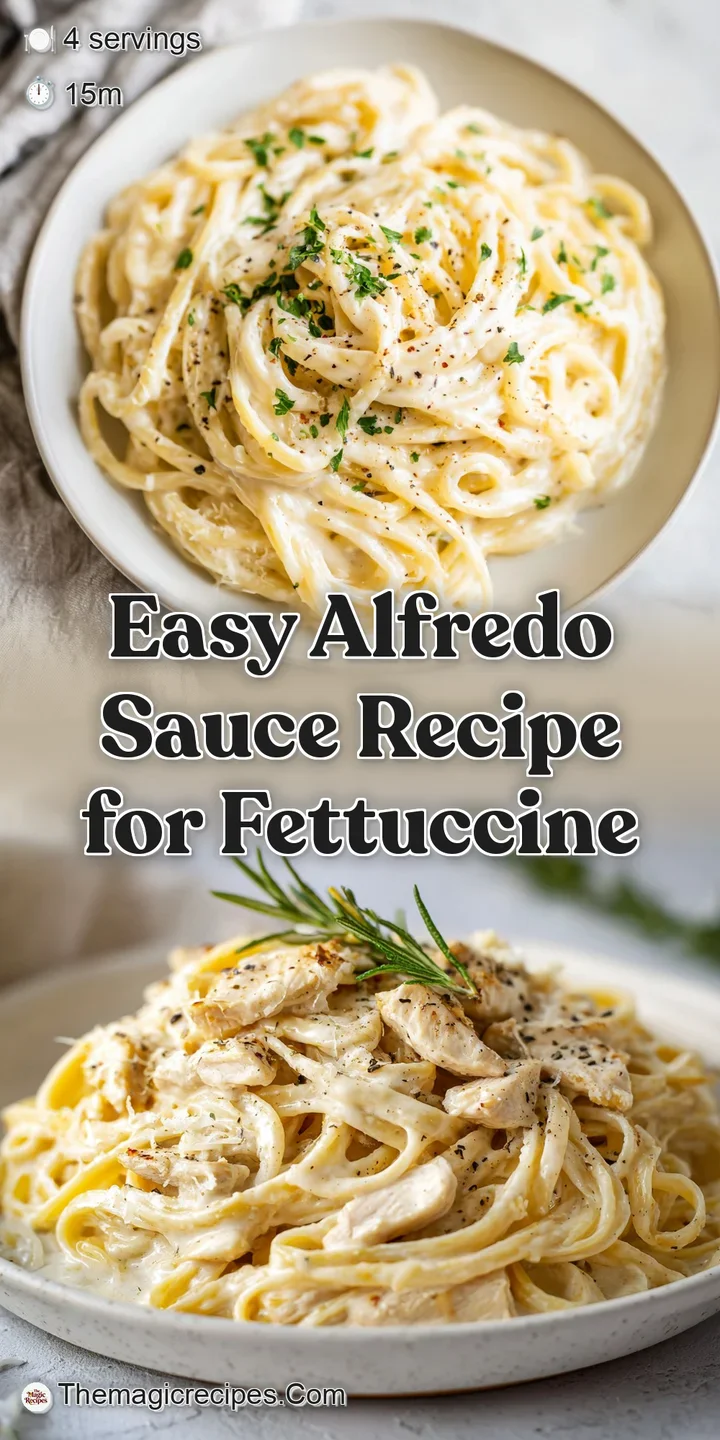
While fettuccine is the classic choice, this sauce is a total chameleon. It's thick enough to cling to rigatoni or penne, where the hollow centers trap all that garlicky goodness. For a low carb option, I've served this over roasted spaghetti squash or even zoodles, and it makes the vegetables feel like a total treat.
If you want a full meal, top your pasta with sliced grilled chicken or sautéed shrimp. The simplicity of the sauce allows the protein to shine. It also makes a killer dipping sauce for breadsticks or a base for a creamy vegetable casserole.
No matter how you serve it, just make sure the plates are warm this sauce is at its best when it's silky and flowing, not when it starts to set on a cold dish.
Recipe FAQs
What is Alfredo sauce made of?
Butter, heavy cream, and Parmesan cheese. The traditional Roman recipe uses only butter and cheese, relying on pasta water for emulsification, but the popular American version adds heavy cream for stability and richness.
What is the secret to a good Alfredo sauce?
Use freshly grated, high-quality Parmesan cheese and keep the heat low. Pre-shredded cheeses contain anti caking agents that prevent smooth melting, leading to a grainy texture.
Is heavy cream or heavy whipping cream better for Alfredo sauce?
Heavy cream is the standard and best choice. While heavy whipping cream has a slightly higher fat content (usually 36% vs. 30%), heavy cream is the established base for reliable reduction and stability in this sauce.
What are common mistakes making Alfredo sauce?
Using high heat or pre-shredded cheese are the biggest errors. High heat causes the dairy to separate, and pre-shredded cheese will inevitably result in a gritty sauce texture.
How do I prevent my homemade Alfredo sauce from becoming oily or separating?
Keep the temperature at a gentle simmer, never a rolling boil, when adding cheese. The gentle heat allows the casein proteins in the Parmesan to emulsify the fat and liquid evenly, creating a stable bond. If you master this emulsification technique here, you'll find similar success when building dressings, like in our Horseradish Sauce for recipe.
Can I skip the butter in Alfredo sauce for a lighter version?
No, skipping the butter significantly compromises the flavor and texture. Butter provides crucial fat that carries flavor and helps create the initial emulsion with the cream. You can reduce the amount used, but omitting it entirely changes the sauce base.
How do I reheat leftover Alfredo sauce without ruining the texture?
Reheat gently on the stovetop over very low heat, adding a splash of liquid. Never use the microwave, as the intense, uneven heating will cause the fat and solids to break apart.
Easy Alfredo Sauce Recipe
Ingredients:
Instructions:
Nutrition Facts:
| Calories | 667 kcal |
|---|---|
| Protein | 15.8 g |
| Fat | 65.5 g |
| Carbs | 4.5 g |
| Fiber | 0 g |
| Sugar | 2.5 g |
| Sodium | 710 mg |
