Easy 30-Minute Charcuterie Board Assembly
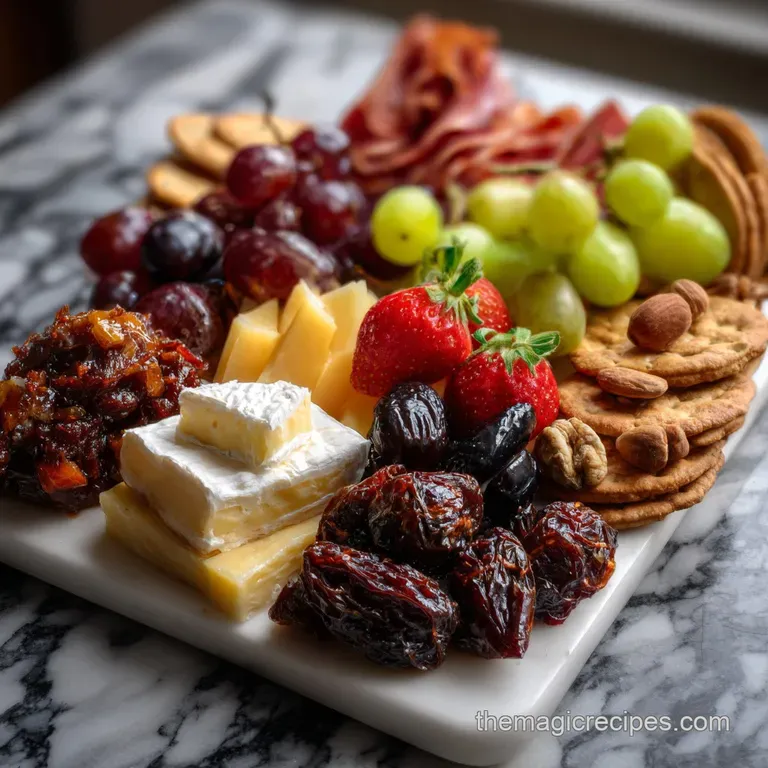
- Effort/Time: Low effort / 30 minutes
- Flavor Hook: Umami-rich cured meats paired with creamy, sharp, and tangy cheese profiles.
- Perfect for: Last-minute hosting, weeknight "snack dinners," or holiday gatherings.
Designing the Ultimate Effortless Charcuterie Board for Busy Families
There is nothing worse than spending $80 on artisan components only to have your charcuterie board look like a cluttered mess where the crackers turn into soggy sponges and the expensive Brie sweats into a sad puddle.
I’ve hosted countless gatherings where I focused too much on "fancy" and not enough on the functional physics of how people actually eat. The result was always wasted food and a board that lost its structural integrity before the first guest even arrived.
I once destroyed a beautiful $15 wedge of Aged Sharp Cheddar by slicing it way too thin, causing it to oxidize and dry out in minutes. I was trying to make it "look" like a magazine photo, but I ignored the science of surface area.
Since then, I’ve realized that a successful charcuterie board isn't about being a gourmet chef; it's about managing moisture and temperature so every bite remains functional and fresh.
The secret to a great charcuterie board is the science of palate fatigue. By strategically placing 60g of Castelvetrano Olives or 80g of honey near the high fat 4 oz Prosciutto di Parma, you create a chemical "reset" for the tongue.
This acidity or sweetness cuts through the lipid coating on the taste buds, ensuring the next bite of 4 oz Manchego is just as impactful as the first. We aren't just making a snack; we are engineering a sensory loop.
Understanding the Flavor Symmetry of a Charcuterie Board
- Lipid Saturation: High fat meats like 4 oz Genoa Salami coat the tongue, requiring tannins or acids to strip the fat away.
- Osmotic Balance: Salty elements like 4 oz Hard Cheese trigger salivation, which enhances the perception of subtle notes in the 150g Red Grapes.
- Textural Friction: Using 50g Multi grain crackers provides a structural "snap" that contrasts with the 4 oz Soft Cheese’s velvety mouthfeel.
- Enzymatic Activity: Raw honey contains enzymes that interact with the proteins in 4 oz Goat Cheese, deepening the flavor profile through mild breakdown.
The 30 Minute Assembly Protocol for Your Charcuterie Board
| Category | Goal | Target Value |
|---|---|---|
| Prep Time | Mise en place to finish | 30 minutes |
| Serving Temp | Ideal for fat release | 68°F (20°C) |
| Yield | Total portions | 9 servings |
| Caloric Density | Per serving | 512 calories |
The Strategic Chemistry of Cured Meats and Artisanal Cheeses
| Ingredient | Chemical/Physical Role (Science) | The Pro Secret (Why This Matters) |
|---|---|---|
| 4 oz Brie | High butterfat emulsion | Acts as a flavor carrier for acidic fruit toppings. |
| 4 oz Prosciutto | Protein denaturation via salt curing | Thin slices increase surface area for instant fat-melt on the tongue. |
| 200g Baguette | Starch gelatinization (when toasted) | Provides a rigid, dry base that resists moisture migration from soft cheeses. |
| 60g Marcona Almonds | Essential fatty acids and crunch | Offers a neutral, earthy reset between pungent blue cheese bites. |
Component Breakdown:
- 4 oz Soft Cheese (Brie or Camembert): Why this? High fat content provides a velvety mouthfeel and balances acidic fruits.
- 4 oz Semi Hard Cheese (Manchego or Havarti): Why this? Low moisture content ensures it holds shape at room temperature.
- 4 oz Hard Cheese (Aged Sharp Cheddar or Parmesan): Why this? Crystallized amino acids provide a unique "crunch" and intense umami.
- 4 oz Crumbly Cheese (Goat Cheese or Blue Cheese): Why this? High acidity or mold cultures provide a sharp contrast to fatty meats.
- 4 oz Prosciutto di Parma: Why this? Paper thin slices allow for the "ribbon" technique, adding height and airflow.
- 4 oz Genoa Salami: Sliced into rounds for easy stacking.
- 3 oz Soppressata or Spicy Capicola: Adds a heat element to stimulate blood flow to the palate.
- 3 oz Mortadella or Bresaola: Provides a milder, silky meat option.
- 50g Multi grain crackers: Sturdy enough for hard cheeses.
- 50g Water crackers: Neutral base for delicate soft cheeses.
- 200g Baguette: Sliced and toasted for structural support.
- 150g Red or Green Grapes: Provides hydration and a visual "anchor."
- 75g Fresh Berries (Strawberries or Raspberries): Adds brightness and essential acids.
- 60g Marcona Almonds or Walnuts: Crucial for textural variety.
- 80g Honey or Fig Jam Recipe: Bridges the gap between salty and sweet elements.
- 60g Cornichons or Castelvetrano Olives: Provides the necessary vinegar/brine to cleanse the palate.
Essential Tools for a Professional Charcuterie Board Setup
To make this work fast, you need the right gear. I use a John Boos Block Walnut Board for the base because the wood is naturally antimicrobial and won't dull my knives.
For the cheeses, a Wüsthof Cheese Knife Set is functional because the holes in the blade prevent the 4 oz Brie from sticking.
- Large wooden board or marble slab (approx. 18x12 inches).
- Small ramekins or bowls for 80g honey and 60g olives.
- Cheese wires for clean cuts on crumbly goat cheese.
- Toaster or oven for the 200g baguette slices.
The Sequential Architecture of Building a Charcuterie Board
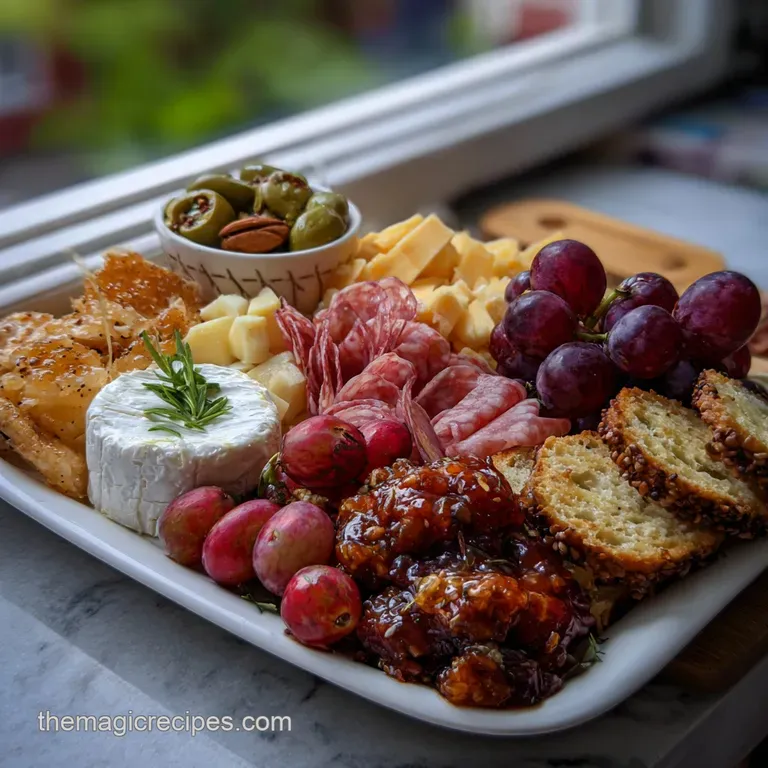
- Place small bowls containing 80g honey and 60g olives on the board first to establish "anchor points."
- Position the 4 oz Brie and 4 oz Aged Cheddar at opposite corners to distribute visual weight.
- Slice the 4 oz Manchego into triangles until the knife hits the board with a clean "thwack".
- Fold 4 oz Prosciutto di Parma into "ribbons" until they stand upright without collapsing.
- Fan 4 oz Genoa Salami in a curved "river" across the center until a continuous path is formed.
- Toast 200g baguette slices for 5 minutes until edges are pale golden and shatter when pressed.
- Cluster 150g grapes in the gaps until the wooden surface is no longer visible.
- Drop 60g Marcona almonds into remaining small crevices until the board looks densely packed.
- Drizzle honey over the 4 oz Goat cheese until it slowly cascades down the sides.
- Set the board out for 15 minutes until cheeses reach a velvety room temperature.
Solving Common Textural Issues with Your Charcuterie Board
Why does your cheese sometimes look oily or "sweaty"? This usually happens because of temperature shock. If you take cheese directly from a 38°F fridge to a 75°F room, the fat molecules separate from the protein matrix.
Always temper your cheese for about 15 20 minutes, but keep the board in a cool, draft free area.
The "Soggy Cracker" Syndrome
When moisture from 150g grapes or 60g olives migrates into the 50g water crackers, they lose their structural "snap." This is caused by simple capillary action.
| Problem | Root Cause | The Fix | Pro Protocol |
|---|---|---|---|
| Soft crackers | Moisture migration | Use bowls for wet items | Create a "buffer zone" using dry nuts. |
| Gray Salami | Oxidation | Prep too early | Keep meats tightly wrapped until 5 mins before serving. |
| Hard Brie | Served too cold | Fat molecules are solid | Temper at room temp for 20 mins to liquefy fats. |
⚗️ The Scaling Lab
When you double a charcuterie board for a large party, the physics of "grazing" changes.
- Flavor Saturation: Do not double the 60g olives or 60g cornichons. These high acid items saturate the palate quickly; a 1.5x increase is sufficient even for a 2x board.
- The Evaporation Paradox: Sliced 4 oz Hard Cheese dries out 40% faster on a large, spread out board than in a compact one. Use larger blocks and let guests cut their own to preserve internal moisture.
- Thermal Mass: A massive marble board takes longer to reach room temperature than wood. If using marble for a large crowd, take it out 10 minutes earlier.
Chef's Tip: Freeze your 4 oz Goat Cheese for 10 minutes before slicing. This firms the fats just enough to get a clean, non-smeary cut with a knife.
Flavor Iterations and Smart Swaps for Your Charcuterie Board
| Original Ingredient | Substitute | Why It Works |
|---|---|---|
| 4 oz Prosciutto | Smoked Turkey Breast | Lower fat, but maintains the salty profile for a lighter version. |
| 80g Honey | Maple Syrup | Thinner consistency; adds a woody, autumnal note. |
| 60g Marcona Almonds | Roasted Chickpeas | Provides the same "crunch" but is nut-free for allergies. |
- The Christmas Charcuterie Board Twist: Use 75g raspberries and sprigs of fresh rosemary to create a red and green visual theme.
- The Plant Based Swap: Replace the 4 oz Salami with thinly sliced smoked beets and use cashew based "cheeses."
Maximizing Freshness and Minimizing Waste After Serving
Storage: Never store the fully assembled charcuterie board. The crackers will pull moisture from the cheese, and the nuts will soften. Store meats and cheeses in separate airtight containers in the fridge for up to 3 days.
- Cheese Rinds
- Don't discard Parmesan rinds. Transform: Drop them into a simmering pot of my Whole Wheat Pasta Recipe sauce. Science: The heat releases glutamates, creating an intense umami depth.
- Stale Baguette
- Transform: Blitz into breadcrumbs or use for croutons. Science: Retrograded starch in stale bread crisps up better than fresh bread.
- Fruit Scraps
- Use leftover berries or grape stems for a quick infused water.
Curating the Perfect Pairing for Your Charcuterie Board
When serving your charcuterie board, remember the "Rule of Three": one bite should have a fat, a salt, and an acid. I love serving this with a crisp Sauvignon Blanc or a dry sparkling cider.
The carbonation in cider acts as a mechanical "scrubber" for the tongue, lifting the heavy fats from the 4 oz Salami.
Common Myths: Myth: "Expensive cheese is always better." → Truth: Even basic sharp cheddar works if the texture is maintained and it's served at the correct temperature.
Myth: "You need a silver platter." → Truth: A simple wooden cutting board is better for moisture management and looks more functional for a busy family setting.
Decision Shortcut: If you want a Fast Fix, focus on 2 meats and 2 cheeses with 200g baguette. If you want Maximum Impact, focus on the "Meat River" technique and high color fruits like 75g berries.
If you want Budget Friendly, swap Marcona almonds for walnuts and use 4 oz Havarti.
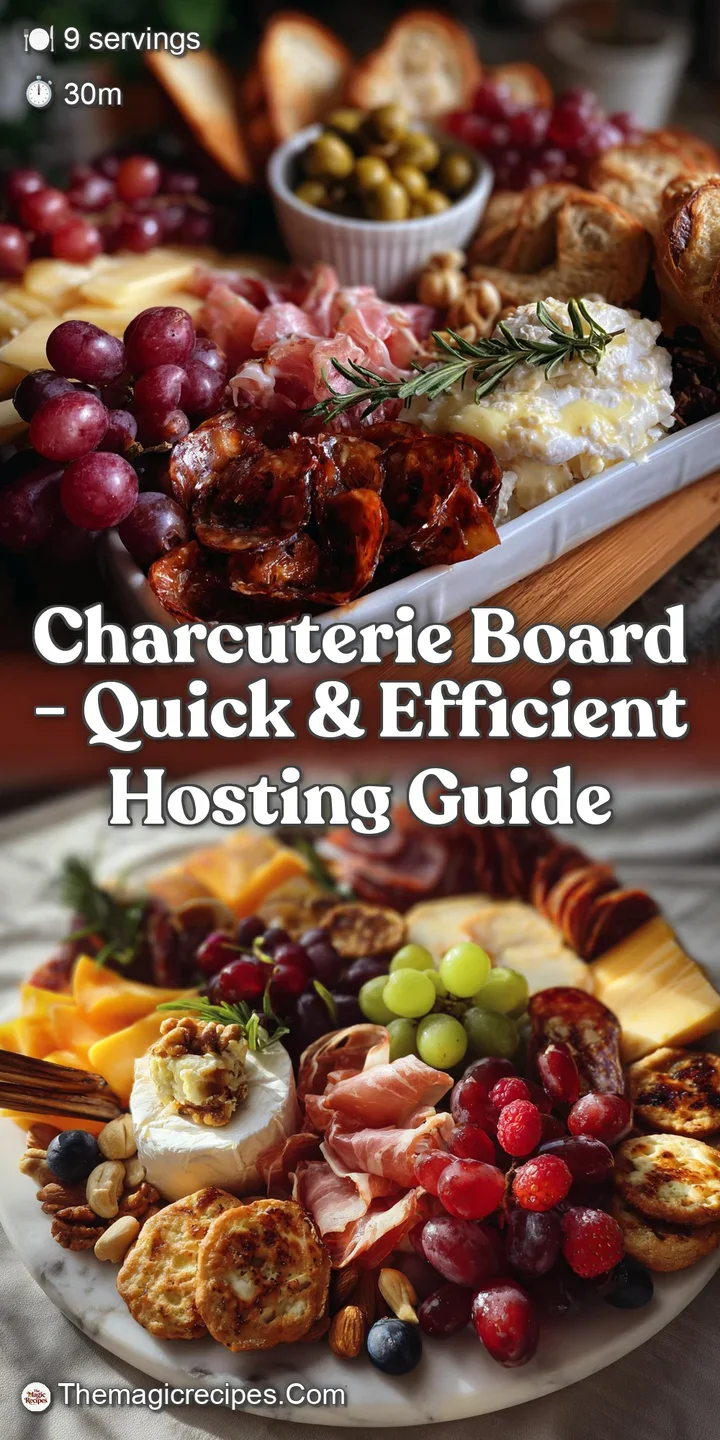
Building a charcuterie board is a functional skill that turns a simple meal into an event. By understanding the science of temperature and the chemistry of flavor pairing, you'll never serve a soggy cracker again. Let's get to work!
Recipe FAQs
What is the ideal temperature for serving cheese?
68°F (20°C) is ideal for optimal fat release. Serving cheese too cold prevents flavor compounds from expressing fully because the butterfat is solid. This leads to a muted, waxy taste profile until the fat warms slightly.
Must all components fit snugly on the board?
No. Small bowls anchor the layout first. Placing bowls first establishes necessary structural pockets before draping meats, preventing liquid migration onto dry crackers.
What is the purpose of placing high acid items like cornichons next to high fat salami?
Acidity cuts through the lipid coating on the tongue. Vinegar or brine acts as a chemical scrub, stripping residual fat molecules, allowing the palate to reset for the next bite.
- Use cornichons for sharp brine
- Olives provide necessary olive oil lipids
- Avoid mixing them with soft Brie directly
Should I slice all the cheese ahead of time?
No. Hard cheeses oxidize quickly when fully sliced. Slicing increases surface area exponentially, accelerating moisture loss and lipid degradation upon air exposure.
Is it better to use salted or unsalted butter if making a cracker accompaniment?
Unsalted butter allows precise salt calibration. Salted butter varies widely in sodium content (80-200mg per tbsp), making the final seasoning unpredictable alongside salty meats and cheeses.
Does using grapes prevent palate fatigue?
Yes. Grapes provide necessary hydration and mild sweetness. The water content and natural sugars offer a clean counterpoint to the intense savory and salty umami components.
Myth: You should arrange items symmetrically for the best look.
Myth: Symmetrical arrangements look static and artificial. Reality: Asymmetrical clustering, using bowls as anchors, creates necessary visual movement and encourages grazing flow.
Easy Charcuterie Board Assembly
Ingredients:
Instructions:
Nutrition Facts:
| Calories | 512 calories |
|---|---|
| Protein | 24 g |
| Fat | 32 g |
| Carbs | 31 g |
| Fiber | 3 g |
| Sugar | 12 g |
| Sodium | 985 mg |
