Chocolate Crinkle Cookies: Fudgy and Rich
- Time: Active 15 minutes, Passive 10 minutes, Total 25 minutes
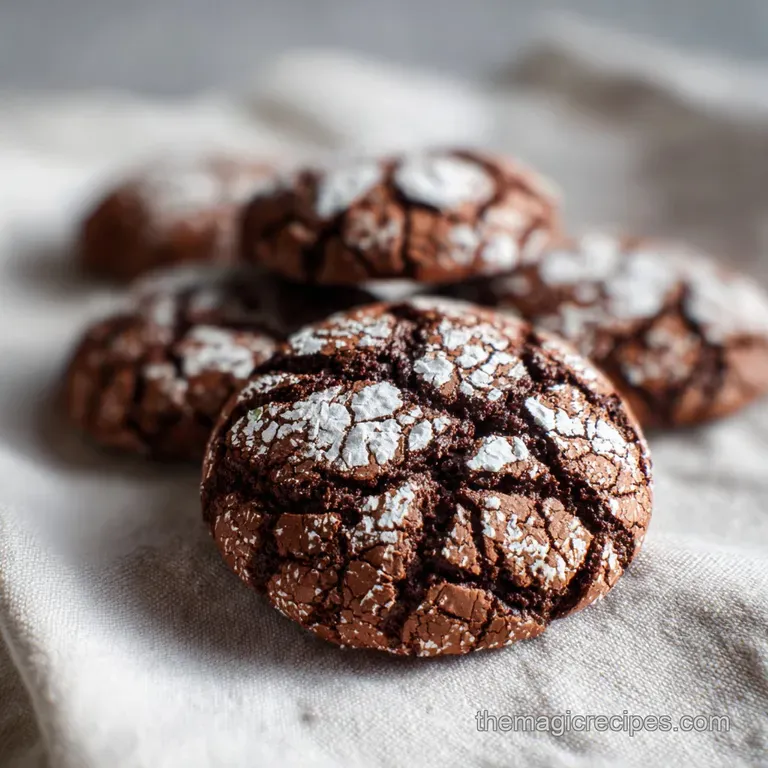
- Flavor/Texture Hook: Velvety dark chocolate core with a delicate, crackling sugar shell
- Perfect for: Holiday cookie exchanges, late night cravings, or beginner bakers wanting impressive results
- Bake the Most Decadent Easy Chocolate Crinkle Cookies
- Why This Specific Texture Works So Well
- Component Analysis and Ingredient Deep Dive
- Shopping List for Fudgy Chocolate Results
- Essential Tools for Success
- Step by Step Baking Guide
- Fixing Flat or Wet Cookies
- Scaling the Recipe for Large Crowds
- Delicious Flavor Variations to Explore
- Storage Guidelines and Zero Waste Tips
- Serving Suggestions for Your Masterpiece
- Debunking Common Cookie Baking Myths
- Recipe FAQs
- 📝 Recipe Card
Bake the Most Decadent Easy Chocolate Crinkle Cookies
Forget the notion that high-quality bar chocolate is the only way to achieve a deep, bakery quality cookie. There is a common myth in the baking world that premium melted chocolate is the gold standard for fudgy textures, but for these specific treats, that's actually a mistake.
When you melt chocolate into a dough, the cocoa butter can make the final result snap like a candy bar or turn greasy if the temperature isn't managed perfectly. By using unsweetened cocoa powder combined with neutral vegetable oil, we create a fat in-water emulsion that stays soft and moist long after the cookies leave the oven.
I remember the first time I tried a version of these using expensive 70% dark chocolate bars. I thought I was being "fancy," but the cookies ended up dense and lost that signature crackle. They didn't have that snowy, contrasting look we all love. It was a total letdown.
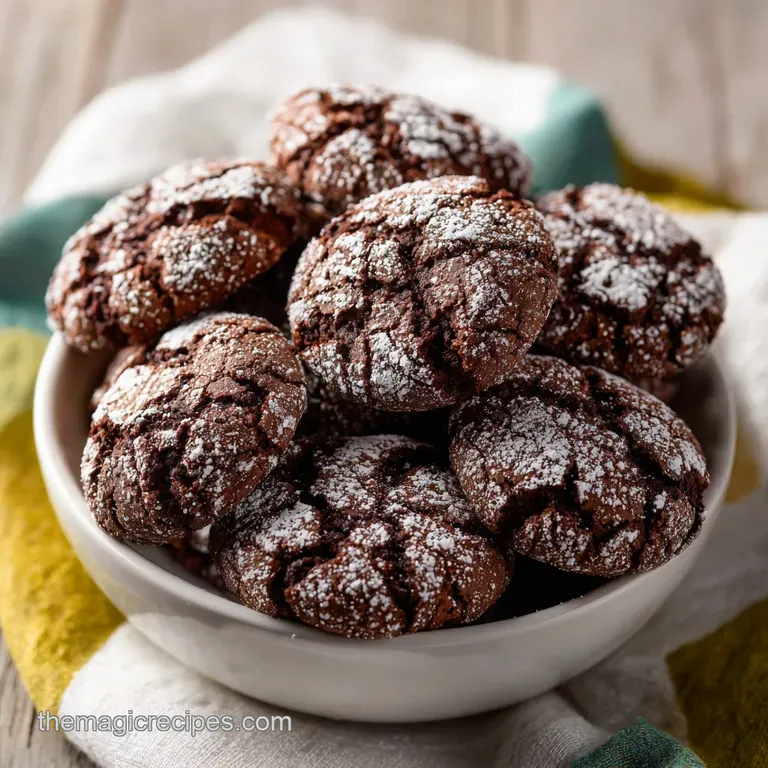
The moment I switched back to the humble cocoa powder and oil method, the magic happened. The tops shattered into beautiful obsidian islands separated by white sugar "snow." It's proof that sometimes the most accessible ingredients produce the most indulgent results.
We're going for a texture that feels almost like a truffle on the inside but has enough structure to hold its shape. The secret isn't in the price of the ingredients but in how we layer the sugars.
If you have been struggling with cookies that look "grey" because the powdered sugar melted into the dough, you are in the right place. We are going to fix that today with a simple two step coating process that acts like a moisture shield.
Why This Specific Texture Works So Well
The chemistry of a crinkle cookie is actually quite fascinating when you look at how the surface dries out faster than the interior. This isn't just luck, it's a deliberate manipulation of moisture and heat.
- Mechanical Leavening: The baking powder reacts with the heat of the oven, causing the dough to expand rapidly. Because the surface is coated in sugar, it dries out and sets first, forcing the expanding interior to "burst" through the crust, creating those iconic fissures.
- The Oil Advantage: Unlike butter, which is solid at room temperature and contains water, neutral vegetable oil is 100% fat and remains liquid. This ensures the cookies stay velvety and soft for days rather than becoming crumbly or dry.
- The Sugar Shield: Rolling the dough in granulated sugar before the powdered sugar creates a sacrificial layer. The granulated sugar absorbs the initial moisture from the dough, allowing the powdered sugar to stay bright white and opaque during the bake.
- Protein Structure: Using four large eggs provides a significant amount of structure and moisture. This high egg content is what gives the cookies their "chewy fudgy" middle, reminiscent of a dense brownie.
| Method | Time | Texture | Best For |
|---|---|---|---|
| Standard Bake | 10 minutes | Fudgy & Soft | Classic holiday tins |
| Chilled Dough | 10 minutes | Thicker & Chewier | Bakery style height |
| Underbaked | 8 minutes | Molten Center | Immediate indulgence |
While the standard bake is the most reliable, chilling the dough for an hour (or even overnight) can really change the game. Chilling allows the flour to fully hydrate and the fats to stabilize, which means the cookies spread less and the cocoa flavor becomes much more concentrated. If you're looking for a slightly different vibe, my Snickerdoodle Cookies use a similar sugar rolling technique but focus on a tangy, cinnamon forward profile.
Component Analysis and Ingredient Deep Dive
Understanding the role of each component helps you avoid common pitfalls. This isn't just about mixing things in a bowl, it's about how the ingredients interact under heat.
| Ingredient | Science Role | Pro Secret |
|---|---|---|
| Cocoa Powder (100g) | Provides structure and intense flavor | Sift it to avoid stubborn lumps in the batter |
| Vegetable Oil (120ml) | Keeps the crumb moist and tender | Use a neutral oil like canola or grapeseed |
| Large Eggs (4) | Acts as the primary binder and leavener | Use room temperature eggs for a glossier batter |
| White Sugar (400g) | Sweetens and aids in the "crackle" effect | Don't reduce this, as sugar is a liquid in baking |
The interaction between the 400g of granulated sugar and the 120ml of oil is what creates that "wet sand" texture in the beginning. This is the foundation of the cookie. If you change these ratios, the "crinkle" won't happen because the dough will either be too stiff to expand or too thin to hold the sugar.
Shopping List for Fudgy Chocolate Results
Before you start, make sure you have everything measured out. Accuracy is the friend of every home baker, especially when dealing with cocoa heavy doughs.
- Unsweetened Cocoa Powder (100g): This provides the dark, intense base. Why this? Cocoa powder offers more concentrated chocolate flavor than melted bars without the added fat.
- White Granulated Sugar (400g): For the main dough. Why this? Sugar provides the necessary sweetness and helps the edges crisp up.
- Neutral Vegetable Oil (120ml): Any flavorless oil works perfectly.
- Large Eggs (4): These provide the rise and the fudgy interior.
- Vanilla Extract (2 tsp): This rounds out the bitterness of the cocoa.
- All Purpose Flour (250g): The structure of our cookie. Why this? AP flour has the right protein content for a soft yet sturdy cookie.
- Baking Powder (2 tsp): The engine that creates the cracks.
- Salt (1/2 tsp): Essential to balance the sugar.
- Granulated Sugar (100g): For the first coating layer.
- Confectioners' Sugar (120g): For that iconic snowy finish.
If you find yourself out of vegetable oil, you can use melted coconut oil, though it will add a very slight tropical note. For those who enjoy a bit of texture in their bakes, you might want to see how toasted nuts change a recipe, much like in my Chocolate Chip Pecan Cookies, though for crinkles, we usually keep the dough smooth to let the crackle shine.
| Original Ingredient | Substitute | Why It Works |
|---|---|---|
| Vegetable Oil | Melted Butter | Richer flavor but cookies will be slightly drier. |
| All Purpose Flour | gluten-free 1:1 Blend | Works well but may require 30 mins chill time. |
| Vanilla Extract | Almond Extract | Adds a cherry like depth to the dark chocolate. |
Essential Tools for Success
You don't need a high end stand mixer for this, but a few specific tools make the process much cleaner. This is a very sticky dough, so being prepared is half the battle.
- Large Mixing Bowl: Plenty of room for whisking the oil and sugar.
- Fine Mesh Sieve: For sifting the flour and cocoa powder together.
- Rubber Spatula: Crucial for folding the dry ingredients without overworking the gluten.
- Small Cookie Scoop (1 tbsp): Ensures every cookie is the same size for even baking.
- Two Small Bowls: One for the granulated sugar coating and one for the powdered sugar.
- Baking Sheets and Parchment Paper: Prevents sticking and makes cleanup a breeze.
Chef's Tip: If the dough is too sticky to handle, lightly grease your hands with a tiny bit of oil before rolling the balls. It prevents the dough from clinging to your palms.
step-by-step Baking Guide
Follow these steps closely. The order of operations matters here, especially when it comes to the "glossy" stage of the wet ingredients.
- Prep the Base: In a large bowl, whisk together the 100g cocoa powder, 400g granulated sugar, and 120ml vegetable oil. Whisk until the mixture resembles wet sand.
- Emulsify the Eggs: Add the 4 eggs one at a time. Whisk vigorously after each addition until the batter is glossy and smooth.
- Flavor Addition: Stir in the 2 tsp of vanilla extract until fully incorporated.
- Sift and Fold: Sift the 250g flour, 2 tsp baking powder, and 1/2 tsp salt directly into the wet cocoa mixture.
- Mix Gently: Use a rubber spatula to fold the ingredients together until no white streaks remain. Note: Do not overmix or the cookies will become tough.
- Form the Balls: Scoop tablespoon sized portions (about 25g) of dough and roll them briefly in your palms to form a ball.
- The Double Coating: Drop each ball first into the bowl of 100g granulated sugar, rolling to cover completely.
- The Final Snow: Immediately drop the ball into the 120g of powdered sugar. Coat it heavily until no dark dough is visible.
- Arrange and Space: Place the balls 2 inches apart on parchment lined baking sheets.
- The Bake: Bake at 175°C (350°F) for exactly 10 minutes until the edges are set and the tops have crackled.
Precision Checkpoints
- Temperature: Ensure your oven is fully preheated to 175°C. An oven thermometer is helpful here, as even a 10 degree difference can affect the "spread."
- Weight: Each dough ball should weigh approximately 25-28 grams. This ensures all 24 cookies finish baking at the same 10 minute mark.
- Cooling: Let the cookies rest on the baking sheet for 5 minutes before moving them. They are very soft when they first come out and need time to "set" their structure.
Fixing Flat or Wet Cookies
Even with a simple recipe, things can go sideways. Usually, it's a matter of temperature or measurement accuracy.
Why Your Sugar Disappeared
If your cookies come out looking dark or "wet" instead of snowy, it's usually because the dough was too warm or the sugar coating was too thin. The granulated sugar layer is your secret weapon here. It creates a barrier that prevents the moisture in the dough from dissolving the powdered sugar.
If you skipped that step, the powdered sugar will almost always melt into the cookie.
| Problem | Root Cause | Solution |
|---|---|---|
| Flat Cookies | Dough was too warm | Chill the dough for 30 mins before rolling. |
| No Cracks | Expired baking powder | Test powder in hot water; it should bubble instantly. |
| Grey Sugar | Thin coating | Use the "granulated sugar first" method and coat heavily. |
Common Mistakes Checklist
- ✓ Ensure eggs are at room temperature to help the sugar dissolve properly.
- ✓ Don't overbake! These cookies should look slightly underdone in the cracks when you pull them out.
- ✓ Use parchment paper instead of greasing the pan, which can cause excess spreading.
- ✓ Sift your powdered sugar if it has hard lumps, otherwise, the coating will be uneven.
- ✓ Check that your oven rack is in the center position for even heat distribution.
Scaling the Recipe for Large Crowds
These cookies are perfect for gifting, so you might want to double the batch. However, baking math isn't always linear.
When scaling UP (2x): Use 200g cocoa and 800g sugar for the base. Increase the vanilla to 4 tsp, but keep the salt at 3/4 tsp rather than doubling it fully to avoid an over salted bite. You will need to work in batches.
Keep the remaining dough in the fridge while the first tray bakes to prevent it from getting too soft.
When scaling DOWN (1/2): Use 50g cocoa and 200g sugar. Use 2 large eggs. Reduce the baking powder to 1 tsp. The bake time remains the same (10 minutes), but you should check them at 9 minutes since a smaller oven load might cook slightly faster.
Delicious Flavor Variations to Explore
Once you've mastered the easy chocolate crinkle cookies, you can start playing with the "layers" of flavor.
- The Christmas Spice Twist: Add 1 tsp of ground cinnamon and a 1/4 tsp of cayenne pepper to the dry ingredients. This creates a Mexican Hot Chocolate vibe that is incredibly warming and decadent.
- The Espresso Kick: Add 1 tbsp of instant espresso powder to the oil and sugar mixture. Coffee intensifies the chocolate flavor without making the cookies taste like a latte.
- The Peppermint Crunch: Add 1/2 tsp of peppermint extract instead of vanilla. After baking and cooling, you can even drizzle them with a bit of white chocolate for a bakery quality look.
Decision Shortcut
- If you want Maximum Fudginess: Bake for 9 minutes and let them cool completely on the tray.
- If you want Bright White Cracks: Coat the balls in granulated sugar, then roll them in powdered sugar twice.
- If you want Thick, Puffy Cookies: Chill the dough for at least 4 hours before rolling.
Storage Guidelines and Zero Waste Tips
These cookies actually store quite well because of the oil content, which keeps them from drying out as fast as butter based cookies.
- Room Temperature
- Store in an airtight container for up to 5 days. Put a piece of parchment paper between layers to keep the sugar from smudging.
- Freezer
- You can freeze the baked cookies for up to 3 months. To thaw, just leave them on the counter for 30 minutes. They actually taste pretty great cold, too!
- Dough Freezing
- You can roll the dough into balls and freeze them before coating in sugar. When you're ready to bake, let them thaw for 15 minutes, roll in the sugars, and bake as directed (you may need an extra 1-2 minutes).
Zero Waste Tips: Leftover Sugar: Don't throw away the sugar used for coating! Sift the leftover powdered sugar and granulated sugar to remove any cocoa bits, then store it in a jar for your next batch of cookies or to sweeten your morning coffee.
Cookie Crumbs: If you have any broken cookies or crumbs at the bottom of the container, save them! They make an incredible topping for vanilla ice cream or can be folded into a cheesecake crust.
Serving Suggestions for Your Masterpiece
Crinkle cookies are a visual treat, so how you present them matters. They look stunning on a dark wooden board or a white ceramic platter where the contrast of the sugar can really pop.
- The Classic Pairing: A cold glass of whole milk is the traditional partner for these. The creaminess of the milk cuts through the intense cocoa perfectly.
- The Adult Version: Serve these alongside a small glass of ruby port or a stout beer. The dark, fruity notes of the wine or the roasted malt of the beer pair beautifully with the 100g of cocoa in the recipe.
- The Dessert Board: Feature these as the center of a dessert charcuterie board, surrounded by fresh raspberries and a few pieces of sharp white cheddar for a sophisticated flavor balance.
Debunking Common Cookie Baking Myths
There are a lot of "old wives' tales" in baking that can actually lead you astray when making this specific recipe.
- Myth: You must cream the butter and sugar. In this recipe, we use oil, so creaming is impossible. We are looking for an emulsion, not aeration. If you try to beat air into this dough, the cookies will puff up and then collapse, ruining the crinkle effect.
- Myth: Sifting doesn't matter. For cocoa powder, sifting is mandatory. Cocoa is naturally clumpy, and those clumps will not disappear during the short 10 minute bake. You'll end up with bitter pockets of dry powder if you skip this.
- Myth: Room temperature doesn't apply to oil. While oil doesn't need to "soften," the eggs do need to be room temperature. Cold eggs will cause the oil and sugar mixture to seize up slightly, making it much harder to fold in your 250g of flour without overworking the dough.
Comparison: Fresh vs Shortcut
| Feature | Fresh From Scratch | Cake Mix Shortcut |
|---|---|---|
| Texture | Fudgy, dense, brownie like | Airy, cake like, spongey |
| Flavor | Deep, intense cocoa | Often overly sweet/artificial |
| Shelf Life | Stays moist for 5 days | Dries out within 48 hours |
By following these steps and understanding the "why" behind the oil and the double sugar coating, you'll produce a batch of cookies that look like they came straight from a professional pastry kitchen.
Just remember to watch that timer — 10 minutes is the sweet spot for that perfect, indulgent fudgy center.

Recipe FAQs
How to achieve the signature cracked top?
Roll the dough balls first in granulated sugar and then in confectioners' sugar. The granulated sugar layer acts as a moisture barrier, ensuring the powdered sugar doesn't dissolve into the dough and allows the distinct, crackled surface to form while baking at 350°F.
Why is the glossy, smooth texture of the batter important?
It signals a successful emulsion of the oil and eggs. If you enjoyed mastering this specific emulsification technique here, you can apply the same principle of vigorous whisking to our no-bake chocolate pie for a perfectly smooth filling.
Is it necessary to use room temperature eggs?
Yes, room temperature eggs are essential for the sugar to dissolve properly. Cold eggs can cause the vegetable oil and cocoa mixture to seize, preventing the batter from reaching the required glossy, smooth consistency.
How to tell when the cookies are finished baking?
Remove them from the oven exactly at 10 minutes when the edges look set. The centers should still appear slightly soft and underdone, as they will continue to firm up on the hot baking sheet as they cool.
How to prevent the powdered sugar from clumping?
Sift the confectioners' sugar into your bowl before coating the dough. Removing hard lumps ensures an even, snowy white finish on the exterior of the cookies rather than patchy spots.
Can I bake the dough balls straight from the freezer?
Yes, you can bake them frozen, but you may need to add 1 2 minutes to the total bake time. Ensure you place them 2 inches apart on the parchment lined sheet, just as you would with room temperature dough.
Should I grease the baking sheet to prevent sticking?
No, avoid greasing the pan, as it causes excess spreading. Using parchment paper is the best way to ensure the cookies maintain their shape and release easily after the 10-minute bake time.
Easy Chocolate Crinkle Cookies
Ingredients:
Instructions:
Nutrition Facts:
| Calories | 200 kcal |
|---|---|
| Protein | 2.9 g |
| Fat | 6.1 g |
| Carbs | 36.4 g |
| Fiber | 1.4 g |
| Sugar | 25.9 g |
| Sodium | 91 mg |
