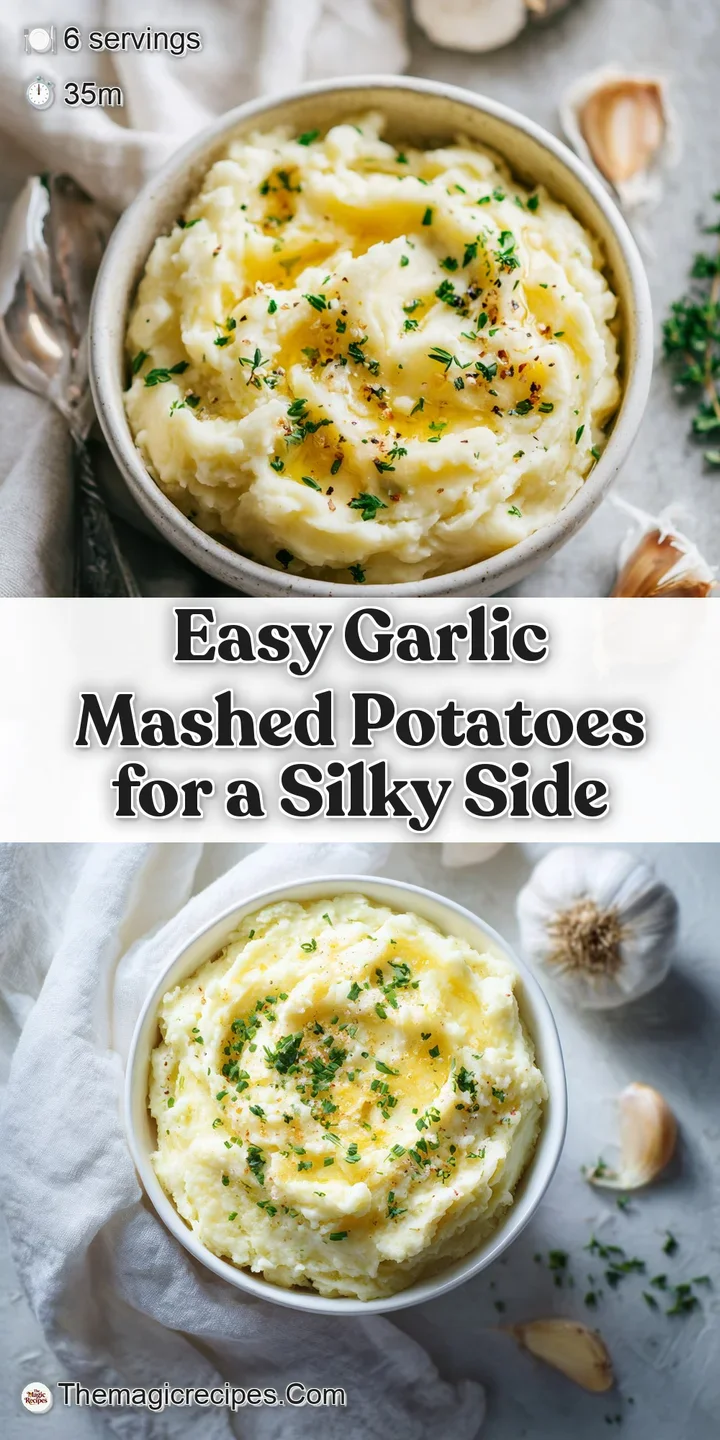
Easy Garlic Mashed Potatoes
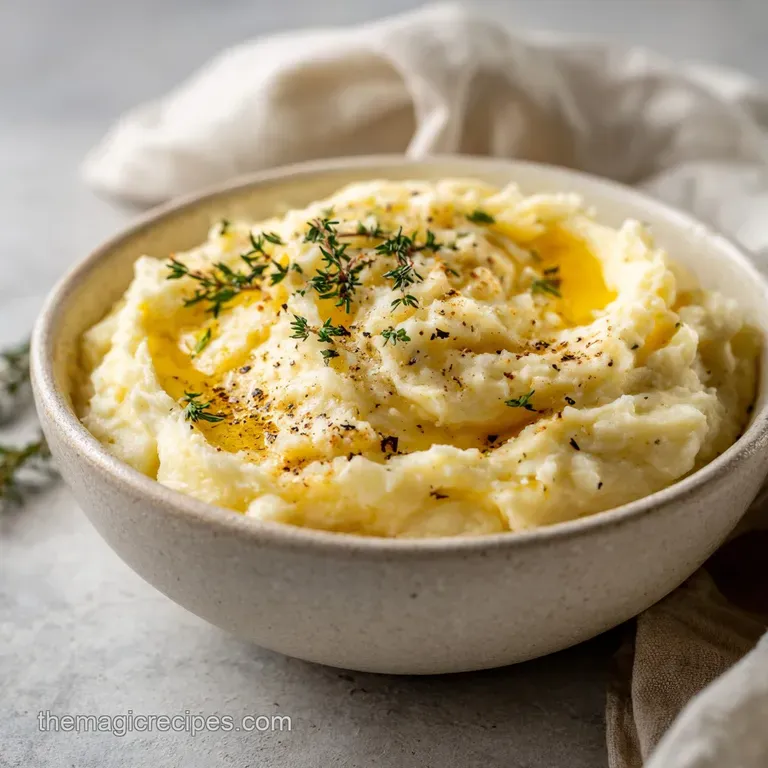
- Time: Active 10 mins, Passive 25 mins, Total 35 mins
- Flavor/Texture Hook: Silky, buttery, and sharp chive finish
- Perfect for: Busy weeknight dinners or simple holiday sides
- Why This Technique Actually Works
- Essential Stats for the Kitchen
- Component Analysis and Science
- Tools for the Creamiest Mash
- Ingredients for Success
- Simple Steps to Garlic Perfection
- Solving Common Texture Issues
- Smart Swaps and Flavor Twists
- Saving and Reusing Your Leftovers
- What to Serve with Mash
- Recipe FAQs
- 📝 Recipe Card
You know that feeling when you lift the lid off a pot and a cloud of starchy, garlic scented steam just hits you right in the face? It’s the ultimate kitchen hug. I used to think that to get that restaurant quality silkiness, I had to spend an hour peeling, dicing, and whisking until my arms fell off.
I even tried using a blender once massive mistake. It turned the potatoes into a literal bowl of glue that we could have used to wallpaper the kitchen.
Since then, I’ve learned that the best results come from working with the potato, not against it. It's about treating the starch with a bit of respect. This recipe is my absolute go to because it's functional, fast, and doesn't require a trip to the store for heavy cream.
We're using pantry staples to make something that tastes like a million bucks, and honestly, your family won't even realize you swapped the cream for Greek yogurt. It’s our little secret.
We’ve all been there with the lumpy, bland mash that feels more like a chore than a treat. But once you nail the cold start technique and the steaming trick I’m about to show you, you’ll never go back to the old way.
Let’s get stuck into what makes these spuds actually work for a real life Tuesday night.
Why This Technique Actually Works
Cold Start Chemistry: Starting potatoes in cold water ensures the outside doesn't turn to mush before the center is cooked through. This leads to a uniform texture that mashes easily without lumps.
Starch Dehydration: Returning the drained potatoes to the hot pot for a minute evaporates excess water. This "steam off" step allows the potatoes to soak up the butter and milk like a sponge rather than sitting in a puddle of water.
Yogurt Emulsification: The lactic acid in Greek yogurt breaks down stubborn starch clumps while providing a tangy fat source. This creates a velvety mouthfeel that mimics high fat cream.
Garlic Infusion: Boiling the garlic cloves with the potatoes mellows their sharp bite. This transforms the raw sulfurous flavor into a sweet, nutty undertone that permeates every bite.
Method Comparison for Texture
| Method | Total Time | Texture | Best For |
|---|---|---|---|
| Traditional Boil | 35 mins | Fluffy/Standard | Classic Sunday Roasts |
| Pressure Cooker | 20 mins | Soft/Very Moist | Quick Weeknight Meals |
| Slow Cooker | 4 hours | Dense/Rich | Large Holiday Batches |
Using the stovetop method listed here gives us the most control over the moisture levels. If you're looking for a more hands off approach for a big crowd, you might want to check out my Crockpot Mashed Potatoes recipe which handles larger volumes beautifully. But for the best balance of speed and flavor, the pot on the stove wins every single time.
Essential Stats for the Kitchen
When you're aiming for easy garlic mashed potatoes, consistency is your best friend. I’ve timed this out so you can have the rest of your dinner ready right as the mash is hitting its peak fluffiness.
Don't rush the simmering stage; if a knife doesn't slide into that potato chunk like it's soft brie, give it another two minutes.
I usually aim for 1.5 inch chunks because they cook fast but don't fall apart. If you cut them too small, they'll absorb too much water, and you'll end up with a soggy mess. Stick to the plan, and you'll be rewarded with a side dish that actually holds its own next to a big main course.
| Serving Size | Potato Weight | Butter Amount | Liquid Volume |
|---|---|---|---|
| 2 People | 1 lb | 1 tbsp | 1/3 cup |
| 4 People | 2 lbs | 2 tbsp | 2/3 cup |
| 6 People | 3 lbs | 3 tbsp | 1 cup |
If you are cooking for a smaller group, it's easy to scale down, but honestly, I always make the full 3 pounds. Leftover mash is basically a gift to your future self. You can fry them up into little cakes the next morning or use them as a topper for a quick shepherd's pie.
Component Analysis and Science
The Physics of the Fluff
Understanding your ingredients is the difference between a side dish and a masterpiece. We're using Yukon Golds here for a very specific reason: their starch content. Unlike Russets, which are super starchy and can get grainy, or Red potatoes, which are waxy and can get gummy, Yukons sit right in the middle.
They have a naturally buttery flavor and a creamy cell structure that loves to be mashed.
| Ingredient | Science Role | Pro Secret |
|---|---|---|
| Yukon Gold Potatoes | Low starch/High sugar | Leave a bit of skin on for rustic texture |
| low-fat Milk | Liquid hydration | Warm it before adding to prevent "thermal shock" |
| Greek Yogurt | Protein/Acid binder | Use full fat for extra richness if calories aren't a concern |
| Sea Salt | Flavor enhancer | Salt the water heavily; it's your only chance to season the inside |
The sea salt isn't just for taste; it actually raises the boiling point of the water and helps break down the pectin in the potato cell walls. This means softer potatoes in less time. And the garlic?
Boiling it with the spuds softens the cloves so they vanish into the mash, leaving behind only that sweet, roasted aroma.
Tools for the Creamiest Mash
You don't need a kitchen full of gadgets, but a few specific items will make your life a lot easier. A heavy bottomed pot (like a Dutch oven) is great because it holds heat well during the "steam off" phase. For the mashing itself, I prefer a classic wire masher.
It leaves just enough texture to remind you that these are real, homemade potatoes.
If you want them perfectly smooth like, baby food smooth you could use a potato ricer. But honestly, for a cozy family meal, the wire masher is faster and easier to clean. Just stay away from the hand mixer or blender.
The high speed blades tear the starch molecules apart, releasing all the "glue," and that's how you get that gummy, sticky texture nobody wants.
Ingredients for Success
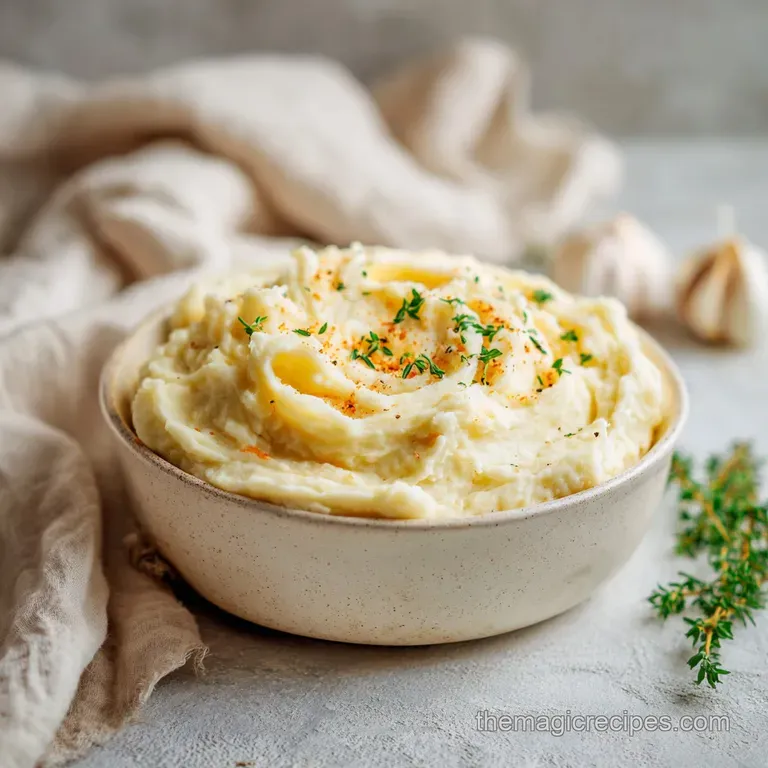
- 3 lbs Yukon Gold Potatoes: Peeled and cut into 1.5 inch chunks. Why this? They provide a naturally buttery flavor and superior creamy texture.
- 1 tbsp Sea Salt: Added to the boiling water. Why this? Essential for seasoning the potato from the inside out.
- 6 cloves Fresh Garlic: Smashed but kept whole. Why this? Boiling mellows the garlic for a subtle, sweet flavor.
- 1 cup low-fat Milk: Use 2% or 1% for a lighter finish. Why this? Provides the necessary moisture without excessive fat.
- 1/4 cup Plain Greek Yogurt: Non fat or low-fat both work. Why this? Adds tang and a velvety finish similar to sour cream.
- 3 tbsp Unsalted Butter: Cubed for faster melting. Why this? Controls salt levels while adding that essential rich aroma.
- 2 tbsp Fresh Chives: Finely minced. Why this? Adds a pop of color and a mild onion like bite.
- Fresh Cracked Black Pepper: To taste.
Simple Steps to Garlic Perfection
- Prep the potatoes. Peel your 3 lbs of Yukon Golds and chop them into 1.5 inch chunks so they cook evenly.
- Start cold. Place potatoes and 6 smashed garlic cloves in a large pot and cover with cold water by at least an inch.
- Season the water. Stir in 1 tbsp of sea salt. Note: The water should taste like the sea.
- Boil then simmer. Bring to a boil over high heat, then reduce to a simmer. Cook for 20-25 minutes until a fork slides through effortlessly.
- Drain thoroughly. Pour the potatoes into a colander, making sure all the water is gone.
- Dry them out. Return the empty pot to the warm stove (heat off) and add the potatoes back in for 1 minute until the surface looks matte and dry.
- Heat the dairy. In a small saucepan or microwave safe bowl, warm the 1 cup of milk and 3 tbsp of butter until the butter has completely melted.
- Begin mashing. Use a potato masher to break down the spuds and garlic together into a coarse crumble.
- Incorporate liquids. Pour in the warm milk mixture and the 1/4 cup of Greek yogurt. Stir gently with a wooden spoon until the mash is smooth and velvety.
- Final touch. Fold in the 2 tbsp of minced chives and cracked black pepper, then serve immediately.
Solving Common Texture Issues
Even the best of us have "off" days in the kitchen. Maybe you got distracted by a phone call and overboiled the spuds, or perhaps the potatoes you bought were a bit more watery than usual. Don't panic. Most mash problems are fixable if you catch them before they hit the table.
Why Your Mash is Watery
If your potatoes are swimming in liquid, it’s usually because they weren't drained well enough or the "steam off" step was skipped. You can fix this by putting the pot back on very low heat and stirring constantly for a few minutes to cook off the excess moisture. Be careful not to scorch the bottom!
| Problem | Root Cause | Solution |
|---|---|---|
| Gummy Texture | Over processing/High speed | Add a splash of warm milk and fold gently; don't whisk! |
| Bland Flavor | Under salting the water | Add a pinch of salt and a squeeze of lemon juice to brighten |
| Lumpy Mash | Under cooked potatoes | Heat the milk/butter extra hot and mash vigorously while steaming |
Common Mistakes Checklist
- ✓ Never start potatoes in boiling water; the centers will stay hard.
- ✓ Always warm your milk and butter before adding them to the pot.
- ✓ Don't use a food processor unless you want potato paste.
- ✓ Pat the potatoes dry if they seem particularly moist after draining.
- ✓ Add the yogurt last to keep the probiotics intact and the texture light.
Smart Swaps and Flavor Twists
While the recipe as written is a classic, you can easily tweak it based on what you have in the fridge. If you don't have Greek yogurt, sour cream is the most obvious substitute, though it will add more fat.
If you're looking for something dairy-free, you can use a high-quality olive oil and chicken stock instead of milk and butter.
Chef's Tip: For a deeper flavor, try to make roasted garlic mashed potatoes by roasting a whole head of garlic in the oven at 400°F (200°C) for 40 minutes, then squeezing the paste into the mash at the end.
It adds a smoky sweetness that is absolutely incredible.
| Original Ingredient | Substitute | Why It Works |
|---|---|---|
| low-fat Milk | Chicken Stock | Lowers fat further while adding savory depth. |
| Greek Yogurt | Sour Cream | Similar tang but higher fat content for more richness. |
| Unsalted Butter | Extra Virgin Olive Oil | Adds a fruity, peppery note; great for a Mediterranean twist. |
If you decide to go the stock route, keep in mind that the color will be slightly darker, and the texture won't be quite as "creamy" as the milk version. This lighter style pairs fantastically with our Garlic Butter Steak recipe, where the steak juices can mingle with the potatoes.
Saving and Reusing Your Leftovers
Leftover mashed potatoes are a gold mine. They'll stay fresh in an airtight container in the fridge for about 3 to 4 days. When you’re ready to reheat them, don't just shove them in the microwave, or they'll turn into a dry brick.
Add a tiny splash of milk or a pat of butter, cover the bowl, and heat in 30 second increments, stirring in between.
For freezing, mashed potatoes actually hold up surprisingly well because of the fat content from the butter and yogurt. Scoop 1 cup portions onto a baking sheet, freeze until solid, then toss them into a freezer bag. They’ll last for up to 2 months.
To use them, let them thaw in the fridge overnight and reheat on the stove with a little extra liquid to bring back that velvety sheen.
Don't throw away any scraps either! If you have just a half cup left, stir it into a soup to act as a natural thickener. It works wonders in a leek and potato soup or even a hearty beef stew.
What to Serve with Mash
Mashed potatoes are the ultimate wingman for almost any protein. Because these have a punchy garlic flavor and a hit of fresh chives, they work especially well with roasted meats. If you're planning a big Sunday dinner, this is the Prime Rib Side recipe you've been looking for. The creamy potatoes soak up the au jus perfectly.
Debunking Kitchen Myths
One big myth is that you need to peel potatoes perfectly. Actually, leaving a bit of the skin on Yukon Golds adds a "rustic" feel and extra nutrients. Another one is that you should add the butter and milk at the same time. Science says no!
Adding the butter first coats the starch molecules in fat, which prevents them from reacting with the water in the milk and becoming gummy. Fat first, then liquid!
Finally,, many people think you have to use heavy cream for a "perfect" result. In reality, easy garlic mashed potatoes can be incredibly luxurious using just milk and yogurt. The yogurt provides the same mouth coating fat feel but with a brighter finish that doesn't leave you feeling weighed down after dinner.
It's a much more balanced way to eat, and honestly, I prefer the flavor.
Next time you’re at the store, grab those Yukon Golds and give this a try. It’s a simple, honest recipe that just works. Happy mashing!
Recipe FAQs
How to make the best garlic mash?
Start the potatoes in cold, heavily salted water with the garlic cloves. This gentle cooking ensures the interior and exterior cook evenly, preventing lumps. Finish by returning drained potatoes to the hot pan for one minute to dry the starch before adding warm liquid.
What is the 1 ingredient upgrade for the fluffiest mashed potatoes?
Plain Greek Yogurt. It adds necessary acidity to help break down starch clumps while providing a velvety, rich mouthfeel similar to sour cream but lighter.
What is a common mistake when making mashed potatoes?
Over processing the potatoes after adding liquid. Using a blender or electric mixer releases too much starch, turning the mash into a gluey paste.
How to make amazing garlic potatoes without an overpowering garlic flavor?
Boil the whole, smashed garlic cloves directly with the potatoes. Boiling mellows the raw sulfur compounds, resulting in a sweet, nutty garlic essence infused throughout the mash.
Is it true I must use heavy cream for a restaurant quality creamy texture?
No, this is a common misconception. You can achieve superior velvetiness by warming low-fat milk and incorporating Greek yogurt last, which provides tang and richness without the heaviness of pure cream.
How to avoid having watery mashed potatoes?
Ensure you aggressively drain and "steam off" the potatoes after boiling. Return the drained potatoes to the hot, empty pot for 60 seconds to let surface moisture evaporate before adding any butter or liquid.
Can I use Russet potatoes instead of Yukon Golds for this recipe?
Yes, but the texture will change significantly. Russets are higher in starch and tend to absorb more water, increasing the risk of a grainy result unless you are extremely careful with the draining step. If you enjoy texture control, mastering the technique here applies directly to making perfect Croutons recipe, where moisture management is key.
Easy Garlic Mashed Potatoes
Ingredients:
Instructions:
Nutrition Facts:
| Calories | 254 calories |
|---|---|
| Protein | 7.2 g |
| Fat | 6.5 g |
| Carbs | 42 g |
| Fiber | 5.1 g |
| Sugar | 3.5 g |
| Sodium | 422 mg |
