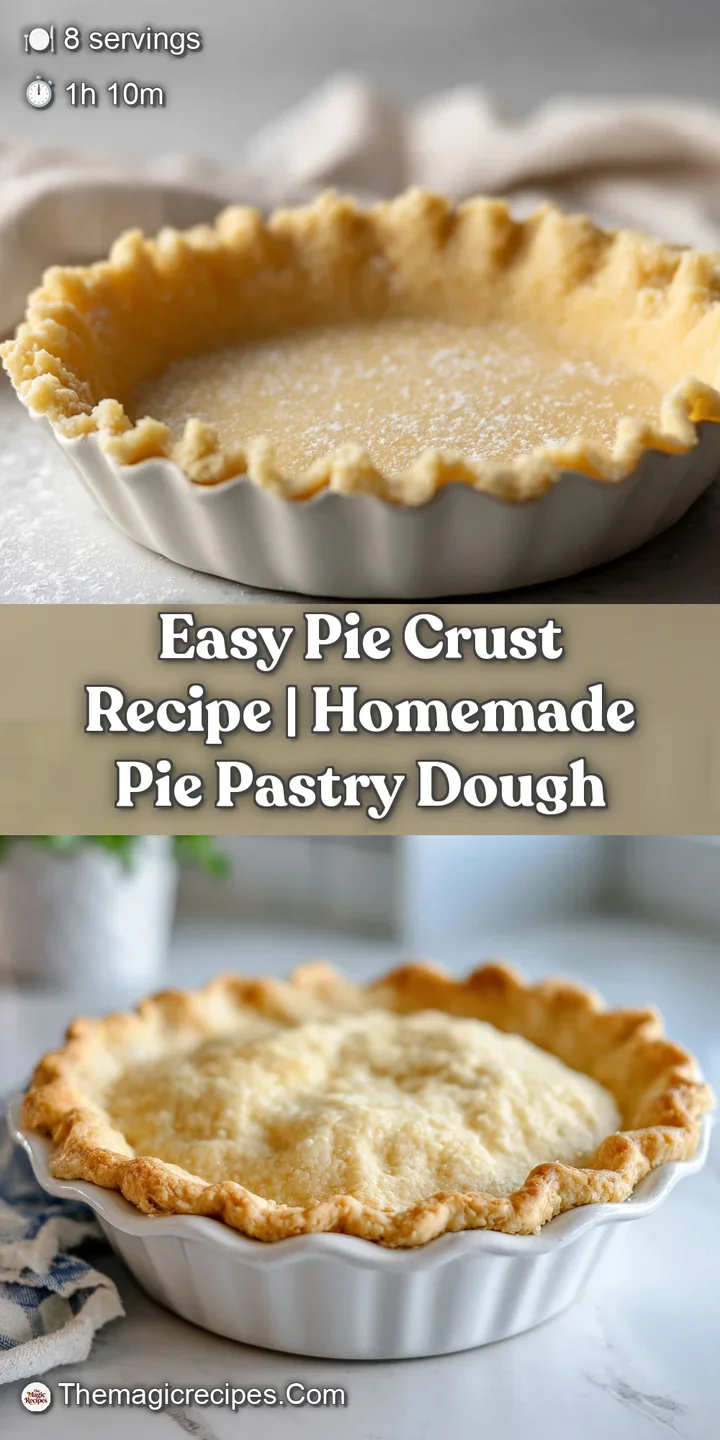
Flaky Easy Pie Crust: Homemade Pastry Dough

- Time: Active 55 mins, Passive ~15 mins (chill), Total 1 hour 10 mins
- Flavor/Texture Hook: Exquisitely tender with a buttery, crisp shatter that melts in your mouth.
- Perfect for: Holiday dessert tables, comforting family gatherings, or simply elevating your everyday sweet treats.
- Make-ahead: Dough can be prepared up to 3 days in advance.
- The Moment That Crumbled My Fear: Pie Crust Revelation
- Unraveling the Mystery: Why Your Crust Might Get Tough
- Your Blueprint for Bakery Quality Indulgence
- Unraveling the Mystery: Why Your Crust Might Get Tough
- The Indispensable Elements of a Sublime Crust
- Essential Tools for Pie Crust Perfection
- Bringing It All Together: From Dough to Golden Flake
- Rescuing Your Dough: Common Hurdles and Simple Fixes
- Elevating the Experience: Delightful Pie Crust Variations
- Plan Ahead for Pure Pleasure: Storing Your Pie Crust
- How to Serve and Enjoy Your Flaky Masterpiece
- Recipe FAQs
- 📝 Recipe Card
The Moment That Crumbled My Fear: Pie Crust Revelation
I remember one holiday season, feeling the weight of expectation for the annual pumpkin pie. My grandma, bless her heart, always said the crust made the pie. Mine, historically, were tough, shrinking, or just... sad. I swore that year, no more store-bought shortcuts.
I was determined to conquer the easy pie crust for our Thanksgiving feast. The air was already thick with the scent of cinnamon and roasting turkey, but my kitchen was silent, save for the nervous thwack of my pastry blender.
I was envisioning that golden, delicate edge, the kind that cracks with a sigh, not a fight.
The real breakthrough came not from some fancy technique, but from embracing the cold, not fighting it. I used to rush, warm hands melting the butter, creating a gluey mess. But that year, with truly icy butter and shortening, cut into perfect ½-inch cubes, the magic started to happen.
I watched the flour transform into a glorious coarse meal, flecked with butter chunks like precious nuggets. That first perfect, golden bite of pie crust, cradling its sweet filling, felt like a culinary triumph. It shattered with an audible crackle, giving way to a rich, tender interior that was pure decadent joy.
Unraveling the Mystery: Why Your Crust Might Get Tough
Making a truly beautiful, tender, and flaky pie crust often feels like a dark art, but it really boils down to a few key principles. Most folks struggle because they're unknowingly activating gluten too much or losing their precious cold fat. We want a crust that yields with a sigh, not a struggle.
Here's the simple science behind why this easy pie crust works and why you’ll achieve that coveted bakery quality indulgence:
- Cold Fat's Secret: The very cold butter and shortening are central to flakiness. When baked, these chilled fat pockets release steam, puffing up the layers of dough. Without enough cold fat, you get a dense, uninspired crust instead of one that shatters.
- Gluten's Gentle Touch: Overworking the dough develops gluten, which is great for bread, but terrible for pie crust. Minimal handling keeps gluten formation low, ensuring a tender, melt in-your mouth texture that contrasts beautifully with a crisp exterior.
- The Ice Water Imperative: Adding ice water in small increments is critical. It hydrates the flour without warming the fats, allowing you to achieve the right dough consistency without turning your butter into an oily puddle.
- Resting for Resilience: Chilling the formed dough discs allows the flour to fully hydrate and, crucially, gives the gluten strands a chance to relax. This makes the dough easier to roll out without shrinking back, preventing those frustrating cracked edges.
| Method | Time | Texture | Best For The easy pie crust is a true testament to the idea that simple ingredients, when handled with understanding, can create something truly indulgent. This isn't just a crust; it's the golden, flaky canvas for your most decadent pie dreams.
Your Blueprint for Bakery Quality Indulgence
This recipe will guide you through creating a reliably tender, impossibly flaky pie crust. We're talking about that kind of easy pie crust that makes your fruit pies sing, and your creamy custards feel like pure luxury.
It's designed to give you that bakery quality indulgence, right in your own kitchen, without the fuss.
Flavor Map:
- Crisp: The golden brown exterior, audibly shattering as you cut into it.
- Tender: The interior layers, yielding with minimal effort, almost melting on the tongue.
- Buttery Richness: Deep, rounded notes from the generous use of cold butter, enhanced by the subtle richness of shortening.
- Neutral Sweetness: A barely there sweetness that lets your chosen filling shine, whether it's bright fruit or a rich chocolate.
Quick Decision Table: Baking Method Comparison
| Method | Prep Time (Active) | Cook Time (for crust only) | Texture | Best For Blind Bake (with weights) | 15 minutes | Extra crisp, prevents sogginess | Custard pies, cream pies, or when pre baking is needed for stability. Best for recipes like Caramel Apple Cheesecake Bars to ensure a firm base. The cold, crisp air outside was the perfect complement to the warmth emanating from my kitchen. It was the winter holidays, and my young niece, Lily, was finally old enough to want to "help" make pies. I could still picture her little face screwed up in concentration, hands covered in flour, trying to flatten the dough. Honestly, I'd been battling pie crusts for years, getting something tough and crumbly rather than light and ethereal. I wanted that golden, shatteringly flaky crust that felt like a special occasion, not a chore.
The turning point wasn't some complex culinary wizardry, but a simple, almost radical realization about temperature. For so long, I'd thought "room temperature" was fine, but a truly excellent, easy pie crust craves the chill.
That day, with Lily's enthusiastic but often misguided help, I made sure my butter and shortening were practically frozen solid. As I cut the fat into the flour, it didn't just blend; it shattered into distinct, pebble like pieces.
The cold helped me handle the dough with minimal fuss, preventing the butter from melting and creating a glorious, rich dough that rolled out like a dream. Seeing Lily's eyes widen as she took her first bite of "our" pie, the crust flaking onto her sweater, was pure, decadent joy. That's the feeling I want for you.
Unraveling the Mystery: Why Your Crust Might Get Tough
Making a truly beautiful, tender, and flaky pie crust often feels like a dark art, but it really boils down to a few key principles. Most folks struggle because they're unknowingly activating gluten too much or losing their precious cold fat. We want a crust that yields with a sigh, not a struggle.
Here's the simple science behind why this easy pie crust works and why you’ll achieve that coveted bakery quality indulgence:
- Cold Fat's Secret: The very cold butter and shortening are central to flakiness. When baked, these chilled fat pockets release steam, puffing up the layers of dough. Without enough cold fat, you get a dense, uninspired crust instead of one that shatters.
- Gluten's Gentle Touch: Overworking the dough develops gluten, which is great for bread, but terrible for pie crust. Minimal handling keeps gluten formation low, ensuring a tender, melt in-your mouth texture that contrasts beautifully with a crisp exterior.
- The Ice Water Imperative: Adding ice water in small increments is critical. It hydrates the flour without warming the fats, allowing you to achieve the right dough consistency without turning your butter into an oily puddle.
- Resting for Resilience: Chilling the formed dough discs allows the flour to fully hydrate and, crucially, gives the gluten strands a chance to relax. This makes the dough easier to roll out without shrinking back, preventing those frustrating cracked edges.
| Method | Prep Time (Active) | Cook Time (for crust only) | Texture | Best For | Blind baking a pie crust is essential to achieve that perfect crispness, especially for custard or cream pies. It means you partially bake the crust before adding the filling.
This prevents a "soggy bottom" by drying out the crust and setting its structure, ensuring it stays beautifully flaky and golden. It’s a trick that elevates any pie from good to truly memorable.
The Indispensable Elements of a Sublime Crust
You don't need a pantry full of exotic ingredients for the best easy pie crust. The secret is in the quality of these basic components and how you treat them.
Component Analysis
| Ingredient | Science Role | Pro Secret |
|---|---|---|
| All Purpose Flour (300g) | Provides primary structure | Don't overmix! Keep a light hand to minimize gluten development for a tender crust. |
| Unsalted Butter, cold (226g) | Adds rich flavor & flakiness | Cut into cubes and freeze for 10 minutes before grating or blending. Keep it very cold for distinct layers. |
| Vegetable Shortening, cold (100g) | Enhances tenderness & workability | Higher melting point creates a more stable, tender crumb that resists crumbling. Use solid, not softened. |
| Ice Water (120ml + 1-2 tbsp) | Hydrates dough, binds ingredients | Use just enough water to bring the dough together. Too much makes it tough; too little makes it crumbly and hard to roll. |
For the Dough
- 2 ½ cups (300g) all purpose flour, plus more for dusting Why this? The perfect balance for structure and tender crumb.
- 1 teaspoon (5g) fine sea salt Why this? Enhances butter flavor and balances sweetness in your pie filling.
- 1 cup (226g) unsalted butter, very cold and cut into ½-inch cubes Why this? Critical for creating those signature flaky layers and rich, buttery taste.
- ½ cup (100g) solid vegetable shortening, very cold and cut into ½-inch cubes Why this? Adds tenderness and prevents the crust from being too brittle.
- ½ cup (120ml) ice water, plus 1-2 tablespoons more if needed Why this? Keeps the fats cold and hydrates the dough without overworking it.
| Original Ingredient | Substitute | Why It Works |
|---|---|---|
| All Purpose Flour (300g) | Pastry Flour (300g) | Lower protein content for even more tenderness. Note: Dough may be slightly softer; handle gently. |
| Unsalted Butter (226g) | Salted Butter (226g) | Use same amount. Note: Reduce added salt by ½ teaspoon to avoid an overly salty crust. |
| Vegetable Shortening (100g) | Lard (100g), very cold | Creates an exceptionally tender and flaky crust with a distinct, savory flavor. Note: Not vegetarian. |
| Ice Water (120ml) | Ice cold Vodka (120ml) | Vodka inhibits gluten development, resulting in a super tender crust. Note: No alcohol flavor remains after baking. |
Essential Tools for Pie Crust Perfection

You don't need a professional pastry kitchen to make a phenomenal easy pie crust. A few simple tools will make the process smooth and enjoyable, ensuring you get that bakery quality indulgence every time.
- Large mixing bowl
- Pastry blender or two knives (or a food processor, if you prefer, but I love the control of hand mixing for a truly flaky crust)
- Measuring cups and spoons
- Rolling pin
- Plastic wrap
- 9 inch pie plate (for each crust, recipe makes enough for two single crusts or one double crust pie)
- Baking weights (pie weights, dried beans, or rice) if blind baking
Bringing It All Together: From Dough to Golden Flake
This is where the magic happens, friend. Follow these steps for a glorious, buttery pie crust that will make your pie dreams a reality. Remember, keep everything cold!
-
Combining Dry Ingredients
In your large mixing bowl, whisk together the 2 ½ cups (300g) all purpose flour and 1 teaspoon (5g) fine sea salt. Note: This ensures even distribution and prevents pockets of over seasoning, especially important for the delicate flavor of a pie crust.
-
Incorporating the Fats
Add the 1 cup (226g) cold butter cubes and ½ cup (100g) cold shortening cubes to the flour mixture. Using a pastry blender or your fingertips, cut the fat into the flour until the mixture resembles coarse meal with some pea sized pieces of fat remaining. Note: Don't overmix!
Those pea sized chunks are essential for a flaky texture. This is a critical precision checkpoint; aim for distinct pieces, not fully incorporated butter.
-
Hydrating the Dough
Gradually add ½ cup (120ml) ice water, 1 tablespoon at a time, mixing lightly with a fork or your hands until the dough just comes together. You may need 1-2 tablespoons more. Note: The dough should be shaggy but hold together when squeezed.
Avoid adding too much water, which can lead to a tough crust. Another precision checkpoint: stop adding water as soon as it forms a cohesive mass, usually around 120-150ml total.
-
Forming and Chilling the Discs
Divide the dough into two equal portions. Gently press each portion into a disc, wrap tightly in plastic wrap, and refrigerate for at least 30 minutes, or up to 3 days. Note: Chilling is non negotiable!
This allows the flour to fully hydrate and the gluten to relax, making for a more tender, easy to roll dough.
-
Rolling Out the Dough
On a lightly floured surface (using more all purpose flour), roll one chilled dough disc into a 12 inch circle, about ⅛-inch thick. Note: Rotate the dough frequently and flour your rolling pin to prevent sticking. Work quickly to keep the dough cold.
-
Transferring to Pie Plate
Carefully transfer the rolled dough to your 9 inch pie plate. Trim the edges, leaving about a ½-inch overhang.
-
Achieving the Perfect Crimp
Fold the overhang under itself, then crimp the edges decoratively with your fingers or a fork.
-
Blind Baking for Crispness (if needed)
If your recipe calls for blind baking (which I highly recommend for any custard or cream pie to avoid a soggy bottom), prick the bottom of the crust all over with a fork. Line the crust with parchment paper and fill with pie weights or dried beans.
Bake at 375°F (190°C) for 15 minutes until the edges are lightly golden. Remove weights and parchment, then bake for another 5-10 minutes until the bottom is pale golden and dry.
This is your third precision checkpoint: the cook time for blind baking is exactly 15 minutes with weights.
Fill and bake according to your specific pie recipe!
Rescuing Your Dough: Common Hurdles and Simple Fixes
Even with the best intentions, a pie crust can throw you a curveball. Don't worry, we've all been there! Here's how to tackle common issues with your homemade pie crust easy.
Why Your Dough is Too Hard to Roll
This usually means your dough is either too cold or hasn't had enough time to rest, making it stiff and resistant.
| Problem | Root Cause | Solution |
|---|---|---|
| Dough is rock hard | Over chilled | Let it sit at room temperature for 10-15 minutes to soften slightly. |
| Edges crack excessively | Not enough hydration | Lightly spritz with ice water and gently work to rehydrate. |
| Dough shrinks back | Gluten not relaxed | Chill for an extra 15-20 minutes; allow gluten more time to settle. |
Preventing a Sticky Dough Mess
A sticky dough can be frustrating, clinging to your rolling pin and surface. This often means too much water was added or the butter is too warm.
Avoiding a Tough, Chewy Crust
A tender, flaky crust is the dream, but sometimes it turns out chewy and hard. This is almost always due to overworking the dough, which develops too much gluten.
Common Mistakes Checklist:
- ✓ Use truly cold fat: Freeze your butter cubes for 10 minutes before mixing.
- ✓ Don't overmix: Stop as soon as the dough just comes together. Visible chunks of fat are good!
- ✓ Handle minimally: The less you touch the dough with warm hands, the better.
- ✓ Chill adequately: Allow at least 30 minutes for gluten relaxation and fat firming.
- ✓ Flour your surface sparingly: Too much extra flour can dry out the dough.
- ✓ Roll evenly: Apply even pressure to prevent thin spots that burn.
Elevating the Experience: Delightful Pie Crust Variations
Once you've mastered the classic, don't stop there! This easy pie pastry is a fantastic base for all sorts of flavor explorations. Here are a few ways to make it your own decadent delight.
Infusing Herbaceous Notes
For savory pies, consider adding 1-2 teaspoons of finely chopped fresh herbs like rosemary, thyme, or sage to the dry ingredients. It adds an earthy, aromatic layer that pairs wonderfully with chicken pot pie or a hearty quiche.
A Hint of Sweetness
If you're making a sweet pie and want a slightly sweeter crust, add 1-2 tablespoons of granulated sugar to the dry ingredients along with the salt. This can enhance the browning and provide a subtle sugary note.
gluten-free Alternative
You can swap the all purpose flour for a good quality 1:1 gluten-free baking flour blend. Note: The texture will be slightly different, often a bit more delicate or crumbly, but it will still be a tender and delightful crust.
dairy-free Option
For a dairy-free pie crust, simply substitute a high-quality vegan butter (like Miyoko's Kitchen or Earth Balance sticks) for the unsalted butter. Ensure it's very cold, just like traditional butter. The shortening remains vegan.
Chef's Tips for a Superior Crust:
- Vodka secret: Substitute half the ice water with ice cold vodka. Alcohol evaporates faster than water, limiting gluten development and resulting in an incredibly tender, flaky crust. Don't worry, you won't taste it!
- Grater magic: Instead of cubing, grate your frozen butter using the large holes of a box grater. This creates super fine, evenly distributed fat particles for maximum flakiness with minimal handling.
- Bench scraper power: Use a bench scraper to gather the dough after mixing. It keeps your warm hands off the dough, maintaining that crucial cold temperature.
If you want...
- ...a super tender crust: use part vodka for the liquid.
- ...an extra rich flavor: add a pinch of nutmeg or cardamom to the dry ingredients for sweet pies.
- ...to avoid shrinking: roll out slightly thicker than ⅛-inch and ensure ample chilling time before baking.
Plan Ahead for Pure Pleasure: Storing Your Pie Crust
Being able to make your homemade pie crust easy in advance is a huge time saver, especially around busy holidays.
Refrigerating Dough
Wrapped tightly in plastic wrap, the dough discs can be stored in the refrigerator for up to 3 days. When ready to use, simply remove from the fridge and let it sit at room temperature for 10-15 minutes until it's pliable enough to roll without cracking.
Freezing Dough
For longer storage, wrap the dough discs first in plastic wrap, then in aluminum foil, and place in a freezer safe bag. It will keep beautifully for up to 2 months. Thaw overnight in the refrigerator before rolling, then let it sit at room temperature for about 20-30 minutes before working with it.
Freezing Blind Baked Crusts
You can also blind bake your pie crusts, let them cool completely, then wrap them tightly in plastic wrap and foil. Store in the freezer for up to 1 month. This is a brilliant trick for quick desserts! When ready to use, simply unwrap and fill, no thawing needed if your filling is cold.
Just know your filling might need slightly longer to bake to account for the frozen crust.
How to Serve and Enjoy Your Flaky Masterpiece
Your beautifully made flaky pie crust recipe deserves a grand entrance! This tender, buttery canvas is the perfect base for an endless array of decadent fillings, transforming any meal into a special occasion.
Classic Fruit Pie Pairing
This crust is absolutely divine with a classic fruit pie. Imagine it cradling a vibrant blueberry filling, its juices bubbling, or a spiced apple pie, the aroma filling your home. For an ultimate seasonal treat, it's the perfect foundation for a Classic Sweet Potato Pie, providing that crucial textural contrast.
Savory Quiche Foundation
Don't limit this crust to sweets! It makes an exceptional base for savory quiches or tarts. The richness of the butter and shortening stands up beautifully to egg custards, cheeses, and vegetables, offering a truly indulgent breakfast or brunch.
Simple Tartlets
Use cookie cutters to create small, decorative tartlets from leftover dough scraps. Fill them with a dollop of jam, a sprinkle of cinnamon sugar, or some fresh fruit before baking for mini, bite sized delights.
However you choose to fill and serve it, take a moment to savor that first bite. The crisp shatter, the tender interior, the rich buttery notes that's the reward for your dedication. And trust me, it’s a flavor experience that’s worth every single moment of effort!
Recipe FAQs
How do you make easy pie base?
Whisk together the flour and salt first. Then, cut the very cold butter cubes and shortening into the dry mix using a pastry blender until you have coarse meal with pea-sized fat pieces remaining. Gradually add the ice water until the dough just comes together.
What is the secret to a good pie crust?
Keeping the fat extremely cold is the most critical secret. Cold fat creates steam pockets during baking, resulting in flaky layers rather than a tough, crumbly texture. For best results, freeze your butter cubes for 10 minutes before mixing.
Is pie crust better with butter or shortening?
Butter provides the superior flavor, but shortening aids in flakiness. Butter melts quickly and yields a richer taste, while shortening has a higher melting point, helping maintain shape and structure. Many recipes successfully blend both, like this one, to gain the benefits of each.
What is the basic formula for making pie crust?
The general ratio is 3 parts flour to 2 parts cold fat by weight. This crust uses 2 ½ cups of flour combined with 1 cup of butter and ½ cup of shortening (totaling 1.5 cups of fat). This ensures a balanced structure for proper rolling and handling.
How long must the dough chill before rolling?
Chill the dough for a minimum of 30 minutes before rolling. This period allows the gluten strands, tightened during mixing, to relax, making the dough pliable. It also ensures the fat firms up again, which is essential for that classic flaky lift.
Why is my crust shrinking or cracking when baked?
The dough was likely overworked or not chilled long enough. Overmixing develops too much gluten, causing shrinkage, and warm fat melts prematurely. If you are learning to control dough tension, you might find the principles of gentle handling similar to those needed when making a smooth creamy & velvety sauce base.
Can I use ice-cold tap water instead of ice water?
No, you must use ice water for best results. Tap water is rarely cold enough to keep the fat solid during the cutting process. The goal is to incorporate moisture without melting the butter or shortening; using only ice water ensures the fat remains stable.
Flaky Easy Pie Crust Recipe

Ingredients:
Instructions:
Nutrition Facts:
| Calories | 452 kcal |
|---|---|
| Protein | 4.1 g |
| Fat | 35.8 g |
| Carbs | 28.6 g |
