Ahi Tuna Poke Bowl: Fresh and Balanced
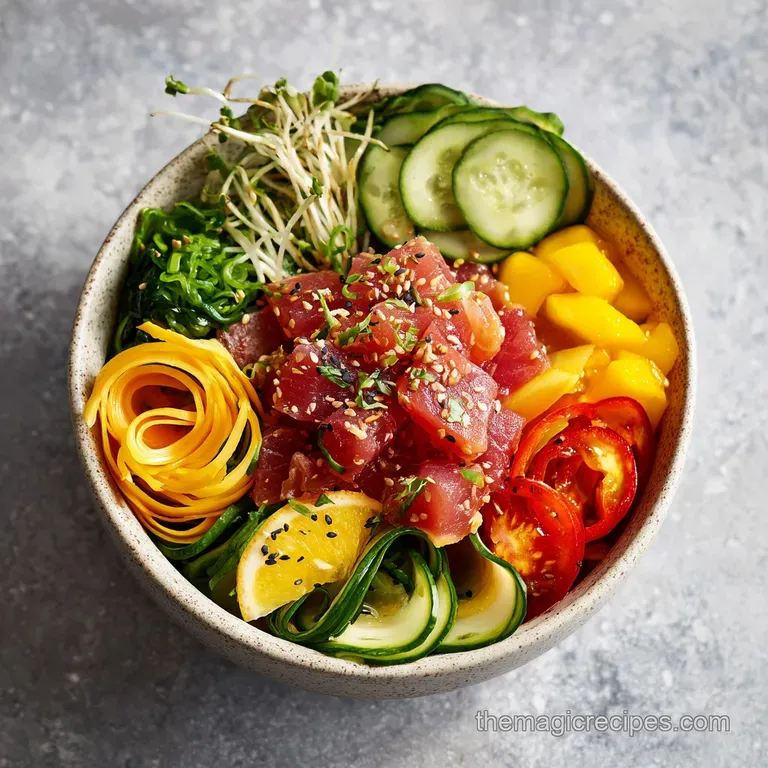
- Time: Active 20 minutes, Passive 0 minutes, Total 20 minutes
- Flavor/Texture Hook: Velvety chilled tuna with a salty, nutty sesame finish
- Perfect for: Impressive dinner parties or a high protein, clean lunch
- Crafting the Ultimate Authentic Ahi Tuna Poke
- Essential Timing and Serving Metrics for Success
- Selecting the Best Elements for Your Fresh Bowl
- Essential Tools for Professional Sashimi Cuts
- Step by Step Guide to a Flash Marinated Bowl
- Solving Common Texture and Flavor Balance Issues
- Creative Ways to Customize Your Ahi Tuna Poke
- Proper Handling and Repurposing Your Fish
- Artful Plating Techniques for Your Next Dinner Party
- Kitchen Myths Debunked
- Recipe FAQs
- 📝 Recipe Card
Crafting the Ultimate Authentic Ahi Tuna Poke
Picture this: your knife slides through a block of ruby red Ahi tuna like it’s chilled butter. There’s no resistance, just a clean, silent glide that leaves behind a shimmering, translucent cube.
As you toss it with toasted sesame oil, that deep, nutty aroma hits you, immediately followed by the sharp, zingy scent of freshly grated ginger. It’s a sensory overload before you even take the first bite.
I used to think making this at home would be intimidating. I worried about the "fishy" smell or getting the texture wrong. But the truth is, the magic happens in the simplicity. It’s about respecting the ingredients.
When you hold a piece of sushi grade fish, you aren’t just cooking; you’re assembling a masterpiece of freshness. We’re aiming for that specific chilled, "clean" taste that transports you straight to a beachside shack in Maui.
This isn't your average "mall food court" bowl piled high with heavy mayo and fried toppings. We're going for something refined. We want the tuna to be the star, supported by the crunch of paper thin Maui onions and the earthy base of brown rice.
Trust me, once you see how easy it is to achieve that restaurant quality shimmer at home, you’ll never look at pre packaged seafood the same way again.
Essential Timing and Serving Metrics for Success
Cold Chain Maintenance: Keeping the fish between 34°F and 38°F from the moment it leaves the store until it hits the bowl is the secret to that "clean" flavor profile.
If the fish warms up, the proteins begin to soften, and you lose that snappy, firm bite that makes raw fish so satisfying.
The Flash Marinate: Most people make the mistake of letting the fish soak for hours. Because of the salt in the tamari and the acid in the rice vinegar, the tuna will actually start to "cook" and turn greyish brown if left too long. We are looking for a 5 to 10 minute window.
This is just enough time for the exterior of the cubes to grab the flavor without losing their vibrant red color or velvety interior.
Brown Rice Temperature: We use chilled brown rice here. Why? Putting ice cold raw tuna on top of steaming hot rice is a recipe for a lukewarm, unappealing texture. By using pre chilled rice, we maintain the "refreshing" aspect of the dish, which is the whole point of a poke bowl.
The Osmotic Draw: Salt in the tamari pulls moisture out of the onions. By shaving them paper thin, they soften slightly in the marinade, losing their aggressive "bite" and becoming a sweet, crunchy companion to the soft fish.
| Cut Thickness | Internal Temp | Marinate Time | Visual Cue |
|---|---|---|---|
| 3/4 inch cubes | 36°F (Ideal) | 5-10 mins | Glistening, vibrant red |
| 1/2 inch cubes | 36°F (Ideal) | 3-5 mins | Translucent edges |
| 1 inch cubes | 36°F (Ideal) | 12-15 mins | Deep ruby center |
Choosing the right cut of fish is the most important decision you'll make today. Look for "Sushi Grade" or "Sashimi Grade" labels. This isn't just marketing; it means the fish was handled and frozen specifically to be safe for raw consumption. If you can't find Ahi, check out my salmon pasta dish for a cooked alternative that still hits those fresh, light notes.
Selecting the Best Elements for Your Fresh Bowl
For this recipe, we are using low sodium tamari because it provides a cleaner, more focused saltiness compared to traditional soy sauce, which can sometimes taste overly fermented or "boozy." The honey is there to balance the red pepper flakes not to make it sweet, but to round out the sharp edges of the
vinegar and ginger.
| Ingredient | Science Role | Pro Secret |
|---|---|---|
| Ahi Tuna | Primary Protein | Pat dry to ensure marinade sticks |
| Toasted Sesame Oil | Fat & Emulsifier | A little goes a long way; don't overpour |
| Fresh Ginger | Aromatic Cleanser | Grate it into a paste for total infusion |
| Maui Onion | Textural Contrast | Shave it so thin it's almost transparent |
The Maui onion is a specific choice here. Unlike a standard yellow onion, it has a high water and sugar content, making it much milder. If you can't find them, a sweet Vidalia onion is your best friend. We want the crunch without the tear inducing pungency.
- 1.5 lbs Sushi grade Ahi Tuna: The heart of the dish. Why this? Essential for safety and the signature buttery texture of raw tuna.
- Substitute: Sushi grade Salmon (richer, higher fat content).
- 1/2 Small Maui onion: Provides a sweet, mild crunch. Why this? Lacks the harsh sulfur bite of standard onions.
- Substitute: Shallots (more delicate, slightly garlicky).
- 4 tbsp Low sodium Tamari: The salt and umami base. Why this? gluten-free and less overwhelming than standard soy sauce.
- Substitute: Coconut Aminos (sweeter, lower salt).
- 1 tbsp Toasted sesame oil: The aromatic "glue" of the sauce. Why this? Provides the classic nutty scent of authentic poke.
- Substitute: Perilla oil (earthy, slightly minty).
- 1 tsp Fresh ginger, finely grated: Adds heat and freshness. Why this? Cuts through the fattiness of the fish.
- Substitute: Ginger paste (more concentrated, use less).
- 1 tsp Rice vinegar (unseasoned): Provides the necessary bright acidity. Why this? Lower acidity than white vinegar; won't "cook" the fish instantly.
- Substitute: Apple cider vinegar (fruitier, more punchy).
- 1/2 tsp Honey or agave nectar: Balances the salt and heat. Why this? Helps the marinade coat the fish evenly.
- Substitute: Maple syrup (adds a slight woodsy note).
- 1/2 tsp Red pepper flakes: For a subtle, creeping heat. Why this? Traditional Hawaiian "limu" feel without the seaweed hunt.
- Substitute: Sriracha (adds moisture and garlic flavor).
- 2 cups Prepared brown rice, chilled: The hearty, nutty base. Why this? Holds up better than white rice when dressed.
- Substitute: Quinoa (higher protein, lighter texture).
- 2 Scallions, thinly sliced: For a fresh, green finish. Why this? Adds visual contrast and mild onion flavor.
- Substitute: Chives (more subtle, elegant).
- 1 tbsp Toasted sesame seeds: For a slight, popping crunch. Why this? Enhances the sesame oil flavor profile.
- Substitute: Furikake (adds salt and seaweed flavor).
- 1 Avocado, diced: Adds the "cream" to the bowl. Why this? Provides essential healthy fats and velvety texture.
- Substitute: Edamame (adds protein and snap).
- 1/4 cup Shredded nori: The "ocean" flavor. Why this? Mimics the traditional seaweeds used in Hawaii.
- Substitute: Seaweed salad (wakame).
Essential Tools for Professional Sashimi Cuts
You don't need a kitchen full of gadgets, but a sharp knife is non negotiable. If you try to cut raw fish with a dull blade, you'll end up "sawing" through the fibers, which bruises the meat and ruins the texture.
A sharp, non serrated chef's knife or a specialized Yanagiba (sashimi knife) will give you those clean, square edges that look like they came from a high end sushi bar.
I highly recommend using a glass mixing bowl for the marinade. Metal bowls can sometimes impart a tiny metallic tang when they come into contact with acidic ingredients like rice vinegar and tamari. Glass is non reactive and allows you to see exactly how well the marinade is emulsifying.
For Firm Sashimi Grade Texture
The key is a "pull cut." Don't push down on the fish. Start at the heel of the knife and pull it toward you in one long, smooth motion. This preserves the cellular structure of the tuna, keeping it firm and prevent it from becoming "mealy."
For a Deeply Layered Umami Profile
Whisking the marinade until it’s fully emulsified is a step many skip. You want the honey, oil, and tamari to become one cohesive liquid. If they are separated, some cubes will get only oil (and taste greasy) while others get only tamari (and taste overly salty).
For a Nutritious Finish
Preparing the brown rice ahead of time is vital. I often make mine the night before. This allows the starches to stabilize, giving the rice a chewy, distinct grain that won't turn into mush when it meets the Tuna Poke marinade.
step-by-step Guide to a Flash Marinated Bowl
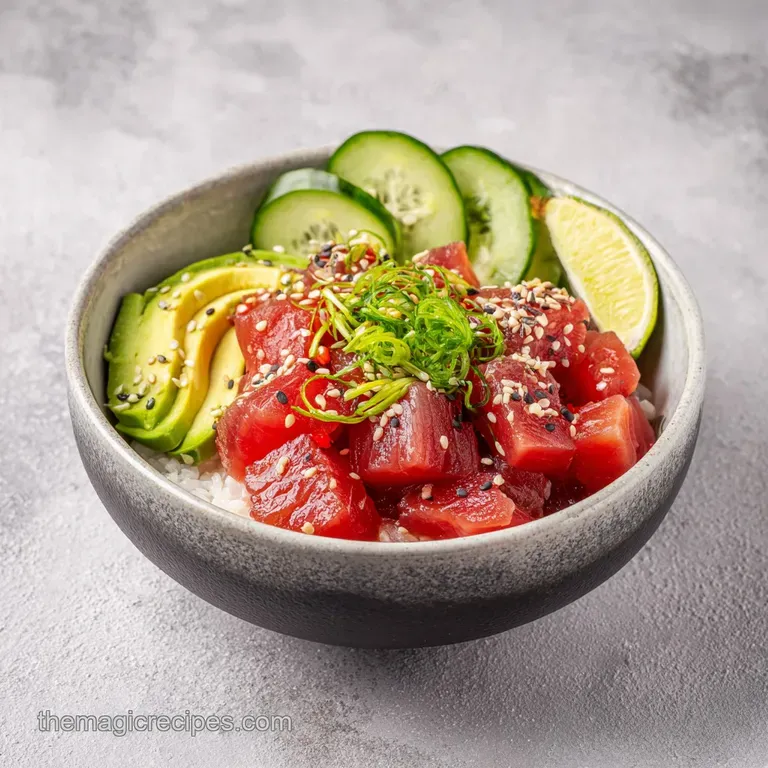
- Pat the Ahi tuna dry with paper towels to remove excess moisture. Note: Dry fish allows the oil based marinade to actually stick to the surface rather than sliding off.
- Using a sharp non serrated chef's knife, cut the tuna into uniform 3/4 inch cubes. Look for clean, straight edges without tearing.
- In a large glass mixing bowl, whisk together the low sodium tamari, toasted sesame oil, grated ginger, rice vinegar, honey, and red pepper flakes until emulsified. Whisk until the oil no longer sits on top.
- Add the shaved Maui onions to the marinade bowl. Note: This allows the onions to start softening while you prep the final garnishes.
- Add the cubed tuna to the marinade. Toss gently with a silicone spatula until every cube is glistening and coated.
- Let the mixture sit for 5 to 10 minutes (Flash Marinade). The fish should still be bright red, not dull brown.
- Divide the prepared, chilled brown rice into four bowls.
- Top each bowl with the marinated tuna and onion mixture, ensuring you drizzle any leftover liquid from the bowl over the rice.
- Garnish with the diced avocado, sliced scallions, toasted sesame seeds, and shredded nori.
- Serve immediately while the fish is chilled and the nori is still crisp.
Solving Common Texture and Flavor Balance Issues
One of the biggest heartbreaks is spending money on beautiful tuna only to have it turn mushy. This usually happens for two reasons: poor knife technique or over marinating. If the fish feels "soft" rather than "firm," you've likely left it in the acidic marinade too long. If you're looking for a more traditional preparation, check out my traditional Poke Receta for a deep dive into Hawaiian methods.
Why Your Tuna Lost Its Color
If your tuna turns a dull grey or brown, the acid in the vinegar or the salt in the tamari has begun to denature the proteins (essentially "cooking" it, like ceviche). To prevent this, never marinate for more than 15 minutes.
The "flash" method is your insurance policy for that vibrant, photo worthy red.
Why Your Bowl Tastes Too Salty
Tamari and soy sauce vary wildly in salt content. If your bowl tastes like a salt lick, it’s likely because the rice wasn't seasoned or the tamari was full sodium. You can fix this instantly by adding more diced avocado or a squeeze of fresh lime juice.
The fat in the avocado and the acid in the lime help neutralize the perception of salt on your palate.
| Problem | Root Cause | Solution |
|---|---|---|
| Mushy Fish | Over marinating or dull knife | Limit marinate to 10 mins; sharpen knife |
| Bland Flavor | Ingredients not emulsified | Whisk marinade until it looks like a thick syrup |
| Tough Onion | Sliced too thick | Use a mandoline or "paper thin" technique |
Common Mistakes Checklist
- ✓ Never use "frozen then thawed" tuna that isn't specifically labeled sushi grade.
- ✓ Don't skip the paper towel pat down; moisture is the enemy of flavor adhesion.
- ✓ Avoid using hot rice; it creates a temperature "danger zone" for the raw fish.
- ✓ Don't overcrowd the marinating bowl; the tuna needs surface contact with the liquid.
- ✓ Check your ginger; if it's woody and fibrous, grate only the juicy center.
Creative Ways to Customize Your Ahi Tuna Poke
While the classic version is hard to beat, the beauty of the Tuna Poke is how well it plays with other flavors. If you want something richer, you can make a Spicy Mayo version by whisking together Kewpie mayonnaise and Sriracha, then folding it into the marinated fish at the very end.
This adds a velvety, creamy layer that some people find more "indulgent."
For a Creamy, Spicy Version
If you want that "Dynamite" flavor, add 1 tablespoon of Kewpie mayo and a teaspoon of Sriracha to the marinade. This creates an emulsion that clings to the fish. It's less traditional but incredibly popular for those who love a bit of heat.
For a Grain Free/Keto Version
Swap the brown rice for a bed of shredded cabbage or kelp noodles. These options provide a fantastic crunch without the carbohydrates. If you go the cabbage route, toss it with a tiny bit of lime juice and salt first to soften the texture.
| Method | Time | Texture | Best For |
|---|---|---|---|
| Traditional | 20 min | Clean/Firm | Purists & Light Lunch |
| Spicy Mayo | 22 min | Creamy/Rich | Dinner parties |
| Grain Free | 15 min | Crunchy/Fresh | Low carb/Keto diets |
Scaling the Recipe Up or Down
If you're cooking for a crowd (2x or 4x the recipe), do not multiply the salt and spices linearly. Use 1.5x the red pepper flakes and ginger first, then taste. Spices can become overwhelming in large batches. For a solo lunch (1/4 batch), use a small ramekin for the marinade to ensure the fish is fully submerged.
Proper Handling and Repurposing Your Fish
Raw fish is a "use it or lose it" ingredient. Ideally, you should eat your poke within 2 hours of making it. However, if you have leftovers, you can store the marinated tuna in an airtight glass container in the coldest part of your fridge for up to 24 hours.
Just know that the texture will soften and the color will fade.
Zero Waste Tip: If you have leftover marinated tuna that you're no longer comfortable eating raw the next day, don't throw it out! Quickly sear the cubes in a hot pan for 30 seconds per side. You'll have "Poke Style" seared tuna bites that are incredible over a salad or tucked into a taco.
The marinade acts as a perfect seasoning for the sear.
Freezing: Never freeze the assembled poke bowl. The rice will turn hard and the avocado will go brown and mushy. You can freeze the raw Ahi block if it was never previously thawed, but once it's marinated, the freezing process will destroy the texture of the fish.
Artful Plating Techniques for Your Next Dinner Party
Presentation is half the battle when you're serving something as beautiful as Tuna Poke. Start with a wide, shallow bowl rather than a deep one. This allows you to spread out the toppings so the guest can see every single component.
Think of the bowl as a canvas where the brown rice is the background and the tuna is the centerpiece.
For Restaurant Quality Height
Instead of just dumping the tuna on top of the rice, use a ring mold (or a clean, empty tuna can with both ends removed) to stack the rice and then the fish. Press down gently, then lift the mold. It creates a professional "tower" look that immediately makes the dish feel like a $30 appetizer.
For a Pop of Color
Contrast is key. Place the bright green avocado right next to the deep red tuna. Sprinkle the black and white sesame seeds from high above this "salt bae" technique ensures even distribution and looks great if you're cooking in front of friends.
Finally, nestle the shredded nori on one side so it doesn't get soggy from the marinade before the first bite.
The red pepper flakes add a tiny glint of orange red that catches the light. If you want even more "pop," a few slices of fresh serrano chili or a sprinkle of edible microgreens can take the visual from "home cook" to "executive chef" in seconds. Just remember: the fish is the star.
Don't bury it under too many garnishes!
| Premium | Budget | Flavor Impact | Savings |
|---|---|---|---|
| Ahi Tuna | Albacore (Frozen) | Milder, less "buttery" | Save $10-15 |
| Maui Onion | Red Onion (Soaked) | Sharper, more pungent | Save $2-3 |
| Fresh Ginger | Ground Ginger | Less "zing", more earthy | Save $1-2 |
Kitchen Myths Debunked
"You need to marinate poke for hours to get the flavor in." This is the quickest way to ruin your fish. As we discussed in the science section, the salt and acid will chemically "cook" the tuna, turning it from a beautiful sashimi texture into a mushy, grey mess. Ten minutes is the sweet spot for flavor vs. texture.
"Sushi grade is a government regulated term." Actually, in the United States, the FDA doesn't officially "grade" fish as sushi grade. It is a term used by wholesalers and retailers to indicate that the fish has been frozen to a specific temperature for a specific time to kill parasites.
Always buy from a fishmonger you trust.
"Brown rice is too heavy for poke." Many people avoid brown rice because they think it will be clunky. However, the nuttiness of brown rice actually complements the toasted sesame oil much better than plain white rice. The key is simply ensuring it is fully chilled before assembly so it stays distinct and chewy.
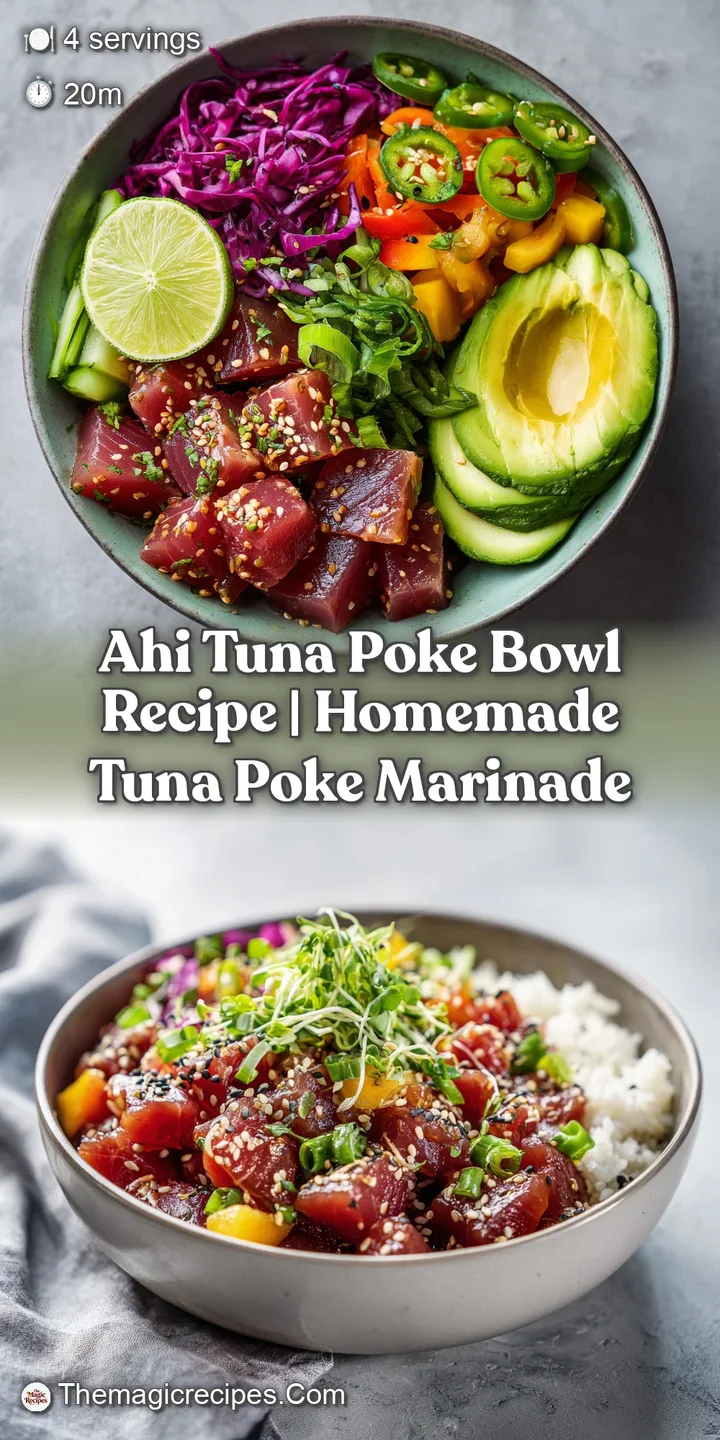
Recipe FAQs
What goes in tuna poke?
This recipe combines sushi grade Ahi tuna with a savory marinade. You will need tamari, toasted sesame oil, grated ginger, rice vinegar, honey, and red pepper flakes, served over chilled brown rice with Maui onion, avocado, scallions, sesame seeds, and shredded nori.
Is tuna poke raw?
Yes, the tuna is raw. It is essential to use high-quality sushi grade Ahi tuna and keep it chilled until the very moment you serve the bowls.
Can I eat poke bowl while pregnant?
No, it is generally recommended to avoid raw fish during pregnancy. Since this dish relies on raw Ahi tuna, you should consult your healthcare provider or substitute the raw fish for a cooked protein.
What does poke mean with tuna?
It refers to the Hawaiian method of "cutting crosswise into pieces." The technique involves dicing the raw Ahi into uniform 3/4 inch cubes to maximize the surface area for the marinade.
How to ensure the marinade coats the fish evenly?
Whisk the tamari, sesame oil, and seasonings until fully emulsified before adding the tuna. If you enjoyed mastering the stable emulsion technique here, you will find it applies to many other sauce based preparations.
Is it true I can use any fish I find at the grocery store for this recipe?
No, this is a common misconception. You must specifically purchase fish labeled "sushi grade" to ensure it has been handled safely for raw consumption.
How to keep the Ahi tuna firm during marinating?
Pat the fish thoroughly dry with paper towels before cubing and limit the marinating time to 5 to 10 minutes. Exceeding this "flash marinade" window can cause the acid in the rice vinegar to alter the texture of the raw tuna.
Fresh Ahi Tuna Poke
Ingredients:
Instructions:
Nutrition Facts:
| Calories | 411 kcal |
|---|---|
| Protein | 44g |
| Fat | 11g |
| Carbs | 28g |
| Fiber | 4g |
| Sugar | 3g |
| Sodium | 315mg |
