Garlic Mushroom Pasta: Velvety Glaze
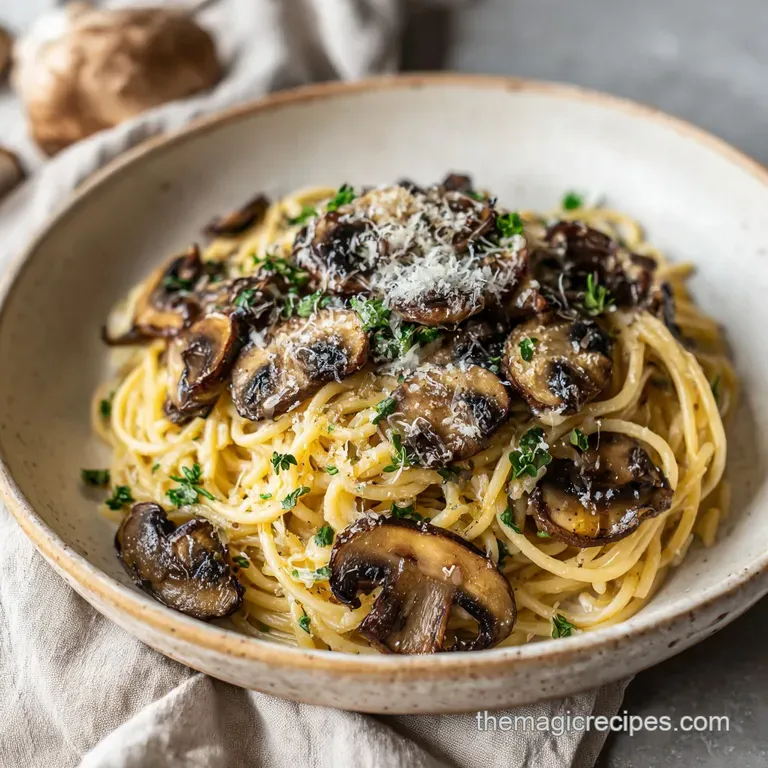
- Time: Active 10 minutes, Passive 20 minutes, Total 30 minutes
- Flavor/Texture Hook: Earthy, nutty mushrooms paired with a velvety garlic butter glaze
- Perfect for: Busy weeknights, budget-friendly date nights, or a quick vegetarian lunch
- Mastering the Savory Foundation of Garlic Mushroom Pasta
- Essential Metrics for Your Garlic Mushroom Pasta Success
- Selecting the Best Components for Garlic Mushroom Pasta
- The Essential Tools for Crafting Garlic Mushroom Pasta
- The Method to Creating Velvety Garlic Mushroom Pasta
- Pro Solutions for Common Garlic Mushroom Pasta Issues
- Smart Variations for Your Unique Garlic Mushroom Pasta
- Storage and Reheating Rules for Garlic Mushroom Pasta
- Finishing Touches for a Stunning Garlic Mushroom Pasta
- Debunking Kitchen Myths
- Recipe FAQs
- 📝 Recipe Card
Mastering the Savory Foundation of Garlic Mushroom Pasta
We've all been there you're staring at a package of mushrooms and a box of pasta, wondering if you can turn them into something that doesn't taste like cardboard. I remember my first attempt; I threw everything into the pan at once, and the mushrooms just boiled in their own grey liquid.
It was a soggy, tasteless mess that honestly made me want to order pizza. But once I learned the secret of the "dry sear," everything changed.
That sizzle you hear when the mushrooms hit a hot pan is the sound of flavor being born. You want them to turn a deep, mahogany brown, almost shattering at the edges while staying tender inside.
When you toss them with garlic and butter, the aroma is enough to bring everyone into the kitchen before you've even boiled the water. This is the kind of cooking that feels like a win because it's cheap, fast, and tastes like you spent an hour on it.
The Science of the Sizzle
The Maillard Reaction: High heat triggers a chemical reaction between amino acids and sugars, creating hundreds of new flavor compounds and that characteristic brown crust. If the pan is too cool, the mushrooms release moisture too slowly and steam instead of searing.
| Method | Time | Texture | Best For |
|---|---|---|---|
| Stovetop | 20 minutes | Crispy edges, juicy centers | Quick weeknights and maximum flavor control |
| oven-roasted | 25 minutes | Concentrated, chewy, and deeply browned | Large batches or hands off meal prep |
Cooking on the stovetop allows you to monitor the garlic closely so it doesn't burn, which is vital for this Garlic Mushroom Pasta. While roasting gives a great concentrated flavor, you lose that immediate emulsification you get by tossing everything together in one pan.
Essential Metrics for Your Garlic Mushroom Pasta Success
To get this dish right every single time, we need to treat our ingredients with a bit of respect. It’s not just about tossing things in; it's about when and how they hit the heat. Similar to the technique used in our Garlic Butter Noodles recipe, the goal is a glossy coating that clings to every strand of pasta.
| Component | Science Role | Pro Secret |
|---|---|---|
| Mixed Mushrooms | Umami Source | Don't salt until the very end of the sear to prevent premature water release |
| Pasta Water | Emulsifier | Use the starchy water from the last 2 minutes of boiling for maximum bind |
| Fresh Garlic | Aromatic | Microplane the cloves to create a paste that melts into the butter sauce |
Chef's Tip: Freeze your butter for 10 minutes before adding it to the pan at the very end. The temperature drop helps create a more stable emulsion for a glossier sauce.
Selecting the Best Components for Garlic Mushroom Pasta
- 1 lb mixed mushrooms (Cremini, Shiitake, or Oyster): Why this? Different varieties provide a complex range of textures and earthy flavors.
- 2 tbsp extra virgin olive oil: Why this? High smoke point for the initial sear without burning too quickly.
- 0.5 tsp sea salt: Why this? Enhances the natural umami of the fungi without overpowering them.
- 12 oz dry long pasta (Tagliatelle, Linguine, or Spaghetti): Why this? Long strands provide more surface area for the butter sauce to cling to.
- 6 cloves fresh garlic: Why this? A high volume is necessary for that bold, signature garlic punch.
- 2 medium shallots: Why this? Sweeter and milder than onions, they disappear into the velvety sauce.
- 3 tbsp unsalted butter: Why this? Adds richness and helps create the silky emulsion with pasta water.
- 0.5 cup reserved pasta water: Why this? The liquid gold that binds the fat and starch together.
- 0.5 cup freshly grated Parmigiano Reggiano: Why this? Adds saltiness and a nutty finish that complements the mushrooms.
- 0.25 cup fresh Italian parsley: Why this? Provides a necessary pop of freshness and color to the dish.
- 1 tsp lemon zest: Why this? The acidity cuts through the fat and brightens the whole meal.
- 0.5 tsp freshly cracked black pepper: Why this? Adds a subtle heat that lingers on the palate.
The Essential Tools for Crafting Garlic Mushroom Pasta
You don't need a professional kitchen to pull this off, but a wide skillet is your best friend here. If the pan is too small, the mushrooms will be crowded and they'll steam rather than sear. A large stainless steel or cast iron pan works best because they hold heat beautifully.
You'll also want a microplane for the garlic it turns the cloves into a fine paste that distributes flavor evenly without leaving you with a mouthful of raw garlic.
The Method to Creating Velvety Garlic Mushroom Pasta
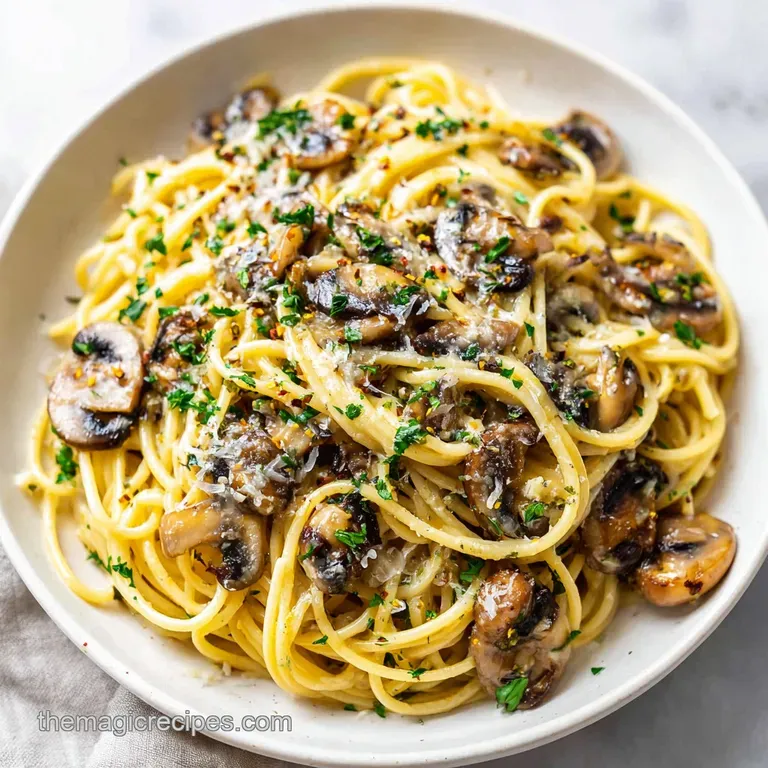
- Boil the water. Salt it heavily until it tastes like the sea. Note: This is your only chance to season the pasta itself.
- Sear the mushrooms. Heat olive oil in a large skillet over medium high heat. Add the 1 lb sliced mushrooms and leave them alone for 4 minutes until they are browned and crisp.
- Flip and repeat. Toss the mushrooms and cook for another 3 minutes.
- Cook the pasta. Drop the 12 oz pasta into the boiling water. Cook 2 minutes less than the package directions until barely al dente.
- Add the aromatics. Lower the skillet heat to medium. Add the diced shallots and cook for 2 minutes until translucent and soft.
- Infuse the garlic. Stir in the 6 cloves of microplaned garlic. Cook for only 30-45 seconds until fragrant but not brown.
- Combine ingredients. Use tongs to move the pasta directly from the water into the skillet. Note: The dripping water helps start the sauce.
- Create the emulsion. Pour in 0.5 cup pasta water and add 3 tbsp butter. Toss vigorously until a glossy sauce forms.
- Finish with cheese. Turn off the heat. Stir in the 0.5 cup Parmigiano Reggiano, 0.25 cup parsley, lemon zest, and pepper.
- Adjust and serve. If the pasta looks dry, add a splash more water until the sauce is velvety.
Pro Solutions for Common Garlic Mushroom Pasta Issues
The biggest hurdle with this dish is often texture. We want a sauce that behaves like a coating, not a puddle at the bottom of the bowl. If you've ever ended up with a greasy mess, it's usually because the heat was too high when the cheese was added, causing it to clump and separate.
Why Your Sauce is Greasy
If your sauce looks oily instead of creamy, the emulsion has broken. This usually happens if you boil the sauce after adding the butter and cheese. To fix it, remove the pan from the heat and add a tablespoon of cold pasta water, whisking or tossing quickly to bring the fats and liquids back together.
| Problem | Root Cause | Solution |
|---|---|---|
| Rubbery Mushrooms | Pan was overcrowded | Cook in two batches to ensure even over high heat contact |
| Bitter Aftertaste | Garlic was burned | Add garlic only in the last minute of cooking aromatics |
| Thin, Watery Sauce | Not enough starch | Use less water to boil pasta so the starch is concentrated |
Common Mistakes Checklist
- ✓ Never wash mushrooms under the tap; use a damp paper towel to wipe off dirt.
- ✓ Wait to salt the mushrooms until they've already browned to keep them from getting soggy.
- ✓ Save more pasta water than you think you need the pasta will keep absorbing it.
- ✓ Don't use the pre shaken green can cheese; real Parmigiano Reggiano melts much better.
- ✓ Ensure the pan is screaming hot before the mushrooms hit the oil.
Smart Variations for Your Unique Garlic Mushroom Pasta
If you’re cooking for a crowd, don't just double everything blindly. For a large batch, cook the mushrooms in two separate pans or in stages. Crowding 2 lbs of mushrooms into one skillet will result in a boiled texture rather than a sear.
When doubling the spices, start with 1.5x the amount and taste as you go; pepper and salt can become overwhelming quickly.
If you’re looking for a different protein profile, this method is quite similar to my Creamy Shrimp Broccoli recipe, where the pasta water does the heavy lifting for the sauce.
| Original Ingredient | Substitute | Why It Works |
|---|---|---|
| Parmigiano Reggiano | Nutritional Yeast | Adds a similar nutty, savory flavor for a vegan friendly dish |
| Unsalted Butter | Vegan Butter or Oil | Emulsifies similarly. Note: Flavor will be less rich/creamy |
| Shallots | Yellow Onion | Provides the same aromatic base, though slightly sharper |
Storage and Reheating Rules for Garlic Mushroom Pasta
This pasta is best enjoyed fresh, but life happens. You can store leftovers in an airtight container in the fridge for up to 3 days. When reheating, don't just microwave it on high, or you'll end up with oily noodles. Instead, put it in a skillet with a splash of water or milk over low heat.
The liquid helps "re activate" the sauce and prevents the butter from separating.
To avoid waste, don't throw away those mushroom stems! Even if they’re too woody for the pasta, toss them in a freezer bag. Once you have a few handfuls, boil them with some onion scraps and water to make a quick, earthy vegetable stock for your next soup.
Finishing Touches for a Stunning Garlic Mushroom Pasta
Presentation is everything when the ingredients are this simple. I like to save a few of the prettiest seared mushroom slices to place right on top of the bowl. A final dusting of cheese and a sprinkle of fresh parsley makes the dish look like it came out of a professional kitchen.
If you want a bit more texture, you could top this with some toasted breadcrumbs. It adds a satisfying crunch that contrasts beautifully with the silky noodles. If you've got ten extra minutes, try some Garlic Parmesan Croutons recipe on the side they are the perfect vessel for soaking up any leftover sauce at the bottom of your bowl.
Debunking Kitchen Myths
A huge myth is that you can't wash mushrooms. While you shouldn't soak them like a sponge, a quick rinse is actually fine as long as you dry them immediately. They are already about 90% water, so a little more on the surface won't hurt if you use high heat to cook it off.
Another misconception is that you need heavy cream to make a "creamy" pasta. As we’ve seen here, the combination of starchy pasta water and cold butter creates a beautiful, light emulsion.
It's much healthier and allows the earthy flavor of the mushrooms to be the star of the show rather than drowning it in heavy fats.
Recipe FAQs
Can I use dried mushrooms instead of fresh for this recipe?
No, substituting dried mushrooms is not recommended here. Dried mushrooms require a long soaking time and change the liquid ratios significantly, altering the necessary starch content of the pasta water emulsion.
How to achieve a truly velvety, non-greasy sauce without heavy cream?
Vigorously toss the cooked pasta with cold butter and starchy pasta water off the heat. This rapid agitation forces the fat molecules to suspend evenly within the starch and water, creating a stable emulsion that clings to the noodles.
Is it true I must use olive oil first and then add butter later?
Yes, this sequencing is crucial for high heat searing. Olive oil has a higher smoke point than butter, allowing you to properly brown the mushrooms first; adding butter too early will cause it to burn before the mushrooms are done.
How to prevent the garlic from burning when adding it to the skillet?
Reduce the heat to medium and add the microplaned garlic only after the shallots are translucent. Cook for no more than 45 seconds until just fragrant, removing the pan from direct heat if necessary to prevent scorching.
What pasta shape works best for capturing this type of buttery sauce?
Long, flat noodles like linguine or tagliatelle are ideal for maximum coating. The large surface area allows the thin emulsion to cling evenly, similar to how we balance fat ratios in our Udon Noodles recipe.
How much salt should I add to the pasta water for optimal flavor?
The water should taste noticeably salty, like the sea. This is your primary seasoning source for the pasta itself, as the sauce ingredients provide richness but less overall saltiness.
What is the best way to repurpose leftovers to avoid a dried out meal?
Reheat slowly in a skillet over low heat, adding a splash of liquid. This can be water or milk; the added moisture helps the solidified sauce re-emulsify around the pasta strands as it warms.
Garlic Mushroom Pasta Recipe
Ingredients:
Instructions:
Nutrition Facts:
| Calories | 536 kcal |
|---|---|
| Protein | 18.9 g |
| Fat | 20.4 g |
| Carbs | 73.8 g |
| Fiber | 3.6 g |
| Sugar | 3.9 g |
| Sodium | 475 mg |
