Garlic Parmesan Croutons: Shatter Crisp Topper
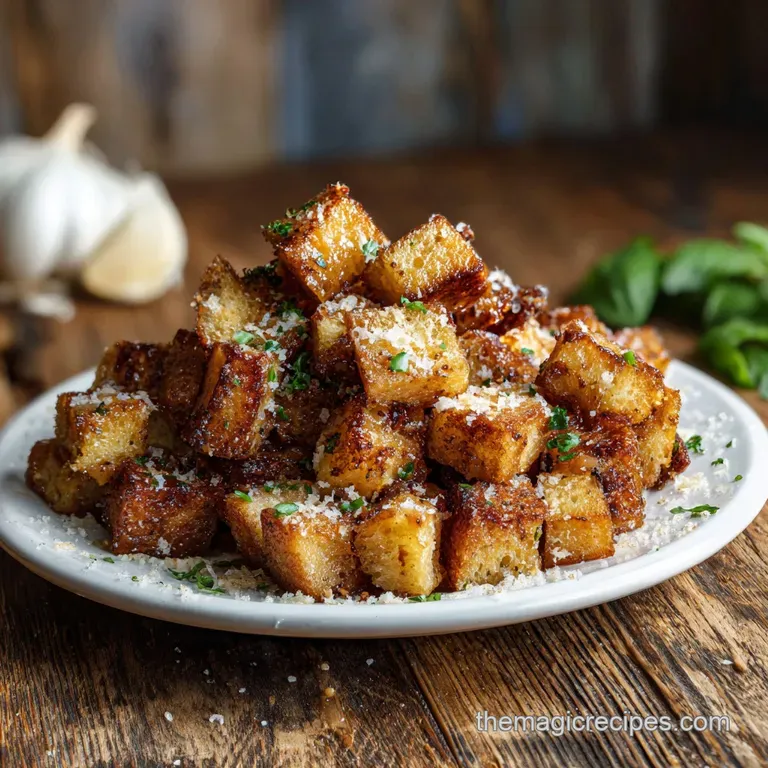
- Time: Active 10 minutes, Passive 15 minutes, Total 25 minutes
- Flavor/Texture Hook: Shatter crisp exterior with a savory, salty Parmesan crust
- Perfect for: Leveling up weeknight soups or making a budget-friendly Caesar salad
- Transform Your Stale Bread Into Garlic Parmesan Croutons
- Why This Works
- Component Analysis for the Perfect Crunch
- Affordable Pantry Staples for These Croutons
- Simple Tools Needed for a Crunchier Result
- Follow These Steps for the Ultimate Toasted Cubes
- Common Pitfalls to Dodge When Toasting
- Smart Variations for Every Need
- Keeping Your Croutons Crisp
- Professional Ways to Elevate Your Plate
- Recipe FAQs
- 📝 Recipe Card
Transform Your Stale Bread Into Garlic Parmesan Croutons
Close your eyes and imagine the sound of a knife hitting a crusty loaf of sourdough. It isn't just a cut; it’s a shatter. That’s exactly what happens when you bite into these croutons.
I remember the first time I realized I could stop buying those dusty, rock hard bags from the grocery store. I had half a loaf of French bread sitting on the counter, getting tougher by the hour, and a bowl of tomato soup that felt a little lonely.
I tossed some cubes with butter and garlic, and the aroma that filled my kitchen was a total game changer. It smelled like a high end Italian steakhouse right in my tiny apartment.
Honestly, the difference is night and day. store-bought versions often taste like seasoned cardboard, but these have a velvety richness from the butter and a sharp, umami punch from the Parmigiano Reggiano. They don't just sit on top of your salad; they become the part of the meal everyone fights over.
We’ve all been there, fishing for that last crunchy bit at the bottom of the bowl.
We’re keeping things practical and budget friendly here. No fancy oils required, just a few pantry staples and that bread you were probably going to throw away. It’s the ultimate zero waste kitchen win that makes you feel like a pro chef without the pro price tag.
Let's get into why this specific method works so well every single time.
Why This Works
- Capillary Action: The porous structure of day old bread acts like a sponge, drawing the melted butter and olive oil deep into the center for flavor that isn't just surface level.
- The Maillard Reaction: By combining the natural sugars in the sourdough with the proteins in the Parmesan cheese, we trigger a browning process that creates complex, savory notes.
- Moisture Evaporation: Using day old bread means there is less internal water to cook off, allowing the cubes to crisp up faster without burning the garlic.
- Fat Synergy: Butter provides the rich, creamy flavor we love, while the olive oil raises the smoke point, preventing the croutons from tasting "scorched."
| Method | Texture Result | Flavor Profile | Best For |
|---|---|---|---|
| Fresh Homemade | Shatter crisp shell, tender core | Rich butter and nutty cheese | Everything |
| store-bought | Uniformly hard/dry | Artificial garlic and salt | Emergency only |
| Shortcut (Toast) | Crunchy edges, soft middle | Simple toasted bread | Quick breakfast |
The secret to that "restaurant quality" crunch actually lies in how the fats interact with the bread's starch. When you use sourdough, the lactic acid gives a slight tang that cuts right through the richness of the butter. If you're looking for a great way to use these, they are a dream when tossed into a Parmesan Spinach Gnocchi recipe just before serving. The way they soak up a little broth while staying crispy on top is pure magic.
Component Analysis for the Perfect Crunch
| Ingredient | Science Role | Pro Secret |
|---|---|---|
| Sourdough Bread | Provides a sturdy, open crumb structure | Use bread that is at least 24 hours old for less "gumminess." |
| Unsalted Butter | Delivers fat soluble flavor compounds | Melt it slowly to keep the milk solids from browning too early. |
| Parmigiano Reggiano | Adds protein for browning and salt | Use a microplane for "snow like" cheese that sticks to every edge. |
| Garlic Powder | Ensures even flavor distribution | Powder won't burn at 400°F (200°C) like fresh minced garlic will. |
Choosing the right bread is the foundation of the whole operation. While you can use a basic white loaf, a sturdy sourdough or a French baguette offers the structural integrity needed to withstand the heat. The air pockets in these breads are like little flavor traps for the garlic butter emulsion.
Affordable Pantry Staples for These Croutons
- 1 lb day old sourdough or French bread: Cut these into 1 inch cubes. Why this? Stale bread is drier, which leads to a much better crunch.
- 4 tbsp unsalted butter: Melted. Why this? Provides that rich, classic bakery flavor profile. (Substitute: Salted butter, but reduce the sea salt in the recipe by half.)
- 2 tbsp extra virgin olive oil: Use a standard cooking grade. Why this? Prevents the butter from burning and adds a fruity depth. (Substitute: Avocado oil for a more neutral taste.)
- 1.5 tsp garlic powder: Why this? Coats every surface evenly without the risk of bitter, burnt bits. (Substitute: Granulated garlic, but use 2 tsp.)
- 1 tsp dried Italian seasoning: Why this? A quick way to add herb complexity without buying five different jars. (Substitute: Dried oregano or thyme.)
- 0.5 tsp sea salt: Why this? Enhances the savory notes of the Parmesan. (Substitute: Kosher salt.)
- 0.25 tsp black pepper: Freshly cracked. Why this? Adds a subtle heat that balances the fat.
- 0.5 cup Parmigiano Reggiano cheese: Finely micro planed. Why this? High protein content creates a crispy "frico" crust on the bread. (Substitute: Pre grated Parmesan, though it won't stick as well.)
Chef's Tip: If you want a bit of a kick, a tiny drizzle of a Hot Sauce recipe into the melted butter before tossing provides a subtle, zesty undertone that guests won't be able to quite place but will absolutely love.
Simple Tools Needed for a Crunchier Result
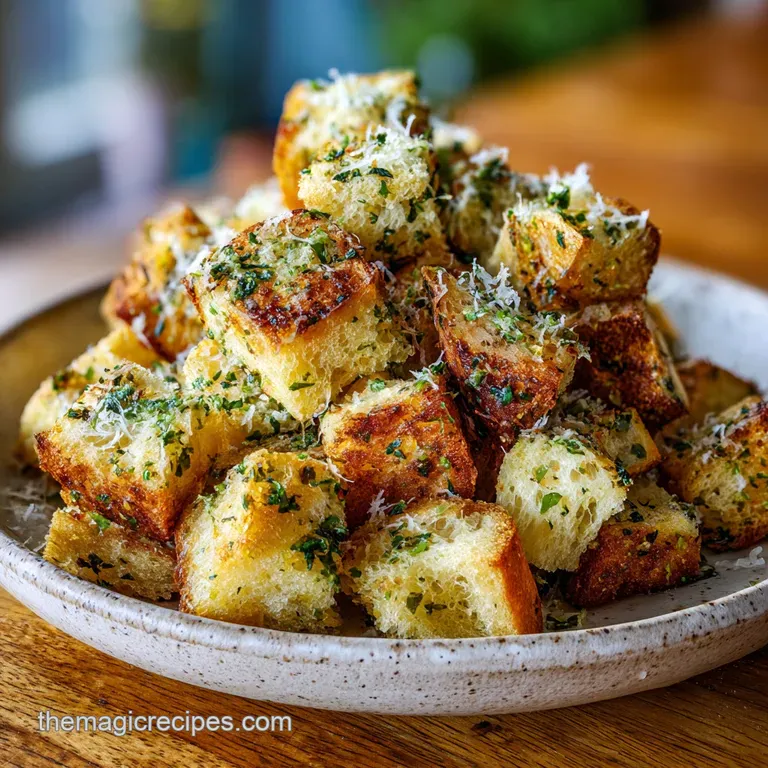
You don't need a kitchen full of gadgets, but a few basics make this easier. A large rimmed baking sheet (half sheet pan) is essential so the bread has room to breathe. If you crowd the pan, the bread will steam instead of roast, and nobody wants a soggy crouton.
A microplane is my favorite tool for the cheese because it creates a feather light texture that adheres to the oil slicked bread perfectly.
You'll also need a large mixing bowl. Don't try to toss these on the pan; you'll lose half your seasoning to the metal. Tossing them in a bowl ensures every single cube gets its fair share of the garlic butter.
If you're feeling fancy, a piece of parchment paper makes cleanup a breeze, but roasting directly on the metal can actually give you a slightly more aggressive "sizzle" and better browning on the bottom.
Follow These Steps for the Ultimate Toasted Cubes
- Preheat your oven to 400°F (200°C). Note: A hot oven is key for immediate moisture evaporation.
- Cube the bread. Cut your 1 lb loaf into roughly 1 inch pieces. until you have a pile of uniform cubes.
- Mix the fats. In a small bowl, whisk together the 4 tbsp melted butter and 2 tbsp olive oil.
- Season the emulsion. Stir in the 1.5 tsp garlic powder, 1 tsp Italian seasoning, salt, and pepper. Note: This ensures the spices don't clump on just one piece of bread.
- Toss the bread. Place bread cubes in a large bowl and drizzle the garlic butter mixture over them.
- Coat thoroughly. Use your hands or a spatula to toss until no dry spots remain on the bread.
- Spread on the tray. Transfer to a baking sheet in a single layer. Note: Leave space between cubes for air circulation.
- First bake. Roast for 10 minutes. until they start to smell toasted and look pale gold.
- Apply the cheese. Remove from oven, sprinkle the 0.5 cup micro planed Parmesan over the top, and toss gently.
- Final crisp. Return to the oven for 5 minutes until the cheese is melted and the bread is golden brown.
Common Pitfalls to Dodge When Toasting
The most common mistake I see is using bread that is too fresh. If the bread is soft and moist, the oil will just turn it into a greasy sponge. If you only have fresh bread, cut it into cubes and leave them on a tray for an hour before starting, or pop them in a low oven (300°F/150°C) for five minutes to "par dry" them.
Another issue is the "Garlic Burn." This is why we use powder in the main roast. Fresh garlic turns bitter and black very quickly at high temperatures. If you absolutely must use fresh garlic, add it in the last 2 minutes of cooking along with the cheese.
Why Your Croutons Are Soggy
If your croutons aren't shattering when you bite them, they likely didn't have enough room on the pan. When bread is packed too tightly, the moisture escaping from the center gets trapped between the cubes, effectively steaming them. Always use the largest tray you have.
Why the Cheese Won't Stick
If the Parmesan is falling to the bottom of the pan, you might have added it too late or used cheese that was too coarsely grated. The micro planed "snow" texture is vital because it catches on the rough surface of the toasted bread and melts into the crevices.
| Problem | Root Cause | Solution |
|---|---|---|
| Burnt Edges | Oven rack is too high | Move tray to the middle rack for even heat. |
| Greasy Texture | Bread was too fresh/soft | Use day old bread or dry it out in a low oven first. |
| Uneven Flavor | Spices weren't mixed into the oil | Always whisk seasonings into the fat before drizzling. |
Common Mistakes Checklist:
- ✓ Never crowd the pan; use two trays if you're doubling the recipe.
- ✓ Always use unsalted butter so you can control the sodium levels yourself.
- ✓ Don't skip the olive oil; it provides the necessary heat resistance for the butter.
- ✓ Wait until the final 5 minutes to add the cheese to prevent it from burning.
- ✓ Let them cool completely on the pan; they continue to crisp up as they sit.
Smart Variations for Every Need
Scaling this recipe is incredibly easy. If you're cooking for one or two, you can easily halve the ingredients. Just remember that if you're using a smaller amount of bread, it might brown faster, so keep a close eye on the oven around the 8 minute mark.
For larger crowds, like a big family dinner, you can double the recipe. When doubling, I recommend rotating the pans halfway through to account for any hot spots in your oven.
If you are baking a double batch, lower the oven temperature to 375°F (190°C). Large amounts of bread in the oven create a lot of steam initially, and a slightly lower temp for a few extra minutes helps ensure that every cube gets dry and crisp without the outer edges turning too dark.
| Original Ingredient | Substitute | Why It Works |
|---|---|---|
| Sourdough Bread | gluten-free Hearty Loaf | Similar density. Note: May require 2-3 extra minutes of bake time. |
| Parmigiano Reggiano | Nutritional Yeast | Adds a similar nutty/umami flavor for a vegan friendly version. |
| Butter | Vegan Butter Sticks | Maintains the fat content. Note: Use sticks, not tub margarine. |
If you're in the mood for a different flavor profile, you can swap the Italian seasoning for smoked paprika and cumin for a smoky, taco salad vibe. Or, try using a New Years Eve recipe inspiration by adding a touch of dried rosemary and lemon zest to the butter mixture.
Keeping Your Croutons Crisp
Once these beauties are out of the oven, let them cool completely on the baking sheet. If you put them in a container while they're even slightly warm, the residual steam will turn them soft. Once cold, store them in an airtight glass jar or a zip top bag at room temperature.
They’ll stay perfectly crisp for up to 5 days, though in my house, they rarely last past 24 hours.
For long term storage, you can actually freeze these! It sounds crazy, but they freeze beautifully for up to 2 months. Just toss them into a freezer bag. When you're ready to eat, don't thaw them just pop them back into a 350°F (180°C) oven for 3-4 minutes to refresh the crunch.
For a zero waste tip: take the crumbs at the bottom of the bag and use them as a "garlic parm" breadcrumb topping for mac and cheese or roasted vegetables.
Professional Ways to Elevate Your Plate
Presentation is where you can really show off. Instead of just dumping a handful of croutons on a salad, try placing three or four large, perfectly golden cubes on top of a bowl of soup right as it hits the table. The visual contrast between the rustic bread and a smooth, velvety soup is stunning.
You can also play with the "crush factor." For certain dishes, like a pasta salad, I like to take a couple of these croutons and roughly crush them so you get big chunks and little sandy bits of garlic parm goodness. It distributes the flavor across the whole dish.
And honestly, don't be afraid to serve these in a small bowl on their own as a pre dinner snack they’re better than most crackers you'll find at the store!

Recipe FAQs
Can I use fresh bread instead of day old bread for these croutons?
No, use stale or dry bread. Fresh bread contains too much internal moisture, causing the cubes to steam in the oven instead of crisping up properly.
How to prevent the garlic powder from burning during the initial bake?
Bake at 400°F (200°C) for only 10 minutes initially. Garlic powder is much more stable than fresh minced garlic, but we wait to apply the Parmesan and finish baking until the end to avoid any scorching.
How to get the Parmesan cheese to stick evenly instead of clumping or burning?
Use microplaned cheese and add it during the last 5 minutes of baking. The ultra fine texture allows it to melt into the bread crevices, creating a crisp crust without burning at high heat.
Is it true that using both butter and olive oil leads to a better texture?
Yes, this is essential for optimal texture. Butter provides the rich flavor, while the olive oil increases the overall smoke point, allowing the bread to toast deeply without the butter solids turning bitter.
How to adjust the recipe if I am making a double batch for a large party?
Reduce the oven temperature to 375°F (190°C). Doubling the volume traps more moisture initially; lowering the heat slightly allows the steam to escape gradually, ensuring even crispness across both sheets.
What is the best way to store homemade croutons to maintain maximum crunch?
Cool them completely on the baking sheet before storing in an airtight container. If you seal them while warm, the trapped steam will soften the crust; they will remain crisp for up to 5 days at room temperature.
What is the technique for ensuring the garlic butter deeply penetrates the bread cubes?
Toss the bread thoroughly in a large bowl, not on the baking sheet. Tossing in a large bowl ensures full saturation before baking, similar to how we ensure every component is coated in our Ranch Carrots Recipe before roasting.
Garlic Parmesan Croutons Recipe
Ingredients:
Instructions:
Nutrition Facts:
| Calories | 254 calories |
|---|---|
| Protein | 6.9 g |
| Fat | 11.3 g |
| Carbs | 29.7 g |
| Fiber | 1.4 g |
| Sugar | 1.1 g |
| Sodium | 470 mg |
