Grill Grilled Salmon: Mastering the Mahogany Crust

- Effort/Time: 25 minutes total (Low-effort, high-precision)
- Flavor Hook: Smoked paprika and garlic create a savory, aromatic bark for this grill grilled salmon.
- Perfect for: Weeknight precision cooking or impressive outdoor entertaining with grill grilled salmon.
- Mastering the Maillard Reaction for the Ultimate grill grilled salmon
- Thermal Conductance and Moisture Retention: Why This Recipe Succeeds
- Precision Logistics and Time Management for Salmon Fillets
- The Molecular Architecture of Flavor: Essential Salmon Seasoning Components
- Professional Grade Tools for Superior Thermal Heat Transfer
- The Atomic Sequence for Achieving a Perfect Crust
- Resolving Protein Denaturation Issues and Surface Adhesion
- Lipid Profiles and Flavor Architecture: Intelligent Ingredient Swaps
- ⚗️ The Scaling Lab: The Physics of Quantity
- Common Myths Debunked
- Preserving Cellular Integrity During Storage and Thermal Recovery
- Enhancing Palate Perception with Complementary Texture and Acid
- Recipe FAQs
- 📝 Recipe Card
Mastering the Maillard Reaction for the Ultimate grill grilled salmon
There is nothing more gut-wrenching than investing in four high-quality salmon fillets only to watch them fuse to your grill grates like a biological weld. You go to flip the fish, and instead of a clean release, the skin tears away, leaving behind a gray, mangled mess and a cloud of acrid smoke.
This technical failure isn't just about a lost dinner; it’s a waste of $40 and a massive blow to your culinary confidence. When the exterior is charred but the interior remains a cold, translucent jelly or worse, a dry, chalky brick you’ve fallen victim to poor thermal management when attempting to grill grilled salmon.
I’ve spent years ruining expensive seafood before I understood the physics of surface moisture. Early in my journey, I thought "more heat" was the answer to sticking, only to realize I was essentially steam cooking my fish from the inside out because I hadn't properly prepared the protein's surface.
I’ve scraped enough charred skin off my Weber gas grill to know that the secret isn't a "magic" spatula; it's the chemistry between the lipid layer and the metal lattice of the grates. Once I mastered the art of the grill grilled salmon, everything changed.
Achieving this result repeatedly is the goal when aiming for perfect grill grilled salmon.
The secret to success is the Maillard reaction the chemical dance between amino acids and reducing sugars that occurs around 285°F (140°C).
By aggressively drying the skin and using a high smoke-point fat like Pompeian Extra Virgin Olive Oil, we create a temporary hydrophobic barrier. This allows the proteins to denature and contract away from the metal rather than bonding to it.
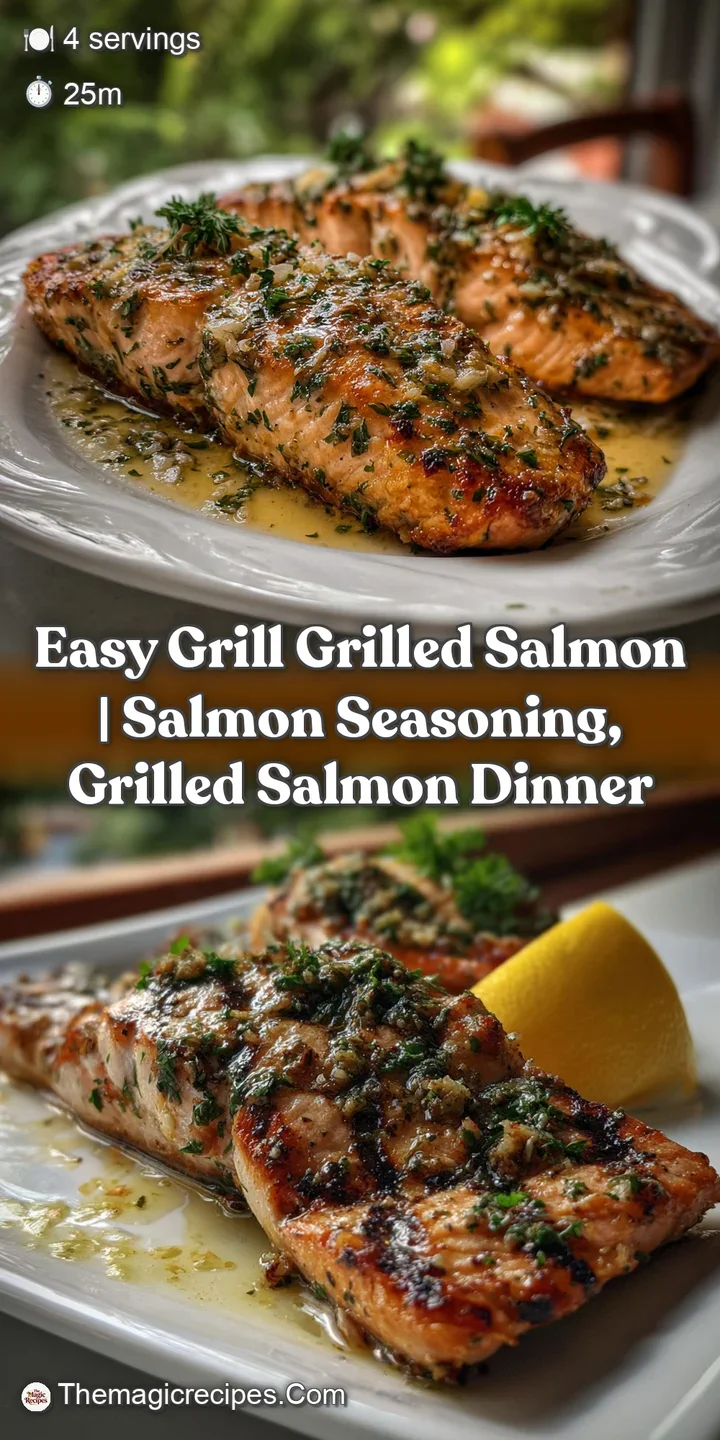
The result is a grill grilled salmon with a velvety, medium rare center and a crust that yields with an audible, satisfying shatter. This perfectly executed grill grilled salmon is the payoff.
Thermal Conductance and Moisture Retention: Why This Recipe Succeeds
- Surface Dehydration: Removing every molecule of surface water prevents the "steaming effect," allowing the Maillard reaction to begin instantly upon contact for superior grill grilled salmon.
- Protein Coagulation Control: By starting with room temperature fillets, we narrow the thermal gap, preventing the outer layers from overcooking before the core reaches 125°F.
- Lipid Mediated Heat Transfer: The olive oil acts as a thermal bridge, filling the microscopic gaps between the fish and the grate for even browning.
- Albumin Management: Rapid over high heat searing "sets" the protein structure quickly, reducing the unsightly white albumin (protein liquid) from leaking out of the muscle fibers on your grill grilled salmon.
The Science of Why it Works
The Maillard reaction creates complex flavor molecules by rearranging amino acids and sugars under high heat. By controlling protein denaturation the uncoiling of amino acids we ensure the salmon remains succulent rather than tightening into a dry, stringy texture.
Following these steps guarantees a successful grill grilled salmon.
Chef's Tip: Freeze 1 tbsp of unsalted butter and grate it over the hot fillets the second they leave the grill. The sudden thermal shock creates a velvety, emulsified glaze that traps the aromatic oils of the salmon seasoning.
Precision Logistics and Time Management for Salmon Fillets
| Metric | Value |
|---|---|
| Prep Time | 15 minutes |
| Cook Time | 10 minutes |
| Total Time | 25 minutes |
| Yield | 4 (6 oz) servings |
| Target Internal Temp | 125°F (Medium Rare) to 135°F (Medium) |
To achieve the best results with salmon on the grill, timing is everything. Unlike a steak, fish has very little connective tissue (collagen), meaning the window between "translucent" and "dry" is only about 90 seconds. We utilize a 70/30 cooking split 70% of the time on the skin side to build a heat shield, and 30% on the flesh side to finish. This is the same logic used in our Brown Sugar Soy recipe, where heat management is key to preventing sugar scorched bitterness in your grill grilled salmon.
The Molecular Architecture of Flavor: Essential Salmon Seasoning Components
| Ingredient | Chemical/Physical Role (Science) | The Pro Secret (Why This Matters) |
|---|---|---|
| Salmon Fillets | Myofibrillar protein structure | Skin-on provides a sacrificial thermal barrier against direct flame. |
| Kosher Salt | Osmotic pressure regulator | Denatures surface proteins to create a "protein glue" for better crust. |
| Smoked Paprika | Fat-soluble carotenoids | High oil content in paprika blooms in the heat, deepening the mahogany color. |
| Garlic Powder | Sulfur based aromatics | Dehydrated form prevents the burning common with fresh minced garlic. |
Ingredient Chemistry Breakdown
- 4 (6 oz) Center cut salmon fillets, skin-on: Why this? Center cuts have uniform thickness, ensuring even heat distribution across the entire fillet.
- 2 tbsp Pompeian Extra Virgin Olive Oil: Why this? High monounsaturated fat content provides a stable medium for heat transfer without premature smoking.
- 1 tsp Diamond Crystal Kosher Salt: Why this? Large crystal size allows for even distribution without over salting via "pinch" control.
- 1 tsp Smoked Paprika: This adds a wood fired depth even if you are using a gas grill, mimicking the phenols of real wood smoke.
- 1 tsp Dried Oregano: Contains carvacrol, which provides a savory, earthy counterpoint to the rich fats of the fish.
Professional Grade Tools for Superior Thermal Heat Transfer
To execute the perfect grill grilled salmon, your equipment must be capable of high heat retention. I recommend using a Lodge Cast Iron Grill Press if you want maximum skin-to-metal contact, though it’s not strictly necessary.
This press aids tremendously in achieving the desired crust on the grill grilled salmon.
- Weber Gas Grill or Charcoal Kettle: You need a heat source capable of reaching 450°F (232°C).
- Long Handled Stainless Steel Tongs: For precise flipping without getting your hands too close to the thermal zone.
- Flexible Fish Spatula: A thin, offset metal spatula (like a Mercer Culinary) is vital for sliding under the delicate skin.
- Instant Read Thermometer: A ThermoPro or Thermapen is non-negotiable for accuracy.
- Stainless Steel Wire Brush: For cleaning grates to a "silver" finish before cooking.
The Atomic Sequence for Achieving a Perfect Crust

Phase 1: Prep and Preheat
- Remove the salmon fillets from the refrigerator 15 minutes before cooking. Note: Reducing the thermal gradient prevents the exterior from overcooking while the center is raw.
- Pat the fish bone dry with paper towels until no moisture remains on the skin or flesh. Note: Moisture consumes energy via evaporation, delaying the Maillard reaction.
- Preheat your grill to medium high (450°F) for at least 10 minutes until the grates are glowing and emitting a shimmering heat haze.
- Clean the grates aggressively with a wire brush until all carbonized residue is removed and the metal shines.
Phase 2: Seasoning and Searing
- Whisk the salt, black pepper, garlic powder, smoked paprika, and oregano in a small bowl.
- Coat the salmon generously with the olive oil, ensuring every millimeter of surface area is covered.
- Press the spice blend into the flesh side of the salmon until the seasoning is firmly adhered and no dry patches remain.
- Lay the fillets onto the grill, skin side down, at a 45 degree angle to the grates. Listen for the immediate, aggressive sizzle that signals the Leidenfrost effect. This first contact is crucial for the grill grilled salmon crust.
Phase 3: The Flip and Finishing
- Sear for 6 7 minutes without moving the fish until the skin naturally releases from the grate and the edges look opaque.
- Flip the fillets carefully using the fish spatula and tongs.
- Cook for an additional 2 3 minutes until the internal temperature hits 125°F and the flesh feels slightly firm but still has a "give" in the center.
- Remove from heat and rest for 5 minutes until the juices redistribute and the carryover heat finishes the cook.
- Garnish with fresh parsley and a squeeze of the grilled lemon halves.
Resolving Protein Denaturation Issues and Surface Adhesion
Why Your Grilled Salmon Stays Stuck to the Grates
The most common issue is "mechanical bonding." If the grill isn't hot enough or the fish is too wet, the proteins cross link with the microscopic pores of the metal. This is the same frustration people feel when making a KidApproved Air Fryer recipe and the bread sticks to the basket it's all about that initial fat barrier and heat for a successful grill grilled salmon.
| Problem | Root Cause | The Fix | Pro Protocol |
|---|---|---|---|
| Skin Ripping | Grates were dirty or cold | Heat grill to 500°F then brush | Wipe grates with an oil-soaked paper towel right before placing fish. |
| White Gunk (Albumin) | Cooking temperature too low | Increase heat for faster sear | Pull the fish at 125°F; higher temps squeeze out more albumin. |
| Bland Flavor | Seasoning didn't penetrate | Salt 15 mins before cooking | Use a "dry brine" method to allow salt to enter the muscle fibers. |
Lipid Profiles and Flavor Architecture: Intelligent Ingredient Swaps
When looking for grilled salmon recipes, you might find you're missing an item. Use this table to maintain the structural integrity of the grill grilled salmon.
| Original Ingredient | Substitute | Why It Works |
|---|---|---|
| Olive Oil | Avocado Oil | Even higher smoke point (520°F); neutral flavor profile. |
| Smoked Paprika | Chipotle Powder | Adds heat and smoke but use 50% less to avoid overpowering the fish. |
| Dried Oregano | Dried Thyme | Similar earthy notes; thyme has a more floral, lemon forward aroma. |
| Lemon Juice | Apple Cider Vinegar | Provides necessary acidity to cut through the fatty omega-3s. |
⚗️ The Scaling Lab: The Physics of Quantity
When you double this salmon dinner grilled for a crowd, thermodynamics change:
- Thermal Mass Drop: Adding 8 fillets instead of 4 will drop the grill's ambient temperature by up to 100°F. Protocol: Preheat the grill to its maximum setting (550°F) before adding the fish to compensate for this heat loss.
- The Evaporation Paradox: With more fish, the grill hood traps more steam. Protocol: Keep the lid open for the first 4 minutes of searing to allow moisture to escape, ensuring a crispy crust for the second batch of grill grilled salmon.
- Carry Over Cooking: Eight fillets bunched together on a platter will retain heat longer than four. Protocol: Pull the fish at 120°F (5 degrees earlier) if you plan to plate them all at once, as the collective heat will continue to cook the centers.
Common Myths Debunked
Myth: You must flip the salmon multiple times to ensure even cooking. Truth: Flipping more than once destroys the crust and increases the chance of the fish breaking apart. One flip is all you need for a perfect grill grilled salmon.
Myth: Salmon is only "safe" at 145°F. Truth: While the FDA recommends 145°F, this results in a dry, chalky texture.
Most chefs pull at 125 130°F for a "medium" finish that is safe and succulent when you grill grilled salmon.
Preserving Cellular Integrity During Storage and Thermal Recovery
Storage
Store leftover salmon fillets in an airtight glass container (like Pyrex) for up to 3 days. Avoid plastic wrap touching the skin, as it will turn the crust soggy through condensation.
Reheating
Never microwave your grill grilled salmon. The high frequency waves vibrate water molecules so violently they explode the delicate protein structures. Instead, place the fish in a 275°F oven with a splash of water and cover with foil for 8 10 minutes until just warm.
💡 ZERO WASTE PHILOSOPHY
Don't discard the salmon skin! If it’s not crispy enough the next day, peel it off and fry it in a pan with a drop of oil until it becomes a "salmon crackling." Science: The high fat and collagen content in the skin transform into a shattering, umami rich snack.
Enhancing Palate Perception with Complementary Texture and Acid
To finish your grilled salmon, think about contrast. The fish is incredibly rich and fatty, so it requires a high acid pairing to cleanse the palate. This is a technique similar to the one used in a Steak Fajita Recipe, where lime juice cuts through the rich fats of the grill grilled salmon.
- Textures: Serve alongside a crunchy cucumber salad or grilled asparagus to provide a snap against the velvety fish.
- Acidity: Beyond the grilled lemon, a dollop of Greek yogurt mixed with dill and capers provides a bright, lactic acid punch.
- Starch: A simple quinoa pilaf or roasted fingerling potatoes will soak up the rendered salmon fats and the seasoned oil.
By following this salmon recipes grilled protocol, you are no longer just "cooking fish" you are managing a series of thermal and chemical reactions to produce a world class meal. Trust the process, watch the thermometer, and enjoy the sizzle.
The grill grilled salmon is now yours to master.
Recipe FAQs
How long do I cook salmon on the grill?
Cook for 7 minutes skin side down, then 2 3 minutes flesh side. This 70/30 split builds the crust without overcooking the delicate interior proteins.
What oil should I use for grilling salmon to prevent sticking?
Pompeian Extra Virgin Olive Oil. Its high monounsaturated fat content creates a stable hydrophobic barrier between the protein and hot metal grates. This lipid layer facilitates heat transfer just enough to initiate the Maillard reaction before bonding occurs.
Is high heat necessary for the perfect crust?
Yes, preheat to 450°F. The Maillard reaction requires surface temperatures near 285°F to trigger flavor and color formation instantly. Lower heat leads to moisture evaporation rather than browning, resulting in a steamed texture.
Does freezing the salmon beforehand affect grilling success?
No. Thawing fully is the critical factor. Thawed portions must be completely patted dry to eliminate surface water, which would otherwise slow down the crust development via evaporative cooling.
What internal temperature denotes medium rare salmon?
Pull the fish off the grill at 125°F. The fish will continue to cook by 5 10 degrees while resting, which is essential for retaining internal moisture and achieving the desired texture.
Myth: Using skin-on fillets guarantees sticking.
Myth: Using skin-on fillets guarantees sticking. Reality: The skin acts as a protective thermal buffer against direct flame, and if properly oiled and seared immediately on a hot grate, it should release cleanly.
Is marinating salmon better than dry seasoning?
Dry seasoning is superior for grilling. Marinades introduce surface moisture which must evaporate before the Maillard reaction can begin, delaying the desired crust formation.
Grill Grilled Salmon Masterclass

Ingredients:
Instructions:
Nutrition Facts:
| Calories | 418 kcal |
|---|---|
| Protein | 35g |
| Fat | 29g |
| Carbs | 2g |
| Fiber | 0.8g |
| Sugar | 0.4g |
| Sodium | 615mg |
