Ground Beef Orzo Skillet Recipe
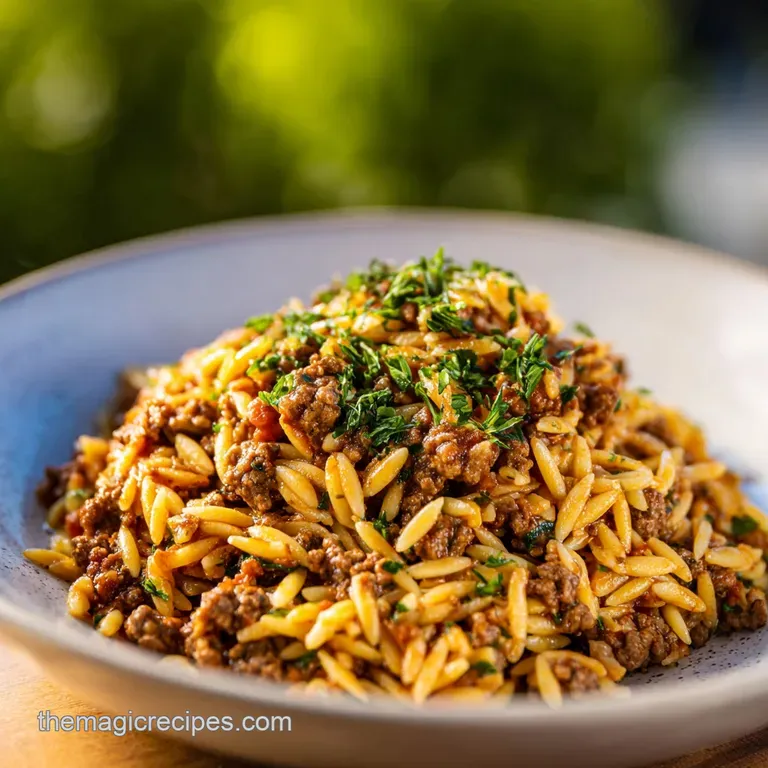
- Time: Active 10 minutes, Passive 20 minutes, Total 30 minutes
- Flavor/Texture Hook: Savory, velvety, and deeply aromatic
- Perfect for: Stressful weeknights or beginner friendly meal prep
- The Physics of the One Pot Slurry
- Specs for This Fast Family Dinner
- Ingredient Deep Dive
- Gathering the Elements for Success
- Minimal Gear for Maximum Flavor
- Step-by-Step Guide to Success
- Fixing Common Beef and Pasta Flaws
- Easy Ways to Change the Flavor
- Keeping and Reheating Your Leftovers
- Best Sides to Serve Tonight
- Kitchen Myths Debunked
- Recipe FAQs
- 📝 Recipe Card
The Physics of the One Pot Slurry
Starch Suspension: By cooking the orzo directly in the beef broth, we trap the surface starches in the pan instead of draining them away, which naturally thickens the liquid into a silky glaze.
This creates a cohesive bond between the meat and the pasta that you simply can't achieve with traditional boiling methods.
| Beef Thickness | Internal Temp | Rest Time | Visual Cue |
|---|---|---|---|
| Crumbled (Small) | 160°F (71°C) | 0 mins | No visible pink, deep brown |
| Crumbled (Large) | 165°F (74°C) | 2 mins | Steam rising, uniform color |
| Meatball style | 165°F (74°C) | 5 mins | Firm to touch, juices run clear |
The key to a successful one pan meal is managing the liquid to starch ratio so the pasta finishes cooking exactly as the sauce reaches the right consistency. If you find yourself wanting more variety in your weekly rotation, this technique is very similar to what I use in my Simple Ground Beef recipe where browning the meat properly builds the foundation for everything that follows.
Specs for This Fast Family Dinner
When you are working with a tight schedule, you need to know exactly what you are getting into before you turn on the stove. This dish is designed for speed and function, prioritizing a high protein count while keeping the cleanup to a bare minimum.
We aren't looking for a long, slow simmered bolognese here; we want a punch of flavor that hits the table in about the same time it takes to watch a sitcom episode.
| Feature | Fast One Pan Method | Classic Boiled Method |
|---|---|---|
| Texture | Velvety and cohesive | Loose and saucy |
| Cleanup | 1 Skillet, 1 Spoon | 2 Pots, 1 Colander, 1 Skillet |
| Flavor | Infused into the pasta | Sits on top of the pasta |
Because the orzo absorbs the beef broth as it hydrates, every single grain of pasta carries the savory notes of the meat and the Italian seasoning. It creates a much deeper flavor profile than just tossing plain boiled pasta with a meat sauce at the end.
It's a functional shortcut that actually improves the quality of the final bite.
Ingredient Deep Dive
Understanding why we use specific components helps you become a more intuitive cook. We aren't just throwing things in a pan; each item has a job to do, from providing structure to balancing the richness of the fats.
| Ingredient | Science Role | Pro Secret |
|---|---|---|
| Ground Beef (90/10) | Primary protein and fat source | Drain the fat but don't rinse the meat to keep flavor |
| Uncooked Orzo | Starch provider for thickening | Toast it for 2 mins before adding liquid for nuttier flavor |
| Tomato Paste | Umami booster and colorant | Fry it with the garlic to remove the raw, metallic taste |
| Parmesan Cheese | Emulsifier and salt source | Use freshly grated so it melts without clumping |
Using a leaner beef like the 90/10 ratio ensures you have enough fat to sauté the onions and garlic without ending up with a greasy puddle at the bottom of your skillet. If you happen to have a fattier blend on hand, just make sure to spoon out the excess liquid after the browning phase. This method is quite adaptable, much like the base of my Ground Beef Alfredo recipe, where the fat management is crucial for a smooth sauce.
Gathering the Elements for Success
You likely have most of these items in your pantry already, which is the beauty of this specific list. It relies on high impact aromatics and stable dry goods to do the heavy lifting.
- 1 lb lean ground beef (90/10): Why this? Provides high protein with minimal grease cleanup. (Substitute: Ground turkey or chicken)
- 1.5 cups uncooked orzo pasta: Why this? Small shape cooks quickly and releases starches easily. (Substitute: Ditalini or pearl couscous)
- 1 medium yellow onion: Why this? Provides a sweet, aromatic base once softened. (Substitute: Shallots or 1 tsp onion powder)
- 4 cloves garlic: Why this? Essential for that pungent, savory depth. (Substitute: 1 tbsp jarred minced garlic)
- 3 cups low sodium beef broth: Why this? Controls salt levels while providing the cooking liquid. (Substitute: Chicken broth or water with bouillon)
- 2 tbsp tomato paste: Why this? Thickens the sauce and adds a rich red hue. (Substitute: 1/2 cup tomato sauce, reduce broth by 1/4 cup)
- 1 tbsp Italian seasoning: Why this? A pre mixed shortcut for oregano, thyme, and basil. (Substitute: Herbes de Provence)
- 0.5 tsp red pepper flakes: Why this? Adds a subtle back of-the throat heat. (Substitute: A dash of cayenne or omit)
- 2 cups fresh baby spinach: Why this? Adds color and nutrition with zero prep work. (Substitute: Chopped kale or frozen peas)
- 0.5 cup parmesan cheese: Why this? Provides a sharp, salty finish and creamy texture. (Substitute: Pecorino Romano or nutritional yeast)
- 3 tbsp heavy cream: Why this? Smooths out the acidity of the tomato paste. (Substitute: Whole milk or half and half)
- 0.5 tsp sea salt: Why this? Enhances every other flavor in the pan. (Substitute: Table salt, use slightly less)
- 0.25 tsp cracked black pepper: Why this? Adds a mild floral heat and bite. (Substitute: White pepper)
When choosing your ingredients, remember that the quality of the broth matters immensely because the orzo will soak up nearly all of it. I always opt for low sodium so I can control the seasoning at the end. If you want to experiment with different flavor profiles, you might find some inspiration in this Simple Mongolian Ground recipe, which uses similar prep techniques for a totally different vibe.
Minimal Gear for Maximum Flavor
One of the main reasons I make this recipe on repeat is that it doesn't require a kitchen full of gadgets. You can pull this off with just a few basic tools, making it the ultimate "lazy but effective" dinner.
- Large Skillet or Dutch Oven: You need something with high sides and a heavy bottom. A 12 inch cast iron or a stainless steel sauté pan works best to ensure even heating and enough room for the broth to bubble without splashing.
- Wooden Spoon or Sturdy Spatula: Essential for breaking up the ground beef into small, uniform crumbles and scraping the flavorful browned bits (the fond) off the bottom of the pan.
- Measuring Cups and Spoons: Precision matters with the liquid to pasta ratio. If you eyeball the broth, you might end up with crunchy pasta or a soup.
- Chef’s Knife and Cutting Board: For a quick dice of the onion and mincing the garlic.
Chef's Tip: If you find yourself struggling to break up the beef, use a stiff whisk or a dedicated meat masher. It creates those tiny, uniform crumbles that distribute better through the pasta, ensuring you get meat in every single forkful.
step-by-step Guide to Success
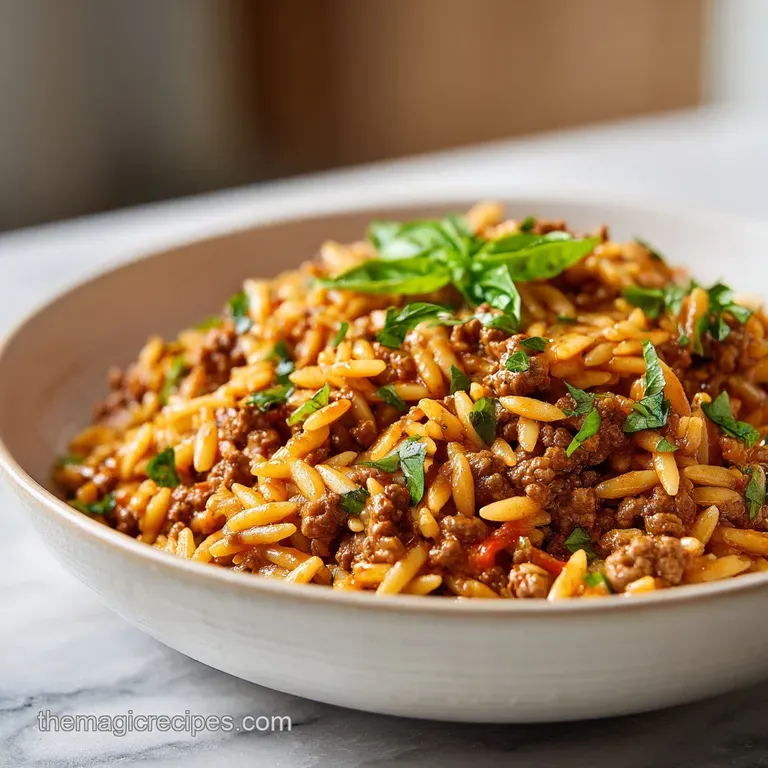
Follow these steps in order to ensure your pasta hydrates properly and your sauce doesn't break. The timing is designed so that each ingredient is added at the peak moment for flavor development.
- Brown the beef. Place the 1 lb ground beef in a cold skillet, then turn the heat to medium high. Break it apart until it is mostly browned and sizzles.
- Sauté aromatics. Add the diced yellow onion to the beef fat. Cook for 3-4 minutes until the onions are translucent and soft.
- Add flavor base. Stir in the 4 cloves of minced garlic, 2 tbsp tomato paste, and 1 tbsp Italian seasoning. Fry for 1 minute until the garlic is fragrant and the paste turns brick red.
- Toast the orzo. Pour in the 1.5 cups of uncooked orzo. Stir constantly for 2 minutes until the pasta smells slightly nutty. Note: This prevents the pasta from getting mushy.
- Simmer the liquid. Add the 3 cups of beef broth, 0.5 tsp red pepper flakes, sea salt, and black pepper. Bring to a boil, then reduce heat to low.
- Cook the pasta. Cover the pan and simmer for 10-12 minutes. Stir occasionally until the orzo is tender and the liquid is mostly absorbed.
- Wilt the greens. Remove the lid and stir in the 2 cups of fresh baby spinach. Heat for 1 minute until the leaves are shrunken and bright green.
- Finish the sauce. Stir in the 3 tbsp heavy cream and 0.5 cup parmesan cheese. Continue stirring until the cheese is melted and the sauce is velvety.
- Rest and serve. Turn off the heat and let the pan sit for 2 minutes. This allows the starches to set, making the dish even creamier.
Fixing Common Beef and Pasta Flaws
Even the simplest recipes can go sideways if the heat is too high or the liquid evaporates too fast. Don't panic if your pan doesn't look like the pictures halfway through. Most issues are easily fixed with a splash of water or a quick stir.
Preventing Gummy Texture
Gummy orzo usually happens for two reasons: overcooking or failing to toast the pasta. When you toast the dry orzo in the beef fat before adding the broth, you create a protective barrier that helps the pasta maintain its structural integrity.
If you've already added the liquid and it looks sticky, add another 1/4 cup of broth and stir gently to loosen the starches.
Managing Excess Salt
If you used a standard broth instead of low sodium, the final dish might taste like a salt lick. This is because the liquid evaporates, but the salt stays behind. To fix this, add a squeeze of fresh lemon juice or an extra tablespoon of heavy cream.
The acidity or fat will help mask the saltiness and balance the flavor profile.
| Problem | Root Cause | Solution |
|---|---|---|
| Crunchy Orzo | Liquid evaporated too fast | Add 1/2 cup hot water, cover, and simmer 3 more mins |
| Greasy Sauce | Didn't drain the beef | Stir in a little extra parmesan to help emulsify the fat |
| Bland Flavor | Under seasoned at the start | Add a splash of soy sauce or Worcestershire for instant depth |
Common Mistakes Checklist
- ✓ Don't skip the onion sautéing; raw onions will stay crunchy and ruin the velvety texture.
- ✓ Ensure the broth is at a gentle simmer, not a rolling boil, which can cause uneven cooking.
- ✓ Use a tight fitting lid to keep the steam inside the pan; otherwise, the pasta won't hydrate.
- ✓ Always taste the sauce before adding the final salt, as the parmesan brings its own saltiness.
- ✓ Don't add the spinach too early, or it will turn into a grey, slimy mess.
Easy Ways to Change the Flavor
Once you have the basic method down, you can pivot this recipe in several directions based on what you have in the fridge. The core technique of one pot cooking remains the same, but the aromatics can be swapped to create entirely different meals.
Mediterranean "Manestra" Twist
Trade the Italian seasoning for a mix of dried oregano and a pinch of cinnamon. Instead of parmesan, crumble some feta on top right before serving and add a handful of kalamata olives. This version is bright, tangy, and feels like a completely different meal despite using the same ground beef and orzo base.
Ground Beef Orzo Soup
If you prefer a more liquid heavy dish, simply double the beef broth to 6 cups. Keep the beef and orzo quantities the same, but add diced carrots and celery during the onion sautéing phase. It turns into a comforting, hearty soup that is great for cold weather.
You can omit the heavy cream if you want a clearer, lighter broth.
The Low Carb Veggie Swap
If you are looking to cut back on pasta, you can replace half of the orzo with cauliflower rice. You will need to reduce the beef broth by about 1 cup, as the cauliflower releases its own moisture. It still gives you that satisfying "grain" texture without the heavy carb load.
| Goal | Adjustment | Outcome |
|---|---|---|
| Extra Creamy | Increase cream to 1/4 cup | Much richer, almost like a risotto. Note: Adds more calories. |
| Spicy Kick | Add 1 tbsp diced jalapeños | Fresh, sharp heat that cuts through the beef fat. |
| Budget Friendly | Use 1/2 lb beef + 1 can beans | Cheaper per serving with higher fiber content. |
Keeping and Reheating Your Leftovers
This is one of those rare dishes that actually tastes better the next day because the flavors have time to fully meld together. However, orzo is notorious for soaking up every drop of moisture while it sits in the fridge.
Storage Guidelines Keep your leftovers in an airtight container in the refrigerator for up to 4 days. If you want to freeze it, let it cool completely first. It will stay good in the freezer for about 2 months.
Just be aware that the spinach might lose its bright green color after being frozen and thawed.
The Best Way to Reheat When you go to reheat this, you’ll notice it has turned into a solid block. Don't just microwave it as is! Put the portion in a pan or a bowl and add a splash of beef broth or water (about 1-2 tablespoons). Cover it and heat gently.
This reintroduces the moisture needed to bring that velvety sauce back to life.
Zero Waste Tips If you have leftover spinach that is starting to wilt, toss the whole bag in! Spinach shrinks so much that you can easily double the amount in this recipe without changing the flavor. Also, save your parmesan rinds.
If you have one in the freezer, drop it into the broth while the orzo simmers. It adds a massive hit of savory umami that you can't get from the shredded cheese alone.
Best Sides to Serve Tonight
Since this is a full meal in one pan, you don't need a side dish, but a few additions can help stretch the meal or balance out the richness. I usually go for something with a bit of crunch to contrast the soft texture of the pasta.
- Garlic Bread: A classic choice. Use a crusty baguette to soak up any remaining sauce at the bottom of the bowl.
- Simple Green Salad: A mix of arugula or romaine with a sharp lemon vinaigrette helps cut through the heavy fats of the beef and cream.
- Roasted Broccoli: Toss some florets with olive oil and salt and roast them at 400°F (200°C) while the orzo simmers. The charred edges provide a great textural contrast.
- Quick Pickled Onions: If you have 10 minutes, thinly slice a red onion and soak it in vinegar and sugar. A pile of these on top of the bowl adds a bright pop of acidity.
Kitchen Myths Debunked
"You must boil pasta in a large pot of water to remove excess starch." This is the biggest hurdle for people trying one pot recipes. While true for some delicate Italian dishes, in this case, we actually want that starch. It’s what creates the creamy mouthfeel without having to make a complex sauce.
"Rinsing ground beef removes the fat and makes it healthier." Please, for the love of flavor, do not rinse your meat. Not only does it strip away the savory juices, but it also creates a massive safety hazard by splashing bacteria around your sink.
If you want less fat, simply use a 93/7 lean blend or spoon the grease out into a jar once the browning is done.
"Fresh spinach must be steamed before adding to pasta." There is absolutely no need for an extra step here. The residual heat from the beef broth is more than enough to wilt the spinach in under sixty seconds. Adding it at the very end ensures it stays vibrant and doesn't disappear into a mushy brown mess.
Trust the process and keep it simple!

Recipe FAQs
What meat pairs best with orzo when making a savory skillet meal?
Ground beef (85/15 or 90/10) is ideal for this recipe. Its texture crumbles perfectly to mix throughout the pasta, and the rendered fat helps bloom the aromatics for maximum flavor.
What are common mistakes when cooking orzo in a one-pot method?
The biggest mistake is not toasting the orzo first. Toasting the dry pasta in the beef fat for two minutes develops a nutty flavor and prevents it from becoming gummy or mushy later on.
Is orzo the healthiest pasta option available?
No, not inherently, as it is refined semolina flour. Whole wheat orzo offers more fiber, but overall, this one-pan method is healthy because the high vegetable and lean protein content balances the carbohydrate load.
Can I put ground beef directly into the pasta cooking liquid?
Yes, this recipe relies on browning the beef first, then adding the orzo directly to the broth. Searing the meat properly builds the fond, which is essential for flavor, much like the initial searing technique used for developing deep flavor in the Tender Beef Stir recipe.
How do I prevent the sauce from turning into a sticky block upon cooling?
Always stir in a liquid heavy cream or broth just before reheating. When the dish cools, the starches absorb all remaining liquid; adding moisture prevents this clumping effect and restores the velvety texture.
Can I use a different type of ground meat, like turkey or pork?
Yes, but you must compensate for lower or higher fat content. If using leaner turkey, add a tablespoon of olive oil when sautéing the onions, or spoon out excess grease if using fattier pork.
What temperature should the ground beef reach before I add the aromatics?
Cook the crumbled beef until it reaches 160°F (71°C) and is well browned. Breaking the beef down into small, uniform crumbles ensures it cooks evenly before you add the onions to sweat down in the rendered fat.
Ground Beef Orzo Skillet
Ingredients:
Instructions:
Nutrition Facts:
| Calories | 542 kcal |
|---|---|
| Protein | 36.5 g |
| Fat | 16.7 g |
| Carbs | 54.1 g |
| Fiber | 3.2 g |
| Sugar | 4.1 g |
| Sodium | 648 mg |
