Honey Mustard
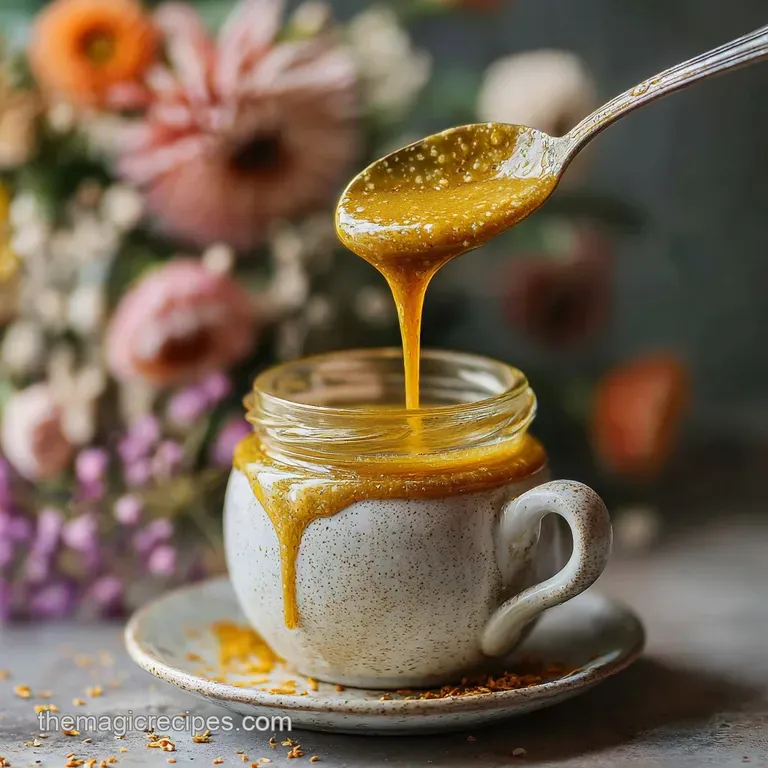
- Time: Active 5 minutes, Passive 0 minutes, Total 5 minutes
- Flavor/Texture Hook: Zesty, silky, and sweet
- Perfect for: Weeknight chicken tenders, meal prep salads, or a quick vegetable dip
- How to Make Balanced Honey Mustard
- Preparation Specs and Timing Details
- Essential Components for Creamy Flavor
- Simple Tools for Quick Mixing
- Step by Step Mixing Guide
- Solving Texture and Flavor Issues
- Creative Variations and Quick Swaps
- Storing and Keeping Sauce Fresh
- Serving Suggestions for Family Meals
- Honey Mustard FAQs
- 📝 Recipe Card
Nothing beats the sharp, vinegary punch of mustard mixed with the floral sweetness of honey. I remember buying those tiny plastic cups of honey mustard at the grocery store for years, thinking there was some secret factory magic inside.
Then I looked at the label and saw a list of thickeners and syrups that I couldn't pronounce, and I realized I could do it better, faster, and much cheaper at home.
The first time I tried to make honey mustard from scratch, I just dumped equal parts honey and yellow mustard into a bowl. It was... fine, but it lacked that "oomph" you get at a good restaurant. It was too thin and way too sharp.
I learned quickly that the secret to that restaurant style body isn't more honey, it's the creamy base and a mix of different mustard types.
You're going to love this because it's a "dump and stir" situation that takes exactly five minutes. It's functional, it's foolproof, and it saves you a trip to the store when the kids are clamoring for chicken nuggets.
Plus, using Greek yogurt keeps it a bit lighter while adding a lovely tang that cuts through the sugar. Let's crack on and get this mixed up.
How to Make Balanced Honey Mustard
The Science of Why it Works: This sauce relies on emulsification, where the lecithin in mayonnaise and the proteins in Greek yogurt bind the honey and vinegar together into a stable, creamy liquid.
The pH balance is also crucial, as the acidity from the lemon juice and vinegar prevents the honey from feeling cloyingly sweet on the palate.
- Protein Binding: The Greek yogurt provides a structure that holds the mustard oils in suspension, creating a thicker mouthfeel without adding extra fat.
- Acidic Counterpoint: Lemon juice and apple cider vinegar break down the sugar molecules' dominance, which highlights the floral notes of the honey.
- Volatile Compounds: Using a "duo" of mustards provides both the pungent heat of Dijon and the bright, turmeric heavy tang of yellow mustard.
- Cold Stability: Because we aren't using heat, the raw honey retains its viscous texture, helping the sauce cling to food rather than sliding off.
When we talk about the flavor profile, it's all about the contrast. If you've ever had a Honey Chicken recipe, you know that the balance of sweet and savory is what keeps you coming back for another bite. This sauce follows that same logic, using a tiny pinch of cayenne to wake up the taste buds without making it "spicy" in the traditional sense.
| Ingredient | Science Role | Pro Secret |
|---|---|---|
| Dijon Mustard | Emulsifier | Contains natural mucilage that prevents the sauce from separating over time. |
| Raw Honey | Humectant | Acts as a thickener and provides a smooth, lingering mouthfeel that coats the tongue. |
| Greek Yogurt | Protein Base | Adds bulk and creaminess with a lower fat content than 100% mayonnaise bases. |
The Greek yogurt is a real budget saver here, too. A big tub of plain yogurt is often cheaper per ounce than high end mayo, and it provides a much fresher finish. Trust me on this, once you try the yogurt mayo blend, you'll never go back to the heavy, greasy versions.
Preparation Specs and Timing Details
Getting your measurements right is the only "hard" part of this recipe, and even then, it's incredibly forgiving. We are aiming for a yield of 8 servings, which is about 1 to 1.5 cups of sauce total. This is the perfect amount for a family dinner with a little left over for school lunches the next day.
The timing is the best part of this whole process. Since there is no cooking involved, your total time is just the five minutes it takes to measure and whisk. If you're really in a rush, you can even mix it right in the storage container to save on washing a bowl.
| Feature | Specification | Why it Matters |
|---|---|---|
| Prep Time | 5 minutes | Perfect for busy parents who need a quick win during the dinner rush. |
| Serving Size | 2 tablespoons | Provides enough sauce for dipping without overwhelming the main dish. |
| Texture | Velvety/Slick | Ensure it sticks to crispy coatings like breaded chicken or fried fish. |
One thing I've learned from making this dozens of times is that the flavor actually improves if it sits for about 15 minutes. It's not a requirement, but it allows the dried garlic powder and cayenne to fully hydrate and distribute their flavor through the creamy base.
Essential Components for Creamy Flavor
Choosing your ingredients wisely makes a huge difference in the final result. For the honey, I always reach for raw unfiltered honey. It has a deeper, more complex flavor than the highly processed clover honey in the bear shaped bottles.
It might be a dollar or two more, but since we only use 1/4 cup, it lasts a long time.
- 1/4 cup creamy Dijon mustard Why this? Provides the sophisticated, sharp "bite" that defines a good sauce.
- 2 tbsp yellow mustard Why this? Adds that classic bright color and a familiar, vinegary tang.
- 1/4 cup raw unfiltered honey Why this? The main sweetener that balances the mustard's heat.
- 1/4 cup non fat plain Greek yogurt Why this? Provides a thick, creamy body with a healthy tang.
- 2 tbsp light mayonnaise Why this? Adds essential fats for a smooth, traditional mouthfeel.
- 1 tsp freshly squeezed lemon juice Why this? Brightens the overall flavor and cuts through the honey.
- 1/2 tsp apple cider vinegar Why this? Adds a fermented depth that white vinegar lacks.
- 1/8 tsp cayenne pepper Why this? A tiny kick that highlights the sweetness without burning.
- 1/4 tsp garlic powder Why this? Adds a savory, umami undertone to the background.
The Tangy Mustard Base
The foundation of any good honey mustard is the mustard itself. Using only yellow mustard makes it taste like a hot dog topping, while using only Dijon can be a bit too intense for some kids.
By mixing 1/4 cup of Dijon with 2 tablespoons of yellow, we get the best of both worlds sophistication and accessibility.
Sweeteners and Creamy Bases
We use 1/4 cup of honey to match the 1/4 cup of Dijon. This 1:1 ratio is a great starting point for most people. If you find it too sweet, you can always add an extra teaspoon of mustard at the end.
The combination of Greek yogurt and light mayo is my favorite "parent hack" because it keeps the sauce rich but functional for everyday meals.
Acidic Balancing Agents
Don't skip the lemon juice or the apple cider vinegar. It might seem redundant to have two types of acid, but they hit different parts of the tongue. The lemon juice is sharp and immediate, while the apple cider vinegar has a mellow, fruity finish that lingers.
| Original Ingredient | Substitute | Why It Works |
|---|---|---|
| Greek Yogurt (1/4 cup) | Sour Cream (1/4 cup) | Similar thickness and tang. Note: Higher fat content and slightly richer flavor. |
| Raw Honey (1/4 cup) | Maple Syrup (1/4 cup) | Provides sweetness. Note: Resulting sauce will be thinner and have a woody flavor profile. |
| Dijon Mustard (1/4 cup) | Spicy Brown Mustard (1/4 cup) | Adds a similar heat. Note: Will have a grainier texture and more rustic look. |
Using maple syrup is a great budget smart swap if you're out of honey, but just be aware that the sauce won't cling quite as well to your food. If you find it too runny after swapping in syrup, you can whisk in an extra tablespoon of yogurt to help it thicken back up.
Simple Tools for Quick Mixing
You don't need a fancy food processor or a high speed blender for this. In fact, I prefer doing it by hand because it gives me better control over the texture. Plus, cleaning a whisk is a lot easier than cleaning a blender jar when you're in a hurry.
- Medium Glass Bowl: Using glass allows you to see if there are any pockets of unmixed honey at the bottom.
- Small Balloon Whisk: This is the best tool for aerating the yogurt and ensuring the honey is fully incorporated.
- Silicone Spatula: Essential for scraping every last drop of sauce out of the bowl and into your serving dish.
- Glass Jar with Lid: If you're making this ahead of time, a simple mason jar is the perfect storage vessel.
Chef's Tip: Freeze your honey for 5 minutes before measuring it into the cup. It will slide out much cleaner and more easily than room temperature honey, saving you from scraping the measuring cup for ten minutes.
If you don't have a whisk, a heavy duty fork will work in a pinch, but you'll have to work a bit harder to get that velvety finish. The goal is to beat enough air into the yogurt and mayo so the sauce feels light on the tongue rather than heavy and dense.
step-by-step Mixing Guide
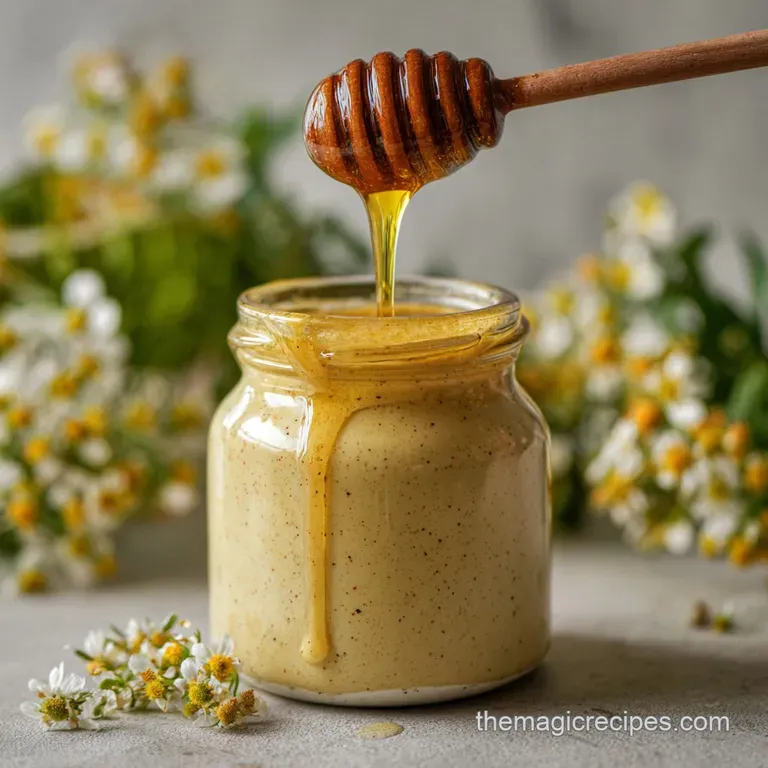
This process is incredibly straightforward, but the order of operations does matter a little bit for the best texture. We want to build the emulsion gradually so that the sauce stays stable in the fridge for several days without separating into a watery mess.
- Place the Greek yogurt and mayonnaise in the bowl.Note: Starting with the fats helps create a stable base for the other liquids.
- Add the Dijon and yellow mustards.Note: Whisk these into the creamy base until the color is a uniform pale yellow.
- Slowly pour in the raw honey.Note: Use a steady stream while whisking to ensure the thick honey integrates fully.
- Whisk 1 minute until smooth.until you see a glossy, unified texture with no streaks of honey.
- Add the lemon juice and apple cider vinegar.Note: These will slightly thin the sauce, making it a perfect dipping consistency.
- Sprinkle in the garlic powder and cayenne pepper.Note: Distribute these evenly across the surface before mixing to avoid spice clumps.
- Whisk again for 30 seconds.until the spices are invisible and the sauce looks aerated and light.
- Taste the sauce with a clean spoon.Note: This is your chance to add a tiny bit more honey or lemon if needed.
- Transfer to a serving bowl or jar.until the surface is flat and even.
- Chill for 15 minutes before serving. Note: This allows the dried spices to bloom and the flavors to marry.
Combining the Initial Bases
Whisking the yogurt and mayo together first is a trick I learned after a few failed batches. If you add the honey too early, it can sometimes bead up and be difficult to break down. By creating a "creamy cradle" first, the honey has something to latch onto immediately.
Seasoning and Gentle Aeration
Don't be afraid to give the sauce a vigorous whisking. You aren't going to over mix it like a cake batter. In fact, the more you whisk, the more stable the emulsion becomes. You'll notice the sauce changes from a dull yellow to a bright, shiny gold as you work air into it.
Resting for Flavor Marriage
Even though you can eat this right away, that 15 minute rest in the fridge is a game changer. It gives the garlic powder time to soften and the vinegar time to penetrate the sweetness of the honey. It's the difference between a good sauce and a great one.
Solving Texture and Flavor Issues
Sometimes things don't go exactly as planned. Maybe your honey was extra thick, or your yogurt was a bit more watery than usual. Don't panic; almost every honey mustard problem is easy to fix with a few simple adjustments from your pantry.
Thin or Runny Sauce
If your sauce looks more like a dressing than a dip, the most common cause is too much liquid (lemon juice or vinegar) or using a honey that was too thin. To fix this, simply whisk in an extra tablespoon of Greek yogurt or a teaspoon of mayonnaise. The proteins and fats will help tighten the structure back up.
Sharp or Bitter Tastes
If the mustard is hitting you too hard in the back of the throat, it usually means the Dijon was particularly strong. You can mellow this out by adding a teaspoon of honey or a tiny pinch of salt. Salt is a weirdly effective way to "tame" bitterness and make the other flavors pop.
Separation and Emulsion Breaks
If you see little beads of oil or water forming on the surface after the sauce has sat for a while, it just needs a quick re whisk. This happens more often if you use full fat yogurt or a very oily mayonnaise. A 10 second stir with a spoon usually fixes it instantly.
| Problem | Root Cause | Solution |
|---|---|---|
| Too Sweet | Excess honey or mild mustard | Add 1 tsp Dijon or a squeeze of lemon juice. |
| Grainy Texture | Undissolved garlic powder | Let it sit for 10 minutes, then whisk vigorously again. |
| Too Thick | Extra thick Greek yogurt | Whisk in 1/2 tsp of cold water or extra lemon juice. |
If you're looking for a different kind of dipping experience, this sauce makes a great alternative dip for a Lil Smokies Recipe. It offers a bright contrast to the smokiness of the meat, especially if you find traditional chili based glazes too heavy.
Creative Variations and Quick Swaps
One of the best things about making your own sauce is that you can tweak it to fit your family's preferences. My kids like it a bit sweeter, so I sometimes add an extra drizzle of honey. My husband likes a bit more "zing," so I'll double the cayenne for his portion.
- If you want it spicier, add 1/2 teaspoon of red pepper flakes or a dash of hot sauce.
- If you want it creamier, swap the Greek yogurt for full fat sour cream.
- If you want a salad dressing, whisk in 2 tablespoons of olive oil and an extra tablespoon of apple cider vinegar to thin it out.
Plant Based Vegan Options
To make this vegan, you can swap the Greek yogurt for a plain almond or soy based yogurt and use a vegan mayonnaise (like Hellmann's Vegan). For the honey, maple syrup or agave nectar works perfectly.
Just remember the tip from earlier syrup is thinner than honey, so you might need a little extra vegan yogurt to keep it thick.
Spicy Hot Honey Variation
If you're a fan of the "hot honey" trend, this is a great place to experiment. Use a honey that is already infused with chili, or add a teaspoon of sriracha to the mix. It creates a complex heat that starts sweet and finishes with a slow burn, perfect for drizzling over fried chicken.
Storing and Keeping Sauce Fresh
Because this recipe contains dairy (yogurt and mayo), you need to treat it with a little care. It can't sit out on the counter all afternoon like a pure mustard might. However, because of the high acid content from the vinegar and lemon juice, it actually stays fresh in the fridge for a surprisingly long time.
Storage: Keep the sauce in an airtight glass jar in the back of the fridge. It will stay good for up to 5 days. I don't recommend keeping it much longer than that because the yogurt can start to release water, which changes the texture.
Freezing: Honestly, don't even bother with freezing this. The emulsion of mayo and yogurt will break when it thaws, leaving you with a grainy, watery mess that isn't appetizing at all. Since it only takes five minutes to make a fresh batch, it's much better to just make what you need.
Zero Waste Tip: If you have just a tablespoon or two left in the jar and you don't want to throw it out, use it as a marinade! Toss a couple of chicken breasts in the jar, shake it up, and let them sit for an hour before grilling.
The enzymes in the yogurt will help tenderize the meat while the honey caramelizes on the grill.
Serving Suggestions for Family Meals
This sauce is the ultimate utility player in my kitchen. While it's famous as a dip for chicken tenders, it has so many other uses. I often use it as a sandwich spread instead of plain mayo to give a basic turkey wrap a bit of personality.
- The Ultimate Dipping Duo: Serve this alongside some crispy sweet potato fries or onion rings. The sweetness of the potatoes pairs beautifully with the tangy mustard.
- Bright Salad Dressing Ideas: Toss this with a bag of coleslaw mix for a "honey mustard slaw" that is incredible on top of pulled pork sandwiches.
- Vegetable Refreshers: It's a great way to get kids to eat their broccoli or carrots. Speaking of which, if you're serving this alongside Honey Roasted Carrots Recipe, you'll have a honey themed side dish combo that everyone will love.
Why Your Honey Mustard Myths Are Wrong
There is a common myth that you need to use expensive "grey" mustard for a good sauce. That’s just not true! While Dijon adds depth, a good old-fashioned yellow mustard provides the acidity and color that makes the sauce feel "classic." You don't need to spend a fortune to get restaurant quality results.
Another myth is that homemade sauce spoils in a day. Thanks to the vinegar and lemon juice acting as natural preservatives, you’ve got a solid 5 days of freshness. Just make sure you always use a clean spoon when dipping into the jar to avoid introducing bacteria.
Final Thoughts on Your Batch
Right then, you're all set to make the best honey mustard your kitchen has ever seen. It’s fast, it’s functional, and it’s a total lifesaver for those busy weeknights when you just need dinner to work.
Don't be afraid to adjust the ratios to find your "perfect" blend that’s the whole point of cooking at home!
Whether you're dipping, spreading, or marinating, this sauce is going to become a staple in your fridge just like it did in mine. Let me know how your first batch turns out, and if you find any new favorite pairings. Happy whisking!
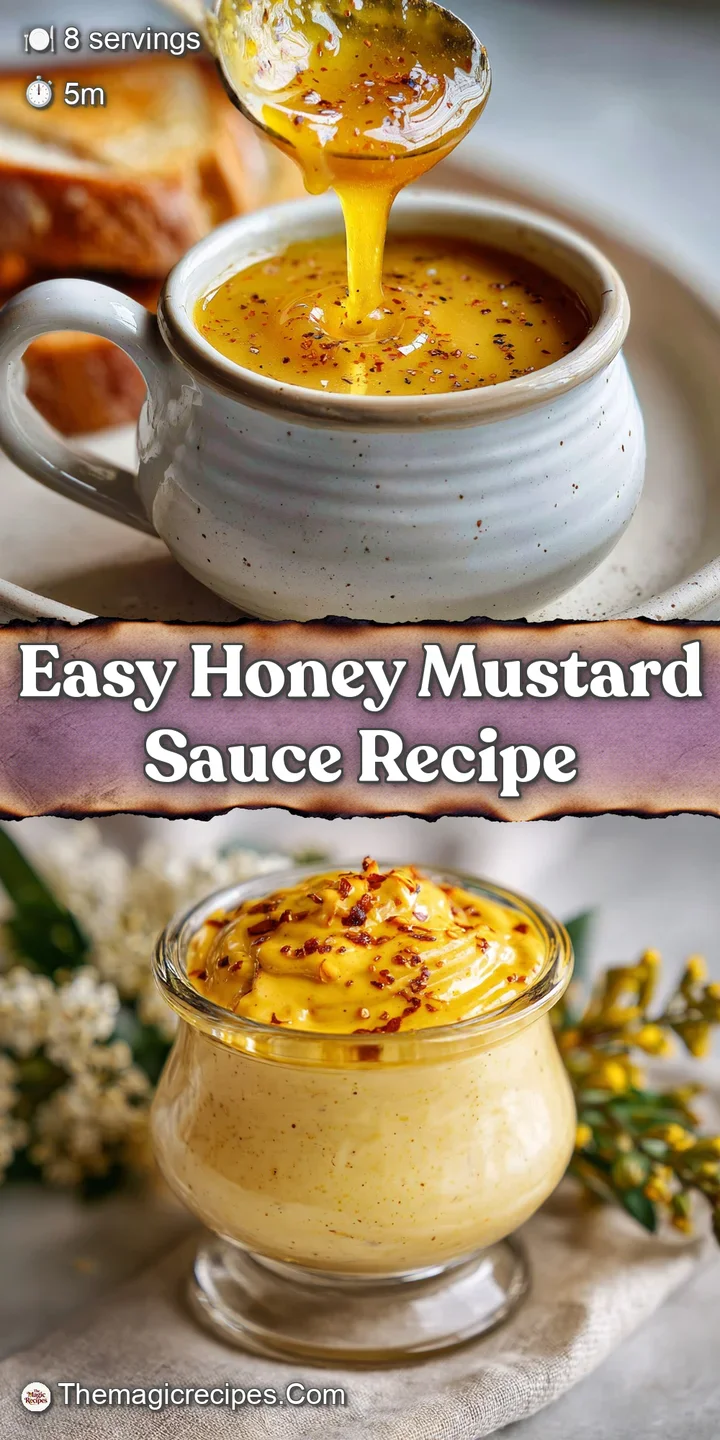
Honey Mustard FAQs
What is honey mustard made of?
Honey and mustard are the primary ingredients. It's a condiment that combines the sweetness of honey with the pungency of mustard, often balanced with other ingredients like vinegar, oil, or mayonnaise to create a smooth dressing or dip.
What are the ingredients of honey mustard dressing?
Common ingredients include Dijon mustard, yellow mustard, honey, vinegar, and oil or mayonnaise. Some recipes also feature additions like lemon juice, garlic powder, or a touch of cayenne for complexity.
Is honey and mustard the same as honey mustard?
No, honey mustard is a distinct condiment made by combining honey and mustard. Simply mixing honey and mustard together creates the base, but a true honey mustard sauce or dressing typically includes other ingredients for flavor balance and texture, much like our recipe for a Bang Bang Sauce Recipe: 5-Minute Copycat Flavor.
How do you make honey mustard at Wingstop?
Wingstop's honey mustard recipe is a closely guarded secret, but it likely involves a base of Dijon and yellow mustard, honey, and a creamy element like mayonnaise or buttermilk. They also add spices and a touch of vinegar for tang, aiming for a smooth, dippable consistency.
Can I use honey mustard on chicken?
Yes, absolutely! Honey mustard is a fantastic marinade, glaze, or dipping sauce for chicken, providing a delightful sweet and savory flavor profile. If you enjoyed mastering the texture of this sauce, you might also like learning about emulsification techniques used in recipes like our Bang Bang Sauce Recipe: 5-Minute Copycat Flavor.
How long does homemade honey mustard last?
Homemade honey mustard typically lasts up to 5 days in the refrigerator. This is thanks to the natural preservatives like vinegar and honey, but it's best stored in an airtight container to maintain freshness and prevent separation.
What can I use if I'm out of honey for honey mustard?
Maple syrup or agave nectar are good substitutes for honey. While they provide sweetness, be aware that they can alter the final flavor profile slightly and may affect the sauce's thickness; maple syrup, for instance, might make the sauce thinner and have a woody taste.
Honey Mustard Sauce
Ingredients:
Instructions:
Nutrition Facts:
| Calories | 57 kcal |
|---|---|
| Protein | 1.3 g |
| Fat | 1.5 g |
| Carbs | 9.9 g |
| Fiber | 0.3 g |
| Sugar | 8.8 g |
| Sodium | 263 mg |
