Velvety Horseradish Sauce for Prime Rib
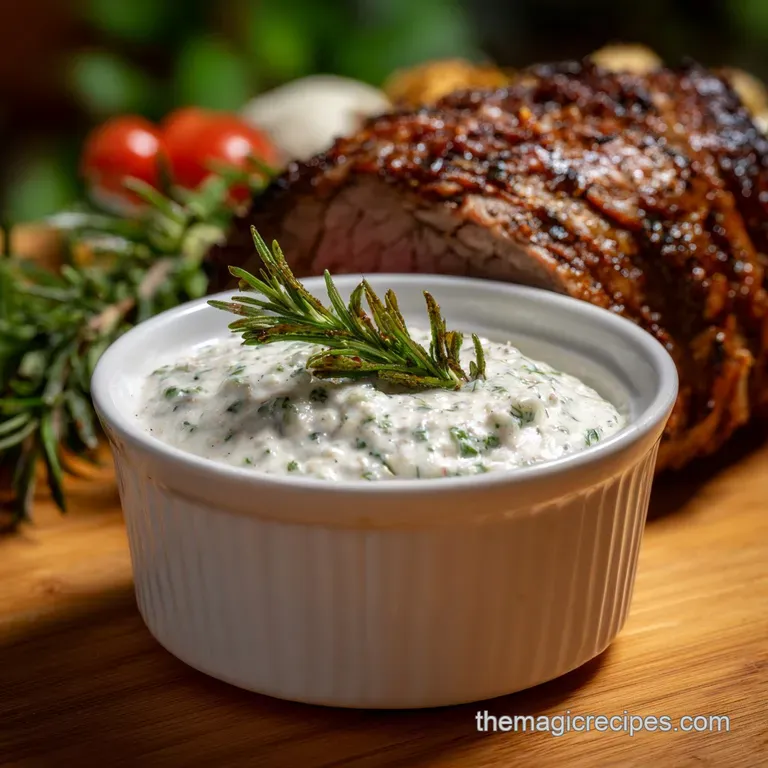
- Time: Active 5 minutes, Passive 0 minutes, Total 5 minutes
- Flavor/Texture Hook: Velvety, tangy, and pungent
- Perfect for: Holiday dinners, Sunday roasts, or leftover steak sandwiches
- Quick Horseradish Sauce For Prime Rib Success
- Prep Flow For Your Best Sauce
- Selecting Components For Flavor Balance
- Tools For Silky Smooth Texture
- Steps To Whip Up This Sauce
- Fixing Common Texture And Flavor Issues
- Ways To Customize Your Cream Base
- Managing Leftovers And Food Waste
- What To Serve With This Dip
- Practical Decisions For Beef Dinner
- Recipe FAQs
- 📝 Recipe Card
Quick Horseradish Sauce For Prime Rib Success
Have you ever sat down to a beautiful, expensive roast only to find the meat feels a bit... heavy? We have all been there. Without a sharp contrast, even the best beef can start to feel one note after a few bites. That is where a proper horseradish sauce for prime rib comes into play.
It provides that essential acidic "zap" that wakes up your palate and makes the next bite of beef taste just as good as the first.
I used to think the stuff in the little plastic jars at the grocery store was fine, but once I started whisking this together at home, there was no going back. It is about the balance of creamy dairy and that volatile heat that hits the back of your nose.
Honestly, don't even bother with low-fat versions here; the fat in the sour cream is what carries the flavor and protects your tongue from being completely overwhelmed by the spice.
This recipe is my go to because it is functional, fast, and foolproof. We are busy people, and when the roast is resting on the counter, the last thing we need is a complicated side project. This is a "dump and stir" situation that delivers big results.
Trust me on this, your guests will be asking if you snuck a chef into the kitchen to whip this up.
Prep Flow For Your Best Sauce
The beauty of this condiment is the lack of actual "cooking." We are strictly in the realm of assembly and emulsification. If you want the best results, you need a plan that accounts for the "bloom" of the horseradish.
- Prep Phase: Drain your prepared horseradish through a fine mesh strainer. If you skip this, your sauce will turn into a watery mess within ten minutes.
- Mixing Phase: Whisk the heavy cream separately until it just starts to thicken before folding it into the sour cream. This adds a lighter, more luxurious mouthfeel than just stirring everything in a bowl.
- Resting Phase: Give the sauce at least 10 minutes in the fridge. This allows the salt to dissolve and the vinegar to pull the heat out of the horseradish bits.
| Feature | Fresh Root Method | Jarred Shortcut (This Recipe) |
|---|---|---|
| Effort Level | High (Grating is a workout) | Low (Open and pour) |
| Consistency | Often fibrous or chunky | Smooth and predictable |
| Heat Profile | Wildly unpredictable | Consistent and balanced |
Selecting Components For Flavor Balance
The science of why it works: Enzymatic Reaction: When horseradish is crushed, it releases allyl isothiocyanate, which creates that famous "nasal burn" that dissipates quickly.
Fat Stabilization: The lipids in the sour cream and mayonnaise coat the tongue, slowing down the heat delivery so you taste the beef too.
Component Analysis
| Ingredient | Science Role | Pro Secret |
|---|---|---|
| Sour Cream | Acidic base | Use Daisy Brand for the cleanest flavor profile. |
| Heavy Cream | Emulsifier | Whisk to soft peaks first for a "mousse" texture. |
| Horseradish | Pungent volatile | Drain the brine completely to prevent thinning. |
| Lemon Juice | pH Balancer | Brightens the fats and prevents the dairy from feeling cloying. |
Tools For Silky Smooth Texture
You don't need a kitchen full of gadgets, but a few specific items make this easier. I swear by my Lodge 10 inch glass mixing bowl because it doesn't react with the vinegar or lemon juice. Metal bowls can sometimes give creamy sauces a weird, metallic aftertaste if they sit too long.
A KitchenAid Balloon Whisk is also vital. You aren't just stirring; you are trying to incorporate a little air into that heavy cream. If you are in a massive rush, a small immersion blender works, but be careful not to over process it or you'll end up with horseradish flavored butter.
Finally, use a sharp knife for those chives. If you bruise them with a dull blade, they turn bitter and swampy instead of fresh and peppery.
Steps To Whip Up This Sauce

- Drain the horseradish. Place 1/2 cup (125g) prepared horseradish in a fine mesh sieve. Why this? Excess vinegar brine makes the sauce runny and overly acidic.
- Measure the base. Add 1 cup (240g) full fat sour cream and 2 tbsp (30g) mayonnaise to your mixing bowl.
- Aerate the cream. In a separate small bowl, whisk 1/4 cup (60ml) heavy whipping cream for 30 seconds until slightly frothy.
- Combine the dairy. Fold the heavy cream into the sour cream mixture using a spatula.
- Add the heat. Stir in the drained horseradish. Wait for the aroma to hit you; that is how you know it's fresh.
- Season the mix. Add 1/2 tsp (3g) kosher salt, 1/4 tsp (1g) black pepper, and 1/2 tsp (2g) Worcestershire sauce.
- Brighten with acid. Pour in 1 tbsp (15ml) fresh lemon juice and 1 tsp (5ml) apple cider vinegar.
- Fold in greens. Gently stir in 1 tbsp (4g) finely minced chives until evenly speckled green.
- Chill and set. Cover and refrigerate for at least 15 minutes. Note: This stabilizes the emulsion.
- Final taste check. Give it one last stir and add a pinch more salt if the heat feels too sharp.
Fixing Common Texture And Flavor Issues
Sometimes things go sideways. Maybe you grabbed the "extra hot" horseradish by mistake, or your lemon was particularly juicy. Don't panic; most issues with this horseradish sauce for prime rib are easily fixed.
My Sauce Is Too Spicy
If the heat is making your eyes water just by looking at it, you need more fat. The heat in horseradish is oil soluble. By adding another dollop of sour cream or a splash of heavy cream, you dilute the concentration of the pungent compounds.
Why Is My Sauce Runny?
This usually happens if you didn't drain the horseradish well enough or if you used a "light" sour cream which has more water and thickeners. You can try to save it by whisking in an extra tablespoon of mayonnaise, which acts as a stabilizer.
| Problem | Cause | Fix | Pro Tip |
|---|---|---|---|
| Thin/Watery | Undrained horseradish | Whisk in more mayo | Use "Extra Heavy" mayo if available |
| Too Dull | Not enough acid | Add a drop of vinegar | A tiny pinch of sugar can also wake it up |
| Broken/Curdled | Over whisking | Gently stir in liquid cream | Fold, don't stir, once the cream is in |
Ways To Customize Your Cream Base
If you are looking for that Ruth Chris horseradish sauce copycat vibe, you might want to increase the mayonnaise ratio slightly and add a pinch of dry mustard. For an Ina Garten horseradish sauce style, many people like to increase the amount of fresh pepper and ensure the chives are very prominent.
- The Smoky Version: Add a 1/4 teaspoon of smoked paprika. It pairs beautifully if you are using a Prime Rib Roast Oven recipe that has a heavy crust.
- The Extra Zesty Version: Microplane some fresh lemon zest directly into the bowl. The oils in the skin provide a floral note that the juice alone lacks.
- The Steakhouse Secret: A tiny bit of prepared Dijon mustard can add a different kind of "up the-nose" heat that complements the horseradish.
Managing Leftovers And Food Waste
Storage: This sauce keeps surprisingly well. Store it in an airtight container in the fridge for up to 5 days. I actually think it tastes better on day two. Do not freeze this. The cell walls of the dairy will break down, and you will be left with a grainy, separated mess once it thaws.
- Zero Waste
- If you find yourself with half a cup of sauce left after the holiday dinner, don't toss it!
- 1. Sandwich Spread
- It is the ultimate topping for a roast beef po'boy.
- 2. Potato Topper
- Stir it into your Prime Rib Side recipe for a zesty twist on mashed potatoes.
- 3. Salad Dressing
- Thin it out with a little more apple cider vinegar and olive oil for a creamy steak salad dressing.
- 4. Chili Topper
- Believe it or not, a dollop of this on a bowl of Hot Dog Chili recipe adds a fantastic tang that cuts through the spice.
What To Serve With This Dip
This isn't just a one trick pony for beef. While it is the "best horseradish sauce for prime rib," its utility in the kitchen is vast. We often serve this alongside roasted root vegetables like carrots or parsnips. The sweetness of the caramelized veggies loves the sharp bite of the horseradish.
If you are feeling adventurous, try it as a dip for cold shrimp. It is a sophisticated alternative to traditional cocktail sauce. It also works wonders as a binder for a cold roast beef salad. But let's be honest, the main event is the beef.
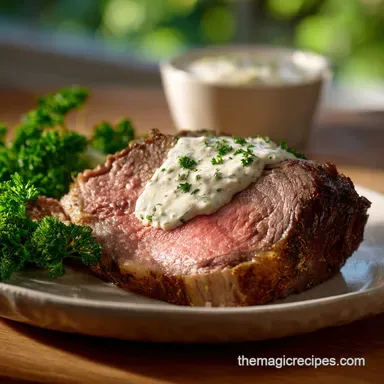
When you have that edge to edge pink roast, a dollop of this creamed horseradish recipe on the side of the plate is the only thing missing.
Practical Decisions For Beef Dinner
Myth: Fresh horseradish is always better than jarred. Actually, for a creamy sauce, high-quality jarred prepared horseradish is often superior. Fresh root can be woody, incredibly bitter, and loses its potency the second you grate it. The jarred stuff is preserved at its peak heat.
Myth: You should cook the sauce to meld the flavors. Never heat this sauce! High heat destroys the compounds that give horseradish its kick. If you heat it, you'll end up with a bland, warm cream sauce. Keep it cold until the moment it hits the hot beef.
- If you want it Extra Spicy
- Use "Extra Bold" prepared horseradish and skip the heavy cream.
- If you want it Mild/Family Friendly
- Increase the sour cream and whisk the heavy cream to stiff peaks before folding.
- If you want it Restaurant Quality
- Make it the night before. The flavors need time to introduce themselves properly.
This horseradish cream sauce recipe is about making your life easier while making your food taste better. It is functional, it is fast, and it works every single time. Now, let's get that roast on the table!

Recipe FAQs
Can I make this creamy horseradish sauce ahead of time?
Yes, it’s recommended. Prepare the base up to 24 hours early to allow the volatile heat from the horseradish to fully develop and mellow slightly in the dairy.
What happens if I forget to drain the jarred horseradish?
It will make your sauce runny. The excess vinegar brine packed with the horseradish thins out the sour cream and mayonnaise mixture, preventing a thick, luxurious consistency.
Can I substitute low-fat sour cream for the full fat version?
No, stick with full fat. The fat content is crucial because it coats your tongue, balancing the sharpness of the pungent horseradish, much like how fat balances heat in spicy dishes like our Hot Sauce: Bright Balanced Cayenne Garlic Recipe.
Should I heat the sauce before serving it with hot prime rib?
No, serve it cold. Heating this sauce will destroy the enzymatic compounds responsible for the sharp "nasal kick," rendering it bland and merely creamy.
Why does the recipe call for whisking the heavy cream separately?
It improves the texture significantly. Whisking the cream slightly before folding it in incorporates a small amount of air, giving the final sauce a lighter, almost mousse like mouthfeel rather than a dense, flat dairy base.
What is the key to getting a balanced, non-metallic flavor?
Avoid metal bowls during mixing. The acid from the lemon juice and vinegar can react with metal, creating an off-flavor, so use glass or ceramic bowls to maintain the clean taste.
Can I use fresh grated horseradish instead of jarred?
Yes, but be cautious with technique. If you are using the fresh root, the heat will be much more intense and volatile, requiring you to use less quantity than the jarred equivalent.
Horseradish Sauce For Prime Rib
Ingredients:
Instructions:
Nutrition Facts:
| Calories | 96 kcal |
|---|---|
| Protein | 0.8 g |
| Fat | 9.2 g |
| Carbs | 2.4 g |
| Fiber | 0.2 g |
| Sugar | 1.1 g |
| Sodium | 182 mg |
