Impressive Slow Roast for New Years Dinner
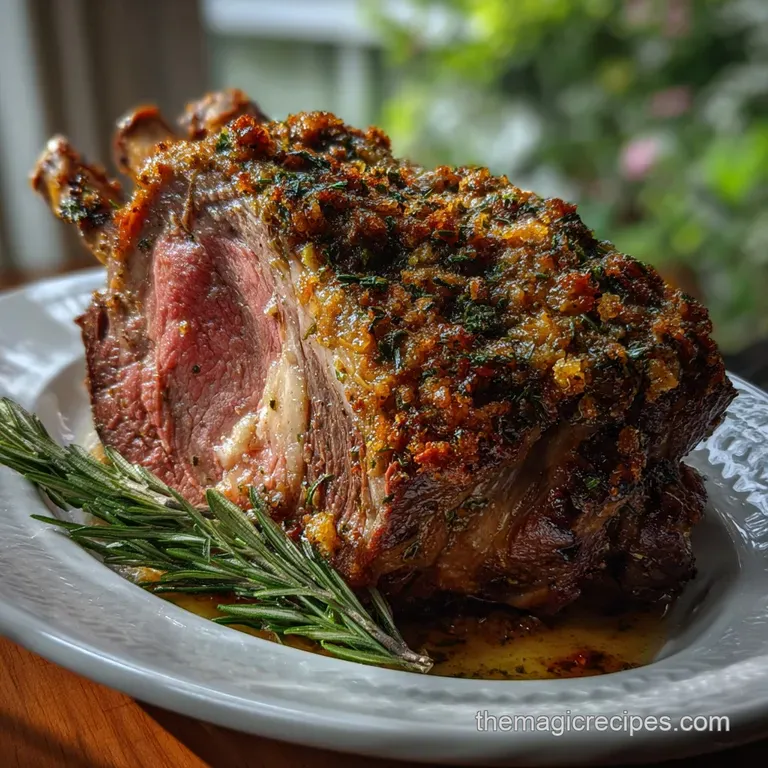
- Time: Active 20 minutes, Passive 3 hours 30 mins, Total 3 hours 50 mins
- Flavor/Texture Hook: Shattering herb crust with velvety, tender centers
- Perfect for: A memorable New Years Eve Dinner with zero stress
- The Secret Science Behind This New Years Dinner
- Essential Specs for Your Holiday Prime Rib
- A Deep Dive Into the Prime Rib Ingredients
- Essential Tools for Your Stress Free Holiday Meal
- Step by Step Instructions for a Perfect Roast
- Troubleshooting Your Most Common Roast Beef Problems
- Clever Substitutions for Your New Years Dinner Table
- Managing Leftovers and Storing Your Holiday Feast
- Expert Pairing Ideas for a Complete Menu
- Final Success Secrets for Your Holiday Celebration
- Recipe FAQs
- 📝 Recipe Card
The Secret Science Behind This New Years Dinner
There is a bit of magic that happens when you cook meat at a low temperature, and it isn't just luck. When we talk about a new years dinner that people will actually remember, we are talking about thermodynamics.
Most people blast their roast with high heat from the start, which causes the outside to overcook before the middle even gets warm. By starting low, we allow the heat to move slowly and evenly through the muscle fibers.
The magic happens through a few specific chemical reactions:
- Enzymatic Tenderization: Between 100°F and 120°F (38°C to 49°C), natural enzymes in the beef are hyper active, breaking down tough connective tissue before the heat eventually deactivates them.
- Maillard Reaction: We finish the roast at 500°F (260°C) to trigger the chemical reaction between amino acids and reducing sugars, creating that dark, savory crust.
- Protein Coagulation: Keeping the temperature steady prevents the muscle fibers from "wringing out" their moisture like a wet sponge.
- Carryover Cooking: The internal temperature will rise about 5 to 10 degrees after you take it out, so we pull it early to hit that sweet spot.
Honestly, I used to be terrified of ruining an expensive piece of meat. But once I understood that heat is a tool rather than just a setting, everything changed. This new years dinner relies on patience rather than constant hovering.
Essential Specs for Your Holiday Prime Rib
Cooking for a crowd on New Year's Eve can feel like a logistical puzzle. You have to time the appetizers, the drinks, and the main event all at once. This new years dinner is designed to give you a huge window of flexibility.
Because we roast at a lower temperature, the window for "perfectly done" is much wider than if you were using high heat.
The rib roast is the star here, but the timing is what makes it a practical choice for parents. You can get the kids settled, have a glass of wine, and not worry about the meat turning into leather. Here is the quick breakdown of what to expect from this new years dinner centerpiece.
| Metric | Detail | Note |
|---|---|---|
| Target Temp | 135°F (57°C) | This is for a standard medium rare finish |
| Rest Time | 30 minutes | Essential for juice redistribution |
| Serving Size | 1 lb per person | Account for bone weight and shrinkage |
If you are looking for a great starter to keep people busy while the meat rests, I highly recommend this New Years Eve recipe. It keeps everyone happy without filling them up too much before the main event.
A Deep Dive Into the Prime Rib Ingredients
Choosing the right components for your new years dinner is half the battle. I always tell my friends that you can't fix a bad piece of meat with a good sauce. You need to start with quality. For this new years dinner, we are using a 9 lb bone in rib roast.
The bones act as an insulator, protecting the meat from direct heat and adding flavor to the drippings.
Component Analysis
| Ingredient | Science Role | Pro Secret |
|---|---|---|
| 3 tbsp Kosher Salt | Protein Denaturation | Salt 24 hours early to dry brine the exterior |
| 1 cup Unsalted Butter | Fat Emulsification | Soften at room temp for a spreadable shield |
| 8 cloves Garlic | Aromatic Infusion | Smash into a paste to release all oils |
| 1 cup Dry Red Wine | Acid Balance | Use a Cabernet to cut through the beef fat |
For the herb rub, we use 3 tablespoons fresh rosemary and 2 tablespoons fresh thyme. Do not use the dried stuff here. It just won't give you that vibrant, "shatter" texture we want in the crust.
The 8 cloves of garlic should be turned into a paste I just use the side of my knife and a little salt to grind it down on the cutting board.
Full Ingredient List: 9 lb standing rib roast (bone in) Why this? Bones add flavor and provide a natural roasting rack for the meat. 3 tablespoons Diamond Crystal kosher salt Why this? Large crystals allow for even coverage without over
salting. 1 cup unsalted butter, softened Why this? High fat content creates the perfect vehicle for the herbs. 3 tablespoons fresh rosemary, minced Why this? Adds a woody, pine like aroma that pairs with beef. 2 tablespoons fresh thyme, minced
Why this? Provides a subtle earthy note to the crust. 8 cloves fresh garlic, smashed into paste Why this? Fresh garlic is essential; pre minced jars taste metallic. 2 tablespoons black peppercorns, coarsely cracked Why this? Coarse
bits provide a spicy crunch in the crust. 2 cups beef bone broth Why this? Richer in gelatin than standard broth for a silkier sauce. 1 cup dry red wine Why this? Provides the necessary acidity to balance the rich drippings. 2 large shallots,
minced Why this? Sweeter and more delicate than standard yellow onions. 2 tablespoons cold unsalted butter, cubed Why this? Whisked in at the end to thicken the sauce naturally.
Essential Tools for Your Stress Free Holiday Meal
You don't need a kitchen full of gadgets for a great new years dinner. In fact, I prefer keeping things simple. A good Lodge cast iron skillet or a heavy duty roasting pan is all you really need. But if there is one thing you absolutely must have, it is a reliable digital meat thermometer.
Do not trust the "finger poke" test or the clock. Every oven is different, and every roast is shaped differently.
Chef's Note: If you don't have a roasting rack, don't go out and buy one. You can use thick slices of onion and celery at the bottom of the pan to prop up the meat. It adds flavor to the jus and works just as well.
I usually use my KitchenAid mixer's bowl to mix the herb butter, but a simple fork and a sturdy bowl work just fine. For the sauce, a small saucepan is plenty. We are focusing on minimal tools so you have fewer dishes to wash when the ball drops at midnight.
step-by-step Instructions for a Perfect Roast
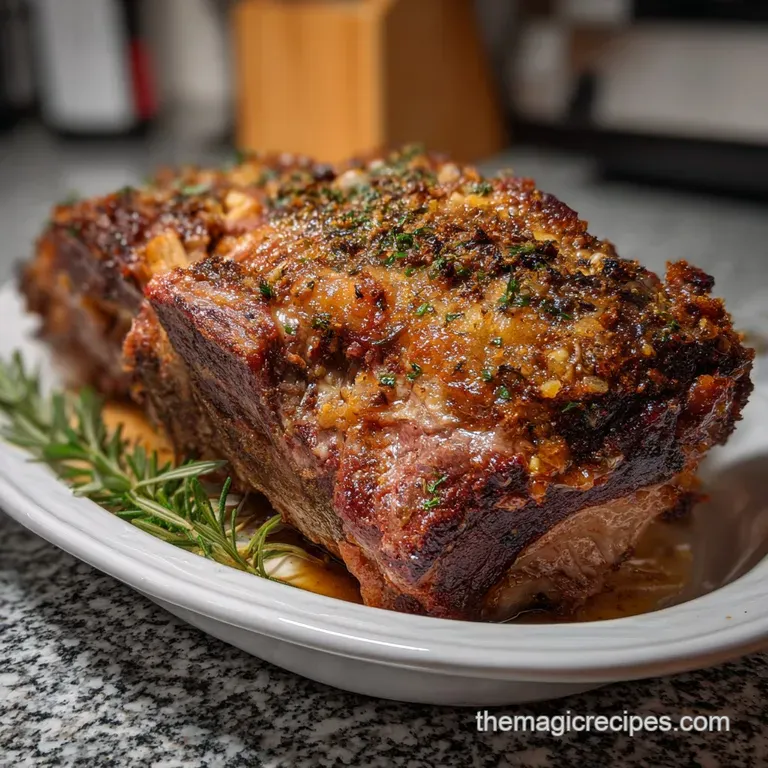
Right then, let's crack on. This new years dinner takes time, but most of it is "set it and forget it." I usually start this process the day before by salting the meat, but if you forgot, don't panic. Just do it as early as you can.
1. The Dry Brine and Tempering
Rub the 3 tablespoons of kosher salt over every inch of the 9 lb roast. Let it sit uncovered in the fridge for at least 6 hours, or ideally 24. This pulls moisture out, dissolves the salt, and then pulls it back in to season the deep interior.
Take the meat out of the fridge 2 hours before cooking. Note: Cold meat cooks unevenly.
2. Applying the Herb Shield
Mix the 1 cup softened butter, rosemary, thyme, garlic paste, and 2 tablespoons cracked peppercorns. Slather this over the top fat cap and the sides of the roast. It should look like a thick green blanket.
3. The Gentle Roast
Preheat your oven to 250°F (120°C). Place the roast in the pan, bone side down. Slide it into the oven and let it go. Cook until the internal temperature hits 120°F (49°C).
This usually takes about 3 to 3.5 hours for a 9 lb roast.
4. The High Heat Finish
Remove the roast from the oven. Increase the oven heat to 500°F (260°C). While the oven heats up, let the roast sit on the counter. Once the oven is screaming hot, put the meat back in for 8-10 minutes until the crust is dark and sizzling.
5. The Rest
This is the hardest part. Transfer the roast to a cutting board and let it sit for at least 30 minutes. Do not skip this. If you cut it now, all the juice will run out and you'll be left with gray, dry meat.
6. Starting the Jus
While the meat rests, pour the excess fat out of the roasting pan, but keep the brown bits. Place the pan over two burners on medium heat. Add the minced shallots and cook until translucent and fragrant.
7. Deglazing the Pan
Pour in the 1 cup of red wine. Use a wooden spoon to scrape up all those delicious stuck on bits. Let the wine reduce by half until it smells rich and less sharp.
8. Simmering the Sauce
Add the 2 cups of beef bone broth. Let it simmer and reduce for about 10-15 minutes. It should coat the back of a spoon slightly.
9. Finishing the Sauce
Turn off the heat. Whisk in the 2 tablespoons of cold cubed butter one piece at a time. This gives the sauce a velvety, professional finish.
10. Carving
Cut the twine and pull the bones away from the meat. Slice the roast into thick slabs. Pour the red wine reduction over the top and serve your new years dinner immediately.
Troubleshooting Your Most Common Roast Beef Problems
Even with a foolproof plan, things can go sideways. But don't worry, most mistakes in a new years dinner are fixable. The biggest issue I see is people panicking about the timing. If your guests are late and the meat is done, just wrap it loosely in foil and a couple of clean towels.
It will stay warm for over an hour.
Why Your Meat Might Be Tough
If the meat feels chewy, it usually means it didn't rest long enough or it was sliced with the grain instead of against it. Always look for the direction of the muscle fibers and cut perpendicular to them.
Quick Fix Table
| Problem | Cause | Fix |
|---|---|---|
| Crust is soggy | Oven wasn't hot enough | Crank the heat to 500°F for the final 5 mins |
| Meat is too rare | Pulled too early | Slice it and sear individual pieces in a pan |
| Sauce is too salty | Reduced too much | Add a splash of water or a pinch of sugar |
Why Your Fat Cap Isn't Crispy
This usually happens if the meat was too wet when you put the butter on. That's why the dry brine is so important. If it's still not browning, you can use a kitchen torch for 30 seconds to get those spots sizzling.
Clever Substitutions for Your New Years Dinner Table
Sometimes the grocery store is a madhouse on December 31st, and they might be out of what you need. Or maybe you want to change things up. Here are some honest trade offs for this new years dinner.
| Original Ingredient | Substitute | Why It Works |
|---|---|---|
| Beef Bone Broth | Chicken Stock | Lighter flavor but works if you add a tsp of soy sauce |
| Red Wine | Pomegranate Juice | Provides the same acidity without the alcohol |
| Shallots | Yellow Onion | Use half the amount; onions are more pungent |
| Fresh Rosemary | Fresh Sage | Gives a different, more savory holiday vibe |
For another festive option, you could look at this Christmas Eve Dinner recipe. It uses a slightly different crust technique that works beautifully for any end of-year celebration.
Decision Shortcut
- If you want a heavier crust, add 1/2 cup of panko breadcrumbs to the herb butter.
- If you want it spicy, stir in 2 tablespoons of prepared horseradish to the garlic paste.
- If you are short on time, skip the slow roast and do 325°F (165°C), but watch the temp closely.
Managing Leftovers and Storing Your Holiday Feast
Leftover prime rib is almost better than the fresh stuff. For this new years dinner, you can keep the meat in the fridge for up to 4 days. I like to wrap it tightly in plastic wrap to keep the air out. To reheat, don't use the microwave! It will turn the meat into rubber.
Instead, put it in a 250°F (120°C) oven with a splash of broth until it’s just warmed through.
Freezing: You can freeze the cooked roast for up to 2 months. Slice it first so you can grab exactly what you need for a quick sandwich later on.
Zero Waste Tip: Do not throw away those rib bones! Put them in a pot with water, an onion, and some carrots to make the best beef stock you've ever had. You can also use the leftover fat (tallow) to roast the best potatoes of your life the next day.
Expert Pairing Ideas for a Complete Menu
A great new years dinner needs balance. Since the roast is very rich and fatty, you want sides that are bright or creamy. I usually go with a simple arugula salad with a lemon vinaigrette to cut through the richness.
Mashed potatoes are a classic, but try adding some of that leftover garlic herb butter to them for an extra kick.
For the sweet ending, check out this New Years Desserts recipe. It is the perfect way to round out the meal without being too heavy.
Side Dish Ideas: Honey glazed carrots with plenty of black pepper. Creamed spinach with a pinch of nutmeg. Yorkshire puddings made using the beef drippings from the pan.
Final Success Secrets for Your Holiday Celebration
There are a lot of stories out there about how to cook the "perfect" roast. Let's clear some things up so your new years dinner goes off without a hitch.
The Sear Myth: People say searing meat "seals in the juices." This is simply not true. Searing creates flavor through the Maillard reaction, but it doesn't create a waterproof barrier. In fact, high heat causes more moisture loss. That is why we do the big sear at the end, not the beginning.
The Bone Choice: Some people prefer boneless roasts because they are easier to carve. While that’s true, the bones act as a heat shield. If you go boneless, reduce your cooking time by about 20% and use a roasting rack to ensure airflow underneath the meat.
- 1. 2 hours before
- Meat comes out of the fridge.
- 2. 120°F
- The moment you pull the meat for the first time.
- 3. 30 minutes
- The minimum time you must let the meat rest before the final sear or carving.
Trust me, once you see that perfectly pink center, you'll never go back to the old way. It's functional, it works around your busy schedule, and it tastes like you spent days on it. Happy New Year and enjoy the feast!
Recipe FAQs
What internal temperature should I pull the roast at to ensure medium rare for New Year's dinner?
120°F (49°C). You must pull the roast when it hits this temperature because the carryover cooking will raise the internal temperature another 5 to 10 degrees while it rests, hitting your perfect medium rare target.
Can I skip the 30-minute rest period after cooking the roast?
No, this step is essential. Resting allows the muscle fibers to relax and redistribute the juices throughout the meat; cutting too early results in dry meat as all the moisture escapes onto the cutting board.
Why do you recommend a low initial cooking temperature of 250°F?
It maximizes tenderness through enzymatic action. Cooking low and slow between 100°F and 120°F allows natural enzymes to break down tough connective tissues before the heat deactivates them, resulting in a velvety center.
What if I don't have bone broth for the pan sauce?
Chicken stock is an acceptable, lighter substitute. If using stock instead of bone broth, add a teaspoon of soy sauce to compensate for the missing gelatin depth, which provides a richer base for your sauce.
Is using the bone-in roast mandatory for this recipe?
No, but the bones offer protection. The bones act as a natural insulator, shielding the meat from direct heat and allowing for more even cooking, which is why boneless roasts cook about 20% faster.
Can I substitute the fresh herbs with dried ones?
I strongly advise against it for the crust. Dried herbs won't achieve the vibrant, shattering texture we aim for; you need fresh herbs to release the volatile oils properly when mixed into the butter paste.
My initial salt rub washed off when I applied the butter. What went wrong?
You likely skipped the essential dry brining step. The salt needs time to dissolve into the surface moisture and adhere properly; if you want to try a spicy alternative, consider looking at recipes like Andouille Sausage Recipes: Spicy Skillet Dinner with Creamy Grits where heavy salting is key for flavor penetration.
Impressive New Years Dinner
Ingredients:
Instructions:
Nutrition Facts:
| Calories | 1142 kcal |
|---|---|
| Protein | 69g |
| Fat | 91g |
| Carbs | 4g |
| Fiber | 1g |
| Sugar | 1g |
| Sodium | 1195mg |
