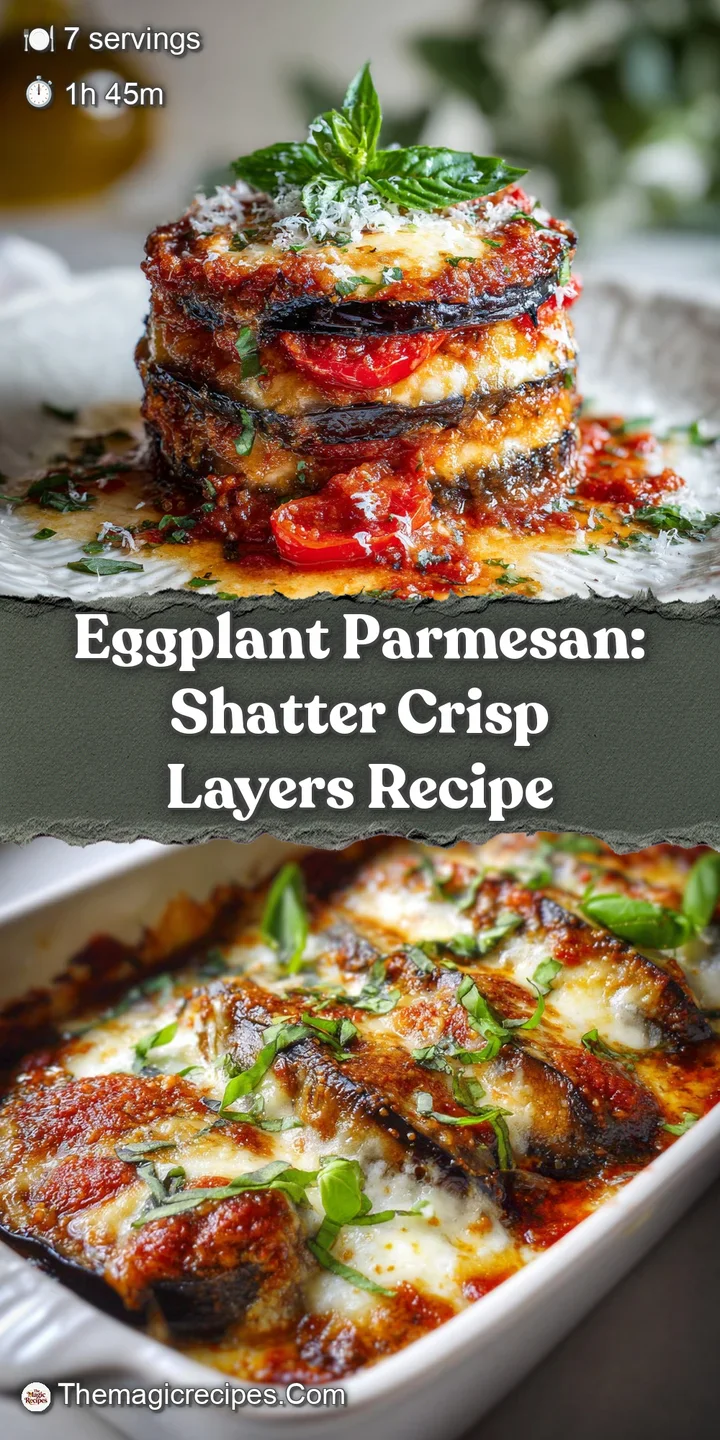
Eggplant Parmesan: Shatter-Crisp Layers
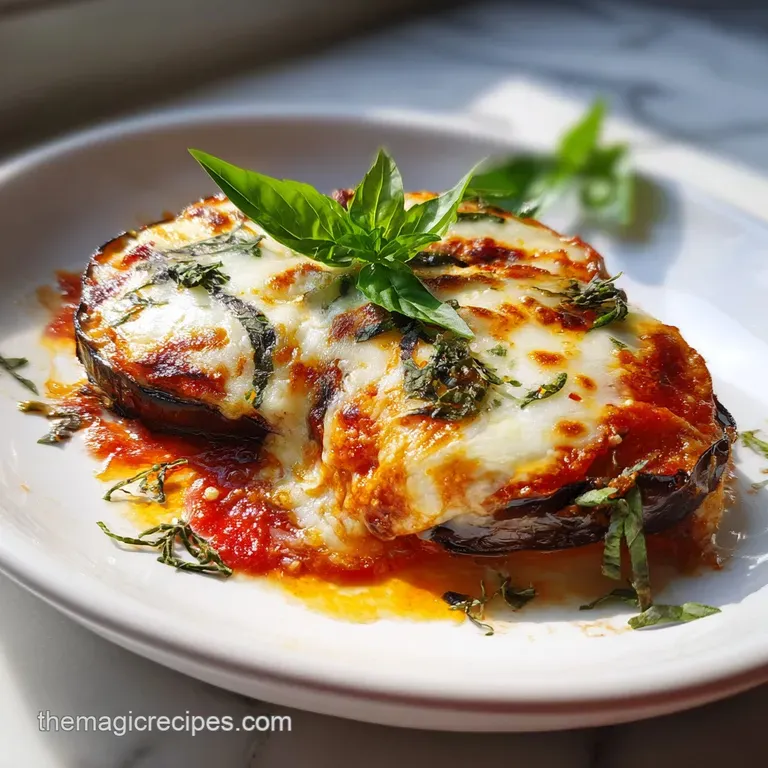
- Time: Active 45 minutes, Passive 1 hours, Total 1 hour 45 mins
- Flavor/Texture Hook: Shatter crisp eggplant layers with vibrant, acidic San Marzano sauce
- Perfect for: Bold weekend entertaining or an authentic family feast
What Makes This So Good
I used to think my Eggplant Parmesan was solid until I stood in a humid kitchen in Naples, watching a chef treat aubergines like precious cargo. The sizzle of the fruit hitting the oil sounded like a secret language, and the aroma of torn basil hitting hot tomato sauce was enough to make me weak.
My version at home always turned out like a soggy, oil soaked sponge, but that day I learned that salt isn't just for flavor it's a structural tool.
We are leaving the heavy, bready casseroles behind for something much more authentic and bold. This recipe focuses on thin, crisp layers that maintain their integrity even under a blanket of molten mozzarella and sharp Parmigiano Reggiano.
It is about the contrast between the velvety interior of the eggplant and the golden, shattered edges of the panko topping. Trust me, once you hear that first crunch, you'll never go back to the mushy stuff.
This is the parmigiana de berenjena you've been dreaming of, where the ingredients speak for themselves. We are using San Marzano tomatoes for their low acidity and 1.2kg of globe eggplants to ensure we have enough to stack high.
It's a labor of love, but the payoff is a dish that feels like it belongs in a high end trattoria rather than a standard glass baking dish.
The Physics of the Shatter
Osmotic Pressure: Salt draws out excess moisture from the eggplant cells, collapsing the spongy structure so it absorbs less oil during the frying process. Starch Barrier: A thin dusting of flour creates a sacrificial layer that browns rapidly, protecting the delicate flesh while providing a surface for the sauce to cling to.
| Method | Time | Texture | Best For |
|---|---|---|---|
| Shallow Fry | 45 minutes | Shatter crisp edges | Authentic, bold flavor |
| Air Fryer | 30 minutes | Firm and chewy | Quick weeknight prep |
| Oven Roast | 40 minutes | Soft and silky | Lower calorie counts |
The shallow fry is the traditional route for a reason. It creates a Maillard reaction that roasting simply cannot mimic, giving the eggplant a deep, nutty profile that stands up to the rich cheese. If you're in a hurry, the parmigiana de berenjena airfryer method works, but you'll miss that specific golden glow.
Recipe Specs
Creating a balanced Eggplant Parmesan requires precision in both temperature and timing. If your oil is too cold, the eggplant becomes a grease trap; if it's too hot, the exterior burns before the middle softens.
We are aiming for a steady 175°C to ensure that the flour dusted rounds develop a beautiful, bronzed hue without losing their velvety heart.
The sauce is equally important. We aren't making a long simmered ragu here. We want a vibrant, punchy marinara that cuts through the richness of the fried eggplant and cheese. By hand crushing the 800g of San Marzano tomatoes, we keep the texture rustic and prevent the sauce from becoming a watery puree.
This ensures the final bake stays structured and sliceable rather than turning into a soup.
| Component | Science Role | Pro Secret |
|---|---|---|
| Globe Eggplant | Structural Base | Slice into 1/2 inch rounds for the best ratio of crunch to cream |
| Kosher Salt | Moisture Extractor | Weighted salting for 30 minutes is non negotiable for texture |
| San Marzano | Acidic Balance | Hand crushing preserves the pectin for a thicker, naturally sweet sauce |
| Low Moisture Mozz | Fat & Binding | Shred it yourself to avoid the anti clumping starches in bagged cheese |
Using low moisture mozzarella is a trick I learned the hard way. Fresh buffalo mozzarella is succulent, but it releases far too much water during baking, which leads to the dreaded "swimming" eggplant.
By sticking to the low moisture variety, you get that iconic cheese pull without compromising the crispness of your hard work.
The Building Blocks
Selecting the right elements for your melanzane parmigiana recipe is half the battle. You want the globe eggplants to be heavy for their size with shiny, tight skin. If they feel light or look dull, they're likely full of large seeds and will taste bitter.
We are also looking for high-quality Parmigiano Reggiano, not the stuff in the green can. The real deal provides the salty, umami punch that defines this dish.
For the breading, we're deviating slightly from tradition by adding 50g of panko. Traditional Italian versions often skip the breadcrumbs entirely or use fine crumbs, but panko offers a jagged surface area that catches the light and the cheese. It’s a global twist that provides a superior crunch. If you love that savory sweet balance, you'll see similar notes in my Stuffed Acorn Squash recipe.
- 1.2kg Globe Eggplants: The star of the show. Why this? Globe variety has the meaty texture needed to survive the frying and layering process.
- 800g San Marzano Tomatoes: The gold standard. Why this? Their thick flesh and low seed count create a concentrated, bold sauce.
- 300g Low moisture Mozzarella: For the melt. Why this? Prevents the dish from becoming watery while providing a gooey, golden top.
- 100g Parmigiano Reggiano: The umami bomb. Why this? Adds a complex, salty finish that balances the sweet tomatoes.
- 150g All purpose flour: The protective coating. Why this? Creates a light crust that keeps the oil out and the flavor in.
- 1 bunch Fresh Basil: The aromatic lift. Why this? Essential for that authentic, garden fresh Italian aroma.
| Original Ingredient | Substitute | Why It Works |
|---|---|---|
| Kosher Salt | Sea Salt | Similar grain size. Note: Use 25% less if using fine table salt |
| Panko | Cracker Crumbs | Provides a similar jagged crunch. Note: Choose unsalted varieties |
| San Marzano | Plum Tomatoes | High flesh to seed ratio. Note: Add a pinch of sugar to mimic sweetness |
When substituting, keep the moisture content in mind. If you choose to use a wetter tomato, simmer the sauce for an extra 10 minutes to drive off the excess liquid. This keeps your layers distinct and prevents the aubergine parmigiana recipe from failing at the finish line.
Equipment Needed
You don't need a professional kitchen to make a killer Eggplant Parmesan, but a few specific tools make the process much smoother. A large cast iron skillet (like a Lodge) is my go to for frying because it holds heat beautifully, meaning the oil temperature won't plummet when you add the eggplant rounds.
You'll also want a wide, shallow baking dish. A ceramic 9x13 inch dish works best here, as it provides enough surface area for the cheese to brown evenly. If your dish is too small and deep, the middle won't get that golden crust we're looking for, and you'll end up with a center that’s a bit too soft.
- Large Skillet: For shallow frying.
- Baking Dish: 9x13 inch ceramic or glass.
- Spider Strainer: To safely lift the hot eggplant from the oil.
- Box Grater: For fresh Parmigiano and mozzarella.
- Paper Towels: Essential for draining the fried rounds.
- Heavy Weight: A cast iron press or extra plates for salting.
Chef's Tip: Freeze your mozzarella for 15 minutes before grating. It firms up the fat, making it much easier to shred without it turning into a clump of mush in your hand.
How to Make It
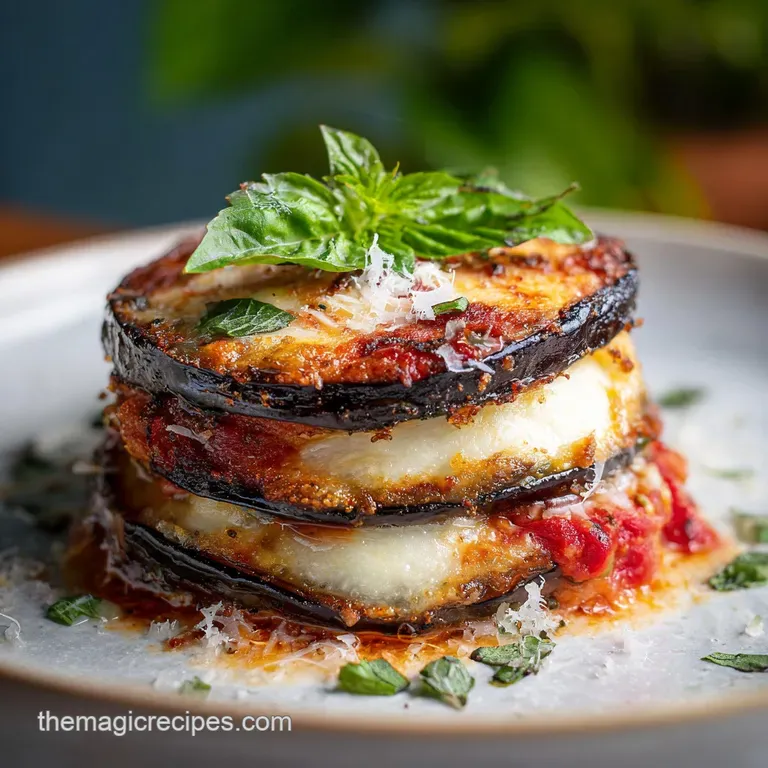
Right then, let's crack on with the cooking. This process is all about the prep. If you rush the salting or the frying, you'll end up with a greasy mess. Take your time, enjoy the sizzle, and focus on the colors. We're looking for deep golds and vibrant reds.
- Prep the eggplant. Slice the 1.2kg of eggplants into 1/2 inch rounds. Note: Consistency in thickness ensures they all cook at the same rate.
- Salt and weigh. Lay the rounds on a wire rack, sprinkle with 2 tbsp Kosher salt, and place a heavy weight on top for 30 minutes. Watch for the beads of water appearing.
- Dry thoroughly. Rinse the salt off and pat every single round completely dry with paper towels. Note: Moisture is the enemy of a good fry.
- Simmer the sauce. Sauté the diced onion and slivered garlic in 2 tbsp EVOO, add the 800g hand crushed tomatoes and basil stems, and simmer for 20 minutes until the sauce thickens and smells fragrant.
- Dredge the rounds. Coat each eggplant slice in the 150g of flour, shaking off any excess. Note: You want a ghostly coating, not a thick batter.
- Fry in batches. Heat 100ml of oil in your skillet and fry the rounds for 3 minutes per side until they are deep golden and the edges start to shatter.
- Drain and rest. Place the fried rounds on paper towels immediately. Note: This removes the excess oil that causes sogginess later.
- Layer the base. Spread a thin layer of sauce in the baking dish, followed by a single layer of eggplant and a handful of the 300g of mozzarella.
- Build the stack. Repeat the layers until you run out of eggplant, finishing with a generous layer of sauce, the remaining mozzarella, 100g of Parmigiano, and the 50g of panko.
- Bake to finish. Place in a 190°C oven for 30 minutes until the cheese is bubbling and the panko is crackling.
Let the dish rest for at least 15 minutes before you even think about cutting into it. This allows the layers to set, meaning you'll get those beautiful, distinct stacks on the plate rather than a heap of loose vegetables.
Common Mistakes & Troubleshooting
The most common heartbreak with Eggplant Parmesan is the "purple pond" at the bottom of the dish. This happens when the eggplant wasn't salted long enough or the sauce was too thin. If you see liquid pooling as you take it out of the oven, don't panic.
You can sometimes save it by letting it sit for an extra 10 minutes in the turned off oven with the door slightly ajar to help evaporation.
But what about the bitterness? Some globe eggplants can be quite sharp. The salting process usually fixes this, but if you're worried, you can add a tiny pinch of sugar to your tomato sauce. It rounds out the flavors and balances the natural bitterness of the skin.
Honestly, don't even bother with low-fat cheese here; it doesn't melt correctly and will leave you with a rubbery texture.
Fixing a Watery Bottom
If your bake looks like a swimming pool, the culprit is usually the eggplant's internal moisture. Next time, try salting for a full 45 minutes and using a heavier weight. You want that eggplant to look almost like leather before it hits the flour.
Also, ensure your sauce is reduced until it can hold a trail when you run a spoon through the pan.
Preventing Bitter Notes
Bitterness comes from the seeds. If your eggplant is older, it will have more seeds. You can mitigate this by choosing smaller, younger eggplants or by ensuring the salting process is thorough. The salt doesn't just pull out water; it pulls out the bitter alkaloids that can ruin the delicate balance of the dish.
| Problem | Root Cause | Solution |
|---|---|---|
| Sliced eggplant is greasy | Oil was too cold during frying | Ensure oil is at 175°C before adding the next batch |
| Cheese is burnt but eggplant is hard | Oven temp too high | Tent with foil and lower temp to 175°C to finish |
| Layers are sliding apart | Cut too soon after baking | Let the dish rest for 15-20 minutes before serving |
Common Mistakes Checklist
- ✓ Salt the eggplant for at least 30 minutes to collapse the cell structure.
- ✓ Pat the rounds bone dry after rinsing; water causes the oil to splatter and the crust to steam.
- ✓ Don't overcrowd the frying pan - fry in 3-4 batches to maintain oil temperature.
- ✓ Use low moisture mozzarella to prevent excess liquid from ruining the layers.
- ✓ Let the finished bake rest before slicing to ensure the structural integrity of the layers.
Flavor Variations to Try
The beauty of an Easy parmigiana de berenjena is how well it takes to bold, global tweaks. While the classic is hard to beat, I love experimenting with the cheese blend. Swapping half the mozzarella for smoked Scamorza adds a campfire depth that is absolutely stunning.
It transforms the dish from a simple bake into something much more complex and mysterious.
If you want a spicy kick, try adding some Calabrian chili paste to your tomato sauce. It provides a slow burning heat that works beautifully with the rich, fried eggplant. For those who want to lighten things up, you can try the Parmigiana de berenjena receta where you roast the slices with a spray of olive oil instead of frying.
It's not as indulgent, but it's a great way to enjoy the flavors on a regular basis.
- Smoked Variation: Use 150g smoked Scamorza and 150g mozzarella for a bold, charred profile.
- Spicy Kick: Stir 1 tbsp of Calabrian chili paste into the crushed tomatoes.
- The Herbaceous Twist: Add fresh oregano and a splash of balsamic vinegar to the sauce for a more rustic, herbal flavor.
When scaling this recipe down for two people, you can use a smaller 8x8 inch pan and reduce the baking time by about 20%. If you're scaling up for a crowd, keep the spices and salt at 1.5x the original amount to avoid over seasoning.
For the liquids, you can reduce them by about 10% as the larger volume will retain more moisture during the bake.
Preservation Secrets
Eggplant Parmesan is one of those rare dishes that actually tastes better the next day. The flavors have time to marry, and the structure becomes even more solid. It stays fresh in the fridge for up to 4 days. To reheat, avoid the microwave if you can. It turns the crisp panko into a sad, soggy mess.
Instead, pop a slice in the oven at 180°C for 15 minutes to bring back that crunch.
You can also freeze this dish with great success. I recommend freezing it in individual portions. Wrap each slice tightly in plastic wrap and then foil. It will last for up to 3 months. To serve from frozen, let it thaw in the fridge overnight and then bake as usual.
Zero Waste Tips
Don't throw away those eggplant scraps! The ends and smaller bits can be finely diced and sautéed with leftover tomato sauce to create a quick pasta topping for lunch the next day. The basil stems also have heaps of flavor; I throw them into the sauce while it simmers and then fish them out before layering.
Even the leftover flour from dredging can be used to thicken a soup or gravy later in the week.
Pairing Ideas
This dish is so bold and rich that it needs something bright and crisp to balance it out. A simple arugula salad with a lemon vinaigrette is the perfect companion. The peppery bite of the greens cuts right through the melted cheese and fried eggplant, refreshing your palate for the next bite.
If you want to go the full Italian route, serve this alongside some crusty sourdough bread to mop up any leftover sauce. A glass of acidic red wine, like a Chianti or a Barbera, is also a fantastic match. The tannins and acidity in the wine dance perfectly with the tomatoes and the fat in the mozzarella.
For a more substantial meal, you could serve smaller portions of the Parmigiana de berenjenas al horno as a side to a simple grilled protein. But honestly, it's so satisfying on its own that I usually just serve it with a big pile of greens and call it a day.
It’s a complete experience that celebrates the humble eggplant in the boldest way possible.
Eggplant Parmesan FAQs
What are common mistakes when making eggplant parm?
Not salting the eggplant long enough. This is the primary cause of greasy or watery results because the structure cannot expel excess moisture.
Frying the eggplant in oil that is too cold is another major error, resulting in a saturated, soggy texture rather than a crisp crust.
What is Eggplant Parmesan called in Italy?
Parmigiana di Melanzane. This literally translates to eggplant parmigiana or eggplant layered dish.
While the name implies Parmesan cheese is the only cheese, traditional versions often use mozzarella and Pecorino Romano alongside Parmigiano Reggiano.
What are the layers of parmigiana?
The typical layers are fried eggplant, tomato sauce, mozzarella, and Parmigiano Reggiano. These are stacked repeatedly in a baking dish.
Some authentic variations skip breading the eggplant entirely, relying on the cheese and sauce to bind the structure during baking.
What is the Italian dish with eggplant and cheese?
That dish is Parmigiana di Melanzane. It is a baked Italian casserole featuring sliced eggplant layered with tomato sauce and cheese.
Regional differences exist regarding whether the eggplant is breaded or fried plain, but the core components remain consistent.
How do I prevent my baked eggplant parm from becoming watery?
Salt the eggplant aggressively for at least 30 minutes, then rinse and pat completely dry. This step is crucial for drawing out internal moisture.
Use low moisture mozzarella instead of fresh buffalo mozzarella, and ensure your tomato sauce is reduced until it coats the back of a spoon.
Should I use Panko or traditional fine breadcrumbs on the eggplant?
Use Panko breadcrumbs for a superior, shatter crisp texture. Panko’s jagged surface area browns better and absorbs less oil than fine crumbs.
If aiming for strict authenticity, skip breading entirely and rely on a light flour dusting before frying to protect the flesh.
How long must the eggplant rest after baking before slicing?
Allow the dish to rest for a minimum of 15 minutes. This resting period allows the molten cheese and sauce to set up.
Slicing immediately causes the layers to slide apart, resulting in a messy presentation instead of clean, structured portions.
Masterful Eggplant Parmesan
Ingredients:
Instructions:
Nutrition Facts:
| Calories | 542 calories |
|---|---|
| Protein | 21g |
| Fat | 32g |
| Carbs | 36g |
| Fiber | 6g |
| Sugar | 9g |
| Sodium | 585mg |
