Cooked Tofu: Shatter Crisp Perfection
- Time: Active 10 minutes, Passive 15 minutes, Total 25 minutes
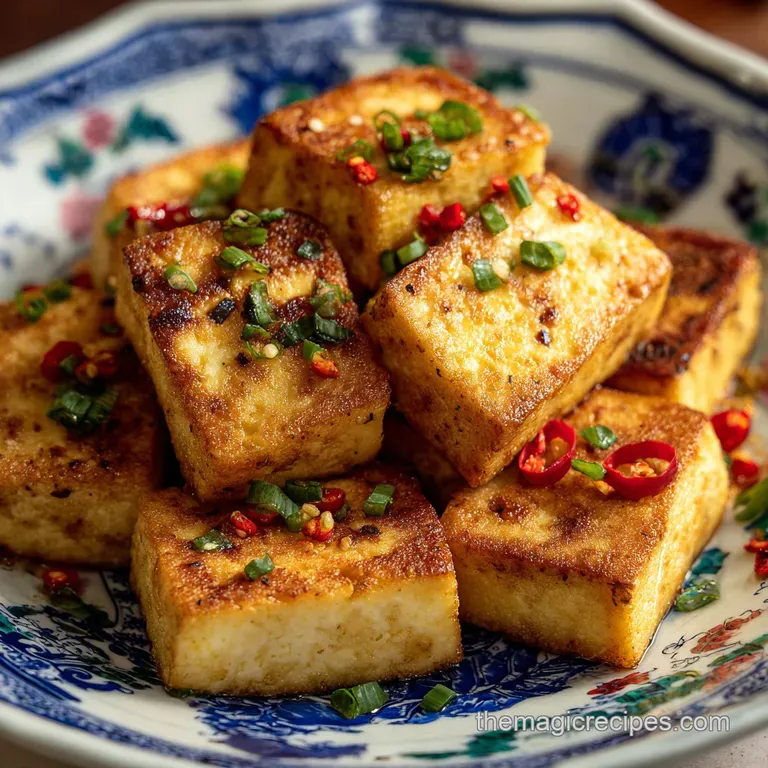
- Flavor/Texture Hook: Shatter crisp edges with a velvety, ginger infused center
- Perfect for: High protein meal prep or a quick, vibrant weeknight dinner
- Why You Will Love This Simple Cooked Tofu
- Crispy Exterior Meets A Tender Center
- The Science of The Shatter
- Essential Numbers for Meal Prep
- The Deep Dive Into Components
- Selecting the Right Plant Protein
- Tools for Golden Brown Results
- The Steps to Stovetop Gold
- Solving Texture and Flavor Issues
- Guidelines for Different Yields
- Debunking Tofu Preparation Myths
- Storage Guidelines and Zero Waste
- Complementary Sides for Every Bowl
- High in Sodium
- Cooked Tofu FAQs
- 📝 Recipe Card
Why You Will Love This Simple Cooked Tofu
I still remember the first time I tried to make tofu at home. It was a disaster. I ended up with a pile of grey, spongy cubes that tasted like nothing and felt like wet cardboard. I almost gave up on the protein entirely, thinking it was just something meant for restaurant kitchens with industrial deep fryers.
But then I discovered the "dusting" secret, and everything changed. The moment those cubes hit the hot avocado oil and that first sizzle filled the kitchen, I knew I’d finally cracked the code.
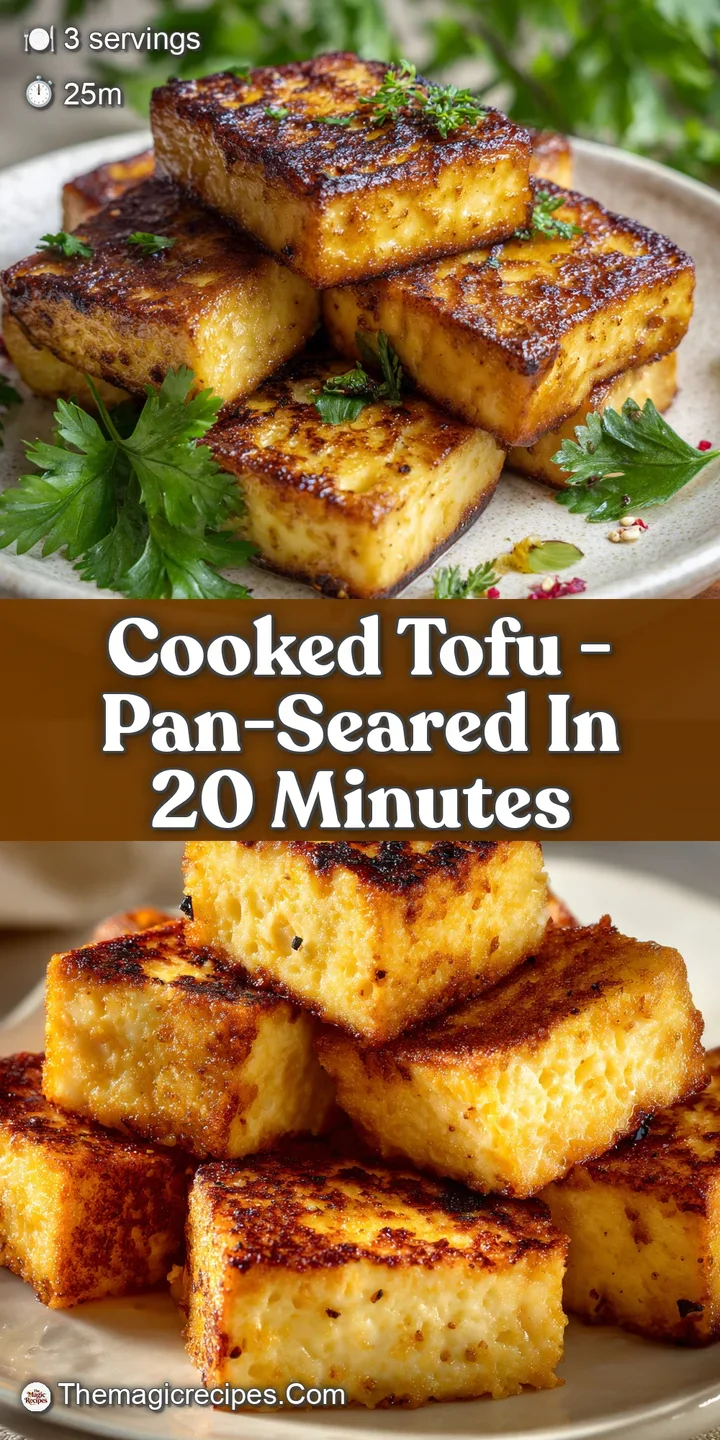
The aroma of toasted sesame oil and fresh ginger hitting the pan is enough to wake up anyone’s appetite. It’s a nourishing, plant forward dish that doesn’t feel like a compromise.
We are going for a high contrast experience here: a crust that actually crackles when you bite into it, giving way to a soft, savory interior that has absorbed every drop of the soy ginger glaze. It’s vibrant, it's fast, and it honestly makes me look forward to leftovers the next day.
You don't need a heavy press or hours of marinating to make this work. We’re focusing on moisture management and over high heat physics to get that golden finish. Whether you're a seasoned vegan or just trying to squeeze more plants onto your plate, this method is going to be your new best friend.
Let's get into how we transform a humble block of soy into something truly spectacular.
Crispy Exterior Meets A Tender Center
What sets this version apart is the balance of textures and flavors. We aren't just frying soy; we are building layers. The cornstarch creates a microscopic lattice on the surface that catches the heat, while the smoked paprika provides a subtle, earthy depth that mimics a wood fired grill.
It’s all about that interplay between the rich, nutty notes of sesame and the bright, acidic punch of rice vinegar.
If you're looking for more ways to expand your plant based repertoire, you might also enjoy my Recetas Veganas with recipe which explores different flavor profiles. This specific dish thrives on simplicity. It’s about letting the fresh ginger and garlic shine against the savory backdrop of the soy sauce. It’s a clean, vibrant meal that leaves you feeling fueled rather than weighed down.
- Crisp
- The golden brown cornstarch and salt crust.
- Tender
- The pillowy, high protein extra firm tofu core.
- Bright
- The zingy snap of fresh rice vinegar.
- Rich
- The deep, toasted aroma of sesame and avocado oils.
The Science of The Shatter
Starch Retrogradation: When cornstarch hits the hot oil, it undergoes a rapid transition where it absorbs any residual surface moisture and then dehydrates, forming a rigid, crispy shell that protects the interior.
Maillard Reaction Acceleration: The small amount of sugar naturally present in the soy sauce, combined with the proteins in the tofu, reacts under high heat to create those complex, savory "browned" flavors we crave.
Lipid Infusion: Because tofu is porous, the toasted sesame oil carries the fat soluble compounds of the garlic and ginger deep into the outer layers of the cube during the final glaze.
Essential Numbers for Meal Prep
| Cooking Method | Time | Texture Result | Best For |
|---|---|---|---|
| Stovetop Skillet | 15 minutes | Maximum crunch, uneven edges | Quick weeknight meals |
| oven-roasted | 25 minutes | Uniformly firm, less oily | Large batch meal prep |
| Air Fryer | 12 minutes | Extremely airy and light | Minimum effort snacking |
When you're deciding how to prepare your meal, consider the final destination. Stovetop is king for immediate serving because that "shatter" texture is at its peak right out of the pan.
If you're tossing this into a lunch container for tomorrow, the oven method provides a more consistent, "meaty" bite that holds up better to reheating.
The Deep Dive Into Components
| Ingredient | Science Role | Pro Secret |
|---|---|---|
| Extra Firm Tofu | Structural Integrity | Wrap in a clean towel for 5 minutes to remove surface water without a heavy press. |
| Cornstarch | Moisture Barrier | Toss the cubes in a sealed container to get an ultra thin, even coating that won't clump. |
| Avocado Oil | High Smoke Point | Use this for the initial sear because it won't burn at the temperatures needed for a crust. |
| Toasted Sesame Oil | Flavor Carrier | Add this only at the very end to preserve its delicate, nutty aroma which can turn bitter if overheated. |
Choosing the right base is everything. I always reach for extra firm because it handles the tossing and turning in the pan without crumbling into a mess. If you find yourself with regular firm tofu, just be a bit more gentle during the searing phase.
Selecting the Right Plant Protein
- 14 oz extra firm tofu, drained: This is our foundation. Why this? It holds its shape during over high heat searing better than softer varieties.
- Substitute: Super firm tofu (the vacuum packed kind) for even more density.
- 2 tbsp cornstarch: The secret to the crunch. Why this? It creates a crispier coating than flour due to its pure starch content.
- Substitute: Arrowroot powder for a grain free alternative.
- 0.5 tsp fine sea salt: Enhances the natural savory notes.
- Substitute: Kosher salt (use a full teaspoon if using Diamond Crystal).
- 0.5 tsp smoked paprika: Adds color and a hint of fire.
- Substitute: Regular paprika or a pinch of chipotle powder for heat.
- 2 tbsp avocado oil: Our primary cooking fat.
- Substitute: Grapeseed or canola oil; avoid olive oil for this over high heat sear.
- 2 tbsp soy sauce: The primary source of umami and salt.
- Substitute: Tamari for a gluten-free version or liquid aminos.
- 1 tsp toasted sesame oil: For that signature nutty finish.
- 1 tsp rice vinegar: To cut through the richness.
- Substitute: Apple cider vinegar or a squeeze of lime juice.
- 1 clove garlic, minced: Freshness is key here.
- 1 tsp fresh ginger, grated: Provides a vibrant, spicy zing.
Tools for Golden Brown Results
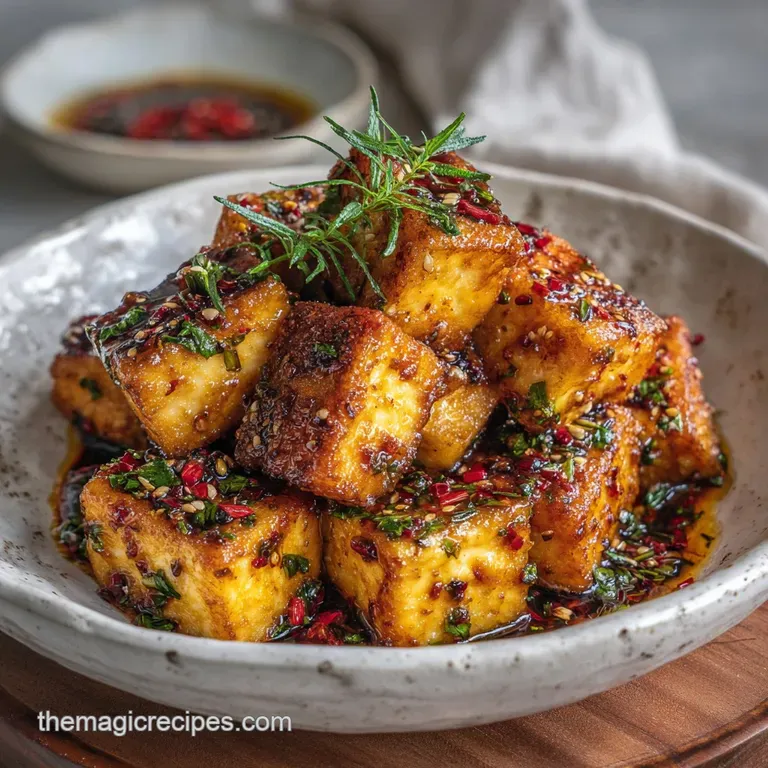
You don't need a kitchen full of gadgets, but a good heavy bottomed skillet is non negotiable. I prefer a well seasoned cast iron or a heavy stainless steel pan. These materials hold heat much better than thin aluminum, which means when you drop the cold tofu in, the pan temperature doesn't plummet.
A microplane is also a lifesaver for the ginger and garlic. It turns them into a paste that melts into the sauce rather than leaving you with big, burnt chunks. And trust me, get a good pair of silicone tipped tongs.
You'll be flipping these little cubes individually to make sure every side gets its moment in the spotlight.
The Steps to Stovetop Gold
- Prep the Tofu. Drain the 14 oz of extra firm tofu and pat it very dry with paper towels. Cut it into 1 inch cubes. Note: Dry surface equals better crunch.
- Season and Coat. In a large bowl, whisk together the 2 tbsp cornstarch, 0.5 tsp salt, and 0.5 tsp smoked paprika.
- Toss the Cubes. Add the tofu to the bowl and toss gently until every side is white and chalky.
- Heat the Pan. Add 2 tbsp avocado oil to your skillet over medium high heat until the oil shimmers and swirls easily.
- Start the Sear. Place the cubes in the pan in a single layer. Don't crowd them or they will steam instead of fry.
- Flip for Crunch. Cook for 3-4 minutes per side. Flip when the bottom is deeply golden and feels firm.
- Whisk the Glaze. While the tofu fries, mix the 2 tbsp soy sauce, 1 tsp toasted sesame oil, 1 tsp rice vinegar, minced garlic, and grated ginger.
- The Flavor Flash. Once the tofu is crispy on all sides, turn the heat to medium low. Pour the sauce over the tofu.
- Glaze and Finish. Toss the cubes constantly for 1-2 minutes until the sauce thickens into a glossy lacquer.
- Serve Immediately. Remove from heat as soon as the garlic smells fragrant but before it turns brown.
Similar to the technique used in my Asian Chicken Recipe, the key is waiting for that sauce to emulsify with the residual oil in the pan to create a sticky, vibrant coating.
Solving Texture and Flavor Issues
Why Your Tofu Is Soggy
If the cubes feel soft or "sweaty" rather than crunchy, it's usually a moisture issue. Tofu is like a sponge. If you don't dry the outside perfectly, the cornstarch turns into a paste rather than a crust. Also, if you add too many cubes at once, the steam released from the centers gets trapped, softening the exteriors.
To Prevent Sticking to the Pan
This is the most common frustration. If you try to flip the tofu and it resists, leave it alone. The tofu will naturally "release" from the pan once the crust has fully formed. If you force it, you'll leave that delicious crispy skin stuck to the metal.
| Problem | Root Cause | Solution |
|---|---|---|
| Bitter Aftertaste | Burnt Garlic | Add the aromatics and sauce only at the very end on lower heat. |
| Rubbery Texture | Overcooked Center | Use a higher heat for a shorter time to crisp the outside quickly. |
| Bland Interior | Lack of Salt | Ensure you season the cornstarch coating, not just the final sauce. |
Common Mistakes Checklist:
- ✓ Skipping the drying step (results in a gummy coating).
- ✓ Using a non stick pan that isn't hot enough (prevents proper searing).
- ✓ Adding the sesame oil too early (loses the vibrant aroma).
- ✓ Crowding the pan (causes the tofu to steam).
- ✓ Flipping too early (destroys the crust).
Guidelines for Different Yields
If you're cooking for a crowd, don't just dump two blocks of tofu into one pan. You'll end up with a mess. Work in batches to maintain that over high heat environment. For the sauce, you don't always need to double it perfectly; 1.5x the liquid ingredients is often enough to coat a double batch without making it soggy.
When scaling down for a single serving, use a smaller 8 inch skillet. This keeps the oil and sauce concentrated around the tofu rather than spreading thin and burning on the edges of a large pan. Just remember that smaller batches cook slightly faster, so keep your eyes on the sizzle!
Debunking Tofu Preparation Myths
"You have to press tofu for an hour." Honestly, don't even bother if you're using extra firm. A firm 5 minute squeeze in a lint free towel is more than enough. The cornstarch will handle any remaining surface moisture. Long pressing can actually make the interior too dense and dry.
"Tofu is bland and needs to marinate overnight." This is a huge misconception. Tofu doesn't actually absorb marinades very well because it's mostly water. You get way more flavor by searing it first and then hitting it with a concentrated glaze at the end.
The sauce sticks to the nooks and crannies of the crispy crust much better than it penetrates the raw block.
Storage Guidelines and Zero Waste
Storage: Store any leftovers in an airtight container in the fridge for up to 4 days. While the tofu will lose its initial "shatter" crunch as it absorbs the sauce, the flavor actually deepens over time.
Freezing: You can freeze the cooked cubes for up to 2 months. The texture will become slightly more porous and chewy after thawing, which some people actually prefer!
Zero Waste Tip: Don't throw away the liquid from the tofu package (aquafaba). It can be used as a binder in vegan baking or added to soups for a bit of extra body. If you have leftover ginger or garlic, mince them and freeze them in an ice cube tray with a little oil for your next quick stir fry.
Complementary Sides for Every Bowl
This dish is a flavor powerhouse, so I like to pair it with things that can soak up any extra glaze. A simple bed of jasmine rice or quinoa works beautifully. If you want to keep things light, try it over a pile of sautéed bok choy or snap peas.
For a more substantial meal, it pairs perfectly with my BBQ Chicken Pasta recipe if you're doing a fusion style dinner party where guests can pick their proteins. The smoky notes of the paprika in the tofu actually bridge the gap between Asian and BBQ flavors surprisingly well.
If you want X, do Y: If you want a spicier kick, add a teaspoon of chili crisp to the final glaze. If you want a sweeter finish, stir in a teaspoon of maple syrup or brown sugar with the soy sauce.
If you want maximum crunch, let the coated cubes air dry for 10 minutes before frying.
High in Sodium
1055 mg mg of sodium per serving (46% of daily value)
The American Heart Association recommends limiting sodium intake to about 2,300mg per day for most adults.
Sodium Reduction Tips
-
Reduce Soy Sauce-20%
Soy sauce is a significant source of sodium. Try reducing the amount from 2 tbsp to 1 tbsp, or use a low-sodium soy sauce alternative for a greater impact.
-
Reduce Added Salt-25%
This recipe contains added salt. Reduce the fine sea salt from 0.5 tsp to 0.25 tsp to significantly lower the sodium content.
-
Sodium Free Tofu-10%
Ensure your tofu is naturally low in sodium. Some brands add sodium during processing, so check the label and opt for sodium free options.
-
Spice It Up
Experiment with different herbs and spices like garlic powder, onion powder, or red pepper flakes to enhance flavor without adding sodium.
Cooked Tofu FAQs
What are the best ways to consume cooked tofu?
Versatile consumption is best. You can enjoy this crispy tofu immediately as a standalone protein, toss it into salads for crunch, or serve it over rice bowls.
How do I prepare cooked tofu to achieve maximum crispiness?
Coat the pressed, cubed tofu lightly in cornstarch. Then, sear it in hot oil over medium high heat, ensuring the pan is not crowded so the cubes fry instead of steam.
How long does it take to cook tofu using the stovetop method?
Plan for about 15 active minutes total. You need 3 4 minutes per side for searing, followed by 1 2 minutes to toss and glaze it with the sauce once the crust forms.
What is the secret to flavoring tofu so it doesn't taste bland?
Apply a concentrated glaze or sauce at the very end. Tofu absorbs flavor best when the sauce hits its hot, crispy exterior, coating it like a lacquer rather than trying to marinate it raw.
Is it true that long pressing tofu (over an hour) makes it better?
No, this is generally unnecessary for extra firm tofu. A quick 5 minute press in a towel removes enough surface moisture; prolonged pressing can lead to an overly dense and dry interior texture.
Can I substitute extra firm tofu with silken tofu for this recipe?
No, silken tofu is entirely unsuitable for searing. Silken varieties are too high in water content and will disintegrate immediately upon hitting the hot pan; stick to extra firm for structural integrity.
How should I adjust the sauce application if I am serving the tofu with a heavy stew, similar to the liquid in a Crockpot Roast?
Reduce the glaze volume by half and serve it on the side. If you plan to mix this tofu into a heavy sauce, you risk reintroducing too much moisture, which will dissolve your hard earned crust.
Mastering Cooked Tofu
Ingredients:
Instructions:
Nutrition Facts:
| Calories | 233 kcal |
|---|---|
| Protein | 12.7 g |
| Fat | 16.8 g |
| Carbs | 8.1 g |
| Fiber | 1.1 g |
| Sugar | 0.6 g |
| Sodium | 1055 mg |
