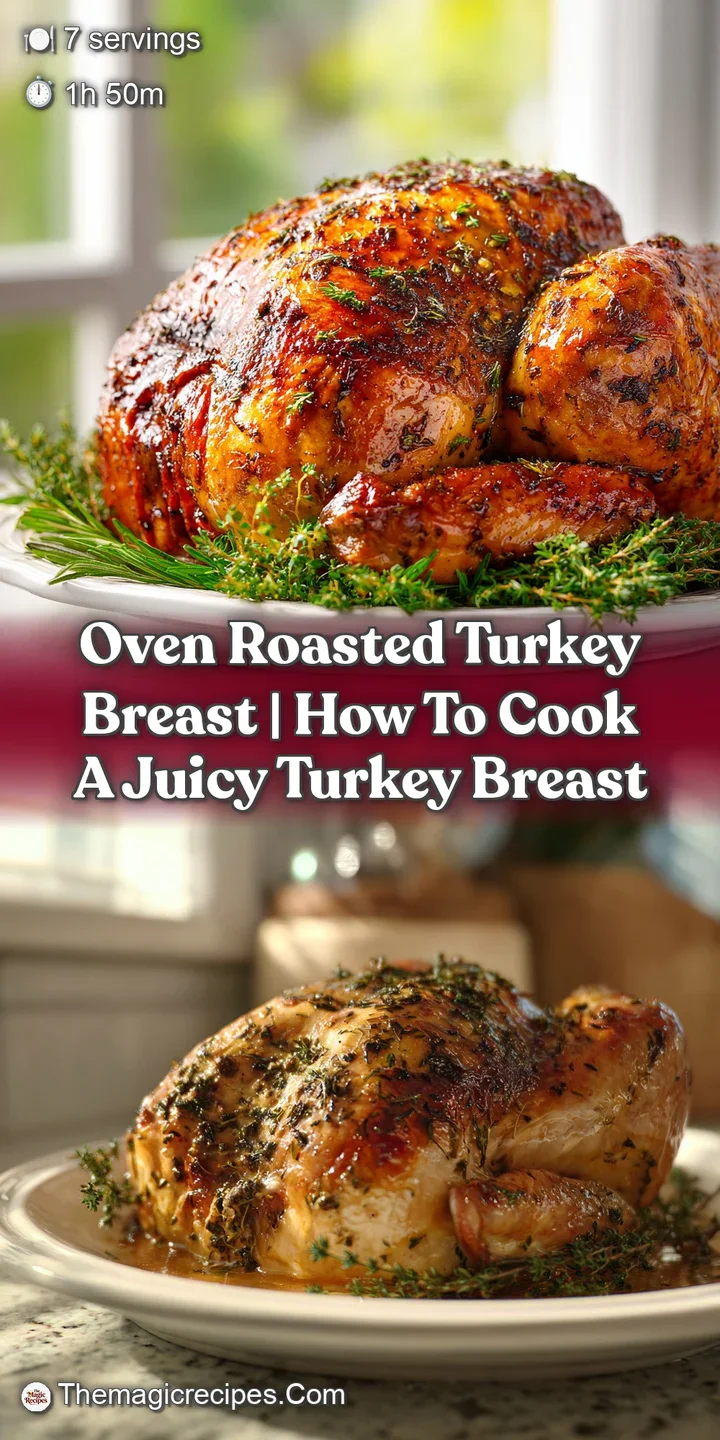
Oven Roasted Turkey Breast: Juicy and Herb-Infused
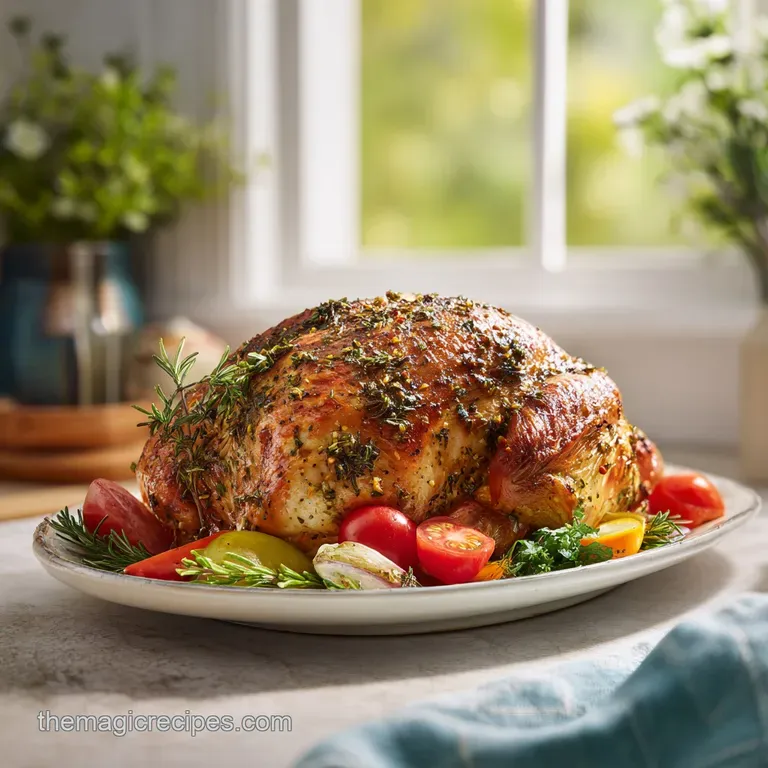
- Time: Active 20 minutes, Passive 1 hour 30 mins, Total 1 hour 50 mins
- Flavor/Texture Hook: Shatter crisp skin with a velvety, herb infused interior
- Perfect for: Holiday gatherings, budget-friendly meal prep, or a Sunday family dinner
- Perfect Oven Roasted Turkey Breast Guide
- Why This Roasting Method Works
- Official Recipe Metrics and Timing
- Essential Ingredients for Maximum Flavor
- Kitchen Tools You Will Need
- Simple Step by Step Instructions
- Solving Common Turkey Roasting Issues
- Adjusting Portions for Larger Crowds
- Easy Ingredient Swaps and Variations
- Busting Traditional Kitchen Cooking Myths
- Storage Tips and Leftover Ideas
- Best Side Dishes for Turkey
- Very High in Sodium
- Recipe FAQs
- 📝 Recipe Card
Perfect oven-roasted Turkey Breast Guide
I still remember the first time I tried to make a turkey breast for a small Friendsgiving. I followed a random internet recipe that told me to "keep it covered with foil" the whole time.
When I pulled it out, the skin looked like a wet paper bag, and the meat was so tough we practically needed a chainsaw to get through it. It was a complete disaster. I realized then that turkey is fussy, but if you treat it with a little respect and use the right tricks, it becomes the most rewarding roast in your repertoire.
The secret to a great oven-roasted turkey breast isn't some expensive gadget or a 20 step process. It's all about managing moisture. Most people struggle because they either under season the meat or they don't dry the skin enough. We want that skin to be so crispy it makes a sound when the knife hits it.
By using a bone in breast, you get a built in thermal buffer that keeps the meat from drying out, even if your oven runs a little hot.
This guide is designed for anyone who wants a "win" in the kitchen without spending all day hovering over the stove. We are going to use basic ingredients like butter, garlic, and fresh herbs to build layers of flavor that actually penetrate the meat.
If you have ever felt intimidated by roasting a whole bird, this breast only version is your new best friend. It’s quicker, cheaper, and honestly, much harder to mess up if you follow these specific steps.
Why This Roasting Method Works
Moisture Retention: The bone in structure acts as a heat shield, slowing down the cooking of the internal meat while the outside sears.
Surface Dehydration: Salting the skin and letting it sit uncovered in the fridge pulls moisture out of the surface, allowing the fat to render into a thin, crispy layer.
Sub Dermal Insulation: Placing compound butter directly under the skin creates a flavored barrier that bastes the meat from the inside out as it melts.
Aromatic Steaming: The chicken stock and vegetables in the roasting pan create a humid environment that prevents the bottom of the breast from becoming stringy.
Carryover Cooking: Resting the meat for 20 minutes allows the muscle fibers to relax and reabsorb juices that would otherwise spill out on the cutting board.
| Cooking Method | Active Time | Resulting Texture | Best For |
|---|---|---|---|
| Oven Roasting | 20 minutes | Crispy skin, juicy meat | Traditional flavor and presentation |
| Stovetop Searing | 45 minutes | Deeply browned, firmer | Quicker meals with smaller pieces |
| Slow Cooker | 10 minutes | Very soft, shreddable | Effortless prep, no crispy skin |
The oven method is the clear winner when you want that classic holiday aesthetic. It allows the heat to circulate around the entire bird, which is why we use a V rack. If you just plop the turkey onto the bottom of a pan, the bottom will get soggy and "boiled" rather than roasted. If you are looking for a similar result with smaller cuts, you might also enjoy learning about succulent roast turkey guide techniques that apply to whole birds. This specific oven-roasted turkey breast recipe focuses on concentrated heat to get the job done in under two hours.
Official Recipe Metrics and Timing
| Ingredient | Science Role | Pro Secret |
|---|---|---|
| Kosher Salt | Denatures proteins | Apply it early to "dry brine" for better seasoning depth |
| Unsalted Butter | Fat for browning | Use softened, not melted, to ensure it stays under the skin |
| Chicken Stock | Liquid buffer | Prevents pan drippings from burning and creates a base for gravy |
| Bone in Turkey | Thermal conductor | Keeps the meat from shrinking too much during the roast |
Roasting meat is essentially a game of thermodynamics. When you put a 6-7 lb turkey breast in a 425°F (218°C) oven, the exterior molecules move fast, creating that golden color.
However, we need to make sure the inside reaches 165°F (74°C) without the outside turning into charcoal. This is why the thickness of the bone is so helpful. It absorbs some of that intense heat and radiates it slowly into the thickest part of the muscle.
The timing is also a critical checkpoint. For a 6-7 lb breast, you are looking at roughly 1 hour 30 mins. But don't just set a timer and walk away. Every oven is different. I once had an oven that ran 25 degrees cold, and my turkey took an extra 30 minutes. Use a meat thermometer.
It is the only way to be 100% sure you aren't serving raw poultry or a dry sponge.
Essential Ingredients for Maximum Flavor
- 1 (6-7 lb) bone in, skin on turkey breast: The bone is non negotiable for flavor. Why this? The bone prevents the meat from drying out during the long roast.Substitute: A boneless breast works, but reduce cook time by 20 mins.
- 2 tbsp kosher salt: Use a coarse grain for better coverage. Why this? Salt draws out moisture from the skin to make it extra crispy.Substitute: 1.5 tbsp table salt (it is denser, so use less).
- 1 tsp cracked black pepper: Adds a sharp, earthy bite. Why this? Large cracks provide better texture than fine powder.Substitute: White pepper for a more subtle heat.
- 1/2 cup unsalted butter, softened: This is the vehicle for all your herbs. Why this? Butter adds richness and helps the skin brown evenly.Substitute: Olive oil for a dairy-free version, though it won't be as creamy.
- 3 cloves garlic, minced: Fresh is always better than the jarred stuff here. Why this? Garlic provides a savory base that balances the herbs.Substitute: 1 tsp garlic powder mixed into the butter.
- 1 tbsp fresh sage, finely chopped: The quintessential "turkey" flavor. Why this? Sage has a piney aroma that cuts through the fat.Substitute: 1 tsp dried sage (it's much more concentrated).
- 1 tbsp fresh rosemary, finely chopped: For a woody, evergreen note. Why this? Rosemary stands up well to high oven temperatures.Substitute: 1 tsp dried rosemary, crushed between your fingers.
- 1 tbsp fresh thyme leaves: Delicate and floral. Why this? Thyme bridges the gap between the garlic and the lemon.Substitute: 1 tsp dried thyme.
- 1 lemon, zested and halved: Acid is the secret to making everything taste "bright." Why this? The zest goes in the butter; the halves go in the pan for steam.Substitute: An orange for a sweeter, citrusy profile.
- Aromatic Base (Carrots, Celery, Onion): Use 2 carrots, 2 stalks celery, and 1 onion. Why this? These flavor the juices that collect in the bottom of the pan.Substitute: Any root veggies like parsnips or leeks work too.
- 1.5 cups low sodium chicken stock: Keeps the pan from smoking. Why this? It provides the liquid needed for a pan sauce later.Substitute: 1 cup white wine and 0.5 cup water.
Kitchen Tools You Will Need
To do this right, you need a roasting pan with a V rack. This rack is essential because it lifts the oven-roasted turkey breast off the bottom of the pan. If the meat sits directly on the vegetables, the bottom portion will steam and turn gray instead of roasting.
If you don't have a rack, you can "scrunch up" some aluminum foil into thick ropes and place them in the bottom of the pan to act as a makeshift platform.
A good sharp chef's knife is also a must. When it comes time to carve, you want to be able to slice through the skin without tearing it. A dull knife will just slide around on the crispy surface and ruin that beautiful mahogany finish we worked so hard for.
Also, make sure you have a small mixing bowl for your compound butter and plenty of paper towels. The drier the bird starts, the better it finishes.
Simple step-by-step Instructions
- Pat the turkey breast completely dry with paper towels. Apply kosher salt to the exterior skin and refrigerate uncovered for 4-12 hours to dry brine for maximum crispness. Note: This is the most important step for getting that "shatter" texture on the skin.
- In a small mixing bowl, combine softened butter, minced garlic, chopped sage, rosemary, thyme, and lemon zest to create a compound butter.
- Gently separate the skin from the meat using your fingers, being careful not to tear it.
- Massage two thirds of the herb butter directly onto the meat under the skin. Note: This ensures the flavor is literally inside the meat, not just on top.
- Rub the remaining butter over the outside of the skin and season with cracked black pepper.
- Preheat oven to 425°F (218°C). Note: A high starting temp helps "set" the skin before the meat overcooks.
- Place chopped carrots, celery, onion, lemon halves, and chicken stock in the bottom of a roasting pan with a V rack.
- Place the turkey breast on the rack. Roast until the skin starts to turn golden and the kitchen smells like herbs.
- Continue roasting until the internal temperature reaches 165°F (74°C) at the thickest part of the breast, approximately 1 hour 30 mins.
- Remove from oven and let rest for 20 minutes before carving. Note: Do not skip this; the juices need time to settle back into the fibers.
Leveraging the Thermal Buffer of the Bone
The bone is your insurance policy. When roasting an oven-roasted turkey breast, the bone absorbs heat and slowly releases it. This prevents the lean breast meat from hitting that "danger zone" where it turns powdery.
If you are using a boneless breast, you need to be much more vigilant with your thermometer, as it will cook much faster and is more prone to drying out.
Mastering the Dry Brine Technique
Dry brining is just a fancy way of saying "salt it early." Salt does two things: it draws moisture out (for crispy skin) and then, as it dissolves, it carries seasoning deep into the muscle. If you just salt right before it goes into the oven, the seasoning stays on the surface.
By giving it at least 4 hours, you are ensuring every bite is actually seasoned.
Harnessing Compound Butter for Sub Dermal Infusion
Think of the butter as a flavored blanket. By putting it under the skin, you are protecting the meat from the direct heat of the oven. As the butter melts, it bastes the meat in garlic and herbs. The skin then acts as a lid, trapping all that flavor inside.
It's a simple trick that separates amateur cooks from the pros.
Solving Common Turkey Roasting Issues
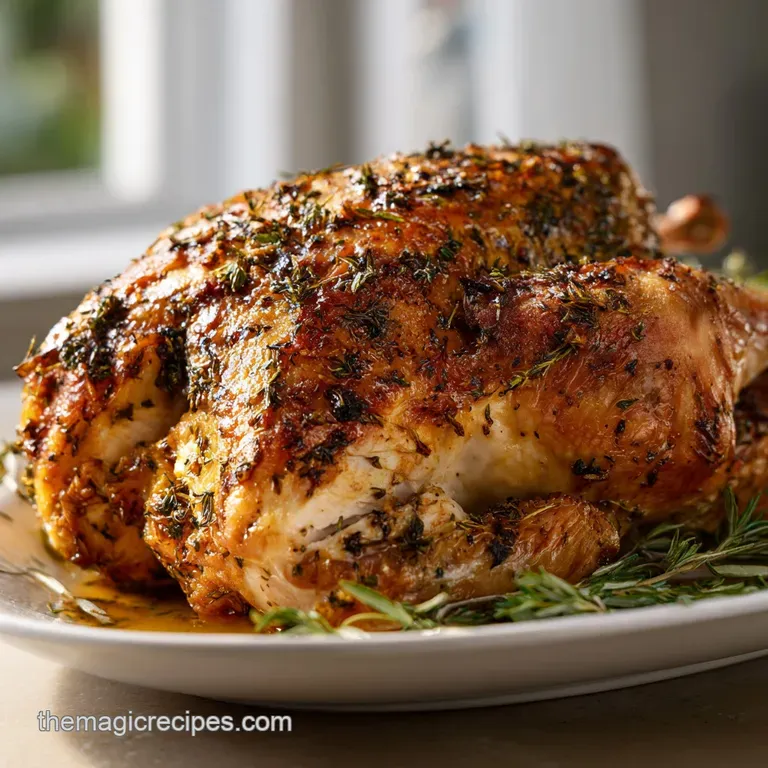
One of the biggest problems people face is uneven browning. If you notice one side of your oven-roasted turkey breast is getting dark too fast, simply rotate the pan. Most ovens have "hot spots," usually in the back corners. Don't be afraid to move things around halfway through the cook time.
Another issue is the skin getting too dark before the meat is done. If your thermometer says the meat is only at 140°F but the skin is already a deep mahogany, tent a piece of foil over the top. This will reflect the direct heat while allowing the ambient oven temp to finish cooking the inside. If you run into issues with smaller poultry cuts, you might find some answers in my pan seared chicken breast recipe which handles heat differently but uses similar flavor profiles.
| Problem | Root Cause | Solution |
|---|---|---|
| Soggy Skin | Too much moisture or covered pan | Pat dry thoroughly and roast uncovered on a rack |
| Dry Meat | Overcooking or skipping the rest | Use a thermometer to hit exactly 165°F and rest 20 mins |
| Burnt Pan Drippings | No liquid in the bottom | Always keep at least 1/2 inch of stock in the roasting pan |
Why Your Turkey Skin Is Rubbery
The most common cause of rubbery skin is "steaming" the bird. If you cover the turkey with foil for the whole cook, the moisture can't escape. It just sits on the skin and makes it soft. Another culprit is a cold oven. If you don't preheat to a high temperature, the fat doesn't "flash" and render quickly.
Why Your Meat Is Stringy
Stringy meat happens when the proteins have been heated for too long, causing them to tighten up and squeeze out all their moisture. This is why we roast at a relatively high temperature of 425°F. It cooks the bird faster, meaning the meat spends less time losing its internal water content.
Common Mistakes Checklist
- ✓ Did you pat the bird dry? Moisture is the enemy of crispiness.
- ✓ Did you use a V rack? Air needs to circulate under the breast.
- ✓ Is your butter softened? Cold butter won't spread and will tear the skin.
- ✓ Did you check the temp in the thickest part? Avoid hitting the bone with the thermometer.
- ✓ Did you rest the meat? Cutting too early is the #1 cause of dry turkey.
Adjusting Portions for Larger Crowds
When scaling this recipe down for just two people, you can find a smaller 3 lb breast. You will need to reduce the roasting time by about 30-40%. Keep the oven temp the same, as you still want that crispy skin.
If you are scaling up for a big group (8-10 people), I recommend buying two separate 6 lb breasts rather than one massive one. Two smaller breasts will cook more evenly than one giant one, and you’ll get twice as much of that coveted crispy skin.
If you are doubling the recipe and putting two breasts in the oven at once, make sure there is at least two inches of space between them. If they are touching, they will steam each other.
You may also need to increase the total cook time by 15-20 minutes since the oven has to work harder to maintain the temp with more cold meat inside.
Chef's Note: If you're cooking for a crowd, don't try to double the salt exactly. Increase it to about 1.5x the original amount to avoid over salting, then adjust to taste at the end.
Easy Ingredient Swaps and Variations
| Original Ingredient | Substitute | Why It Works |
|---|---|---|
| Unsalted Butter | Ghee (Clarified Butter) | Higher smoke point and dairy-free-ish. Note: Adds a slightly nutty flavor. |
| Fresh Sage | Dried Poultry Seasoning | Contains sage, thyme, and marjoram. Note: Very potent; use only 1 tsp. |
| Chicken Stock | Apple Cider | Adds a sweet, autumnal acidity. Note: The skin will brown faster due to sugar. |
Decision Shortcut
- If you want a smoky flavor, add 1 tsp of smoked paprika to the compound butter.
- If you want it extra juicy, inject the breast with a mix of melted butter and chicken stock.
- If you are on a budget, use dried herbs and substitute the lemon for 2 tbsp of white vinegar in the pan liquid.
Sometimes the budget doesn't allow for fresh herbs, and that's okay. The trick with dried herbs is to crush them in your palm before mixing them into the butter. This releases the oils that have been dormant.
Also, if lemons are expensive, any acidic fruit or even a splash of apple cider vinegar in the pan will help cut through the richness of the turkey fat.
Busting Traditional Kitchen Cooking Myths
One of the biggest myths is that you need to baste the turkey every 15 minutes. Every time you open that oven door, the temperature drops by about 25-50 degrees. This actually extends the cook time and prevents the skin from getting truly crispy.
The compound butter under the skin is doing all the basting for you from the inside. Keep the door closed!
Another myth is that you have to cook turkey until the juices "run clear." While that's a decent sign, it's not scientific. Some perfectly cooked turkeys will still have a slight pink tint near the bone due to the pH levels of the meat. Trust your digital thermometer.
165°F (74°C) is the gold standard for safety and texture.
Finally, people think you need to wash the turkey before cooking. Please don't do this. Washing raw poultry just sprays bacteria all over your sink and counters. The high heat of a 425°F oven will kill any surface bacteria far more effectively than a splash of tap water ever could.
Storage Tips and Leftover Ideas
Storage: You can keep leftover oven-roasted turkey breast in the fridge for up to 4 days. Store it in an airtight container to prevent it from picking up other fridge smells. If you want to freeze it, slice the meat first, wrap it tightly in plastic wrap, then place it in a freezer bag.
It will stay good for up to 3 months.
Zero Waste: Don't you dare throw away that bone! The carcass of a roasted turkey breast is a goldmine for flavor. Throw it in a pot with some water, an extra onion, and some peppercorns. Simmer it for 2 hours, and you’ll have the best homemade turkey stock you’ve ever tasted. You can use this stock for soups, risottos, or to make the base for a tender lemon herb chicken meatballs sauce later in the week.
Leftover meat is perfect for more than just sandwiches. I love dicing it up and tossing it into a quick pasta with cream and peas. Because it’s already seasoned with sage and rosemary, it brings a ton of "pre packaged" flavor to whatever you add it to.
Best Side Dishes for Turkey
Since this oven-roasted turkey breast is quite savory and herb heavy, you want sides that offer a bit of contrast. A bright, acidic cranberry sauce or a crisp green salad with a vinaigrette works wonders.
If you want to lean into the comfort food vibe, mashed potatoes are the classic choice because they soak up the pan juices beautifully.
You can also roast some root vegetables right alongside the turkey if you have a large enough pan. Throw some halved Brussels sprouts or sweet potato chunks into the bottom of the roasting pan during the last 30 minutes of cooking.
They will caramelize in the turkey fat and herb butter, making them taste like a million bucks. This "one pan" approach is my favorite way to handle a busy weeknight or a small holiday meal without creating a mountain of dishes.
The most important thing is to enjoy the process. Roasting a turkey breast is a skill that pays off for years. Once you get the hang of the dry brine and the compound butter, you'll never go back to those dry, flavorless roasts of the past. It’s quick, it’s healthy, and it works every single time.
Very High in Sodium
1040 mg 1040 mg of sodium per serving (45% 45% of daily value)
The American Heart Association recommends limiting sodium intake to no more than 2,300 mg per day, with an ideal limit of less than 1,500 mg per day for most adults.
Tips to Reduce Sodium
-
Drastically Reduce Added Salt-25%
The recipe calls for 2 tablespoons of kosher salt, which is a significant source of sodium. Eliminate the added kosher salt entirely and rely on herbs, spices, and aromatics for flavor. This is the single most impactful change you can make.
-
Switch to Low-Sodium Broth-15%
While the recipe specifies low-sodium chicken stock, ensure it's truly very low sodium or use homemade stock with no added salt. Regular broth can contain a surprising amount of sodium.
-
Maximize Lemon Zest and Juice-5%
Lemon adds brightness and can enhance the perception of flavor without salt. Use the zest and juice from the entire lemon, and consider adding more if you enjoy a pronounced citrus note.
-
Boost Aromatics
Increase the amount of garlic, and consider adding other aromatics like shallots or leeks to the vegetable mirepoix for a deeper flavor base.
-
Embrace Fresh Herbs
The recipe already includes fresh sage, rosemary, and thyme. Continue to use these generously and consider adding other complementary herbs like parsley or marjoram for added complexity.
-
Incorporate Spices
Add a pinch of cayenne pepper for a subtle heat, or smoked paprika for depth. Black pepper is already included, but you can increase it or add other spices like onion powder (ensure it's sodium free) or garlic powder.
Recipe FAQs
Is it best to cook a turkey breast at 325 or 350?
Neither, 425°F is the target temperature. Cooking at a higher heat allows the skin to reach maximum crispness while keeping the meat juicy during the 90-minute roast time.
What is the best temperature to roast a turkey breast in the oven?
Preheat your oven to 425°F (218°C). This high temperature is essential for rendering the fat under the skin efficiently while roasting the bird to the required 165°F internal temperature.
Do you cover a turkey breast when cooking it in the oven?
No, keep it uncovered. Covering the turkey traps steam, which prevents the skin from crisping and undermines the work you did by dry-brining and adding herb infused butter.
Can diabetics eat oven-roasted turkey breast?
Yes, this dish is an excellent protein source. Since it contains no added sugars and focuses on lean protein and herbs, it fits well into a blood sugar-conscious diet.
How to ensure the turkey breast stays moist after roasting?
Rest the meat for 20 minutes before carving. If you enjoyed mastering the tender results achieved through proper resting here, you will find the same principle applies to any large poultry roast to keep juices locked in.
How to get the skin extra crispy?
Pat the bird completely dry with paper towels and dry-brine with kosher salt for 4 12 hours. Removing surface moisture is the most critical step to ensure the skin turns golden and crunchy rather than steamed and rubbery.
How to know exactly when the turkey is finished?
Use a meat thermometer to check the thickest part of the breast. Pull the turkey out of the oven once it registers 165°F (74°C), being careful not to let the probe touch the bone, which can provide an inaccurate reading.
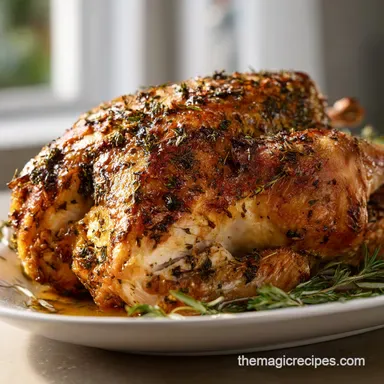
oven-roasted Turkey Breast
Ingredients:
Instructions:
Nutrition Facts:
| Calories | 485 calories |
|---|---|
| Protein | 62 g |
| Fat | 24 g |
| Carbs | 2 g |
| Fiber | 0.5 g |
| Sugar | 0.8 g |
| Sodium | 1040 mg |
