Idea De Comida Con Pollo Y Arroz One-Pot
- Time: Active 20 minutes, Passive 40 minutes, Total 1 hours
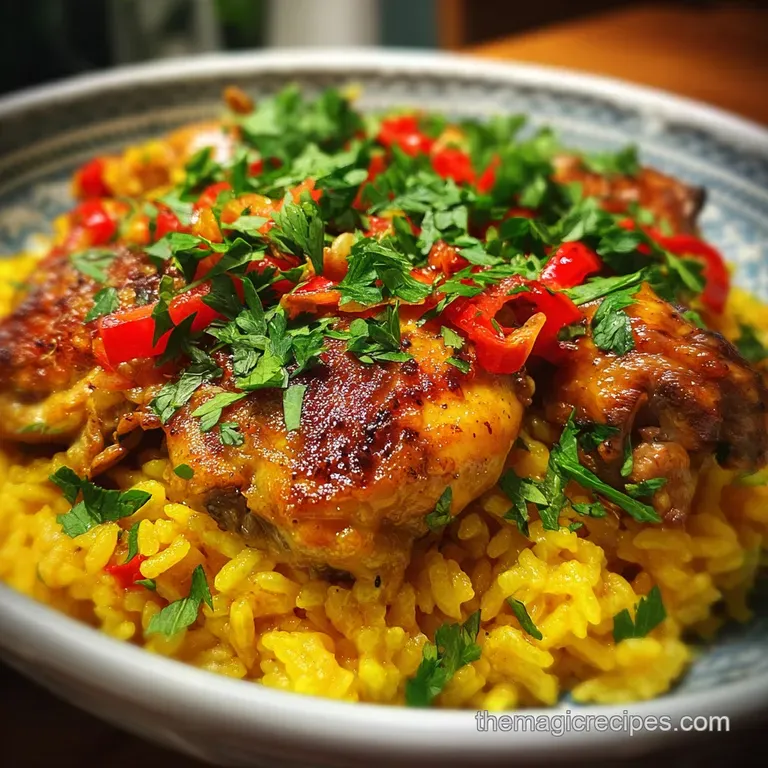
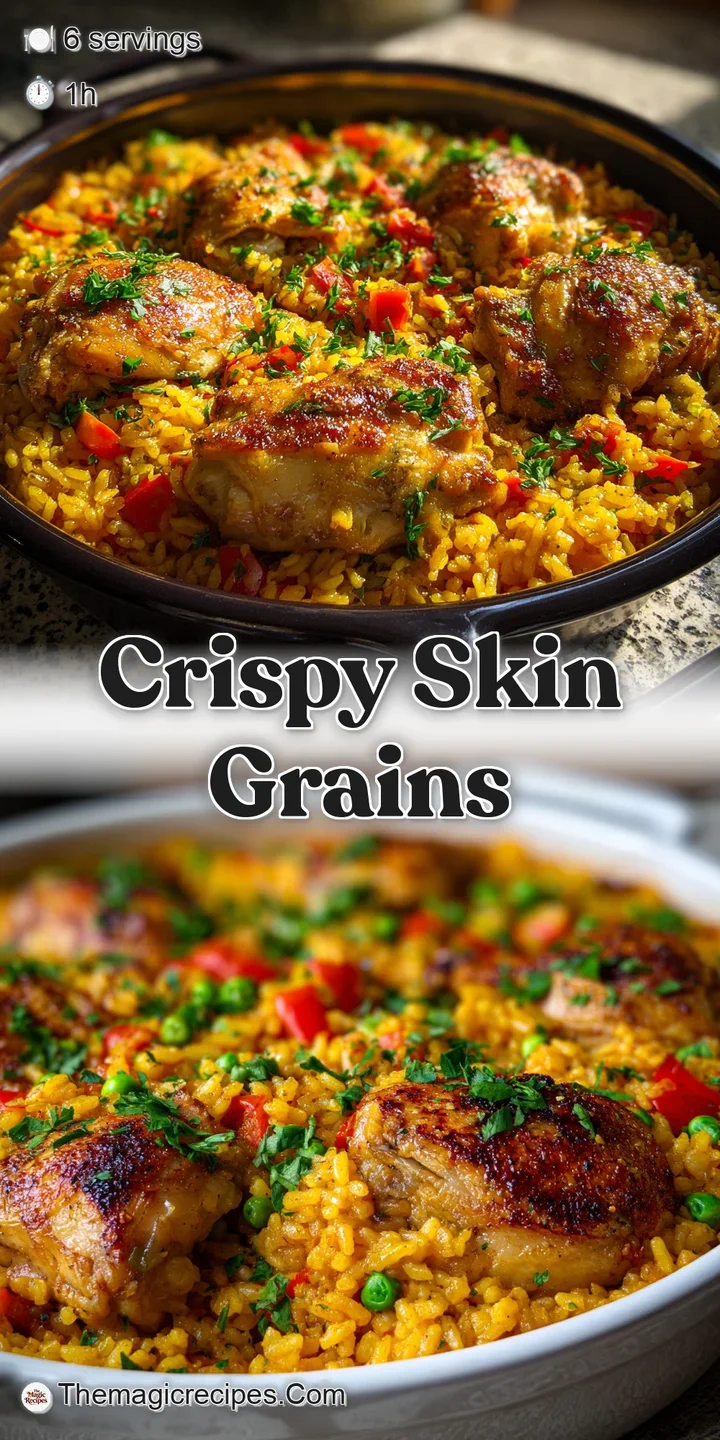
- Flavor/Texture Hook: Shatter crisp skin and fluffy, turmeric stained grains
- Perfect for: Busy weeknight dinners and high yield meal prepping
- Core Mechanics for Success
- Component Analysis and Selection
- Essential Elements and Substitutes
- Minimal Tools for Maximum Flavor
- Detailed Execution Steps
- Solving Common Cooking Hurdles
- Adjusting for Crowd Size
- Culinary Folklore Debunked
- Storage and Sustainable Practices
- Functional Presentation Ideas
- Recipe FAQs
- 📝 Recipe Card
Core Mechanics for Success
Understanding the "why" behind the sizzle helps you cook better even when you aren't looking at a screen. Here is how we ensure this dish never turns out mushy or bland:
- Maillard Reaction: Searing the chicken at a high temperature creates complex flavor molecules and a crispy texture that survives the steaming process.
- Starch Toasting: Frying the dry rice in oil and chicken fat coats each grain, preventing them from bursting and turning into a sticky paste.
- Deglazing: Adding dry white wine pulls up the "fond" (the brown bits on the pan), which contains the most concentrated savory notes.
- Adsorption: The rice absorbs the seasoned broth from the inside out, ensuring every bite is seasoned to the core rather than just on the surface.
Chef’s Tip: Freeze your stick of butter for 10 minutes, then grate a tiny bit over the rice right before putting the lid on to add a velvety finish without weighing the dish down.
| Chicken Thickness | Internal Temp | Rest Time | Visual Cue |
|---|---|---|---|
| 1 inch (standard) | 165°F | 5 minutes | Juices run clear |
| 1.5 inches (thick) | 165°F | 8 minutes | Bone pulls slightly |
| 0.75 inches (thin) | 165°F | 3 minutes | Skin is mahogany |
Cooking times can vary based on your stove's power, so I always rely on a quick read thermometer. If you are looking for more Weeknight Recipes Inspo, you'll find that mastering this internal temperature trick works for almost any poultry dish.
Component Analysis and Selection
| Ingredient | Science Role | Pro Secret |
|---|---|---|
| Chicken Thighs | Fat & Protein | Bone in retains 30% more moisture during the long simmer than boneless cuts. |
| Long grain Rice | Structural Carb | Rinse thoroughly to remove surface starch; this ensures distinct, fluffy grains. |
| Turmeric | Aromatic/Color | Bloom it in the oil for 30 seconds to activate the fat soluble flavor compounds. |
| White Wine | Acidity | The acid cuts through the heavy fat of the chicken skin, balancing the palate. |
Using the right rice is non negotiable here. Short grain rice will turn this into a risotto like texture, which isn't what we want for a traditional "y arroz" vibe. We are aiming for grains that stand tall and separate.
Essential Elements and Substitutes
To get this "Idea de comida" on the table, you'll need these specific items. I've included my tried and true swaps for when the pantry looks a bit bare.
- 6 bone in, skin on chicken thighs: Why this? The skin provides the fat needed to flavor the entire pot of rice.
- Substitute: Chicken drumsticks (same cook time, slightly less meat).
- 2 cups long grain white rice: Why this? It stays fluffy and separate during the 40 minute cook time.
- Substitute: Basmati rice (reduce broth by 1/4 cup).
- 1 tbsp olive oil: Why this? High smoke point for the initial chicken sear.
- Substitute: Avocado oil or Ghee.
- 1 large onion, 1 red bell pepper, 1 green bell pepper: Why this? This trio forms the "sofrito" base for sweetness and depth.
- Substitute: Shallots and poblano peppers.
- 4 cloves garlic, minced: Why this? Essential for that pungent, savory backbone.
- Substitute: 1 tsp garlic powder (add with the turmeric).
- 1 cup frozen peas: Why this? Adds a pop of color and sweetness at the very end.
- Substitute: Frozen corn or diced carrots.
- 3.5 cups low sodium chicken broth: Why this? Controls salt levels while providing maximum hydration.
- Substitute: 3.5 cups water + 2 bouillon cubes.
- 1 tsp turmeric & 1 bay leaf: Why this? Turmeric provides the classic golden hue; bay leaf adds a tea like aroma.
- Substitute: Saffron (for a more floral, expensive version).
- 0.5 cup dry white wine: Why this? De glazes the pan and adds bright acidity.
- Substitute: 2 tbsp apple cider vinegar + 1/4 cup water.
Minimal Tools for Maximum Flavor
You don't need a kitchen full of gadgets for this. I honestly prefer keeping it simple so there is less to wash.
- Large Deep Skillet or Dutch Oven: A 12 inch wide pan with a tight fitting lid is crucial. If the lid is loose, the steam escapes and the rice stays crunchy.
- Sturdy Tongs: For flipping the chicken without tearing that precious skin.
- Wooden Spoon: Best for scraping the bottom of the pan to get all those flavorful bits up into the broth.
Detailed Execution Steps
1. The Initial Sear
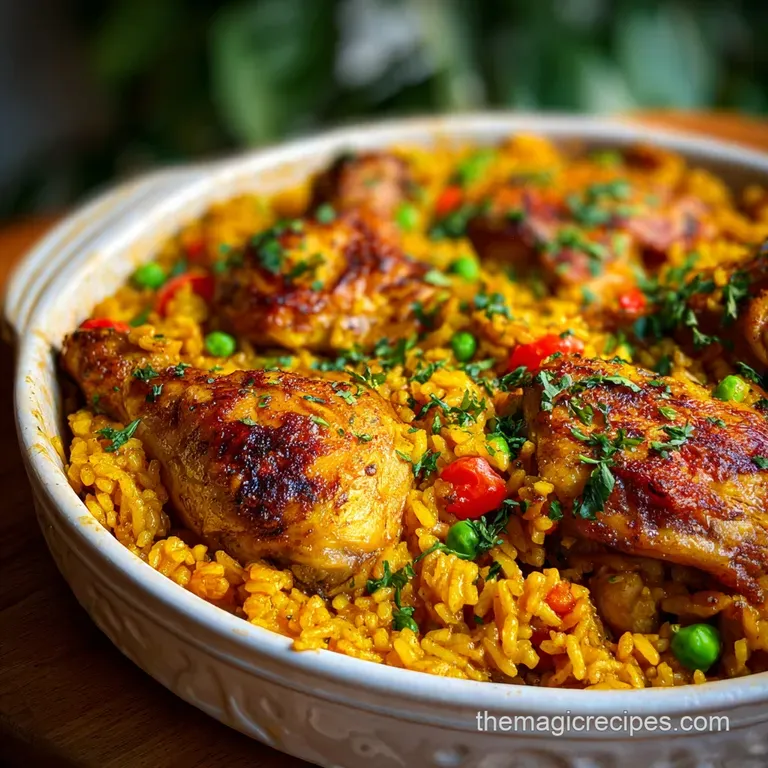
Season your 6 chicken thighs with the 1 tsp salt and 0.5 tsp black pepper. Heat 1 tbsp olive oil in your pan over medium high heat. Place chicken skin side down and cook for 8 minutes until the skin is deep golden and releases easily.
Note: Don't force the flip; if it sticks, it’s not ready.
2. Rendering and Aromatics
Remove the chicken (it won't be cooked through yet) and set aside. In the remaining fat, add the diced onion, red bell pepper, and green bell pepper. Sauté for 5 minutes until vegetables are softened and translucent.
3. Building the Base
Stir in the 4 minced garlic cloves and 1 tsp turmeric. Cook for 1 minute until the kitchen smells incredibly fragrant. Add the 2 cups of dry rice and stir constantly for 2 minutes to toast the grains.
4. Deglazing the Pan
Pour in the 0.5 cup dry white wine. Use your spoon to scrape the bottom of the pan vigorously until the liquid has mostly evaporated.
5. Liquid Integration
Add the 3.5 cups chicken broth and 1 bay leaf. Bring the mixture to a boil. This is when the flavors start to marry.
6. The Nesting Phase
Place the chicken thighs back into the pan, skin side up, nesting them into the rice and liquid. Keep the skin above the water line to ensure it stays somewhat crispy.
7. The Long Simmer
Turn the heat to low, cover tightly with a lid, and cook for 25 minutes. Resist the urge to peek; you need that steam to cook the rice evenly.
8. The Final Addition
Scatter the 1 cup frozen peas over the top. Replace the lid and cook for another 5 minutes until the liquid is fully absorbed.
9. The Rest Period
Turn off the heat. Let the pan sit, covered, for 10 minutes. Note: This allows the moisture to redistribute so the rice doesn't stick to the bottom.
10. Fluff and Serve
Remove the bay leaf. Use a fork to gently fluff the rice around the chicken. Your "Idea de comida con pollo y arroz" is ready to plate.
Solving Common Cooking Hurdles
Crunchy or Hard Rice
This usually happens if the heat was too high, causing the liquid to evaporate before the rice could soften, or if the lid wasn't tight enough.
Greasy Texture
If you find the dish too oily, it’s likely because the chicken thighs were extra fatty. Next time, you can trim the excess skin flaps before searing or spoon out a tablespoon of fat after the initial sear but before adding the vegetables.
| Problem | Root Cause | Solution |
|---|---|---|
| Rice is mushy | Too much liquid or over stirring | Measure broth precisely; don't stir after covering. |
| Burnt bottom | Heat was too high during simmer | Use the lowest setting possible on your burner. |
| Bland flavor | Not enough salt or skipped toasting | Season the chicken well and ensure rice is toasted. |
Common Mistakes Checklist
- ✓ Never skip the chicken searing step; it’s where 50% of the flavor lives.
- ✓ Don't use "minute rice" or "instant rice" it will turn to mush in this time frame.
- ✓ Always rinse your rice in a fine mesh strainer until the water runs clear.
- ✓ Make sure your broth is at least room temperature (cold broth shocks the pan).
Adjusting for Crowd Size
Reducing the Recipe (Half Batch): Use a smaller pan (10 inch). Use 3 thighs and 1 cup of rice. Reduce the chicken broth to 1.75 cups. Keep the simmering time the same, as the rice still needs that time to hydrate.
Increasing the Recipe (Double Batch): You will likely need two pans or a very large wide Dutch oven. Do not stack the chicken; it needs to be in a single layer. Use 1.5x the spices (turmeric/salt) instead of doubling them to avoid an overpowering earthy taste.
If you are cooking for a huge family gathering and want something different, you could try this Whole30 Real Food recipe as a side or alternative protein.
Culinary Folklore Debunked
Myth: You must "seal in the juices" by searing. Searing does not create a moisture barrier. In fact, seared meat loses slightly more moisture. However, we sear for the flavor of the browned skin, which is far more important for a tasty "pollo y arroz."
Myth: Adding more turmeric makes it taste better. Turmeric is a powerful spice, but in large quantities, it becomes bitter and medicinal. Stick to the teaspoon; it’s there for the golden hue and a subtle earthiness, not to overwhelm the dish.
Storage and Sustainable Practices
Storage Guidelines: This dish keeps beautifully in the fridge for up to 4 days. Store it in an airtight container. When reheating, add a splash of water or broth to the rice to keep it from drying out.
I don't recommend freezing the rice as the texture becomes quite grainy upon thawing, though the chicken freezes fine for 2 months.
Zero Waste Tips: Don't throw away the onion skins or pepper scraps! Throw them into a freezer bag. Once the bag is full, boil them with water to make a "scrap broth" for your next batch of rice.
Also, if you have leftover rice but no chicken, it makes an incredible base for a quick fried rice the next day.
Functional Presentation Ideas
To make this look like a professional "video receta," garnish with a handful of fresh cilantro or flat leaf parsley right before serving. The green against the golden rice is a classic contrast.
- Add a Squeeze: Serve with fresh lemon or lime wedges. The hit of fresh citrus wakes up the heavy fats.
- The Best Side Dishes: This is a full meal, but a crisp green salad or some roasted zucchini pairs perfectly.
- Texture Contrast: Sprinkle some toasted sliced almonds or pumpkin seeds on top for a crunch that mirrors the crispy chicken skin.
Recipe FAQs
What combines well with chicken and rice?
Sautéed bell peppers, onions, and garlic form the best base. These aromatics create a savory 'sofrito' foundation that infuses the rice with depth during cooking. A squeeze of fresh lime at the end also brightens the overall flavor profile.
What meal can I make with boneless chicken?
Use boneless, skinless thighs or breast, but reduce the simmer time. Boneless cuts cook faster than bone-in, so check their internal temperature sooner to avoid drying them out. For a simple twist, try layering the cooked components into a quick weeknight meal like our Simple Ground Beef Recipe in 20 Minutes, substituting the beef for shredded chicken.
How do I make the rice taste better?
Toast the dry rice in oil and fat before adding liquid. Coating each grain prevents it from becoming mushy and allows it to absorb the seasoned broth deeply. This technique, similar to making pilaf, ensures maximum flavor penetration throughout the starch.
Can we eat chicken and rice together?
Yes, chicken and rice are a classic combination globally. They complement each other perfectly as protein and carbohydrate sources, creating a balanced meal. This pairing is foundational in many cuisines for its satisfying texture and flavor profile.
How do I get the chicken skin crispy if I cover the rice?
Keep the chicken skin completely above the level of the cooking liquid. Sear the skin hard initially to render the fat, then nestle the chicken into the rice so only the bottom half is submerged. The top half will steam cook while the skin continues to crisp slightly from the trapped heat.
Is it true that using cold broth ruins the rice texture?
Yes, using cold broth can shock the rice and stall the cooking process. Adding cold liquid lowers the temperature of the pan dramatically, forcing you to increase the heat, which results in an unevenly cooked exterior and hard center. Always use room temperature or warm broth for even starch hydration.
What is the secret to a flavorful broth when simmering?
Deglaze the pan with dry white wine after searing the meat and sautéing vegetables. Scraping up the fond (browned bits) and incorporating that concentrated savory layer into the liquid drastically boosts the final flavor. If you master this technique, you can apply the same flavor extraction principle when building a base for a rich stew like our Carne Guisada: Ultimate Slow Simmered Latin Beef Stew Recipe.
Pollo Con Arroz Sencillo
Ingredients:
Instructions:
Nutrition Facts:
| Calories | 562 kcal |
|---|---|
| Protein | 34.2 g |
| Fat | 23.8 g |
| Carbs | 51.4 g |
| Fiber | 3.2 g |
| Sugar | 2.6 g |
| Sodium | 645 mg |
