Prime Rib Roast Oven: Festive Dinner Perfection
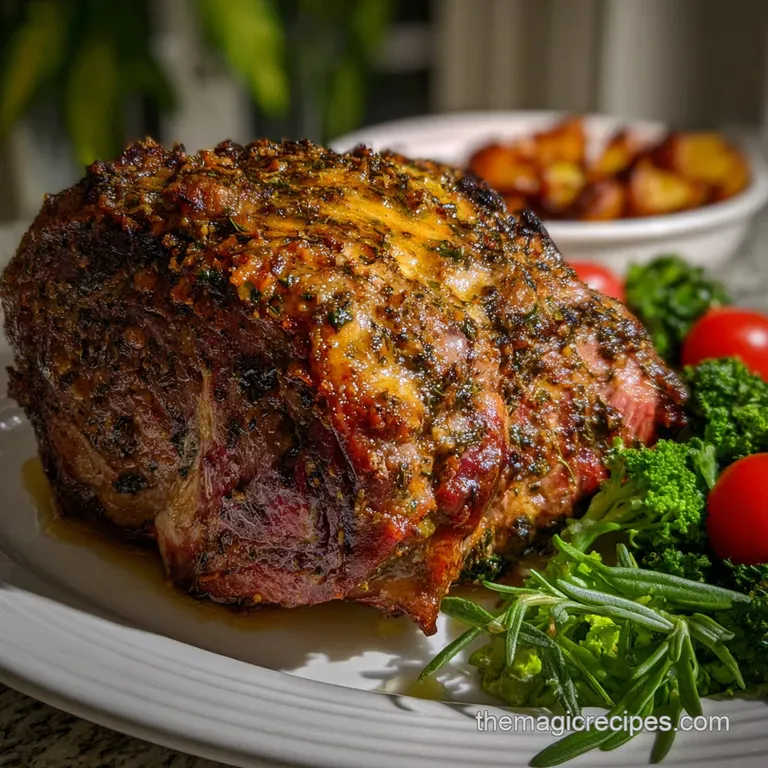
- Effort/Time: Low-active effort / 4 hours total.
- Flavor Hook: Herb-infused garlic butter crust meets a rich red-wine au jus.
- Perfect for: Holiday hosting, Sunday meal prep, or high-protein family dinners.
- Achieve Shattering Crust and Velvety Center with This prime rib roast oven
- The Thermal Engineering Behind a Consistent prime rib roast oven
- Human-Friendly Timing Metrics and Precision Temperature Protocols
- The Molecular Composition of a Perfect Salt-Crusted Rib Roast
- Minimalist Tool Selection for Maximum Heat Distribution
- Step-by-Step Sequence for High-Precision Roast Results
- Diagnosing the Gray Band and Other Common Thermal Failures
- Flavor Architecture Adjustments and Paleo-Friendly Variations
- ⚗️ The Scaling Lab: The Physics of Quantity
- Preserving Protein Integrity for Functional Next-Day Meals
- Fast Finishing Touches and Practical Side Dish Pairings
- Recipe FAQs
- 📝 Recipe Card
Achieve Shattering Crust and Velvety Center with This prime rib roast oven
There is nothing quite like the financial gut-punch of pulling a $150 roast out of the oven only to find it's turned into gray, dry cardboard. I’ve been there standing in the kitchen with a dull knife and a sinking feeling, realizing I’d overcooked the most expensive meal of the year by rushing the process.
We work too hard for our money to let a simple "prime rib roast oven" fail due to poor temperature management or lack of patience.
Years ago, I used to crank the heat to 450°F immediately, thinking a "quick sear" was the only way to lock in juices. I destroyed three roasts before realizing that high heat is actually the enemy of a tender interior because it causes protein fibers to seize and squeeze out moisture like a wrung out sponge.
Now, I use a low and slow approach followed by a rest, which allows the muscle fibers to relax and reabsorb those juices before the final crust building blast of heat.
The secret to a "Masterclass" result isn't a secret ingredient; it's the science of the Maillard reaction combined with controlled protein denaturation. By keeping the "prime rib roast oven" temperature low for the majority of the cook, we allow enzymes to naturally tenderize the meat while the salt draws out surface moisture to create that signature mahogany, crackling exterior.
The result is a velvety, uniform pink from edge to center that makes every slice look like it came from a high end steakhouse.
The Thermal Engineering Behind a Consistent prime rib roast oven
- Enzymatic Tenderization: At lower temperatures (between 100°F and 120°F), naturally occurring enzymes like calpains and cathepsins work rapidly to break down connective tissues before the heat eventually deactivates them.
- Surface Evaporation: Dry brining with Diamond Crystal Kosher Salt creates an osmotic pull that first draws moisture out, then dissolves the salt into a brine that is reabsorbed, deeply seasoning the muscle and drying the surface for a superior "prime rib roast oven" crust.
- Thermal Momentum: Pulling the meat 5 10°F below your target temperature accounts for "carryover cooking," where the high energy of the exterior continues to migrate inward during the rest.
Human Friendly Timing Metrics and Precision Temperature Protocols
| Metric | Measurement | Target / Requirement |
|---|---|---|
| Active Prep Time | 30 minutes | Trimming and herb butter application |
| Total Cook Time | 3 hours 30 mins | Target: 120°F (Rare) to 130°F (Med-Rare) |
| Resting Duration | 30 minutes | Critical for moisture redistribution |
| Service Yield | 9 servings | Based on approx. 1 lb per person (bone-in) |
- If you want a juicy, pink center
- Pull the roast at 120°F internal temp.
- If you want a crispier crust
- Pat the roast bone dry with paper towels before applying the butter rub.
- If you are short on time
- Slice the roast into individual steaks and sear them but for the traditional "prime rib roast oven" experience, stick to the slow roast method.
The Molecular Composition of a Perfect Salt Crusted Rib Roast
Ingredient Chemistry Breakdown
| Ingredient | Chemical/Physical Role (Science) | The Pro Secret (Why This Matters) |
|---|---|---|
| Bone-in Prime Rib | Bone acts as an insulator, slowing heat transfer | Keeps meat near the bone more tender and prevents overcooking. |
| Diamond Crystal Kosher Salt | Denatures surface proteins and controls moisture | Creates the "dry-brine" effect necessary for a mahogany crust. |
| Unsalted Butter | Fat-based heat conductor and flavor carrier | Suspends herbs and garlic against the meat for even infusion. |
| Dry Red Wine | Acidic solvent for deglazing caramelized sugars | Dissolves the "fond" (brown bits) to create a complex au jus. |
The Essential Elements
- 1 bone-in prime rib roast (approx. 8.5 lbs): Why this? Bones provide thermal mass, ensuring a slower, more even rise in internal temperature.
- 3 tbsp Diamond Crystal Kosher Salt: Why this? Larger flakes allow for even coverage without over salting via osmotic pressure.
- 2 tbsp Coarsely Ground Black Pepper
- 1 cup Unsalted Butter, softened: Why this? High fat content facilitates the Maillard reaction for a shattering crust.
- 6 cloves Garlic, minced
- 2 tbsp Fresh Rosemary, finely chopped
- 2 tbsp Fresh Thyme, finely chopped
- 1 tbsp Smoked Paprika: Why this? Adds subtle phenols that mimic a wood fired flavor profile.
- 2 cups Beef Bone Broth: Why this? High gelatin content provides a silky, velvety mouthfeel to the au jus.
- 1/2 cup Dry Red Wine (Cabernet or Merlot)
- 1 shallot, minced
Minimalist Tool Selection for Maximum Heat Distribution
For a functional "prime rib roast oven" setup, you don't need a cabinet full of gadgets. I rely on my Lodge Cast Iron Roasting Pan or a heavy duty stainless steel roasting pan.
The heavy base is vital because it retains heat, which prevents the oven temperature from plummeting when you open the door to check the roast.
You also need a reliable Meater Plus Wireless Thermometer or a similar probe. Cooking by time is a recipe for disaster with a piece of meat this expensive. A probe allows you to monitor the internal "prime rib roast oven" progress in real time without constantly opening the door and losing heat.
Finally, a sharp Victorinox Slicing Knife ensures you get clean, velvety slices instead of shredded meat.
step-by-step Sequence for High Precision Roast Results
- Dry-brine the roast. Rub 3 tbsp Kosher salt over the entire surface 24 hours in advance. Note: This allows salt to penetrate deep into the muscle fibers via osmosis.
- Temper the meat. Remove from fridge 2 hours before cooking until the chill vanishes and it reaches room temperature.
- Prepare the compound butter. Mix 1 cup softened butter with garlic, rosemary, thyme, and smoked paprika.
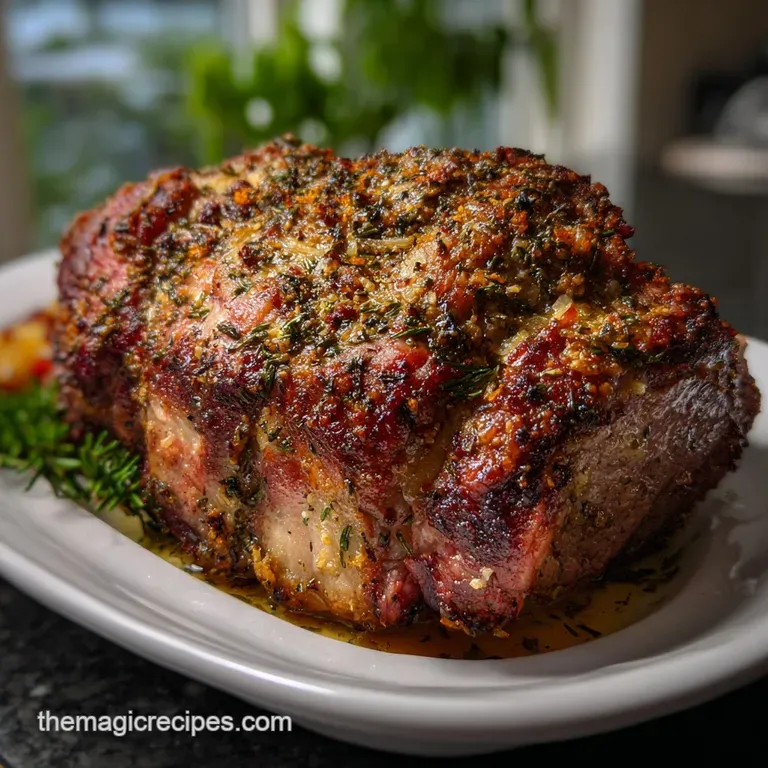
- Coat the exterior. Slather the herb butter over the fat cap and sides until the roast is completely encased in a pale green gold layer.
- Preheat the oven. Set your "prime rib roast oven" to 250°F (120°C) for a slow, even cook.
- Slow roast the beef. Place on a rack in the roasting pan for approx. 3 hours 30 mins until the internal probe reads 120°F (for medium rare).
- Rest the meat. Remove from the oven and tent loosely with foil for 30 minutes until the internal temperature rises 5 10°F from carryover heat.
- Deglaze the pan. While resting, sauté 1 shallot in the pan drippings, then add 1/2 cup red wine until the liquid reduces by half and smells sweet.
- Finish the au jus. Add 2 cups beef bone broth and simmer until the sauce coats the back of a spoon and looks glossy.
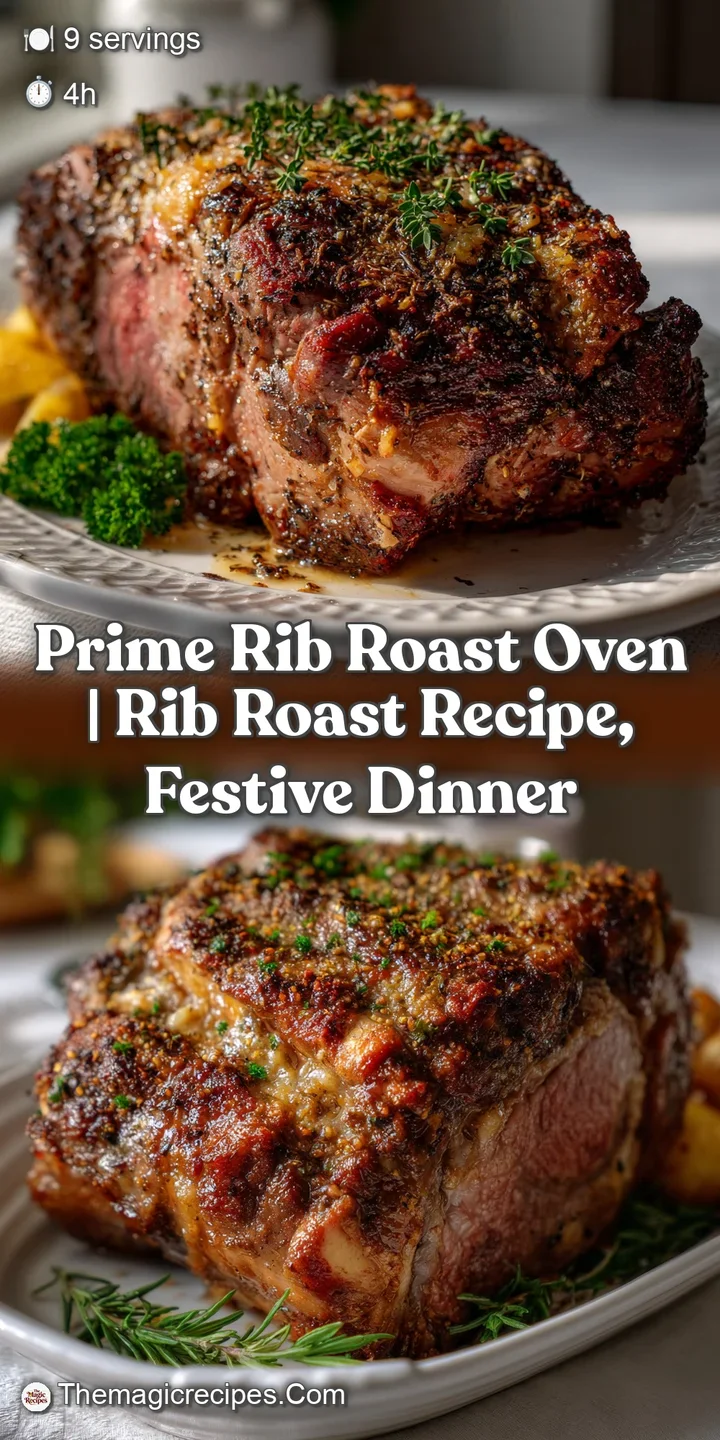
- Blast the crust. Return the rested roast to a 500°F oven for 6 10 minutes until the exterior is dark mahogany and the fat sizzles loudly.
- Slice and serve. Cut against the grain until you reach the bone, revealing a uniform pink center.
Chef's Tip: For an unconventional flavor depth, add a teaspoon of instant espresso powder to your salt rub. The bitterness counters the rich fat and deepens the "prime rib roast oven" crust color significantly without making it taste like coffee.
Diagnosing the Gray Band and Other Common Thermal Failures
A "gray band" is that thick layer of overcooked, dry meat between the crust and the pink center. This usually happens when the oven is too hot or the meat was too cold when it went in. To avoid this, we use the "Reverse Sear" logic: cook low first, rest, then sear at the very end.
This keeps the heat from penetrating too deeply and over denaturing the outer layers of protein.
Troubleshooting Your Prime Rib
| Problem | Root Cause | The Fix | Pro Protocol |
|---|---|---|---|
| Thick Gray Band | Oven temp too high early on | Lower oven to 250°F and use a probe | Temper meat for 2 hours before roasting. |
| Soggy, Pale Crust | Excess surface moisture | Pat dry and use higher salt ratio | Dry-brine uncovered in fridge for 24 hours. |
| Tough, Chewy Meat | Sliced with the grain | Slice perpendicular to muscle fibers | Look for the "lines" in the meat; cut across them. |
Flavor Architecture Adjustments and Paleo Friendly Variations
While the classic herb butter is functional and reliable, you can swap ingredients to fit your pantry or dietary needs. For a great side, this roast pairs perfectly with my Honey Roasted Carrots Recipe which can cook on the bottom rack during the final over high heat blast.
Ingredient Substitution Table
| Original Ingredient | Substitute | Why It Works |
|---|---|---|
| Unsalted Butter | Ghee (Clarified Butter) | Higher smoke point; Note: Provides a nuttier, Paleo friendly flavor. |
| Dry Red Wine | Balsamic Vinegar + Water | High acidity mimics wine's brightness. Note: Will be slightly sweeter. |
| Rosemary/Thyme | Dried Herbes de Provence | Concentrated herbal notes. Note: Use 1/3 the amount of fresh. |
Variation: The Paleo Beef Roast To keep this strictly Paleo, replace the butter with tallow or ghee and ensure your bone broth has no added sugars or yeast extracts. The "prime rib roast oven" method remains the same, but the fat profile shifts to a more primal, savory depth.
⚗️ The Scaling Lab: The Physics of Quantity
When you decide to double your "prime rib roast oven" for a massive gathering, the rules of thermodynamics change. A 17 pound roast is not just twice the size; it has significantly more "thermal mass."
- The Square Cube Law: A larger roast has less surface area relative to its volume. This means the exterior can easily burn before the center even begins to warm. When doubling, drop your oven temperature by 25°F (to 225°F) to allow heat to migrate to the center more gently.
- Flavor Saturation: Do not simply double the salt. Scale salt and spices to 1.5x. Because the surface area doesn't double at the same rate as the weight, 2x salt will result in an inedibly salty crust.
- Carryover Surge: A larger roast holds more energy. A 17 lb roast will see a carryover rise of 10 15°F, whereas a smaller one only rises 5°F. Pull the large roast at 115°F internal to hit a perfect 130°F medium rare.
Preserving Protein Integrity for Functional Next Day Meals
Storage: Store leftovers in an airtight container in the fridge for up to 4 days. To maintain that velvety texture, do not microwave. Microwaves vibrate water molecules too fast, effectively "steaming" the meat from the inside and turning it gray.
Reheating: Place slices in a baking dish with a splash of beef broth, cover with foil, and warm at 250°F until just heated through. If you have leftovers, they make the ultimate foundation for a French dip sandwich recipe the next day.
Freezing: You can freeze cooked "prime rib roast oven" slices for up to 3 months. Wrap tightly in plastic wrap, then foil, to prevent freezer burn and oxidation.
- Transform
- Simmer the bones for 12 hours with onion scraps to make a concentrated "bone gold" stock.
- Science
- Gelatin extraction from the collagen in the bones creates a silky mouthfeel and provides natural gut-health benefits.
- Fat Scraps
- Render the fat (suet) in a small pan to make tallow. Use it for the best roasted potatoes you've ever had.
Fast Finishing Touches and Practical Side Dish Pairings
For a busy parent, the goal is a functional, impressive meal without 20 side dishes. I usually serve this with a simple mash and greens. The red wine au jus we made is the real star here it provides the moisture and salt needed to tie the plate together.
Fast vs. Classic Comparison
| Feature | Fast Method (High Heat) | Classic Method (This Recipe) |
|---|---|---|
| Texture | Large gray band, tough edges | Edge-to-edge velvety pink |
| Juiciness | 15% moisture loss | <5% moisture loss due to low temp |
| Effort | Constant monitoring | Set-it and forget-it (mostly) |
- Myth
- Searing first "locks in" juices.
- Truth
- Searing is for flavor (Maillard reaction), not moisture. In fact, searing first often results in a larger gray band in your "prime rib roast oven".
- Myth
- You must bring meat to room temperature for 4 hours.
- Truth
- Two hours is plenty. The goal is to break the "fridge chill" so the center doesn't stay ice-cold while the outside cooks.
This "prime rib roast oven" technique is about working smarter, not harder. By respecting the thermal mass of the meat and using a low-temp start, you guarantee a result that looks like a professional chef's work while you focus on enjoying the evening. Let's work!
Recipe FAQs
How to make prime rib oven roast?
Dry brine, low-temp roast at 250°F, rest 30 minutes, then blast at 500°F. Apply a compound butter rub before roasting. This reverse sear sequence ensures edge-to-edge doneness with a crusty exterior. Follow the full sequence for best results in our Masterclass guide.
How to cook a prime rib oven roast cap off?
Remove the fat cap completely before seasoning. A thick cap traps moisture between the fat and the meat, inhibiting crust formation. If you prefer a leaner presentation, cook exactly as directed but ensure the underlying meat surface is patted dry before applying the herb butter.
How to cook a prime rib oven roast in a slow cooker?
Slow cookers cannot achieve the necessary dry-heat crust. The slow cooker creates a humid environment, which steams the meat, preventing the Maillard reaction required for a proper crust. For a moist roast using low, slow heat, you are better off using a dedicated oven method.
How to cook a prime rib oven roast convection oven?
Set temperature 25°F lower than conventional settings. Convection rapidly pulls heat across the surface, accelerating surface drying and potential overcooking. If using convection for the low-temp phase, use 225°F instead of 250°F, or you risk drying the exterior too quickly.
What internal temperature should prime rib be pulled at?
Pull at 120°F for medium rare doneness. Carryover cooking adds 5 10°F during the critical 30-minute rest period. This gentle rise preserves muscle fibers, just as it prevents curdling when tempering eggs in delicate sauces.
Should I sear the prime rib before roasting?
No, searing first creates a gray ring. Initial high heat rapidly denatures surface proteins, forcing internal moisture outward and setting a gray border before the center cooks evenly. If you enjoyed mastering this temperature control, apply the same principle when learning how to roast a whole Branzino.
Myth: Can I skip resting the roast?
Myth: Resting is optional, just carve right away. Reality: Resting allows contracted muscle fibers to relax and redistribute internal moisture; carving immediately leads to juices running out onto the board, leaving the roast dry.
Prime Rib Roast Oven
Ingredients:
Instructions:
Nutrition Facts:
| Calories | 948 kcal |
|---|---|
| Protein | 61 g |
| Fat | 74 g |
| Carbs | 3 g |
| Fiber | 0.5 g |
| Sugar | 1 g |
| Sodium | 1540 mg |
