Salmon Chowder Recipe with Potatoes
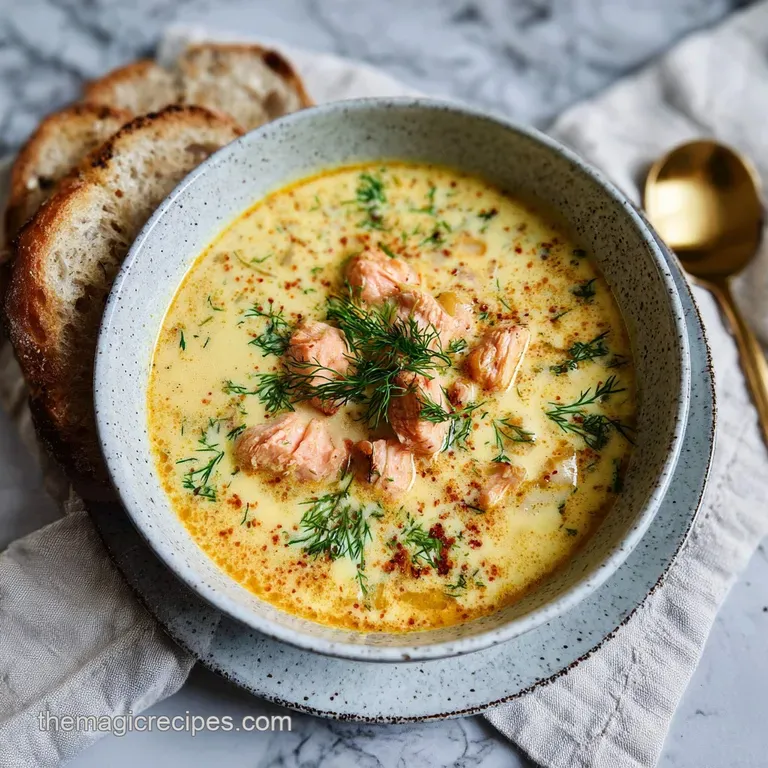
- Time: Active 15 minutes, Passive 20 minutes, Total 35 minutes
- Flavor/Texture Hook: Velvety broth with buttery, flaky salmon chunks
- Perfect for: Quick weeknight dinners or cozy family gatherings
- Create a Perfect Creamy Salmon Chowder
- Why This Works
- Essential Recipe Specs and Details
- Choosing Your Flavor Building Blocks
- Tools for Easy One Pot Cooking
- Steps for Making the Soup
- Fixing Common Soup Cooking Issues
- Diet Swaps and Simple Changes
- Storing and Reheating Your Leftovers
- Serving Ideas for Better Meals
- Salmon Chowder FAQs
- 📝 Recipe Card
Create a Perfect Creamy Salmon Chowder
The first time I made this, I was staring at a rainy Tuesday and a fridge that looked a bit bleak. I tossed the sliced leeks into the oil and that immediate sizzle filled the kitchen with an aroma that felt like a warm hug.
It's one of those smells that instantly tells your brain, "Okay, dinner is going to be good tonight." I remember worrying that the salmon would turn into rubbery little nuggets, but I learned a trick that changed everything.
You don't need a heavy flour roux to get that velvety texture we all crave. By using Yukon Gold potatoes, the starch naturally thickens the broth as it simmers, leaving you with a clean, bright soup that doesn't feel like a lead weight in your stomach.
We’ve all had those chowders that are basically liquid mashed potatoes, but this one is different. It’s light, it’s fresh, and the dill at the end makes the whole bowl pop.
Trust me, this is the version you’ll keep on repeat. It’s family friendly because it’s not overly "fishy," and it’s quick enough that you aren't standing over the stove all night. Let’s get into how we make this work with just one pot and a few simple steps.
Why This Works
- Residual Heat Poaching: Turning the heat off before adding the salmon prevents the protein from seizing and becoming tough or rubbery.
- Starch Gelatinization: Yukon Gold potatoes release just enough starch during the simmer to thicken the broth naturally without needing a heavy roux.
- Acid Balance: Adding lemon juice at the very end cuts through the fat of the cream and the salmon, brightening every single bite.
- The Umami Bridge: Clam juice provides a concentrated salty depth that water or vegetable broth alone simply can't achieve.
Method Comparison for Quick Cooking
| Method | Time | Texture | Best For |
|---|---|---|---|
| Stovetop | 35 minutes | Flaky fish, firm potatoes | Fastest weeknight result |
| Slow Cooker | 4 hours | Soft veggies, very tender | Hands off morning prep |
| Dutch Oven | 40 minutes | Deepest flavor development | Maximum heat retention |
Choosing the stovetop method is usually my go to because it gives you total control over the salmon’s texture. You don't want the fish cooking for hours; you want it to just barely turn opaque so it melts in your mouth. If you prefer a more traditional pan seared approach to fish before starting a soup, you might enjoy my Recetas de Salmon Fresco recipe for a different dinner vibe.
Component Analysis
| Ingredient | Science Role | Pro Secret |
|---|---|---|
| Yukon Gold Potatoes | Starch provider | Don't rinse after cutting to keep the surface starch for thickening. |
| Leeks | Flavor base | Sauté until translucent but not brown to keep the broth golden. |
| Clam Juice | Liquid seasoning | Use bottled juice for an instant "simmered for hours" seafood depth. |
| Fresh Dill | Aromatic finish | Add at the very end; heat destroys the delicate volatile oils. |
Essential Recipe Specs and Details
Working with fresh fish means you need to be precise with your timing. For this Salmon Chowder, we are looking at a 15 minute prep where most of your work is just dicing potatoes and slicing leeks.
The 20 minute cook time is almost entirely passive, meaning you can actually clean up the kitchen while the potatoes simmer.
Chef Tip: Freeze your salmon for about 10 minutes before cutting. It firms up the flesh, making it much easier to get those clean 1 inch chunks without the fish tearing or smushing under your knife.
I always suggest weighing your potatoes if you can. 1.5 lbs of potatoes is roughly 3 to 4 medium Yukons, but getting the ratio right ensures the broth has the perfect consistency. If you have too many potatoes, the soup becomes a stew; too few, and it stays thin like a tea.
It's a simple balance that makes a huge difference in the final bowl.
Choosing Your Flavor Building Blocks
- 1.5 lbs wild caught salmon: Skin removed, cut into 1 inch chunks. Why this? Wild caught has a leaner, more intense flavor than farmed varieties.
- Substitute: Arctic char or steelhead trout (both have similar fat content and color).
- 1.5 lbs Yukon Gold potatoes: Peeled and cut into 1/2 inch cubes. Why this? They hold their shape while releasing perfect amounts of starch.
- Substitute: Red bliss potatoes (note: the broth will be slightly thinner).
- 2 medium leeks: White and light green parts only, sliced. Why this? Provides a sweeter, milder onion flavor that doesn't overwhelm the fish.
- Substitute: One large yellow onion, finely diced.
- 8 oz bottled clam juice: Why this? The "secret weapon" for instant oceanic depth without making stock from scratch.
- Substitute: Fish stock or additional vegetable broth with a pinch more salt.
- 3 cups low sodium vegetable broth: Why this? Acts as the volume base without adding too much competing flavor.
- Substitute: Chicken broth (mild version) or even filtered water in a pinch.
- 1 cup light cream: Why this? Adds a velvety mouthfeel without the heavy, cloying fat of heavy cream.
- Substitute: Full fat coconut milk (adds a slight tropical note).
- 1/2 cup fresh dill: chopped. Why this? Dill and salmon are a classic pairing that cuts through the richness.
- Substitute: Fresh parsley or chives if you aren't a fan of dill.
Tools for Easy One Pot Cooking
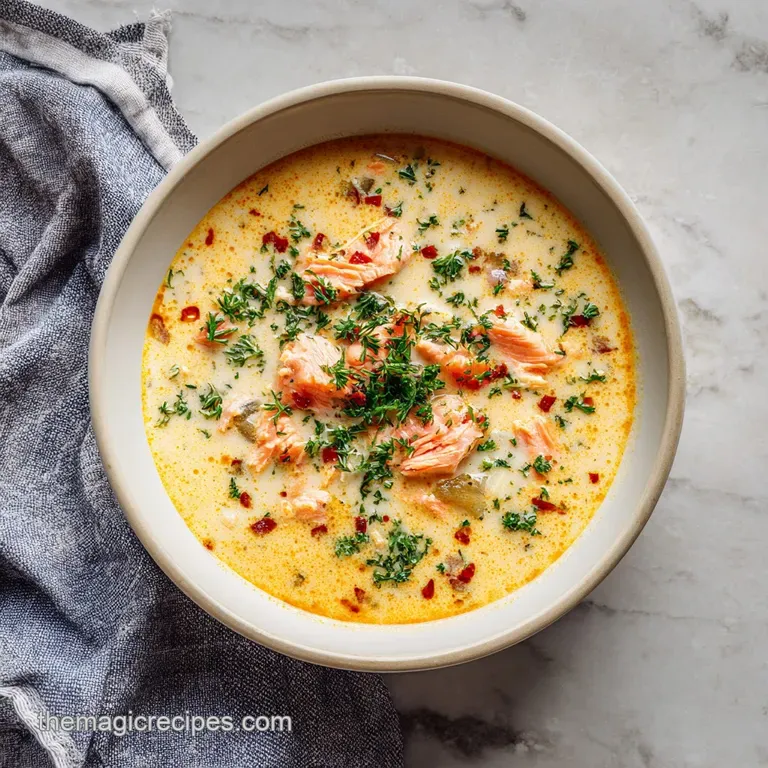
You really don't need a pantry full of gadgets for this. A heavy bottomed pot, like a 5 quart Dutch oven (I love my Lodge for this), is the most important tool. It distributes heat evenly, which is critical when you're simmering potatoes.
If your pot is too thin, the potatoes might stick to the bottom and scorch before they are actually tender.
A sharp chef's knife makes quick work of the leeks and celery. For the garlic, I usually just use a microplane to grate it directly into the pot it saves on chopping and ensures the garlic melts into the broth.
Finally,, grab a good wooden spoon or a silicone spatula to scrape up any bits of flavor from the bottom of the pot after you sauté the aromatics.
Steps for Making the Soup
- Sauté the aromatics. Heat 1 tbsp extra virgin olive oil in your pot over medium heat. Add the sliced leeks and diced celery, cooking for 5 minutes until they are soft and fragrant.
- Add flavor boosters. Stir in the 3 minced garlic cloves, 2 tsp fresh thyme leaves, and 1/4 tsp smoked paprika. Cook for 1 minute until the spices smell toasted.
- Deglaze the pot. Pour in the 8 oz bottled clam juice and use your spoon to scrape any bits off the bottom. Note: This step captures all the caramelized veggie flavor.
- Simmer the base. Add the 3 cups low sodium vegetable broth and the 1.5 lbs cubed potatoes. Bring to a boil, then reduce heat to a simmer.
- Cook the potatoes. Let them simmer for about 10-12 minutes until the potatoes are fork tender.
- Enrich the broth. Pour in the 1 cup light cream and stir gently. Bring it back to a very low simmer, but don't let it boil hard.
- Poach the salmon. Stir in the 1.5 lbs salmon chunks. Turn off the heat entirely and cover the pot with a lid.
- Rest and cook. Let the pot sit for 5 minutes. The residual heat will poach the salmon until it is opaque and flakes easily.
- Final seasoning. Stir in the 1 tbsp lemon juice, 1/2 cup fresh dill, 1/2 tsp sea salt, and 1/4 tsp cracked black pepper.
- Taste and serve. Give it one last stir and serve immediately while the herbs are bright green.
Fixing Common Soup Cooking Issues
Why Your Salmon Is Tough
When salmon hits boiling liquid, the proteins contract violently, squeezing out moisture and leaving you with a rubbery texture. This is why we use the "off heat" method. If you've already overcooked it, there isn't a "fix" to make the fish soft again, but you can flake the fish into smaller pieces so it integrates better with the creamy broth.
Troubleshooting Your Broth
| Problem | Root Cause | Solution |
|---|---|---|
| Thin Broth | Not enough potato starch released | Smash a few potato cubes against the side of the pot and stir back in. |
| Curdled Cream | Added to boiling broth or acid too early | Add cream over low heat only; always add lemon juice at the very end. |
| Fishy Taste | Salmon wasn't fresh or "white stuff" (albumin) | Soak salmon in cold salt water for 10 mins before cooking to reduce albumin. |
Common Mistakes Checklist
- ✓ Don't skip the clam juice; it’s the primary source of depth in this quick recipe.
- ✓ Ensure potatoes are cut into uniform 1/2 inch cubes so they cook at the same rate.
- ✓ Never let the soup reach a rolling boil once the cream is added to prevent separation.
- ✓ Use fresh dill rather than dried; dried dill often tastes like dust in a delicate chowder.
- ✓ Wash your leeks thoroughly in a bowl of water after slicing, as they hide a lot of grit.
Diet Swaps and Simple Changes
If you need to feed a crowd or just half the family, scaling this recipe is quite straightforward. For a half batch, use a smaller 3 quart saucepan and reduce the simmering time for the potatoes by about 3 minutes since there's less mass to heat up.
When doubling the recipe, use a large stockpot and keep the salt at about 1.5 times the original amount you can always add more at the end, but you can't take it out!
Scaling Strategy
| Servings | Salmon Weight | Potato Weight | Liquid Total |
|---|---|---|---|
| 2-3 People | 0.75 lbs | 0.75 lbs | 2 cups broth / 4oz clam juice |
| 5 People | 1.5 lbs | 1.5 lbs | 3 cups broth / 8oz clam juice |
| 10 People | 3 lbs | 3 lbs | 5.5 cups broth / 16oz clam juice |
Storing and Reheating Your Leftovers
Storage: This chowder keeps beautifully in the fridge for up to 2 days. The flavors actually deepen overnight, though the potatoes will continue to soak up the liquid, so you might need a splash of broth when you reheat it.
Store it in an airtight glass container to keep the seafood scent from migrating to other foods in your fridge.
Reheating: Whatever you do, do not microwave this on high. You’ll turn the salmon into pebbles. Instead, place it in a small pot over medium low heat. Stir occasionally and take it off the stove the second it's hot. If you're looking for another way to use leftover salmon in a different format, it works surprisingly well as a base for a Smoked Salmon Brunch recipe if you flake it onto crackers.
Freezing: I generally don't recommend freezing cream based soups with potatoes. The cream tends to break and the potatoes get a grainy, mealy texture once thawed. It's best eaten fresh or within 48 hours!
Serving Ideas for Better Meals
This Salmon Chowder is a meal in itself, but it loves a crunchy partner. A thick slice of sourdough bread or a handful of old-fashioned oyster crackers is mandatory for soaking up that last bit of velvety broth.
If you want to keep things lighter, a simple green salad with a sharp vinaigrette provides a nice contrast to the richness of the cream and salmon.
For a bit of visual flair, don't just stir the dill in save a few sprigs for the top. A tiny sprinkle of smoked paprika right before serving gives the bowl a beautiful orange hue that looks professional.
If you have guests over, serving this in wide, shallow bowls makes it feel much more like a bistro meal than a quick home cooked dinner. It’s all about the little touches that make the "work" of cooking feel like a treat.

Salmon Chowder FAQs
What is the secret to great chowder?
Using starchy potatoes like Yukon Golds. Their natural starches release as they simmer, thickening the broth into a velvety consistency without relying on a heavy flour roux.
What is the best type of salmon for chowder?
Wild caught salmon offers the best flavor. It has a leaner texture and a more intense taste that stands up well to the richness of the cream base.
How do I prevent the salmon from becoming tough in the hot liquid?
Turn the heat off completely before adding the fish. Cover the pot and let the residual heat gently poach the salmon for about 5 minutes until it is just opaque and flaky.
What does Gordon Ramsay put on salmon?
Ramsay frequently utilizes high heat searing for a crispy skin. While chowder uses poaching, Ramsay often pairs salmon with bright acids like lemon or citrus butter to balance the fat content, a principle you can use in any rich soup base.
What is a famous salmon soup?
Lohikeitto, a traditional Finnish salmon soup, is very famous. It typically uses a simple broth base with cream, dill, and cubed root vegetables, much like this chowder but often without bacon or thickening agents.
How to ensure my chowder has a deep, complex seafood flavor without using hours of stock?
Use bottled clam juice as a primary liquid. This provides an instant, concentrated oceanic depth that mimics long simmered seafood broth, elevating the flavor profile significantly.
Is it true that I must use heavy cream for a rich chowder?
No, light cream provides sufficient richness while cutting down on heaviness. The starch from the potatoes contributes far more to the final mouthfeel than the fat content of the dairy.
Quick Salmon Chowder Recipe

Ingredients:
Instructions:
Nutrition Facts:
| Calories | 557 kcal |
|---|---|
| Protein | 33.6 g |
| Fat | 30.4 g |
| Carbs | 34.8 g |
| Fiber | 3.2 g |
| Sugar | 5.1 g |
| Sodium | 745 mg |
