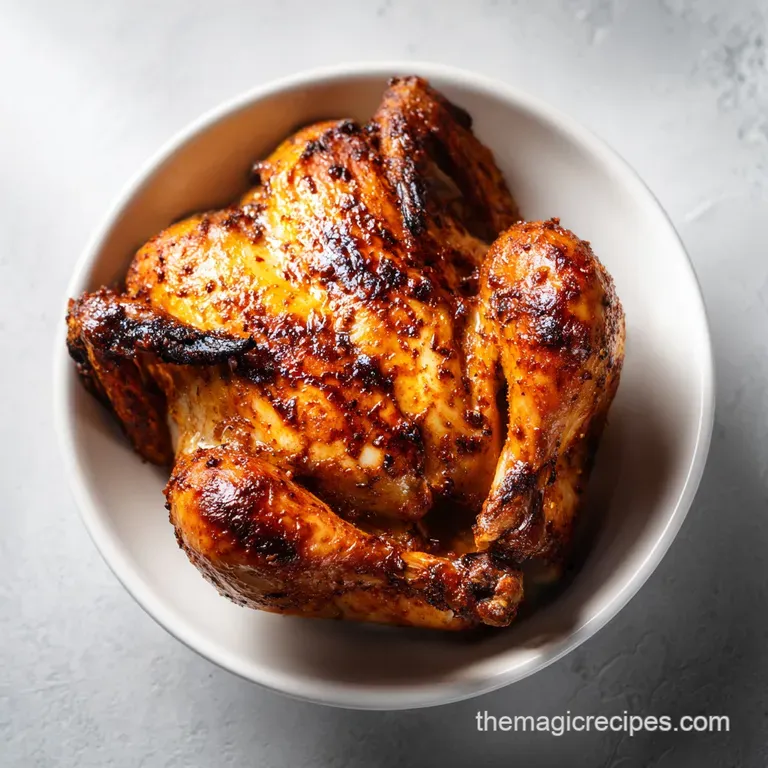
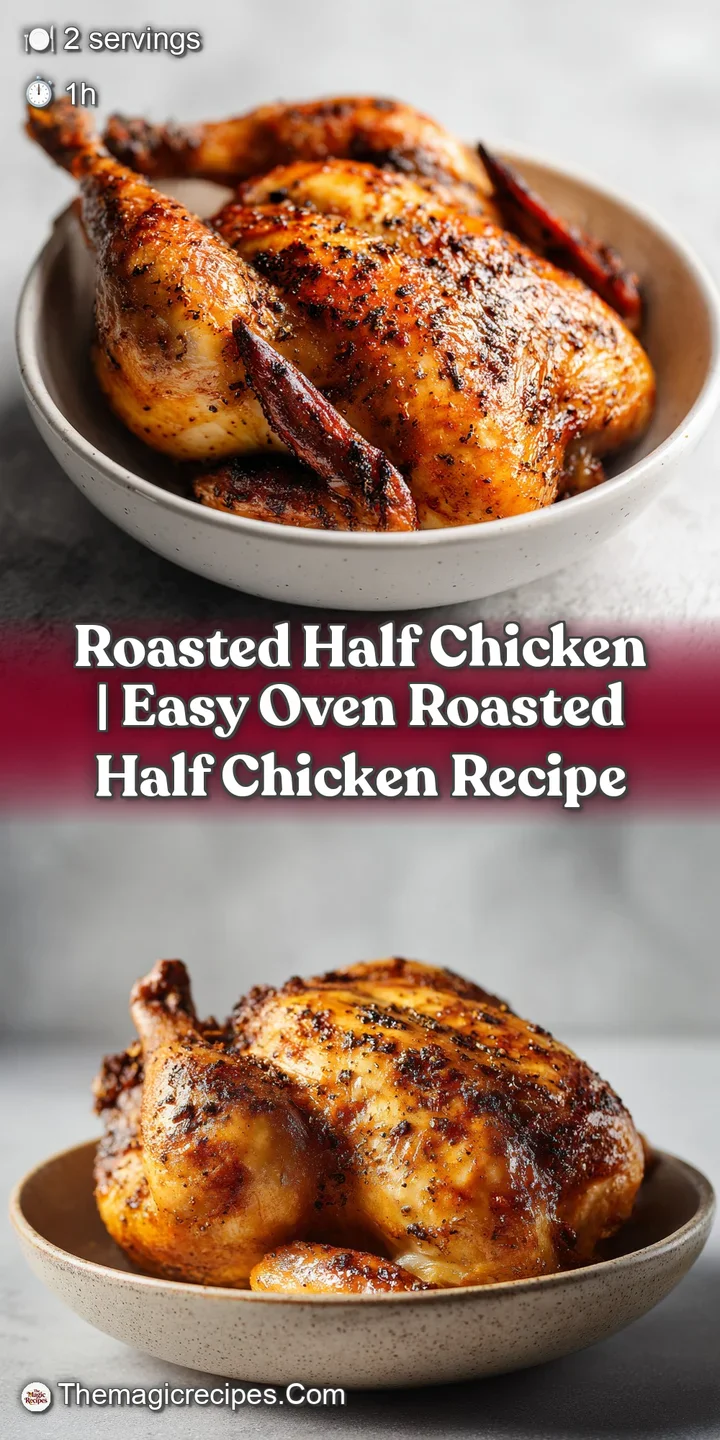
Roasted Half Chicken: Mahogany-Skinned and Succulent
- Time: Active 15 minutes, Passive 45 minutes, Total 60 minutes
- Flavor/Texture Hook: Shatter crisp skin and velvety meat
- Perfect for: Quick weeknight family dinners or stress free meal prep
- Achieving the Perfect Golden Crust on Your Roasted Half Chicken
- Why This over High heat Method Delivers Results
- Understanding Your Ingredients for the Best Flavor
- Components for the Ultimate Roasted Half Chicken
- Step-by-Step Instructions for the Perfect Roast
- Troubleshooting Common Roasting Issues
- Adjusting the Recipe for Different Needs
- Debunking Popular Poultry Beliefs
- Storage Guidelines and Zero Waste Tips
- Best Side Dishes to Complete the Meal
- Very High in Sodium
- Recipe FAQs
- 📝 Recipe Card
Achieving the Perfect Golden Crust on Your Roasted Half Chicken
The air in my kitchen currently smells like a dream, heavy with the scent of toasted garlic and sizzling poultry fat. There is something fundamentally comforting about a roast chicken, but let's be honest, waiting ninety minutes for a whole bird to finish on a Tuesday night is a big ask.
I remember one specific rainy Tuesday when I was determined to have a "real" dinner but only had an hour before the kids' bedtime. I decided to split the bird right down the middle, and it was a total revelation.
The heat hit the meat more evenly, the skin got way crispier than a standard roast, and we were eating in forty five minutes flat.
This technique is my go to because it solves the biggest problem with roasting poultry: the legs taking longer than the breasts. When you lay a half chicken flat, everything finishes at the same time. You get that beautiful mahogany color and a skin that actually crackles when the knife hits it.
Plus, since the chicken sits right on top of the vegetables, the potatoes and carrots essentially fry in the rendered chicken fat. It's a low effort, high reward situation that I find myself returning to at least once a week because it just works.
We are going for a very specific texture here. I want the skin to be so thin and crisp that it shatters like glass, while the meat underneath remains silky and dripping with juice. To get there, we’re using a over high heat method and a quick dry brine.
It sounds fancy, but it really just means letting the salt do the heavy lifting while you go about your business. You won't need any special equipment either, just a good pair of shears and a heavy pan. Let’s get stuck into why this method is so much more reliable than the traditional way.
Why This over High heat Method Delivers Results
Increased Surface Area: Splitting the chicken exposes more of the skin directly to the hot oven air, which means more crispiness and faster cooking times.
Fat Basted Vegetables: Placing the bird directly on the vegetables allows the rendered schmaltz to season the potatoes and carrots from the inside out.
Thermal Efficiency: The flat profile of a half chicken prevents the "cold cavity" effect, where the center of a whole bird stays cool while the outside overcooks.
Dry Brine Magic: Salt draws moisture out of the skin and then re seasons the meat, leading to a much more flavorful and deeply browned exterior.
| Cooking Method | Total Time | Skin Texture | Best For |
|---|---|---|---|
| Oven Roasting | 60 minutes | Shatter crisp and even | Hands off family dinners |
| Stovetop Skillet | 35 minutes | Deeply seared but uneven | Quick single portions |
| Slow Cooker | 6 hours | Soft and tender | Shredded chicken recipes |
Choosing the oven method for this Roasted Half Chicken provides the most consistent results because the circulating hot air mimics a professional rotisserie. While a skillet is faster, you often end up with charred bits and raw centers if the heat isn't managed perfectly. The oven gives us that beautiful, all over mahogany glow that looks like it came from a high end bistro. If you are looking for a more hands off approach for a different day, you might enjoy my Crockpot BBQ Chicken which takes a totally different route to tenderness.
Understanding Your Ingredients for the Best Flavor
| Ingredient | Science Role | Pro Secret |
|---|---|---|
| Kosher Salt | Denatures proteins to lock in moisture | Use coarse grains for better coverage and crunch |
| Unsalted Butter | Provides milk solids for browning (Maillard reaction) | Soften to room temp so it sticks to the meat |
| Smoked Paprika | Adds fat soluble color and earthy depth | Rub it under the skin to prevent it from scorching |
| Yukon Gold Potatoes | High starch content for a creamy interior | Cut into uniform 1 inch chunks for even roasting |
Components for the Ultimate Roasted Half Chicken
For this recipe, we are using simple, high-quality ingredients that you likely already have in your pantry. Each one plays a specific part in building layers of flavor.
- 1 whole chicken (approx. 3.75 lbs): This size is the "sweet spot" for tenderness. Substitute: Two large Cornish hens, though you will need to reduce cook time by 10 minutes. Why this? Larger birds can be tough; this weight ensures a fast, juicy roast.
- 2 tsp kosher salt: Essential for the dry brine. Substitute: 1.5 tsp fine sea salt. Why this? Large crystals draw out moisture more effectively for crispy skin.
- 1 tsp coarsely cracked black pepper: Adds a bite that cuts through the fat. Substitute: White pepper for a milder, more floral heat.
- 3 tbsp unsalted butter, softened: The vehicle for all our herbs. Substitute: Ghee for a higher smoke point and nuttier flavor. Why this? Butter adds richness that oil alone cannot provide.
- 2 cloves garlic, minced into a paste: Provides the aromatic base. Substitute: 1 tsp garlic powder if you're in a rush.
- 1 tbsp fresh thyme, finely chopped: The classic poultry herb. Substitute: Fresh rosemary or dried oregano (use half the amount).
- 1 tsp smoked paprika: For that gorgeous mahogany color. Substitute: Sweet paprika for less smokiness.
- 2 large Yukon Gold potatoes: These hold their shape while becoming buttery. Substitute: Red bliss potatoes. Why this? They have the perfect balance of starch and moisture for roasting.
- 3 large carrots, peeled: Adds a natural sweetness to the pan. Substitute: Parsnips or sweet potatoes.
- 1 red onion, cut into wedges: Provides a jammy, savory contrast. Substitute: Shallots or yellow onions.
- 2 tbsp extra virgin olive oil: To coat the vegetables and prevent sticking. Substitute: Avocado oil for over high heat stability.
step-by-step Instructions for the Perfect Roast
- Split the bird. Place the chicken breast side down on a sturdy cutting board. Using heavy duty kitchen shears, cut along both sides of the backbone to remove it entirely. Note: Save the backbone in the freezer for making stock later.
- Flatten and divide. Turn the bird over and press firmly on the breastbone with the palm of your hand until you hear a crack. Use a sharp chef's knife to cut straight down the center of the breastbone, creating two clean halves.
- Season early. Generously season both sides of the chicken halves with the kosher salt and cracked black pepper. Let them rest on the counter for at least 30 minutes. Wait until the skin looks slightly translucent as the salt works its way in.
- Prepare the herb butter. In a small bowl, mash together the softened butter, minced garlic paste, chopped thyme, and smoked paprika until a smooth, orange tinted paste forms.
- Apply the rub. Gently lift the skin over the breast and thigh area, being careful not to tear it. Stuff about half the butter mixture under the skin, then rub the remaining half all over the exterior.
- Prep the vegetables. In a large cast iron skillet or a rimmed baking sheet, toss the potato chunks, carrot batons, and red onion wedges with the olive oil. Spread them out into an even layer.
- Assemble the pan. Nestled the chicken halves, skin side up, directly on top of the vegetables. The chicken should act as a "lid" for the veg.
- The over high heat roast. Slide the pan into a preheated oven at 220°C (425°F). Roast for 45 minutes until the skin is deep mahogany and the juices run clear when the thigh is pierced.
- Check for doneness. Ensure an instant read thermometer hits 74°C (165°F) in the thickest part of the breast. The legs will likely be slightly higher, which is fine.
- The mandatory rest. Transfer the chicken to a warm plate and let it rest for 10 minutes. This allows the juices to redistribute so they don't flood the plate when you carve.
Troubleshooting Common Roasting Issues
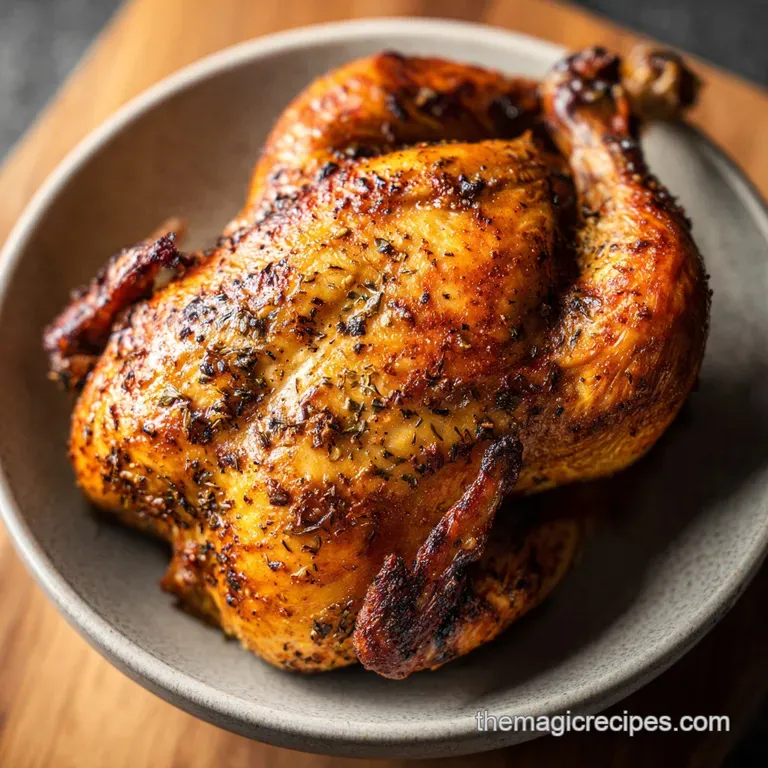
Why Your Chicken Skin is Rubbery
If the skin isn't crispy, it is almost always due to excess moisture. If you don't pat the chicken dry or if you use too much oil instead of butter, the skin steams rather than fries.
Another culprit is a crowded pan; if the vegetables are piled too high around the bird, the steam from the veg will soften the chicken skin. Make sure the chicken is sitting on top of the vegetables, not buried among them.
How to Prevent Garlic from Burning
Garlic is delicate and can turn bitter if it burns at 220°C. This is why we rub the garlic paste under the skin. The skin acts as a protective shield, allowing the garlic to infuse the meat with flavor without ever touching the direct heat of the oven.
If you are rubbing it on the outside, make sure it is very finely minced and well mixed with the butter, which helps insulate it.
| Problem | Root Cause | Solution |
|---|---|---|
| Dry breast meat | Overcooking past 74°C | Pull the bird at 71°C and let carryover heat finish it |
| Soggy vegetables | Not enough heat/too much oil | Ensure oven is fully preheated; use a large enough pan |
| Dark/burnt skin | Paprika or honey in rub | Tent with foil halfway through if browning too fast |
Common Mistakes Checklist
- ✓ Ensure the chicken is at room temperature for 20 minutes before roasting to ensure even cooking.
- ✓ Pat the skin extremely dry with paper towels before applying the butter rub.
- ✓ Don't skip the 30 minute dry brine; it's the secret to that "shatter" texture.
- ✓ Use a heavy pan like cast iron for the best heat retention and crispiest potatoes.
- ✓ Never cover the chicken with foil during the actual roasting or the skin will turn to mush.
Adjusting the Recipe for Different Needs
Scaling this recipe is quite simple because of the "half chicken" format. If you are cooking for one, you can simply roast one half and save the other half, tightly wrapped, in the fridge for up to two days.
The cooking time remains the same because the thickness of the meat doesn't change, just the total volume in the pan.
If you are cooking for a larger family and need to double the recipe, use two separate rimmed baking sheets rather than crowding everything onto one. When you double the vegetables, they release a lot of steam. If that steam can't escape, your chicken will never get crispy. Rotate the pans halfway through the 45 minute cook time to ensure they both get equal love from the oven's heating elements. For a different take on a high protein meal, you might consider my Low Calorie Grilled Chicken if you want to swap the oven for the grill.
Debunking Popular Poultry Beliefs
One of the biggest myths in home cooking is that you need to baste the chicken while it roasts. Every time you open the oven door, you lose heat, which extends the cooking time. More importantly, pouring liquid over the skin while it’s trying to crisp up is counterproductive.
The butter we put under the skin provides all the "internal basting" you need. Trust the process and leave the oven door shut.
Another misconception is that the "juices running clear" is the only way to tell if a chicken is done. While it's a good indicator, it isn't foolproof. Sometimes a perfectly safe, cooked chicken can still have a slightly pink hue near the bone due to the marrow.
The only 100% reliable method is using a digital thermometer. If it hits 74°C, it's done, regardless of what the juices look like.
Storage Guidelines and Zero Waste Tips
Storage: You can keep leftover Roasted Half Chicken in an airtight container in the fridge for up to 4 days. To keep the skin from getting too rubbery, reheat it in an oven or air fryer at 180°C for about 8 minutes.
Avoid the microwave if you want to keep that crunch.
Freezing: The meat can be pulled off the bone and frozen for up to 3 months. This is perfect for quick additions to soups or salads later on. Just make sure it’s completely cool before you bag it up to prevent ice crystals from forming.
Zero Waste: Never toss the backbone or the carcass! Throw them into a pot with some onion scraps and peppercorns to make a quick chicken stock. Also, the leftover schmaltz (chicken fat) left in the pan is liquid gold. Save it to sauté greens or fry eggs the next morning. If you have leftover meat, it makes a killer Chicken Avocado Melt Sandwich for lunch the next day.
Best Side Dishes to Complete the Meal
Since this recipe already includes potatoes and carrots, you really just need something bright and acidic to cut through the richness of the butter and chicken fat. A simple arugula salad with a lemon vinaigrette works wonders. The peppery bite of the greens balances the smoky paprika perfectly.
If you want something heartier, a side of sautéed garlicky green beans or steamed broccoli with a squeeze of lemon is a great way to round out the plate. The key is to keep the sides simple so the star of the show, that perfectly Roasted Half Chicken, really stands out. You can also serve it with a dollop of Dijon mustard on the side for a little extra kick that pairs beautifully with the roasted onions. For those looking for more variety in their poultry rotation, checking out my Chicken Penne Casserole is a great way to use up any leftover chicken from this roast in a completely different way.
Very High in Sodium
2415 mg 2415 mg of sodium per serving (105% 105% of daily value)
The American Heart Association recommends limiting sodium intake to no more than 2,300mg per day, ideally to less than 1,500mg for most adults.
Tips to Reduce Sodium
-
Halve the Salt-25%
Reduce the 2 tsp of kosher salt by half to 1 tsp. This is the most significant source of sodium and a substantial reduction can be made here.
-
Boost Herbs and Spices
Emphasize the use of fresh thyme and smoked paprika. Consider adding other no-sodium herbs like rosemary, sage, or a pinch of chili flakes for added flavor without salt.
-
Unsalted Butter and Olive Oil
The recipe already calls for unsalted butter and extra virgin olive oil, which are good choices. Continue using these to avoid hidden sodium.
-
Fresh Garlic and Onion
Utilize fresh garlic and red onion as indicated. These ingredients provide natural flavor without contributing to sodium levels.
-
Vegetable Focus
The potatoes, carrots, and red onion are naturally low in sodium and contribute to the dish's overall flavor and appeal. No changes needed here.
Recipe FAQs
How long do you roast a half chicken?
Roast for 45 minutes at 425°F (220°C). The chicken is ready when the skin turns a deep mahogany color and an instant read thermometer registers 165°F (74°C) in the thickest part of the meat.
Is it better to roast chicken at 350 or 400?
Neither; 425°F is the optimal temperature. High heat is necessary to render the fat and crisp the skin properly in the required 45-minute timeframe, whereas lower temperatures often lead to steaming rather than roasting.
How to cook chicken for diabetic patients?
Focus on lean protein and nutrient dense vegetables like Yukon Gold potatoes and carrots. This preparation avoids added sugars and uses healthy fats from olive oil and butter, but portion the vegetables carefully to manage glycemic load.
How long should I cook 1/2 chicken at 350?
Avoid using 350°F as it is too low for this preparation. Cooking at 350°F will significantly increase the required time, likely drying out the white meat before the skin achieves the necessary golden, crispy texture.
Can I store the leftovers?
Yes, keep leftovers in an airtight container in the refrigerator for up to 4 days. To maintain skin texture, reheat the chicken in an oven or air fryer at 180°C for approximately 8 minutes, avoiding the microwave.
How to ensure the chicken skin is crispy?
Dry the chicken thoroughly and let it rest with salt for 30 minutes before roasting. This dry-brining process draws surface moisture out, allowing the skin to crisp up quickly in the oven. If you enjoyed mastering high heat searing here, the same principle of surface moisture control applies to getting a perfect crust on other proteins.
How to prepare the bird for even cooking?
Remove the backbone with heavy duty kitchen shears and flatten the bird before splitting it into halves. This ensures the chicken lies flat against the heat source, allowing the white and dark meat to cook consistently throughout the 45-minute window.
Roasted Half Chicken
Ingredients:
Instructions:
Nutrition Facts:
| Calories | 1342 kcal |
|---|---|
| Protein | 84.6 g |
| Fat | 91.4 g |
| Carbs | 46.8 g |
| Fiber | 7.2 g |
| Sugar | 8.4 g |
| Sodium | 2415 mg |
