Sausage Broccoli Farfalle: Savory and Fresh
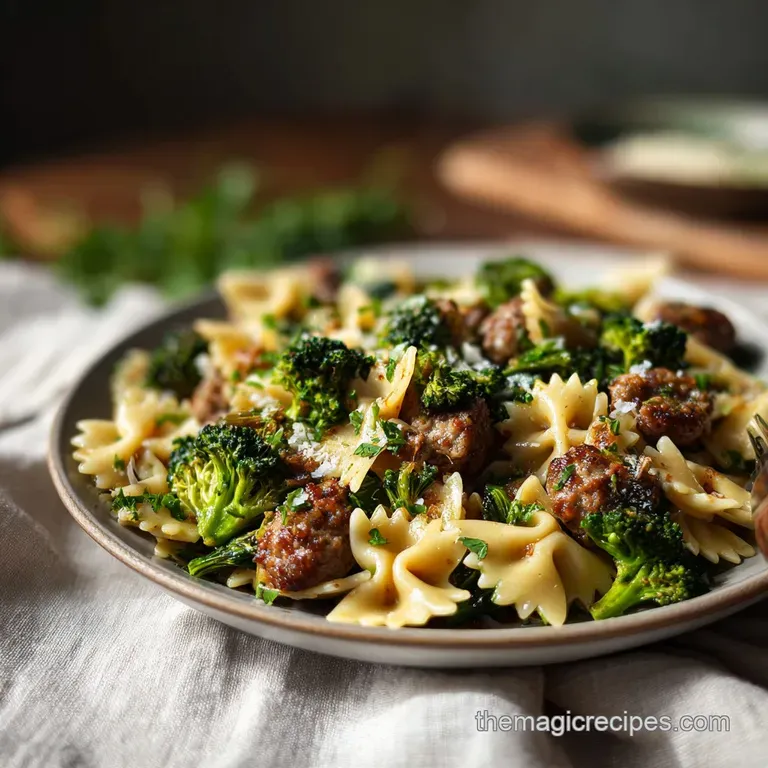
- Time: Active 10 minutes, Passive 15 minutes, Total 25 minutes
- Flavor/Texture Hook: Savory browned sausage with a zesty lemon finish
- Perfect for: Busy weeknight dinners or a quick family-friendly meal
- Making My Favorite Sausage Broccoli Farfalle
- Why This Simple Sauce Stays Glossy
- Quick Performance Stats and Timing
- Gathering Your Essential Fresh Ingredients
- The Only Minimal Tools Required
- Cooking the Whole Dish Together
- Fixing Common Texture Mistakes Easily
- Swapping Proteins and Veggies Quickly
- Keeping Your Leftovers Tasting Fresh
- Simple Dishes to Serve Alongside
- Critical Sodium Level
- Recipe FAQs
- 📝 Recipe Card
Making My Favorite Sausage Broccoli Farfalle
The sound of Italian sausage hitting a hot pan is one of my favorite kitchen cues. It starts as a wet slap and quickly transforms into a rhythmic, aggressive sizzle as the fat begins to render out. Within minutes, the kitchen fills with the scent of toasted fennel seeds and garlic.
I remember the first time I realized that the browned bits stuck to the bottom of the pan weren't a mess to be scrubbed away, but rather the foundation of the best sauce I’d ever make. It was a Tuesday night, I was exhausted, and I almost just threw the pasta with some plain oil.
Instead, I let the sausage sear properly, and it changed my whole approach to weeknight cooking.
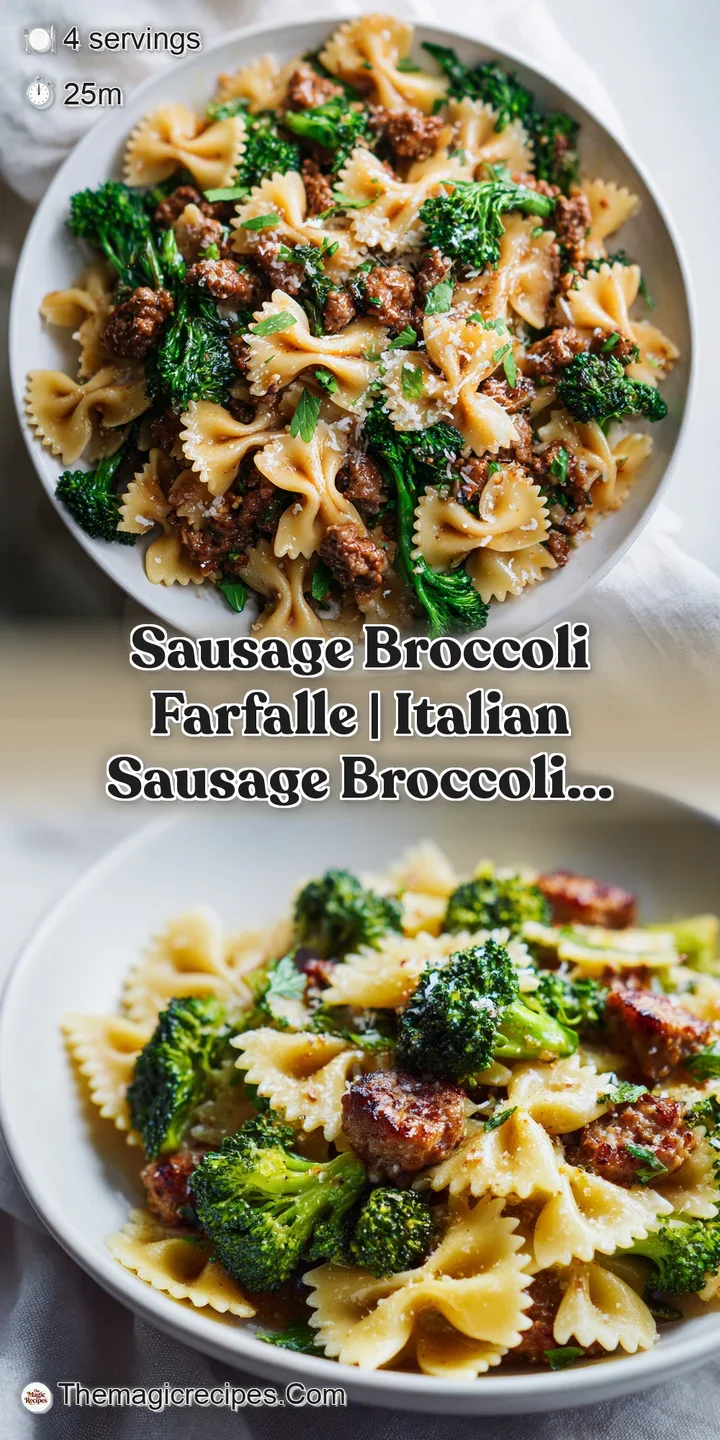
This dish is all about those contrasts. You have the "shatter" of the crispy pork edges against the tender, velvety bite of the bow tie pasta. Then there is the broccoli, which stays bright green and slightly snappy because we aren't overboiling it into a mushy gray heap.
The lemon zest hits your nose before you even take a bite, cutting right through the richness of the pork. It feels fancy, but honestly, it’s one of those recipes that works because it respects the ingredients rather than trying to hide them under a thick layer of heavy sauce.
We’ve all had those pasta dishes that feel dry or clumpy by the time they hit the table. I used to struggle with that constantly until I learned the trick of the "glossy finish." This recipe isn't just about mixing things in a bowl; it’s about using the heat of the pan and the science of starch to create something that looks like it came out of a professional kitchen.
You’ll see exactly how the cold butter and the pasta water team up to make a coating that clings to every ridge of the farfalle.
Why This Simple Sauce Stays Glossy
Understanding how a few basic components turn into a silky coating is what makes this meal work every single time. It isn't magic, just a few smart choices with temperature and timing.
- The Starch Glue: When farfalle boils, it releases starch into the water. This cloudy liquid acts as a bridge, allowing the olive oil and sausage fat to bind with the pasta instead of just sliding off to the bottom of the bowl.
- Cold Fat Integration: Adding cold butter at the very end, rather than melted butter, allows the fat to incorporate slowly into the hot liquid. This creates a stable, velvety sheen that doesn't "break" or become oily.
- Maillard Depth: Leaving the sausage undisturbed to form a deep mahogany crust creates complex savory flavors that dissolve into the sauce. This provides a rich base that seasoned salt alone could never replicate.
- Chlorophyll Preservation: By blanching the broccoli for exactly 3 minutes in the pasta water, we stop the enzymes that cause browning, keeping the greens crisp and vibrant.
| Method | Time | Texture | Best For |
|---|---|---|---|
| Stovetop Skillet | 25 minutes | Vibrant greens and crispy meat | Quick weeknight dinners |
| Oven Pasta Bake | 40 minutes | Melty cheese and soft veg | Sunday meal prep |
| One Pot Method | 30 minutes | Starchier, thicker sauce | Minimal cleanup |
This comparison shows that the stovetop method really is the king when you want that specific contrast between the seared meat and the fresh vegetables. While a bake is great for leftovers, the immediate sear you get in a 12 inch skillet provides a flavor profile that the oven just can't match in a short timeframe.
Quick Performance Stats and Timing
To get the most out of this Sausage Broccoli Farfalle, focusing on a few specific variables ensures the texture is spot on. I’ve found that being precise with the sausage sear makes the biggest difference in the final savoriness of the dish.
| Component | Science Role | Pro Secret |
|---|---|---|
| Italian Sausage | Fat and Umami | Sear as a flat disc first to maximize browning surface area. |
| Starchy Water | Emulsifying Agent | Scoop the water out right before draining to get the highest starch concentration. |
| Cold Butter | Texture Stabilizer | Toss vigorously once the butter goes in to create the glossy "gold" sauce. |
| Fresh Lemon | Acid Balance | Use zest for aroma and juice for brightness to cut through the pork fat. |
Using the right amount of fat is essential here. You might be tempted to drain the sausage fat, but don't. That liquid gold is where all the fennel and garlic notes live. If you find the pan looks a little dry, that's when you lean on your extra virgin olive oil to bring back the shine.
Gathering Your Essential Fresh Ingredients
Shopping for this dish is straightforward, but quality matters because there aren't many ingredients to hide behind. Look for the best produce and meat you can find to ensure the flavors really pop.
- 1 lb Farfalle: Also known as bow tie pasta. Its shape is perfect for catching bits of sausage and garlic in the "wings."
- 1 lb Italian Sausage: Use bulk sausage with the casing already removed. Sweet or spicy both work, depending on your heat preference.
- 1 large head Broccoli: Look for tight, dark green florets without any yellowing.
- 3 tbsp Extra Virgin Olive Oil: Use a high-quality oil for the finishing toss.
- 4 cloves Garlic: Thinly sliced. Slicing gives a milder, sweeter flavor than mincing.
- 0.5 tsp Red Pepper Flakes: Adds a gentle background warmth.
- 0.5 cup Parmigiano Reggiano: Freshly grated is a must; the pre shaken stuff won't melt properly into the sauce.
- 1 Organic Lemon: We are using the zest, so organic is better to avoid wax and pesticides.
- 2 tbsp Unsalted Butter: Keep this in the fridge until the very second you need it.
- Kosher salt: For the pasta water and final seasoning.
- Freshly cracked black pepper: To add a final punch of spice.
For another weeknight win with similar flavors, you might like this Cajun Sausage Rice Skillet. The way the sausage seasons the entire base is very similar to how it works in this pasta dish.
The Only Minimal Tools Required
I love this recipe because you don't need a mountain of gadgets to make it happen. It’s a "working" kitchen meal that relies on basic heat and physics.
You will need a large 12 inch skillet or braiser. A wide surface area is non negotiable for the sausage; if the pan is too small, the meat will steam in its own juices instead of getting that dark, crispy crust we want.
A heavy bottomed pan like a Lodge cast iron or a stainless steel All Clad works brilliantly here because they hold heat consistently.
Beyond that, a large pasta pot for boiling the farfalle and a sturdy colander are essential. I also recommend a microplane for the lemon zest and the Parmesan. It creates a fluffy texture that melts instantly.
If you don't have one, the small holes on a box grater will do the job, but try to get the zest as fine as possible.
Cooking the Whole Dish Together
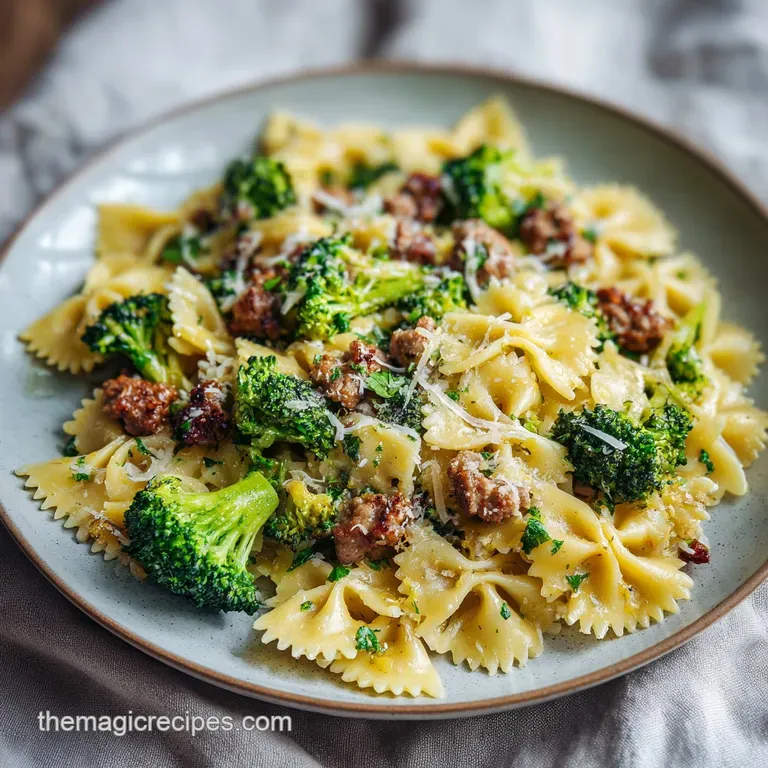
Follow these steps closely to ensure everything finishes at the exact same time. The goal is to have the pasta and broccoli hit the skillet while the sausage and garlic are at their peak aroma.
- Bring a large pot of heavily salted water to a boil. In a large 12 inch skillet or braiser, heat 1 tablespoon of olive oil over medium high heat.
- Add the 1 lb bulk Italian sausage to the skillet, spreading it into a flat disc with your spatula. Cook 3 minutes undisturbed until a deep mahogany crust forms, then begin breaking it up into chunks.
- Drop the 1 lb farfalle into the boiling water. Set a timer for 3 minutes less than the package instructions for al dente. Note: We finish the cooking in the skillet, so the pasta needs to be quite firm at this stage.
- Add the 4 sliced cloves of garlic and 0.5 tsp red pepper flakes to the skillet with the sausage. Sauté 2 minutes until the garlic is golden and fragrant.
- When the pasta timer has 3 minutes remaining, add the broccoli florets directly into the boiling pasta water to blanch.
- Reserve 1 cup of starchy pasta water using a heat safe measuring cup. Drain the pasta and broccoli in a colander.
- Transfer the drained pasta and broccoli immediately to the skillet with the sausage.
- Add the remaining 2 tablespoons of olive oil, the juice and zest of the lemon, 2 tablespoons of cold butter, and half of the Parmesan.
- Toss everything vigorously over medium heat. Add splashes of the reserved pasta water 1/4 cup at a time until a glossy, emulsified sauce coats every piece.
- Season with salt and black pepper to taste. Serve immediately topped with the remaining Parmigiano Reggiano.
Chef's Tip: If your sauce looks "broken" or greasy, add another splash of pasta water and a vigorous stir. The extra starch and agitation will pull the fat and water back together into a smooth coating.
Fixing Common Texture Mistakes Easily
Even the simplest dishes can go sideways if the heat is too high or the timing is off. The most common issue people face with this recipe is the pasta drying out before it reaches the plate.
Managing Dry or Clumpy Pasta
If your farfalle feels sticky or the sauce seems to disappear, it's usually because the pasta absorbed all the moisture or the pan was too hot. Farfalle has a lot of surface area, and those little "nooks" in the bow tie shape can drink up sauce fast. Always keep that reserved pasta water handy.
It is better to have a slightly loose sauce in the pan that thickens as you serve than a dry one that clumps up instantly.
| Problem | Root Cause | Solution |
|---|---|---|
| Greasy Sauce | Not enough starch or agitation | Add 2 tbsp pasta water and toss vigorously over heat. |
| Bitter Garlic | Garlic was sliced too thin or burnt | Move sausage to the side and cook garlic on lower heat. |
| Tough Broccoli | Florets cut too large | Slice the stems thin so they cook as fast as the tops. |
If you have leftover florets after making this, they work great in a Broccoli Casserole recipe. This helps reduce waste while giving you another easy meal option for later in the week.
Common Mistakes Checklist
- ✓ Don't rinse the pasta: Rinsing washes away the starch you need to make the sauce stick.
- ✓ Wait for the sear: Don't stir the sausage the moment it hits the pan; let it sit for those full 3 minutes.
- ✓ Use cold butter: Adding warm or melted butter won't create the same velvety emulsion.
- ✓ Salt the water heavily: The pasta water should taste like the sea, as this is your main chance to season the farfalle itself.
- ✓ Slice, don't press: Sliced garlic is much less likely to burn and turn bitter than pressed garlic.
Swapping Proteins and Veggies Quickly
This recipe is incredibly flexible. While Italian sausage is the classic choice, you can easily adapt this based on what you have in the fridge or your dietary needs.
If you want to use a different protein, ground turkey or chicken sausage are great lean alternatives. Just keep in mind that they have less fat, so you may need to add an extra tablespoon of olive oil to the pan to ensure you still get a good sauce.
For a vegetarian version, smoked crumbled tempeh or even a can of drained chickpeas sautéed until crispy can stand in for the meat.
| Original Ingredient | Substitute | Why It Works |
|---|---|---|
| Italian Sausage | Ground Turkey + Fennel | Lower fat content. Note: Requires more olive oil for the sauce. |
| Farfalle | Orecchiette | Similar "cup" shape that catches the sausage and garlic. |
| Broccoli | Broccolini | Thinner stems cook faster and offer a more elegant look. |
When scaling the recipe, keep the ratios in mind. If you are cutting the recipe in half for two people, you can still use a whole head of broccoli (we love the extra greens!). However, if you are doubling the recipe for a crowd, work in batches with the sausage.
Crowding 2 pounds of meat into one skillet will result in gray, boiled looking meat instead of those beautiful crispy bits.
Keeping Your Leftovers Tasting Fresh
This pasta keeps surprisingly well, but it does tend to absorb the sauce as it sits in the fridge. Store any leftovers in an airtight container for up to 3 to 4 days. When you go to reheat it, don't just microwave it on high. Add a tiny splash of water or a little bit of butter to the bowl before heating.
This helps recreate the emulsion so the pasta isn't dry.
Freezing isn't the best option for this specific dish because the broccoli can become quite watery and mushy when thawed. However, if you must freeze it, do so in individual portions and consume within 2 months.
For a zero waste tip: Don't throw away the broccoli stems! They are actually the sweetest part of the vegetable. Peel the tough outer skin with a vegetable peeler, slice the tender inner core into coins, and toss them into the boiling water with the florets. They add a wonderful extra crunch to the meal.
Simple Dishes to Serve Alongside
Since this is a full meal with protein, carbs, and greens all in one pan, you don't need much to round it out. I usually keep it very simple. A crisp green salad with a sharp red wine vinaigrette is the perfect foil for the rich, fatty sausage.
The acidity in the dressing cleanses your palate between bites of the savory pasta.
If you want something a bit more hearty, a few slices of toasted ciabatta rubbed with a raw garlic clove are excellent for mopping up any leftover lemon butter sauce at the bottom of your bowl. Honestly, though, this dish is designed to be a standalone hero.
It's functional, fast, and healthy enough that you don't feel weighed down after dinner.
If you want...
- More Heat: Increase the red pepper flakes to 1 full teaspoon and use "hot" Italian sausage.
- More Creaminess: Stir in 2 tablespoons of heavy cream or mascarpone at the very end with the butter.
- More Crunch: Toast 1/4 cup of panko breadcrumbs in olive oil and sprinkle them over the top before serving.
This Sausage Broccoli Farfalle has become a staple in my house because it just works. It’s reliable, the cleanup is minimal, and it never fails to satisfy that craving for something savory and comforting.
Enjoy the process and don't be afraid to let that sausage get a little extra crispy that's where the magic happens!
Critical Sodium Level
1140 mg 1140 mg of sodium (50% 50% of daily value)
The American Heart Association recommends no more than 2,300mg of sodium per day, with an ideal limit of less than 1,500mg for most adults.
Tips to Reduce Sodium in Your Italian Sausage Pasta
-
Choose Lower Sodium Italian Sausage-25%
Italian sausage is a major sodium contributor. Opt for brands specifically labeled as 'lower sodium' or 'uncased' and check the nutrition facts to find the option with the least sodium.
-
Reduce Parmigiano Reggiano-15%
Parmigiano Reggiano is high in sodium. Halving the amount will significantly reduce sodium without losing too much cheesy flavor. You can also supplement with nutritional yeast for a cheesy umami boost.
-
Omit Added Kosher Salt-10%
The recipe calls for 'salt, to taste,' which can add substantial sodium. With flavorful sausage and cheese, you may find you don't need any added salt at all. Taste before adding any.
-
Boost Flavor with Herbs and Spices
Enhance taste without salt. Incorporate fresh herbs like parsley or basil, and consider adding more red pepper flakes or garlic for a flavor punch instead of relying on salt.
-
Maximize Lemon Zest and Juice
Lemon adds brightness that can trick your palate into perceiving less need for salt. Use the zest from the entire lemon and generously squeeze in the juice to elevate the dish's overall flavor profile.
Recipe FAQs
How to ensure the sausage gets a proper crust?
Spread the sausage into a flat disc and leave it completely undisturbed for 3 minutes. Resisting the urge to stir early is key to developing that deep mahogany flavor profile.
Should I rinse the farfalle after draining?
No, never rinse the pasta. You need to keep the starchy coating on the surface of the farfalle to help the sauce cling to it properly.
Is it true I can use melted butter for the sauce?
No, this is a common misconception. You must use cold butter to create a stable, glossy emulsion; if you enjoyed the emulsification technique here, see how it applies to our Italian Sausage Orzo recipe.
How to get the most flavor out of the garlic?
Slice the garlic thinly rather than pressing or mincing it. Sliced garlic is much less likely to burn, allowing it to become golden and fragrant without turning bitter.
How to blanch the broccoli without overcooking it?
Add the florets directly to the boiling pasta water when the timer has exactly 3 minutes remaining. This timing ensures the broccoli stays vibrant and crisp tender by the time the farfalle reaches the perfect al dente texture.
Why is my sauce not glossy?
You likely skipped reserving the starchy pasta water. Adding splashes of that water while tossing the pasta and cold butter is the secret to creating a velvety, emulsified sauce.
Can I prepare this dish ahead of time?
No, this dish is best served immediately. Because the sauce relies on an emulsion of pasta water, butter, and cheese, it will lose its glossy texture if left to sit or reheated for too long.
Sausage Broccoli Farfalle
Ingredients:
Instructions:
Nutrition Facts:
| Calories | 945 kcal |
|---|---|
| Protein | 38.5 g |
| Fat | 45.8 g |
| Carbs | 91.8 g |
| Fiber | 6.8 g |
| Sugar | 4.2 g |
| Sodium | 1140 mg |
