Sautéed Mushrooms: Velvety Centers
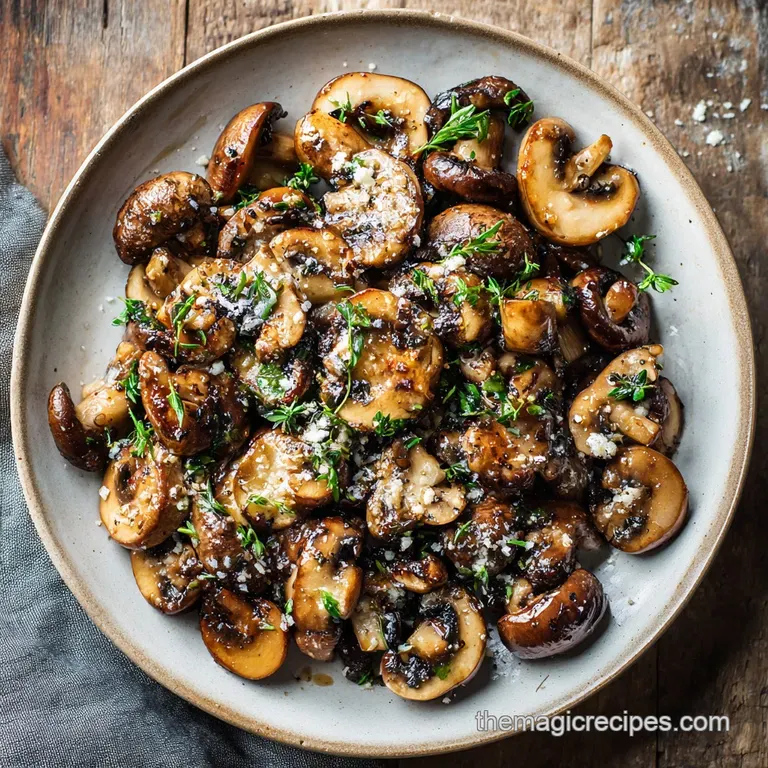
- Time: Active 5 minutes, Passive 0 minutes, Total 15 minutes
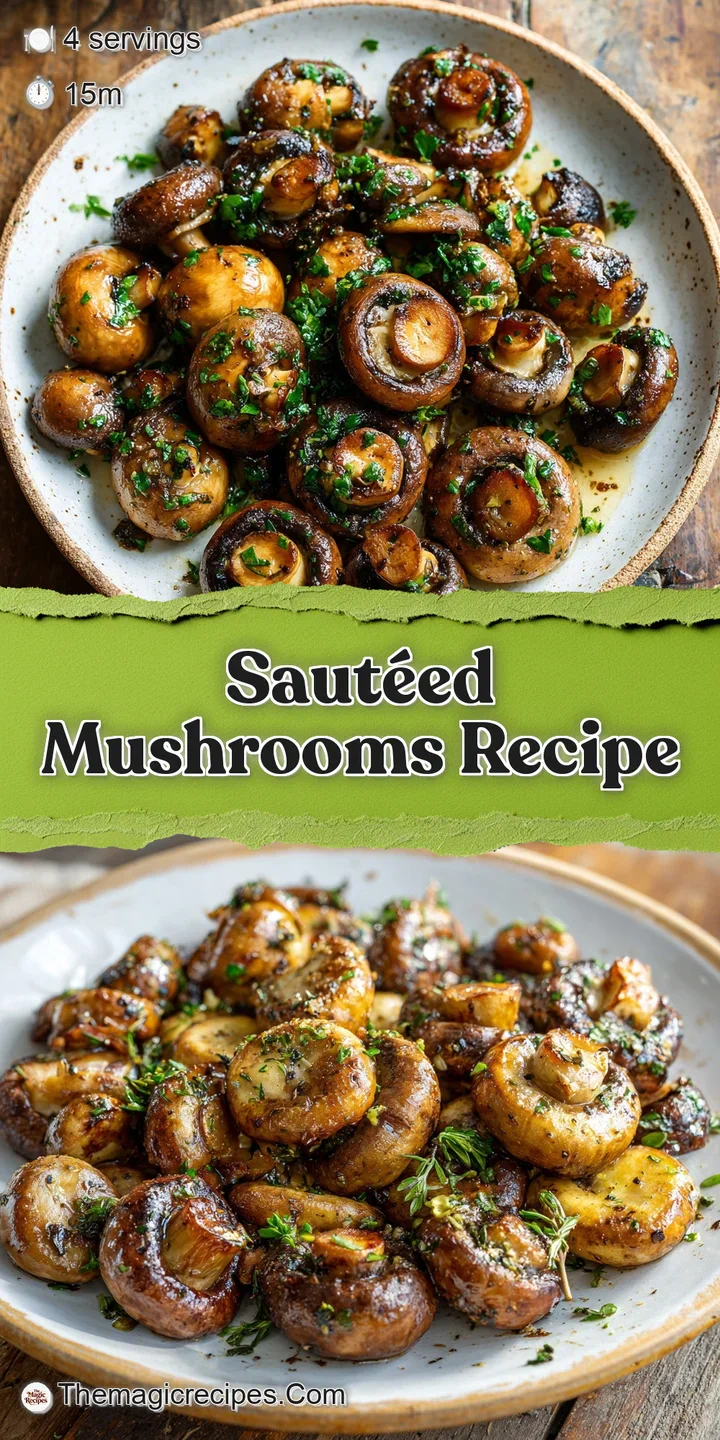
- Flavor/Texture Hook: Velvety centers with a buttery, golden brown exterior
- Perfect for: Weeknight side dish, steak topper, or a quick vegetarian protein boost
- Achieve Golden Brown Perfection with This Sautéed Mushrooms Recipe
- The Physics of the Fungal Sizzle
- Comparing Fast Searing Against Classic Slow Methods
- Understanding the Blueprint: Time and Prep Specifications
- The Component Analysis: Deep Dive into Ingredients
- The Flavor Foundation: Ingredients and Smart Substitutes
- Tools for the Job: Selecting Your Kitchen Arsenal
- Master the Pan: Step-by-Step Instructions for Success
- Solving Every Common Textural Problem and Error
- Making it Yours: Creative Twists and Ingredient Swaps
- Debunking Common Fungal Preparation Myths
- Best Methods for Storage and Waste Prevention
- The Final Flourish: Presentation Tips for the Table
- Recipe FAQs
- 📝 Recipe Card
Achieve Golden Brown Perfection with This Sautéed Mushrooms Recipe
The high pitched, aggressive sizzle of a mushroom hitting a scorching cast iron skillet is a sound that honestly makes my heart skip a beat. I used to be the person who tossed a pound of mushrooms into a cold pan with way too much oil, only to watch them boil in their own grey, murky juices.
It was heartbreaking, really. I thought I was doing it right, but I was just making mushroom soup without the broth.
Then I learned the "dry sear" secret from a chef friend, and everything changed. We aren't just cooking these; we are transforming them. When you get that pan hot enough, the mushrooms don't just sit there they sing.
The aroma of 1 lb Cremini mushrooms hitting the heat, followed by the earthy fragrance of fresh thyme and sharp garlic, is enough to pull anyone into the kitchen. Trust me, once you see that mahogany crust form, you’ll never go back to the soggy version again.
We're going to walk through how to treat these little flavor sponges with the respect they deserve. This isn't a "set it and forget it" situation; it’s a quick fire 10 minute dance that results in a side dish so good you might just eat the whole pan before the steak is even rested.
Let's get the pan screaming hot and crack on with the best way to make these beauties.
The Physics of the Fungal Sizzle
The Porosity Collapse: Mushrooms are nearly 90% water, and the dry heat method forces the internal air pockets to collapse quickly, allowing the moisture to evaporate before it can pool.
Delayed Osmosis: Adding 1/2 tsp fine sea salt only at the very end prevents the salt from drawing out moisture too early, which would otherwise steam the mushrooms instead of searing them.
Comparing Fast Searing Against Classic Slow Methods
| Method | Total Time | Resulting Texture | Flavor Profile |
|---|---|---|---|
| Fast Searing | 10 minutes | Firm, meaty, and browned | Intense, nutty umami |
| Classic Sauté | 20 minutes | Soft, tender, and moist | Mild, buttery, and earthy |
| Steaming | 15 minutes | Rubbery and slippery | Diluted and watery |
Building a great meal often requires choosing the right sidekick. If you're looking for something with a bit more heft to go alongside your main, you might find that this Beef Potato Casserole recipe provides the perfect starchy contrast to the earthy mushrooms.
Understanding the Blueprint: Time and Prep Specifications
When we talk about a 15 minutes total time, we really mean it. This is the ultimate weeknight solution because the prep is basically non existent. You spend 5 minutes slicing 1 lb Cremini or Baby Bella mushrooms into 1/4 inch thick slices, and the rest is just watching the magic happen in the pan.
The key to keeping this functional and family friendly is the equipment. A large skillet preferably stainless steel or cast iron gives the mushrooms enough room to breathe.
If you crowd 1 lb of mushrooms into a tiny 8 inch pan, you’re essentially creating a fungal mosh pit where nobody has room to brown. Space is your best friend here.
The Component Analysis: Deep Dive into Ingredients
| Ingredient | Science Role | Pro Secret |
|---|---|---|
| Cremini Mushrooms | Dense structure | These hold less water than white buttons, leading to a much better sear and meatier bite. |
| Balsamic Vinegar | Acidic deglazing | The 1 tsp of balsamic cuts through the 2 tbsp butter, brightening the entire flavor profile instantly. |
| Unsalted Butter | Fat emulsification | Adding this late prevents the milk solids from burning while providing a velvety mouthfeel. |
Choosing the right fat is a game of thermodynamics. We start with 1 tbsp extra virgin olive oil because it has a higher smoke point than butter. This allows us to get the pan hot enough to initiate the Maillard reaction without the fat breaking down and smoking out your kitchen.
The butter comes in later as a flavor finisher.
The Flavor Foundation: Ingredients and Smart Substitutes
- 1 lb Cremini or Baby Bella mushrooms: Sliced 1/4 inch thick. Why this? They have a deeper flavor than white mushrooms and maintain their shape better.
- Substitute: White button mushrooms. They are milder but work perfectly if that's what's in the fridge.
- 1 tbsp extra virgin olive oil: Used for the initial over high heat sear.
- Substitute: Avocado oil. It has an even higher smoke point for a really aggressive sear.
- 2 tbsp unsalted butter: Added at the end for richness.
- Substitute: Vegan butter or ghee. Ghee adds a nutty flavor without the risk of burning.
- 1 small shallot: Finely minced. Why this? Shallots offer a delicate sweetness that won't overpower the mushrooms like a yellow onion might.
- Substitute: The white part of 2 green onions for a sharper, fresher bite.
- 3 cloves garlic: Minced.
- Substitute: 1/2 tsp garlic powder if you're in a massive rush, though fresh is always better.
- 1 tsp fresh thyme leaves: Stripped from the stem.
- Substitute: 1/2 tsp dried thyme. Just be sure to crush it between your palms to wake up the oils.
- 1/2 tsp fine sea salt: To season.
- 1/4 tsp cracked black pepper: For a subtle heat.
- 1 tsp balsamic vinegar: To deglaze and add a touch of acid.
- Substitute: A splash of dry sherry or soy sauce for a different kind of umami depth.
Tools for the Job: Selecting Your Kitchen Arsenal
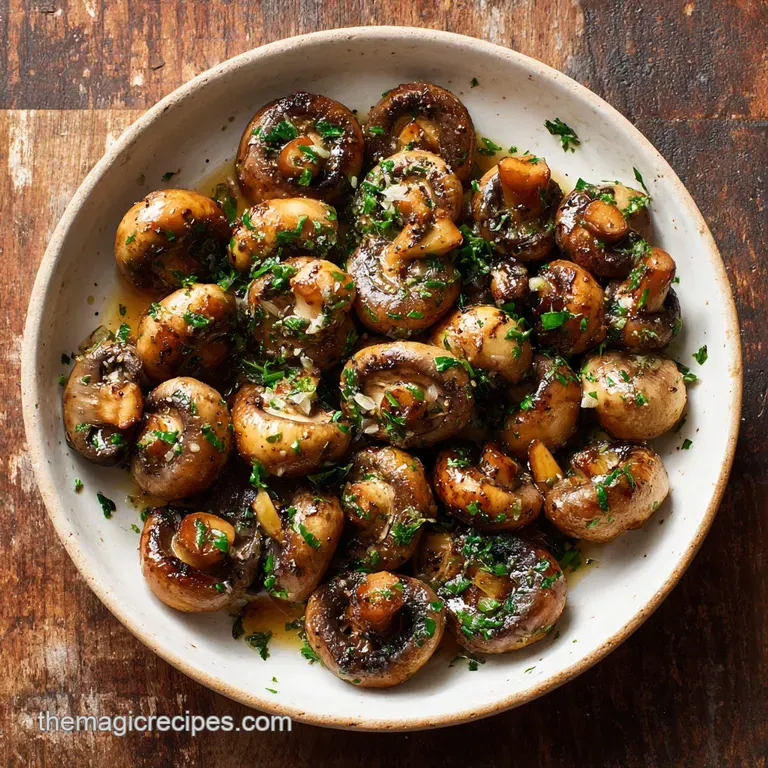
You don't need a professional kitchen, but a heavy bottomed pan is non negotiable. I usually reach for my 12 inch cast iron skillet because it retains heat like a champ. When you dump a pound of cold mushrooms into a thin, cheap pan, the temperature drops instantly, and you lose that sizzle.
A good sharp chef's knife is also vital. You want clean 1/4 inch slices, not jagged hacks. If the slices are uneven, the thin ones will turn to carbon while the thick ones stay raw. Consistency in your knife work leads to consistency in your browning. If you're looking for a totally different texture, like something ultra crisp, you should check out this Air Fryer Mushrooms recipe which uses a completely different set of tools.
Master the Pan: step-by-step Instructions for Success
- Prep the mushrooms. Wipe 1 lb Cremini mushrooms with a damp paper towel and slice them into 1/4 inch thick pieces. Note: Never soak them in water; they'll act like sponges.
- Heat the skillet. Set your large pan over medium high heat for 2-3 minutes until a drop of water flicked onto the surface dances and evaporates instantly.
- The initial sear. Add 1 tbsp extra virgin olive oil and immediately add the mushrooms in a single layer if possible.
- The "No Touch" phase. Let the mushrooms sit undisturbed for 3-4 minutes until the bottoms are deeply browned and start to release from the pan.
- Toss and repeat. Stir the mushrooms and let them cook for another 2-3 minutes until they have shrunk significantly and look mahogany in color.
- Add the aromatics. Lower the heat to medium and stir in 1 small minced shallot and 3 minced garlic cloves. Note: Adding these now prevents the garlic from turning bitter and burnt.
- The butter finish. Drop in 2 tbsp unsalted butter and 1 tsp fresh thyme leaves, stirring constantly until the butter is foamy and smells nutty.
- Deglaze the pan. Pour in 1 tsp balsamic vinegar and use a wooden spoon to scrape up any browned bits (fond) from the bottom of the pan.
- Final seasoning. Turn off the heat and sprinkle with 1/2 tsp sea salt and 1/4 tsp cracked black pepper.
- Rest and serve. Let the mushrooms sit in the warm pan for 1 minute until the butter has created a glossy, velvety glaze.
Solving Every Common Textural Problem and Error
Mushrooms can be finicky if you don't understand their water content. The most common mistake is impatience. If you start stirring the second they hit the pan, you're preventing the surface from reaching the temperatures needed for browning. You have to let them sit there and do their thing.
Another pitfall is the heat level. If you're too scared of the high heat, the mushrooms will just slowly leak water and sit in a grey puddle. Don't be afraid of that sizzle! It’s the sound of deliciousness being created.
Addressing the Soggy Texture
If your mushrooms are swimming in liquid, it’s usually because the pan wasn't hot enough or you overcrowded it. If this happens, don't panic. Increase the heat to high and let the liquid boil off. It won't be as perfect as a dry sear, but it'll save the dish from being a total loss.
Fixing Burnt Garlic Bitterness
Garlic burns in a heartbeat. If you see the garlic turning dark brown or black, the flavor will be acrid. The best fix? If it's early, wipe the pan and start the aromatic phase over.
If it's at the end, a squeeze of lemon juice can sometimes mask the bitterness, but it's better to just add the garlic late in the process as the recipe suggests.
| Problem | Root Cause | Solution |
|---|---|---|
| Mushrooms are grey/soggy | Pan was too cold or overcrowded | Cook in two batches or use higher heat next time. |
| Garlic is bitter | Added too early in the process | Add garlic only in the last 2 minutes of cooking. |
| Mushrooms lack flavor | Salted too early or not enough | Add salt only at the very end and use a splash of vinegar. |
Chef's Tip: Freeze your butter for 10 minutes before adding it to the pan. Cold butter creates a more stable emulsion with the mushroom juices, resulting in a thicker, glossier sauce that clings to the fungi.
Common Mistakes Checklist
- ✓ Never wash mushrooms under running water; use a damp cloth to remove dirt.
- ✓ Use a wide skillet to ensure mushrooms have enough surface area to sear.
- ✓ Resist the urge to stir for the first 3 minutes of cooking.
- ✓ Wait until the very end to add the salt to prevent premature moisture loss.
- ✓ Always use fresh herbs like thyme or rosemary for the best aromatic impact.
Making it Yours: Creative Twists and Ingredient Swaps
If you want to turn these into "Sautéed Mushrooms for Steak," I highly recommend adding a tablespoon of Worcestershire sauce during the deglazing phase. It adds a fermented, salty depth that pairs perfectly with a ribeye.
For a brunch vibe, toss these over a piece of sourdough toast with a dollop of ricotta cheese.
Scaling this recipe is straightforward, but you must be careful with the pan space. If you are doubling the recipe to serve 8 people, you absolutely must work in two batches. If you try to do 2 lbs of mushrooms in one 12 inch skillet, you will end up with a boiled mess.
Decisions for Your Dish
- If you want a richer flavor, add a splash of heavy cream at the very end.
- If you want maximum crunch, slice the mushrooms thicker (1/2 inch) and sear for longer.
- If you want a vegan version, swap the butter for a high-quality olive oil or coconut oil.
Debunking Common Fungal Preparation Myths
One major myth is that you can't wash mushrooms. While you shouldn't submerge them, a quick rinse under cold water is actually fine if you dry them immediately. However, for this specific sautéed method, keeping them dry is better because any extra surface moisture just delays the searing process.
Another myth is that mushrooms absorb all the oil you put in the pan. While they are porous, they eventually release that fat back out as they cook and shrink. This is why we start with just 1 tbsp of oil and add the butter at the end for flavor rather than as a primary cooking medium.
Best Methods for Storage and Waste Prevention
These mushrooms keep surprisingly well in the fridge for up to 4 days. Store them in an airtight glass container. When you're ready to eat them again, don't microwave them they'll turn rubbery.
Instead, toss them back into a hot, dry skillet for 2 minutes to wake up the fats and crisp up the edges again.
For zero waste, don't throw away the stems! Even if you prefer the look of just the caps, the stems are packed with flavor. Finely mince them and sauté them right along with the shallots, or save them in a freezer bag for the next time you make a vegetable or beef stock.
They provide a massive umami boost to any soup base.
The Final Flourish: Presentation Tips for the Table
Presentation matters, even for a quick weeknight side. I like to serve these in a shallow ceramic bowl rather than a flat plate to keep the buttery juices pooled around the mushrooms.
A final sprinkle of fresh thyme or a light dusting of parsley adds a pop of green that contrasts beautifully with the deep browns of the sear.
If you're serving these with steak, pile them right on top of the meat so the juices mingle. For a dinner party, you can even finish them with a tiny drizzle of truffle oil or a shave of fresh parmesan. The goal is to make them look as velvety and glistening as they taste.
Enjoy your perfectly seared, umami packed creation!
Recipe FAQs
Is it better to sauté mushrooms in butter or olive oil?
Start with olive oil, finish with butter. Olive oil has a higher smoke point, allowing you to achieve the necessary high heat for a proper sear without burning the fat; butter is added at the end for superior flavor and richness.
What is the secret to sauteed mushrooms?
Use high, consistent heat and avoid stirring initially. The secret is forcing the internal moisture out quickly through high heat so the mushrooms sear rather than steam; resist the urge to stir for the first 3 4 minutes.
What is the best way to cook mushrooms?
Sear them quickly in a large, hot, dry skillet. Ensure the mushrooms are in a single layer to maximize surface contact with the heat source; crowding the pan causes them to boil in their own released liquid.
What are some common mistakes when sautéing mushrooms?
The most common mistakes are overcrowding the pan and adding salt too early. Overcrowding lowers the pan temperature, causing steaming, while early salting draws out moisture prematurely, preventing that desirable mahogany crust.
When should I add salt to the mushrooms?
Add salt only at the very end, after they have browned. Salt draws out water via osmosis; adding it early means you are boiling your mushrooms in salty water instead of searing them.
How do I prevent my garlic from burning while sautéing mushrooms?
Add the garlic only during the last two minutes of cooking. Garlic has a much lower tolerance for high heat than mushrooms; cook the mushrooms fully, then reduce the heat before tossing in the minced aromatics.
Can I use frozen mushrooms instead of fresh ones?
No, stick with fresh for this high heat method. Frozen mushrooms are already partially waterlogged; sautéing them will inevitably lead to a soupy, spongy result, unlike the meaty texture achieved here.
Sauteed Mushrooms Recipe
Ingredients:
Instructions:
Nutrition Facts:
| Calories | 115 kcal |
|---|---|
| Protein | 3.2 g |
| Fat | 9.1 g |
| Carbs | 5.8 g |
| Fiber | 1.2 g |
| Sugar | 2.1 g |
| Sodium | 294 mg |
