Asparagus Soup: Silky, Vibrant, and Ready in Under One Hour

- Capturing Spring: Why This Silky Asparagus Soup is Essential
- Achieving the 'Liquid Silk' Texture: The Science Behind This Recipe
- What You Need: Essential Ingredients for the Perfect Asparagus Soup
- From Spear to Silky Smooth: Step-by-Step Cooking Method
- Keeping It Green: Chef’s Secrets and Troubleshooting Your Asparagus Soup
- Practical Prep: Storage, Freezing, and Reheating Guide
- Elevating the Bowl: Best Serving Suggestions
- Recipe FAQs
- 📝 Recipe Card
Capturing Spring: Why This Silky Asparagus Soup is Essential
Oh my gosh, you guys. The moment the leeks hit the butter and start to melt, followed by that sharp, fresh scent of cut asparagus? That is the exact aroma of true spring, captured perfectly in my kitchen.
The finished result is a vibrant, emerald bowl of comfort, utterly clean on the palate, and with a texture so smooth it defies explanation. Seriously, this isn't the fibrous, gritty, beige stuff your Aunt Mildred used to make.
This asparagus soup recipe is a total lifesaver because it’s incredibly fast, asking for less than 45 minutes of your precious time. We are using humble, cheap ingredients (well, unless you splurge on fancy English asparagus, which I always recommend), turning them into a healthy asparagus soup that feels decadent.
It’s perfect when you need a light starter for a big dinner or just want a clean eating soup recipe after a long week.
Ready to stop wasting those perfect seasonal spears on basic roasts? We are going to harness their delicate flavour and achieve a gorgeous, bright green finish that will make your competitors (ahem, your other home cook friends) truly jealous.
Let's crack on and make the absolute best creamy asparagus soup you've ever had and guess what? We barely use any actual cream.
Achieving the 'Liquid Silk' Texture: The Science Behind This Recipe
The biggest lie about vegetable soups is that they have to be thick and heavy. Nope. This easy asparagus soup recipe is all about light elegance, achieving its body not from flour or excessive dairy, but from carefully sautéed aromatics and the natural starch of the asparagus itself.
The main trick, which I swear by, is filtration. We blend until the soup screams, and then we filter out every tiny, undesirable bit of fibre.
The Triumph of Texture: Why Blending Technique Matters
You need to blend the cooked soup for longer than you think you do. Use a powerful high speed blender, run it for a solid 60 to 90 seconds, and watch the texture turn from chunky liquid to a smooth, aerated foam. But the real key to that "silky" restaurant grade finish? You must strain it.
Skipping the fine mesh sieve leaves those tiny, almost invisible fibres from the asparagus stalk and the leek root, which make the finished soup feel grainy and coat your tongue heavily.
Maximizing Seasonality: Selecting the Best English Asparagus
The best asparagus soup recipe starts with the best ingredient. Look for spears that are firm, bright green, and have tightly closed tips. If you buy limp, tired asparagus, your soup will taste watery and slightly bitter, no matter how much you season it.
I always try to source local, seasonal asparagus; it’s just infinitely sweeter and more tender.
Leeks vs. Onions: Building the Aromatic Base
While you could use a standard onion, leeks are absolutely superior for this application. They offer a much sweeter, more nuanced flavour that melts seamlessly into the final soup without the sharp bite of a typical white onion.
They are subtle, allowing the asparagus to truly shine, which is the whole point of a spring asparagus recipe. Make sure you wash those leeks meticulously , as grit is the enemy of silky soup.
The Critical Role of Asparagus Ends (Flavor Extraction)
Okay, here’s a tip most recipes miss: when you snap off the woody, fibrous ends of your asparagus (which you always should!), don't toss them immediately. Those bits still hold plenty of concentrated flavour.
Toss them into the stock pot right alongside the usable stalks and let them simmer for 10 minutes. Just remember to fish them out before you transfer the rest of the soup to the blender!
Skip the Cream: Achieving Natural Richness with Stock and Butter
We’re aiming for a healthy asparagus soup here, so we’re not dousing everything in heavy cream. We build richness right from the beginning by gently cooking the leeks in butter and olive oil until they are fully broken down.
The body comes from the asparagus stalks and the careful reduction of good quality stock, meaning the added cream (or coconut milk if going vegan) is merely a finish, not the backbone.
What You Need: Essential Ingredients for the Perfect Asparagus Soup
This ingredient list is short and sweet because the star deserves the spotlight. When focusing on a specific vegetable, quality truly trumps quantity.
| Ingredient | Substitute (Use This Instead) | Notes |
|---|---|---|
| Leeks | 1 Small White Onion or 3 Shallots | Must be sautéed until completely soft. |
| Vegetable Stock | Light Chicken Stock | Adds depth but prevents the soup from being vegetarian. |
| Unsalted Butter | Ghee or Good Quality Olive Oil | Butter adds better mouthfeel and richness. |
| Heavy Cream | Full Fat Coconut Milk (for vegan) or Crème Fraîche | Adds richness at the end; omit entirely for ultra light soup. |
Asparagus Prep: Trimming and Snapping Notes
The easiest way to determine where the woody part ends is the snap test. Hold the asparagus spear near the bottom and middle, then bend it until it snaps naturally. That point is where the woody fibre ends, and the tender stalk begins. Don't toss those tips!
We cut off the top inch of the spears and blanch them separately for a vibrant, perfect garnish.
Choosing the Right Cooking Liquid (Vegetable vs. Light Chicken Stock)
I usually reach for high-quality, low-sodium vegetable stock because it keeps the flavour profile clean and bright, perfect for a spring dish. If you absolutely want a richer, deeper base, light chicken stock works wonders, but ensure it's not overly concentrated.
The stock needs to enhance the asparagus, not taste like roast dinner.
Ingredient Swaps: Using Shallots Instead of Leeks
If you can’t find leeks, or just hate dealing with washing the sandy layers, two or three finely diced shallots make an excellent replacement. Shallots are much milder and sweeter than regular onions, making them ideal for a delicately flavoured soup base.
You’ll want to cook them until they are completely translucent, just like the leeks.
The Importance of Good Quality Butter
A quick note on the fat: we are starting by sweating the aromatics in a mixture of good quality unsalted butter and a touch of olive oil. The butter adds essential richness right at the start. Since this is a simple recipe, every ingredient matters, and cheap butter tastes exactly like cheap butter.
From Spear to Silky Smooth: step-by-step Cooking Method

This process is straightforward, but pay close attention to the details in Step 3 that’s where the magic happens.
Step 1: Gently Sweating the Aromatics (Do Not Brown)
Melt the butter and olive oil in your Dutch oven over medium low heat. Add the sliced leeks and shallots with a good pinch of salt. This is crucial: Cook them for 8 to 10 minutes, stirring often, until they are fully translucent and sweet.
The moment they start to caramelize or get any colour, you’ve gone too far, and your soup will look muddy.
Step 2: Simmering for Peak Tenderness and Flavor Infusion
Add the roughly chopped asparagus stalks and the reserved woody ends (remember to fish those out later!) to the pot. Stir for a minute, then pour in the stock. Bring this to a gentle simmer, cover, and cook for 10 to 12 minutes.
The asparagus is done when a piece is easily pierced with a fork it should be very tender but not totally mushy.
Step 3: The Blending and Straining Imperative (Key to Smoothness)
Remove the pot from the heat and take out those woody ends you simmered for extra flavour. Carefully transfer the hot liquid to a high speed blender; if you’re working in batches, please be careful! I once forgot to hold the lid down properly and had green steam covering my ceiling.
Blend on the highest setting until absolutely smooth, about a minute and a half.
Chef’s Note: Now, for the non-negotiable step: pour the blended soup slowly through a fine mesh sieve into a clean bowl or back into the pot. Use the back of a ladle to push the liquid through, leaving behind all the fibrous bits. Discard that fibrous paste.
This guarantees the liquid silk texture we crave.
Step 4: Final Seasoning and The Vibrant Green Finish
Return the strained soup to very low heat. Stir in the heavy cream (or coconut milk) and the fresh lemon juice. Heat gently for 2 minutes do not let it boil vigorously now, as you risk scorching the dairy or dulling the colour. Taste and adjust the salt and pepper until it sings.
The final touch of lemon is the secret to a beautifully bright asparagus soup, lifting the earthiness immediately.
Keeping It Green: Chef’s Secrets and Troubleshooting Your Asparagus Soup
Preventing Oxidation: How to Maintain that Emerald Hue
Nothing is sadder than a beautiful emerald soup turning muddy olive green. The key is speed and temperature control. We blanch the tips separately and shock them immediately in ice water. For the main batch, once the soup is blended and strained, cool it down quickly if you are not serving immediately.
Do not leave it sitting hot on the stovetop , as residual heat dulls the colour instantly.
The Salt Test: Achieving Spot-On Seasoning
Undersalted vegetable soup tastes watery and flat; it’s a tragedy, truly. Because stock and asparagus stalks contain natural sodium, you must season incrementally. Taste the soup after straining and after adding the cream and lemon.
That final dash of kosher salt is often what takes the flavour from "good" to "wow."
Fixing Fibrous Soup (What Went Wrong and How to Correct It)
If your finished soup feels gritty, you either used very old, tough asparagus, or (more likely) you skipped the fine mesh straining step. If you're determined to fix it, you can reheat it slightly and pass it through the sieve again.
Alternatively, for thickness, you can blend in a small, previously boiled potato to disguise the texture.
Practical Prep: Storage, Freezing, and Reheating Guide
Fridge Life and Air-Tight Containers
This asparagus soup holds up beautifully in the fridge. Let it cool completely, transfer it to an airtight container (I prefer glass containers to prevent staining), and it will keep well for about 3 to 4 days.
If the colour starts to look less vibrant after a couple of days, just embrace the natural oxidation it still tastes incredible.
Best Practices for Long Term Freezing
But does it freeze well? You bet it does! For the absolute best results, freeze the soup before you add the cream or the final lemon juice. Cool the strained soup completely and pour it into freezer safe containers, leaving an inch of headspace for expansion. It will last perfectly for three months.
Gently Reheating Without Breaking the Emulsion
When reheating frozen soup, thaw it in the fridge overnight. Heat the soup gently on the stovetop over low heat, stirring frequently. Once heated through (do not bring it to a rolling boil!), remove it from the heat and stir in the cream and lemon juice right before serving.
This prevents the cream from separating and keeps the texture ultra smooth.
Elevating the Bowl: Best Serving Suggestions
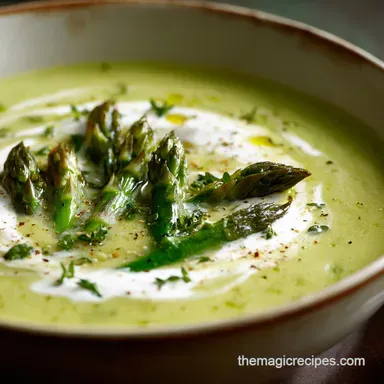
For a light lunch, all this silky asparagus and leek soup needs is a thick slab of buttered sourdough bread. If you’re making this for guests, go a little extra with the garnish. Drizzle a tiny bit of high-quality extra virgin olive oil or even some pumpkin seed oil over the top for a gorgeous colour contrast.
Don’t forget those perfectly blanched asparagus tips and a scattering of fresh chives!

Recipe FAQs
How do I ensure my Asparagus Soup stays a vibrant, bright green color?
The key to maintaining that signature bright green is to avoid overcooking the asparagus; it should only be simmered until tender, about 3 to 5 minutes. After blending, you can sometimes "shock" the soup's base by adding an ice cube or two just before the final puree, which halts the cooking process quickly.
A final quick blend of raw parsley or basil can also boost the green hue.
Why is my soup gritty or fibrous, even after blending?
Grittiness almost always comes from using the woody, tough ends of the asparagus spears, which contain indigestible fibers. Ensure you trim these white bottoms completely before cooking. For a truly "silky" texture, pass the fully blended soup through a fine mesh sieve or chinoise before serving.
Can I make this "Emerald Spring" soup completely vegan or dairy-free?
Absolutely. Substitute the small amount of butter used for sautéing the leeks with olive oil or a vegan butter alternative. Ensure you use a high-quality vegetable stock instead of chicken stock for the liquid base.
If you desire extra richness, a splash of full fat coconut milk or cashew cream works beautifully at the end.
How should I store and reheat leftover Asparagus Soup?
Store cooled soup in an airtight container in the refrigerator for up to 4 days. When reheating, do so gently over low heat, avoiding a rolling boil, as this can dull the flavor and potentially break the emulsion if you used any cream. If the soup is too thick upon reheating, add a small splash of stock or water.
Can I freeze Asparagus Soup, and what is the best technique?
Yes, this soup freezes very well. The best technique is to freeze the soup without adding any final cream or dairy components, as dairy tends to separate upon thawing. Cool the soup completely, transfer to freezer safe bags or containers, and consume within 3 months for peak freshness.
I don't have leeks. What is the best substitute for sautéing?
While leeks offer a unique sweetness, sweet yellow onions or shallots can be used as a close substitute. Ensure you mince them finely and sauté them very slowly until they are fully softened and translucent. This draws out their natural sweetness and creates the necessary foundational flavor layer.
My soup is a little too thin. How can I thicken it without adding heavy cream?
For a non-dairy thickener, try adding a small, cooked and peeled potato (like a Yukon Gold) to the blender along with the asparagus, which adds body without altering the flavor. Alternatively, you can always simmer the soup, uncovered, for an extra 5 to 10 minutes to naturally reduce the liquid and concentrate the flavor.
Silky Asparagus Soup Recipe
Ingredients:
Instructions:
Nutrition Facts:
| Calories | 265 kcal |
|---|---|
| Protein | 6.9 g |
| Fat | 15.1 g |
| Carbs | 25.3 g |
