Smoked Beef Jerky: Smoky and Savory
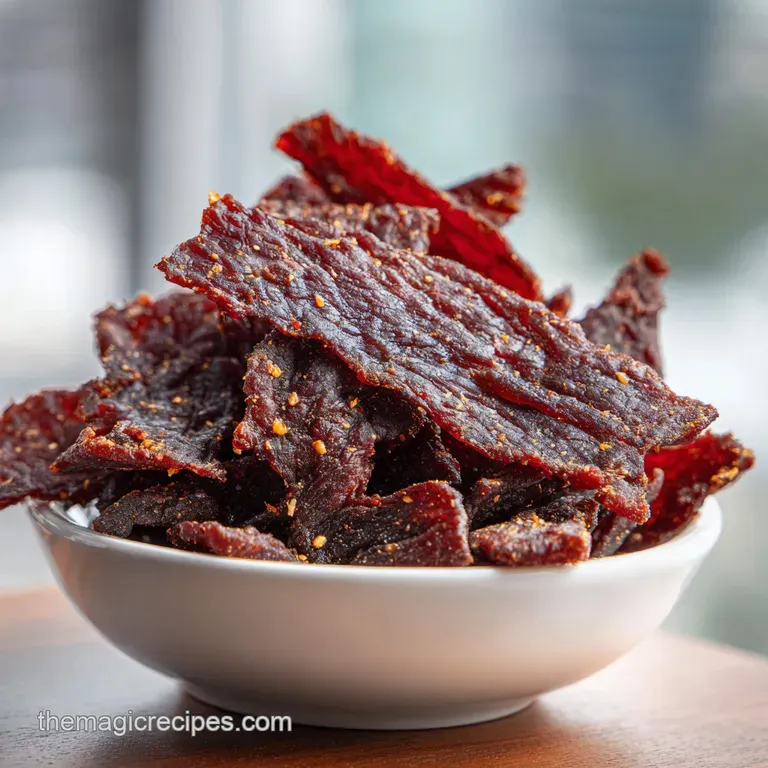
- Time: Active 20 minutes, Passive 3 hours 30 mins, Total 3 hours 50 mins
- Flavor/Texture Hook: Smoky, leathery, and perfectly chewy
- Perfect for: High protein meal prep and family road trips
- Understanding the Science Behind the Smoke
- Deep Dive into Components
- Choosing High Quality Ingredients for Maximum Flavor
- Essential Minimal Tools for a Smooth Smoking Process
- A Practical Guide from Prep to Final Plate
- Fixing Texture Problems and Avoiding Common Mistakes
- Creative Ways to Mix Up Your Flavor Profile
- Practical Tips for Storage and Zero Waste Cooking
- Smart Pairing Ideas for Your Homemade Smoky Snack
- Troubleshooting Common Issues
- Debunking Jerky Myths
- Recipe FAQs
- 📝 Recipe Card
Understanding the Science Behind the Smoke
Before we start slicing, we need to talk about why this process actually works. Jerky isn't "cooked" in the traditional sense where we look for a sear; it is cured and dried. We are essentially managing the exit of moisture while inviting smoke and salt to move in.
- Hygroscopic Action: The salt in the soy sauce and the pink curing salt pulls moisture out of the muscle fibers, which prevents bacterial growth.
- Protein Denaturation: Maintaining a steady 160°F allows the proteins to slowly tighten and dry without becoming brittle or "case hardened."
- Bacterial Inhibition: Using Pink Curing Salt #1 (sodium nitrite) provides a safety net during the long, low temperature drying phase, keeping the meat safe to eat.
- Surface Evaporation: Airflow is just as important as heat; by not overlapping the strips, we ensure the moisture has a clear path to escape.
| Thickness | Internal Temp | Rest Time | Visual Cue |
|---|---|---|---|
| 1/8 inch | 160°F (Smoker) | 10 mins | Bends without snapping, shows white fibers |
| 1/4 inch | 160°F (Smoker) | 15 mins | Deep mahogany color, firm to the touch |
| 1/16 inch | 160°F (Smoker) | 5 mins | Crackles slightly when bent |
Managing the temperature is the most important part of this entire project. If your smoker spikes too high, you’ll essentially be making tiny, very dry steaks instead of jerky. If it stays too low, the meat won’t dry out fast enough to stay safe.
Keeping it at that 160°F sweet spot ensures the texture stays leathery rather than crunchy.
Deep Dive into Components
When we look at the ingredient list, it might seem like a lot of liquids, but each one has a specific job to do. We aren't just adding flavor; we are creating a chemical environment that preserves the meat.
| Ingredient | Science Role | Pro Secret |
|---|---|---|
| Soy Sauce | Primary Salt Source | Use Tamari for a deeper, richer color and gluten-free option. |
| Brown Sugar | Counteracts Salt | This helps the "bend" of the jerky; without it, the meat feels too stiff. |
| Pink Curing Salt | Preservative | Always measure this exactly; it’s what gives jerky its classic red hue. |
Every component in the marinade is working toward that final texture. The Worcestershire sauce provides the acidity needed to break down some of the tougher connective tissues in the round, while the black pepper adds a slow building heat that lingers after the smoke.
Choosing high-quality Ingredients for Maximum Flavor
For this Smoked Beef Jerky, we are sticking to lean, accessible cuts. Fat is the enemy of jerky because it doesn't dry out; it goes rancid. That’s why we want the leanest beef possible.
- 2 lbs Eye of Round or Top Round beef: Why this? It's incredibly lean and has a uniform grain that makes slicing easy.
- Substitute: Flank steak (Note: It’s pricier and has more internal fat).
- 0.5 cup Soy Sauce: Why this? Provides the essential salt and deep umami base.
- Substitute: Liquid Aminos (similar saltiness, slightly sweeter).
- 0.25 cup Worcestershire sauce: Why this? Adds fermented depth and necessary acidity.
- Substitute: Balsamic vinegar with a pinch of salt.
- 1 tbsp Black Pepper: Why this? Coarsely cracked pepper provides a textured "bite."
- Substitute: White pepper (for a more earthy, less sharp heat).
- 1 tbsp Brown Sugar: Why this? Balances the salt and helps the surface caramelize.
- Substitute: Honey or Maple Syrup (adds a distinct floral note).
- 1 tsp Garlic Powder: Why this? Distributes savory flavor more evenly than fresh garlic.
- Substitute: Granulated garlic (use slightly more).
- 1 tsp Onion Powder: Why this? Provides a foundational savory note without moisture.
- Substitute: Shallot powder (for a more refined, onion like flavor).
- 1 tsp Liquid Smoke: Why this? Reinforces the natural wood smoke for a bolder profile.
- Substitute: Smoked paprika (adds color and a milder smoke).
- 0.5 tsp Pink Curing Salt #1: Why this? Crucial for safety and that signature pinkish color.
- Substitute: Celery powder (Note: Harder to measure for precise curing).
Chef's Tip: Freeze your beef for about 45 minutes before slicing. It won't be a solid block of ice, but it will be firm enough that your knife won't slide around, allowing you to get those perfect 1/8 inch strips every single time.
Essential Minimal Tools for a Smooth Smoking Process
You don't need a professional smokehouse to do this. I'm a big fan of keeping things functional. A sharp knife is your best friend here, and a simple wire rack can make the difference between jerky that dries evenly and jerky that stays soggy on the bottom.
- Sharp Chef's Knife: A dull knife will tear the meat fibers rather than cutting them cleanly.
- Gallon sized Zip top Bag: This is the most efficient way to marinate because you can squeeze the air out, ensuring every inch of beef is in contact with the liquid.
- Wire Cooling Racks: If your smoker grates have wide gaps, these racks keep the thin strips from falling through while allowing smoke to circulate.
- Smoker or Pellet Grill: Whether it's a Traeger or a simple offset smoker, as long as it can hold 160°F, it'll work.
If you find yourself with extra beef after a big grocery haul, you don't have to turn it all into jerky. For a faster weeknight fix using similar beef cuts, try this One Pot Beef Rice that's ready in a flash.
A Practical Guide from Prep to Final Plate
Now, let's get into the work. Follow these steps closely, and don't rush the drying time. The goal is steady evaporation, not a quick bake.
- Partial Freeze. Place the 2 lbs of beef in the freezer for 45 to 60 minutes. Note: This makes the meat firm, which is the only way to get consistent 1/8 inch slices.
- Slice Against Grain. Using your sharpest knife, slice the beef into 1/8 inch thick strips. Look for the long muscle fibers and cut across them so the jerky is easier to chew.
- Mix Marinade. In a gallon zip top bag, combine the soy sauce, Worcestershire, black pepper, brown sugar, garlic powder, onion powder, liquid smoke, and pink curing salt. Note: Ensure the curing salt is fully dissolved.
- Incorporate Beef. Add the beef strips to the bag. Massage the bag for 2 minutes to ensure every piece is coated.
- Refrigerate. Let the beef marinate for at least 4 hours, but 12 hours is even better for deep flavor.
- Preheat Smoker. Set your smoker to 160°F using hickory or cherry wood. Wait for the smoke to turn thin and blue before adding the meat.
- Arrange Strips. Lay the strips out on wire racks or directly on the grates. Leave at least 1/2 inch of space between strips for airflow.
- Smoke and Monitor. Close the lid and smoke for 3 to 4 hours. Note: Humidity in the air can affect this, so check at the 3 hour mark.
- Test for Doneness. Take a piece out and let it cool for a minute. Bend it slowly; it should show white fibers and resist snapping.
- Cool Down. Let the Smoked Beef Jerky cool completely on the racks before bagging. Note: This prevents condensation from making the jerky soggy in storage.
Chef's Tip: If you want a more "old fashioned" look, coarsely crack your black pepper using the bottom of a heavy skillet rather than a grinder. Those big chunks of pepper provide a fantastic textural contrast to the smooth meat.
Fixing Texture Problems and Avoiding Common Mistakes
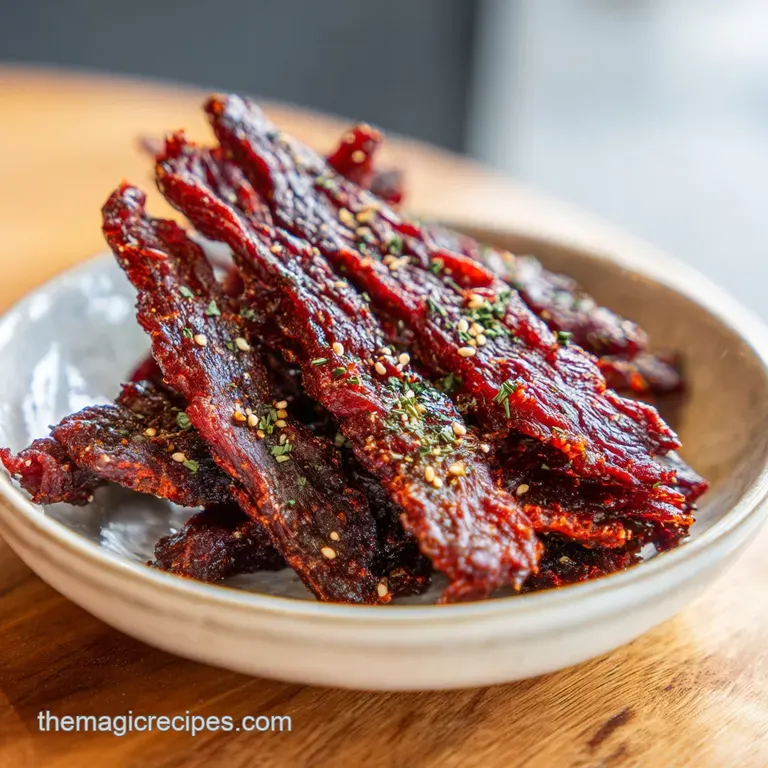
Jerky can be temperamental. If the air is too humid, it takes forever. If the meat is too fatty, it feels greasy. But most problems have a quick fix.
Why Your Jerky Turned Out Brittle
If your jerky snaps like a cracker, it has been over dried. This usually happens if the slices were thinner than 1/8 inch or if the smoker temperature climbed above 170°F. While you can't "un dry" it, you can use these brittle pieces as a flavor base for soups or stews.
Next time, pull the meat when it still has a bit of "give" to it.
Why the Jerky Feels Greasy
This is almost always a result of using a cut with too much intramuscular fat (marbling) or failing to trim the exterior fat cap. Fat does not evaporate; it melts and coats the meat. If this happens, use a paper towel to blot the strips while they are still warm to remove as much oil as possible.
| Problem | Root Cause | Solution |
|---|---|---|
| Too Salty | Over marinating | Limit marinating time to 12 hours max or reduce soy sauce. |
| Tough Chew | Sliced with the grain | Always slice across the muscle fibers (perpendicular). |
| Soggy/Soft | Under dried | Increase time by 30 mins or check smoker airflow. |
Common Mistakes Checklist
- ✓ Never skip the partial freeze; warm beef is impossible to slice thinly and evenly.
- ✓ Don't skip the pink curing salt if you plan on keeping this in the pantry; it's a vital safety component.
- ✓ Avoid overcrowding the grates; if air can't circulate, the jerky will steam instead of dry.
- ✓ Let the jerky cool completely before putting it in a bag, or the residual heat will create moisture.
- ✓ Trim every single bit of visible white fat before you start slicing.
Creative Ways to Mix Up Your Flavor Profile
Once you’ve mastered the base Smoked Beef Jerky, you can start playing with the "Sweet and Heat" balance. I love adding a tablespoon of Sriracha or a teaspoon of red pepper flakes to the marinade for a version that wakes up the taste buds.
If you’re a fan of a more "Teriyaki" style, swap half the soy sauce for pineapple juice the enzymes in the juice also help tenderize the meat even further.
Another popular variation is the "Dr Pepper" jerky. You replace the brown sugar and some of the soy sauce with a reduced Dr Pepper syrup. It adds a complex, cherry like sweetness that pairs beautifully with the hickory smoke.
Just remember that adding more sugar makes the jerky more prone to sticking to the grates, so a light spray of oil on the racks is a smart move.
If you end up with extra eye of round after trimming your jerky strips, it’s also the star of a French dip sandwich that uses that same lean profile to perfection.
| Method | Time | Texture | Best For |
|---|---|---|---|
| Smoker (160°F) | 3.5 hours | Deep smoke flavor, leathery | Traditionalists |
| Oven (170°F) | 4 hours | Clean flavor, very consistent | No smoker households |
| Dehydrator | 6 hours | Uniform drying, no smoke | Minimal supervision |
Practical Tips for Storage and Zero Waste Cooking
Storing your Smoked Beef Jerky properly is the difference between a snack that lasts a month and one that lasts a week. Because we used curing salt, this jerky is more stable than "natural" versions, but it still loves a cool, dry place.
- Pantry
- In an airtight container or zip top bag, it will stay fresh for about 1 to 2 weeks. Adding a small silica gel packet (the kind you find in commercial jerky) helps tremendously.
- Fridge
- This is my preferred method. It will stay great for up to 1 month. The cold also makes the texture slightly firmer, which I personally enjoy.
- Freezer
- You can freeze jerky for up to 6 months. It doesn't really "freeze" solid because of the low moisture content, so you can eat it almost straight from the freezer.
Zero Waste Tips: Don't throw away those small, irregular scraps of beef that are too tiny for strips! Toss them in the marinade anyway. These "jerky bits" are incredible when tossed into a salad or used as a smoky topping for a baked potato.
If you have leftover marinade that hasn't touched the raw meat yet, you can simmer it down into a thick glaze for grilled chicken. If it has touched the meat, discard it immediately.
Smart Pairing Ideas for Your Homemade Smoky Snack
While Smoked Beef Jerky is a star on its own, it plays very well with others. If you’re building a "man cave" charcuterie board, pair this jerky with a sharp, aged cheddar or a smoky gouda. The fats in the cheese help balance the lean, salty profile of the beef.
For drinks, a cold, hoppy IPA is the classic choice. The bitterness of the hops cuts right through the salt and umami of the soy sauce. If you prefer something non alcoholic, a crisp ginger ale or a sparkling apple cider provides a sweet, bubbly contrast to the deep smoke.
You can even chop up a few strips of jerky and stir them into a bloody mary for the ultimate brunch garnish. It's functional, tasty, and definitely a conversation starter!
Troubleshooting Common Issues
| Issue | Solution |
|---|---|
| Why does slicing against the grain change the chew | Think of muscle fibers like a bundle of straws. If you slice "with" the grain, you are trying to bite through the entire length of the straw, which is tough. If you slice "against" the grain, you are |
| How does the marinade provide a "shortcut" to flavor | The salt and acid in the marinade work together to create "osmotic pressure." This essentially forces the flavors of the garlic, onion, and smoke deep into the center of the meat strips, rather than j |
| Why is 160°F the "Magic Number" for safety and speed | At 160°F, you are high enough to kill off common pathogens like E. coli and Salmonella relatively quickly, but you are low enough that the moisture can evaporate slowly. If you go higher, the outside |
Debunking Jerky Myths
Many people think that you need a specialized "jerky gun" or expensive equipment to get good results. That is simply not true. Hand sliced beef has a much better texture than the ground beef sticks you see in stores. Another myth is that jerky "never goes bad." While it is shelf stable, moisture is the enemy.
Without curing salt and proper drying, homemade jerky can mold, so always check your pieces before snacking. Finally, the "white stuff" on jerky isn't always mold sometimes it's just salt or fat crystallizing on the surface (called "efflorescence"), but when in doubt, throw it out!
Recipe FAQs
How long to smoke beef jerky on a smoker?
Smoke for 3 to 4 hours. The process is complete when the strips bend easily and display white fibers without snapping.
Which beef jerky is best for diabetics?
The standard recipe is generally unsuitable due to the brown sugar content. You can omit the brown sugar from the marinade to significantly reduce the glycemic impact while maintaining the savory profile of the soy and Worcestershire base.
Is it true that beef jerky is a good source of iron for anemia?
Yes, it is a concentrated source of heme iron. Because the moisture is removed, the protein and mineral content per ounce is higher compared to fresh meat.
Is beef jerky good for cholesterol?
No, it should be consumed in moderation due to sodium levels. While trimming every bit of visible white fat helps minimize saturated fats, the curing salt and soy sauce create a very high sodium snack that may impact heart health.
Is it true that you must use a dehydrator to get the right texture?
No, this is a common misconception. A smoker at 160°F using hickory or cherry wood provides superior flavor and identical drying capabilities to a dehydrator.
How to ensure the jerky does not turn out tough or leathery?
Slice your beef against the grain into uniform 1/8 inch thick strips. If you enjoyed mastering the smoky adobo technique in other dishes, you will appreciate how this precision cutting ensures consistent texture throughout the drying process.
How to prevent the jerky from steaming instead of drying?
Lay the strips across wire racks without overlapping. Proper airflow is essential for the moisture to escape, so avoid overcrowding the smoker grates at all costs.
Smoked Beef Jerky Recipe
Ingredients:
Instructions:
Nutrition Facts:
| Calories | 82 kcal |
|---|---|
| Protein | 13.2 g |
| Fat | 2.1 g |
| Carbs | 1.9 g |
| Fiber | 0.1 g |
| Sugar | 1.3 g |
| Sodium | 485 mg |
