Spatchcocked Turkey: Oven-Roasted Perfection
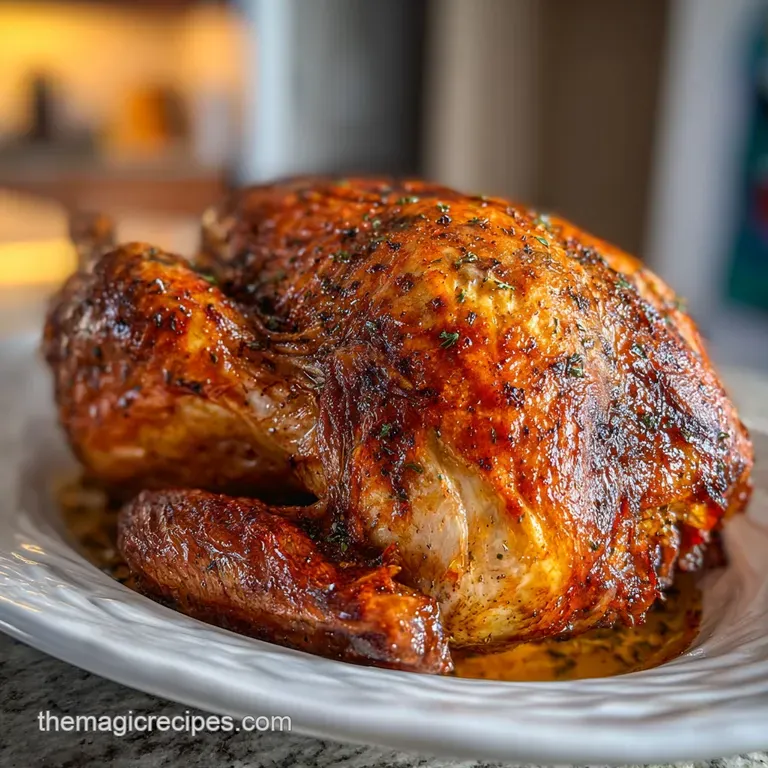
- Time: Active 30 minutes, Passive 1 hours 30 mins, Total 2 hours
- Flavor/Texture Hook: Shatter crisp skin with herb infused, velvety meat
- Perfect for: Stress free holiday hosting or a high protein meal prep
- Physics Of The Flat Roast Profile
- Kitchen Timings And Yield Data
- Essential Ingredients For Maximum Flavor
- Components And Smart Substitutions
- Tools For A Successful Spatchcock Prep
- Mastering The Bird Flattening Process
- Solving Common Roast Turkey Problems
- Scaling For Different Group Sizes
- Debunking Common Turkey Roasting Misconceptions
- Safe Storage And Zero Waste Ideas
- Serving Your Bird With Professional Flair
- Very High in Sodium
- Recipe FAQs
- 📝 Recipe Card
Physics Of The Flat Roast Profile
Surface Area Dynamics: By removing the backbone, you increase the surface area exposed to direct heat, which allows the bird to cook from both sides simultaneously.
Thermal Equilibrium: Flattening the turkey places the legs and breasts on the same horizontal plane, ensuring the legs (which need more heat) aren't shielded by the cavity.
Moisture Retention: The faster cook time prevents the lean breast proteins from denaturing and squeezing out their moisture before the dark meat reaches its safe temperature.
Skin Dehydration: Exposing all the skin upward allows moisture to evaporate quickly, leading to an immediate sizzle and a much crispier finish.
| Method | Cook Time (13 lb) | Evenness | Skin Texture |
|---|---|---|---|
| Spatchcocked | 80-90 minutes | Very High | Maximum Crisp |
| Classic Roast | 3-4 hours | Moderate | Variable |
| Slow Cooker | 6-8 hours | Low | Soft/Rubberish |
It is clear that the flat profile wins on speed and texture. If you are looking for a deeper flavor profile to go with this, our Turkey Injection Marinade recipe is a great way to add moisture if you decide to skip the herb butter step.
Kitchen Timings And Yield Data
When you're working against the clock on a busy afternoon, these metrics are your best friend. A 13 lb (5.9 kg) turkey is the "sweet spot" for this method because it fits comfortably on a standard rimmed baking sheet without hanging over the edges.
It provides enough for 12 generous servings, which is usually enough for a family dinner plus those mandatory leftovers for sandwiches the next day.
- Weight Checkpoint: 13 lb (5.9 kg) turkey is ideal for even heat distribution.
- Temperature Checkpoint: Pull the bird at 160°F (71°C) in the breast; carryover cooking hits 165°F.
- Time Checkpoint: Start checking for doneness at the 70 minute mark to prevent over browning.
Essential Ingredients For Maximum Flavor
| Ingredient | Science Role | Pro Secret |
|---|---|---|
| Baking Powder | pH Alteration | Breaks down skin proteins for a bubbly, extra crisp texture. |
| Kosher Salt | Denaturation | Draws out moisture then re absorbs it to season the deep tissue. |
| Unsalted Butter | Fat Medium | Carries fat soluble herb flavors deep under the skin. |
| Lemon Zest | Acid Brightness | Cuts through the heavy fats of the turkey and butter. |
Choosing the right components makes the difference between a functional meal and a memorable one. I always opt for kosher salt over table salt because the larger crystals are easier to distribute evenly without over salting.
Components And Smart Substitutions
- 13 lb whole turkey, thawed completely: Why this? The center must be ice free for the spatchcocked turkey to cook safely. (Sub: Two 6 lb roasting chickens for a faster, smaller meal).
- 3 tbsp kosher salt: (Sub: 2 tbsp sea salt it’s finer, so use less).
- 1 tbsp baking powder: (Sub: Skip if necessary, but skin will be less "bubbly").
- 1 tbsp black pepper, freshly cracked: (Sub: White pepper for a milder, floral heat).
- 1 tsp dried thyme, pulverized: (Sub: 1 tbsp fresh thyme leaves).
- 1 cup unsalted butter, softened: Why this? Softened butter allows for easy mixing with herbs without melting prematurely. (Sub: Ghee for a higher smoke point).
- 2 tbsp fresh sage, finely minced: (Sub: 1 tsp dried sage).
- 1 tbsp fresh rosemary, finely minced: (Sub: Fresh oregano for a Mediterranean vibe).
- 4 cloves garlic, microplaned: (Sub: 1 tsp garlic powder mixed into the salt).
- 1 large lemon, zested: (Sub: Orange zest for a sweeter, autumnal aroma).
- 2 large yellow onions, thickly sliced: (Sub: Red onions or leeks).
- 3 medium carrots, cut into 2 inch chunks: (Sub: Parsnips for an earthier flavor).
- 3 stalks celery, cut into 2 inch chunks: (Sub: Fennel bulbs for a slight anise note).
- 1 cup chicken stock: (Sub: Dry white wine like Sauvignon Blanc).
Tools For A Successful Spatchcock Prep
You don't need a gourmet kitchen, but a few specific items make this work much faster. Heavy duty kitchen shears (sometimes called poultry shears) are the most important. I once tried using regular craft scissors don't do that. You’ll ruin the scissors and your hands will ache for days.
A sturdy, rimmed baking sheet (half sheet pan) is better than a deep roasting pan here. The high sides of a roasting pan can actually trap steam, which is the enemy of crispy skin. You want the air to circulate freely around the bird.
A wire rack that fits inside the baking sheet is also helpful to keep the turkey slightly elevated, though we’ll be using the vegetables as a natural roasting rack in this recipe.
Mastering The Bird Flattening Process
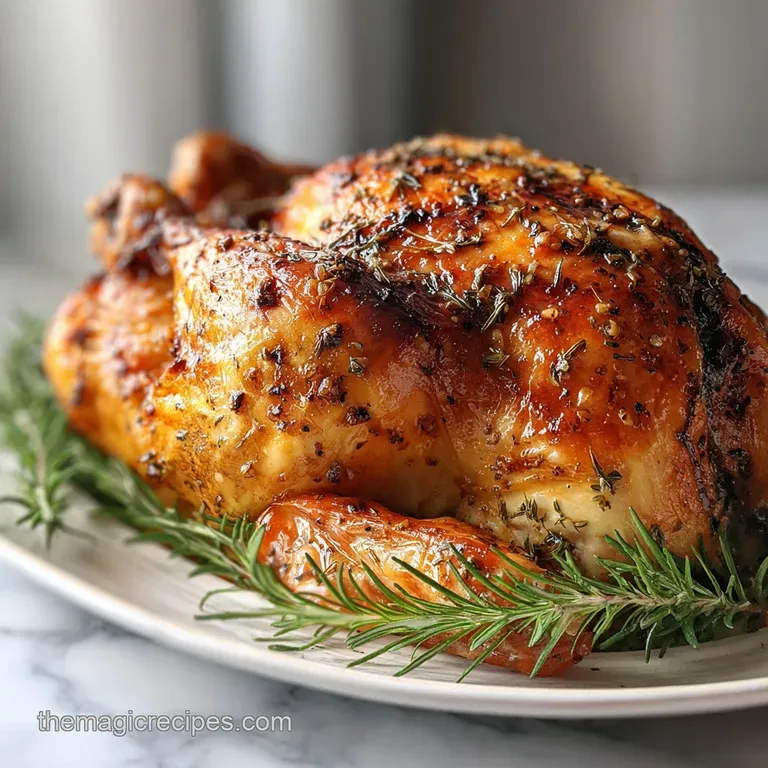
- Dry the turkey. Use paper towels to pat the 13 lb turkey completely dry inside and out. Note: Surface moisture creates steam, which prevents the skin from crisping.
- Remove the backbone. Turn the turkey breast side down. Use shears to cut along both sides of the spine from tail to neck. Discard or save the bone for stock.
- Flatten the bird. Flip the turkey over. Place your palms on the center of the breast and press down firmly until you hear the breastbone crack.
- Mix the dry brine. Combine 3 tbsp kosher salt, 1 tbsp baking powder, 1 tbsp pepper, and 1 tsp thyme.
- Apply the brine. Rub the mixture all over the skin and the underside of the turkey. Note: Let it sit for at least 30 minutes, or up to 24 hours in the fridge.
- Prep the herb butter. Mix 1 cup softened butter with 2 tbsp sage, 1 tbsp rosemary, 4 cloves microplaned garlic, and lemon zest.
- Apply the butter. Gently separate the skin from the breast meat with your fingers and spread half the butter underneath. Rub the rest on the outside.
- Set up the pan. Scatter 2 sliced onions, 3 chopped carrots, and 3 celery stalks on the baking sheet. Pour in 1 cup chicken stock.
- Position the turkey. Lay the turkey flat on top of the vegetables.
- Roast. Bake at 450°F (230°C) for 15 minutes, then reduce to 400°F (200°C) and cook until the thickest part of the breast hits 160°F.
Chef's Tip: If the wing tips start to turn too dark before the rest of the bird is done, just wrap them in a tiny piece of foil to "shield" them from the intense heat.
Solving Common Roast Turkey Problems
Why Your Turkey Skin Is Rubberish
If the skin isn't crisp, it usually means there was too much moisture in the oven or the temperature wasn't high enough. Steam is the enemy of the sizzle. If you use a deep roasting pan, the tall sides keep the moisture trapped right around the bird.
Why The Breast Is Dry
This happens when the bird cooks too slowly or you wait until 165°F to pull it out. Because of carryover cooking, the internal temperature will continue to rise about 5 degrees while the bird rests on the counter. Pulling at 160°F is the secret to a velvety, moist result.
| Problem | Root Cause | Solution |
|---|---|---|
| Skin is burning | Oven rack is too high | Move the tray to the lower third of the oven. |
| Soggy bottom | Turkey sitting in juices | Ensure vegetables are chunky enough to act as a rack. |
| Meat is tough | No resting period | Let the bird rest for at least 20 minutes before slicing. |
Common Mistakes Checklist - ✓ Don't skip the baking powder; it’s the key to that chemical reaction for crunch. - ✓ Avoid basting the turkey with stock; it adds moisture to the skin and makes it soft. - ✓ Use a meat thermometer instead of relying purely on time.
- ✓ Ensure the turkey is fully thawed; a frozen core will stay raw while the outside burns. - ✓ Let the butter soften naturally; microwaved butter separates and won't stick to the meat.
Scaling For Different Group Sizes
Scaling Down (Feeding 4-6): If a 13 lb bird is too much, you can easily use the same method for a large roasting chicken (about 5-6 lbs). Reduce the salt and baking powder by half. The cook time will drop significantly, usually taking only 45-55 minutes.
Check the internal temperature early!
Scaling Up (Feeding 20+): I don’t recommend trying to spatchcock a 20 lb turkey. It’s physically difficult to crack the bone and it won't fit on a standard pan. Instead, cook two 10-12 lb turkeys side-by-side on separate racks. Rotate the pans halfway through to ensure even browning.
Keep the salt at 1.5x the original amount rather than doubling it to avoid an overly salty crust.
If you find yourself with extra trimmings from the backbone, they are perfect for making our Giblet Gravy recipe while the turkey is in the oven.
Debunking Common Turkey Roasting Misconceptions
One of the biggest myths is that you need to baste the bird every 20 minutes. Every time you open that oven door, the temperature drops significantly, extending the cook time and drying out the meat. Plus, pouring liquid over the skin just ruins all the hard work the dry brine did to get it crispy.
Another common thought is that the turkey must reach 165°F inside the oven to be safe. Actually, the FDA guidelines allow for a "log reduction" of bacteria based on time and temperature.
A turkey held at 160°F for a few minutes is just as safe as one hit 165°F for a second, and it will be much juicier.
Safe Storage And Zero Waste Ideas
Storage: Store leftover turkey in an airtight container in the fridge for up to 4 days. If you want to freeze it, slice the meat off the bone first and wrap it tightly in foil, then place it in a freezer bag for up to 3 months.
Zero Waste: Never throw away that backbone or the roasted vegetables! Throw the backbone, neck, and any wing tips into a pot with the roasted onions and carrots from the pan. Cover with water and simmer for 3 hours to create a rich, golden stock.
You can even use the leftover herb butter bits to start a roux for a quick soup.
Serving Your Bird With Professional Flair
When it's time to serve, don't try to carve the turkey while it's still on the roasting pan. Move it to a large wooden board. The flat shape of the spatchcocked turkey makes it much easier to remove the legs and wings first.
To get those professional looking breast slices, cut along one side of the breastbone and remove the entire breast as one large piece. Then, slice it crosswise into thick, even pieces. This keeps the skin attached to every slice. It looks far more intentional and keeps that crispy texture intact for everyone at the table. If you want a quick side dish that matches this vibe, a simple Teriyaki Ground Turkey Bowl recipe is a great way to use up any smaller scraps of meat you have left over from the carving process.
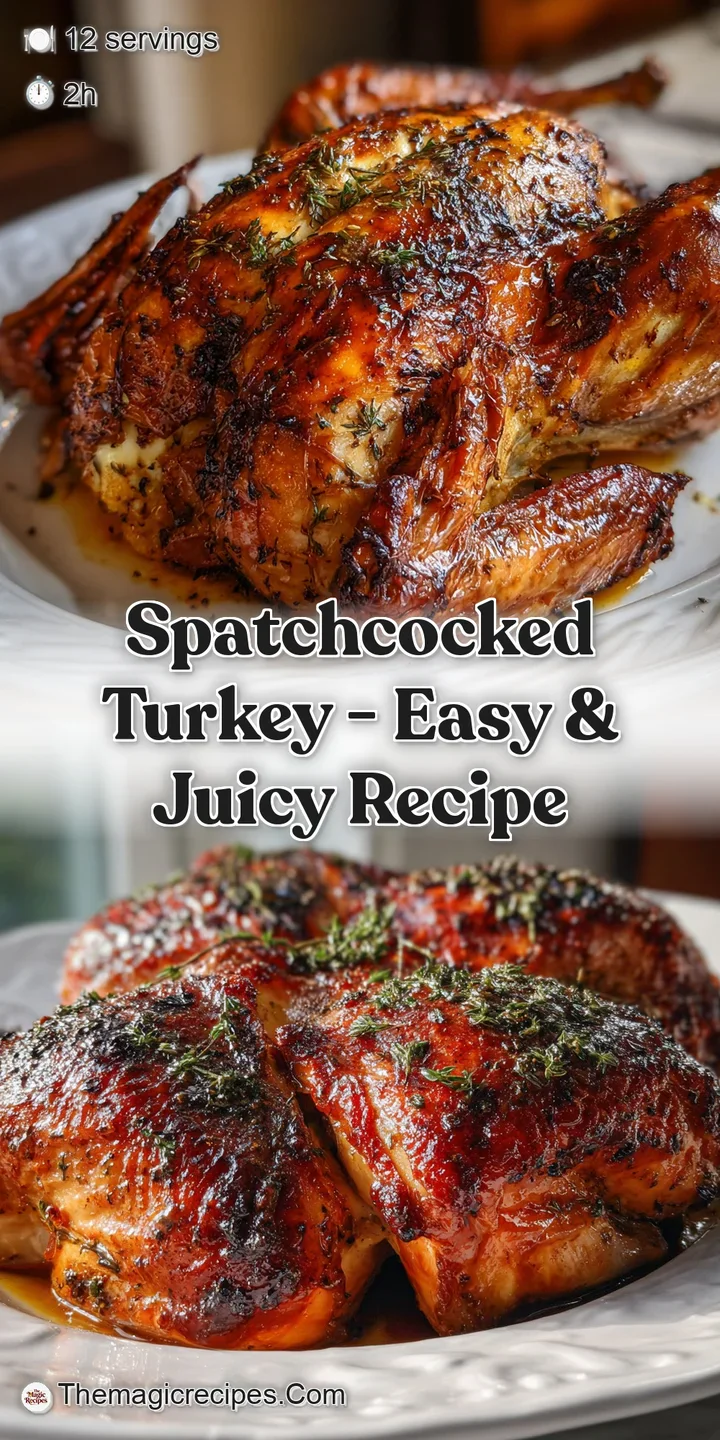
Very High in Sodium
1240 mg mg of sodium per serving (54% of daily value)
The American Heart Association recommends limiting sodium intake to no more than 2,300mg per day for most adults. Ideally, most adults should limit their intake to 1,500mg per day.
Tips to Reduce Sodium in Your Turkey Recipe
-
Sodium Free Broth-30%
Replace the regular chicken stock with a sodium free version. This simple swap can significantly lower the overall sodium content.
-
Reduce Added Salt-25%
Decrease the amount of kosher salt used. Start by reducing it by 25% (from 3 tbsp to 2.25 tbsp) and taste before adding more. You can always add, but you can't take away!
-
Unsalted Butter is Key-10%
Continue to use unsalted butter and control the amount of salt you add separately.
-
Flavor Boost
Experiment with other herbs and spices such as smoked paprika, garlic powder, onion powder or cayenne pepper to boost the flavor of the turkey without adding sodium.
Recipe FAQs
What is spatchcocking a turkey?
It means flattening the bird by removing the backbone. This allows the turkey to lay flat, ensuring more even cooking of the dark and white meat and a crispier skin.
How do I spatchcock a turkey?
Cut along both sides of the backbone with poultry shears to remove it. Then, flip the bird breast side up and press firmly on the breastbone until it cracks, flattening the turkey.
Will spatchcocking my turkey cook faster?
Yes, significantly faster. Flattening the turkey exposes more surface area to heat, allowing it to cook much more evenly and quickly than a traditional whole roast.
Is it true that spatchcocked turkey skin is crispier?
Yes, this is a major benefit. Exposing all the skin directly to the heat allows moisture to evaporate more quickly, resulting in a superior crispiness.
Can I dry brine a spatchcocked turkey?
Absolutely, and it's highly recommended. Dry brining the bird for up to 24 hours in advance further dehydrates the skin for ultimate crispiness and seasons the meat deeply.
What internal temperature should I pull a spatchcocked turkey at?
Pull the breast at 160°F (71°C). Carryover cooking will bring it up to the safe 165°F (74°C) while it rests, ensuring juicy, tender meat.
Should I baste a spatchcocked turkey?
No, avoid basting. Opening the oven frequently to baste lowers the temperature and prolongs cooking. It also adds moisture to the skin, hindering crispiness.
Spatchcocked Turkey
Ingredients:
Instructions:
Nutrition Facts:
| Calories | 594 kcal |
|---|---|
| Protein | 66.5 g |
| Fat | 34.2 g |
| Carbs | 1.8 g |
| Fiber | 0.4 g |
| Sugar | 0.6 g |
| Sodium | 1240 mg |
