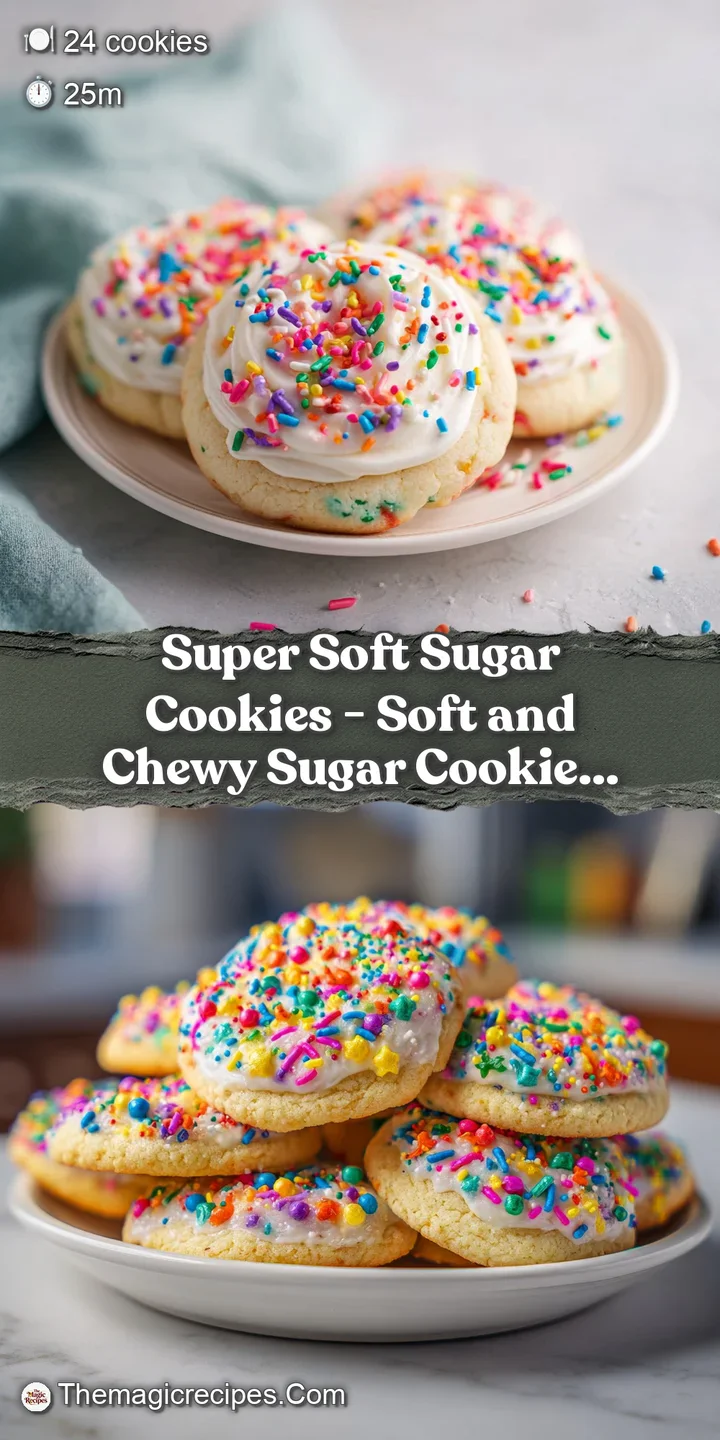
Super Soft Sugar Cookies: Tender and Bakery-Style
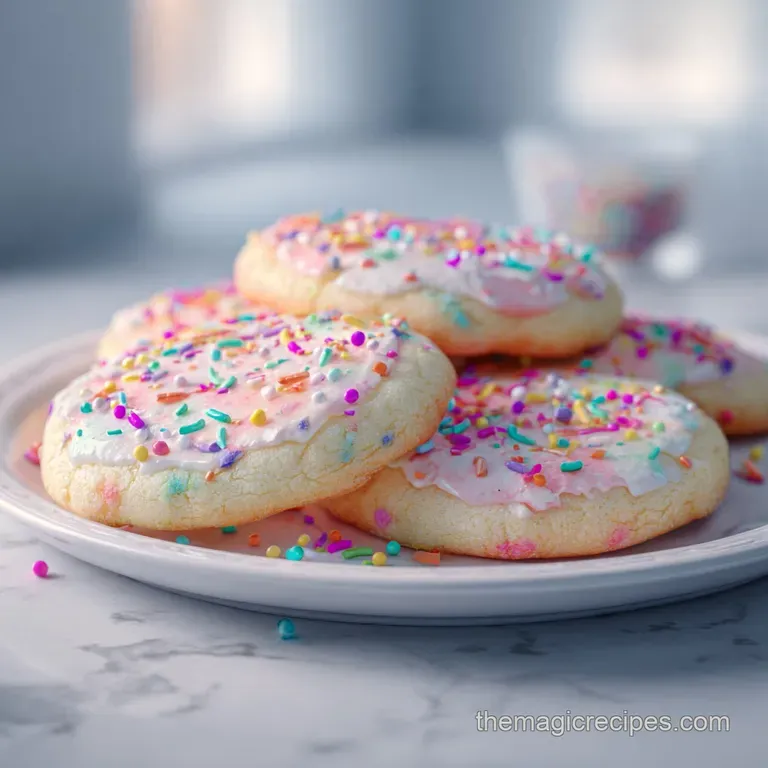
- Time: Active 15 minutes, Passive 10 minutes, Total 25 minutes
- Flavor/Texture Hook: Pillowy, velvety crumb with a sweet almond aroma
- Perfect for: Holiday gift boxes, birthday parties, or a cozy weekend treat
- Baking Decadent Super Soft Sugar Cookies
- Why You’ll Love This Treat
- Precise Measurements for Perfect Batches
- How Sour Cream Ensures Softness
- Ingredient Deep Dive for Flavor
- Essential Gear for Flawless Baking
- Detailed Instructions for Fluffy Cookies
- Fixing Common Cookie Baking Issues
- Smart Alternatives for Dietary Adjustments
- Storage Tips for Lasting Softness
- Delightful Pairing and Serving Ideas
- Recipe FAQs
- 📝 Recipe Card
Baking Decadent Super Soft Sugar Cookies
The moment you pull these out of the oven, your kitchen fills with the scent of warm butter and a faint, sweet breeze of almond extract. It’s that nostalgic, cozy aroma that reminds me of the old school bakeries where the cookies were thick, pale, and so tender they practically dissolved on your tongue.
I used to think the secret was just more butter, but after a few batches that turned out either too greasy or too crisp, I realized the real magic lies in one specific tub in the fridge: full fat sour cream.
Sour cream is the absolute hero of this recipe, and honestly, I won't hear of any substitutes. It provides the necessary acidity to break down gluten ribbons, ensuring the structure stays soft rather than chewy. The fat content adds a richness that milk or water just can't touch.
I remember the first time I swapped the liquid for sour cream; the dough felt like silk in my hands, and the resulting cookies had that iconic "heft" without being heavy. It’s a complete game changer for anyone who finds standard sugar cookies a bit too one dimensional.
We are aiming for a texture that is strictly velvety. These aren't the thin, lacy cookies that shatter into crumbs. They are sturdy enough to hold a thick swirl of buttercream but soft enough that a child (or a cookie obsessed adult) can bite into them without any resistance.
We’re going to walk through the process together, focusing on how the dough should feel and smell at every stage, because that’s how you really master a bake.
Why You’ll Love This Treat
There is something deeply satisfying about a cookie that doesn't require a rolling pin or hours of chilling. This recipe is designed for the home cook who wants maximum indulgence with a streamlined process. You get all the flavor of a traditional cutout cookie but with a much more forgiving, tender result.
The combination of vanilla and almond extracts creates a complex sweetness that smells like a professional pastry shop, making these feel much more special than a basic sugar cookie.
Beyond the ease of prep, the longevity of these cookies is a huge selling point. Because of the high fat content and the moisture retaining properties of the sour cream, they don't turn into hockey pucks by the second day.
In fact, I often find they taste even better the morning after they’re baked, once the flavors have had a chance to fully meld together. They are the ultimate canvas for your decorating whims, whether you like a simple dusting of sparkling sugar or a full on royal icing masterpiece.
Precise Measurements for Perfect Batches
To get that specific texture every time, we need to be mindful of how we’re measuring. While I love a quick bake, precision with your dry ingredients prevents the cookies from becoming "cakey" or dry. We want a dense, soft bite, not a muffin like crumb.
If you have a kitchen scale, use it for the flour to ensure you aren't accidentally packing too much into your measuring cup.
| Method | Time | Texture | Best For |
|---|---|---|---|
| This Recipe | 25 minutes | Pillowy and velvet soft | Decorating and soft bite fans |
| Traditional Cutout | 2 hours 30 mins | Crisp edges, sturdy | Intricate shapes and flooding |
| store-bought Dough | 15 minutes | Chewy and often greasy | Last minute sugar cravings |
Selecting the right method depends on your end goal, but if you want that classic "bakery soft" feel, this specific ratio is your best bet. The lack of chilling time means the butter doesn't fully solidify, allowing the cookies to puff slightly in the oven and create those tiny air pockets that define a super soft sugar cookies recipe.
How Sour Cream Ensures Softness
Acidic Tenderizing: The lactic acid in the sour cream weakens the gluten strands in the flour, preventing the dough from becoming tough or overly elastic.
Fat Based Moisture: Sour cream contains a higher fat to water ratio than milk, which coats the flour particles and inhibits the formation of a dry, crumbly structure.
Controlled Rise: The interaction between the sour cream's acidity and the baking soda creates a gentle lift that results in a dense yet airy crumb.
| Component | Science Role | Pro Secret |
|---|---|---|
| Sour Cream | Moisture & Acidity | Use full fat only for the best mouthfeel and structure. |
| Room Temp Butter | Aeration | Should be 65°F cool to the touch but leaves an indent. |
| Almond Extract | Flavor Depth | A little goes a long way to mimic high end bakery flavors. |
Using room temperature ingredients is non negotiable here. If your egg or sour cream is ice cold, it will cause the butter to seize up, and you'll lose that beautiful emulsion we work so hard to build in the stand mixer.
Ingredient Deep Dive for Flavor
Every single item in this list serves a purpose. We start with 3 cups (375g) All Purpose Flour, which provides the structure. Don't reach for cake flour here; we need the protein in all purpose to hold the sour cream's moisture.
For the sweetness, 1.5 cups (300g) Granulated White Sugar is essential not just for taste, but for the way it interacts with the butter to create air pockets.
Leveraging the Power of Sour Cream
The 0.5 cup (120g) Full Fat Sour Cream is the ingredient that sets this apart. It adds a subtle tang that balances the sugar and ensures the cookies stay moist. I’ve tried using Greek yogurt as a swap, and while it works in a pinch, it lacks the specific fat profile needed for that true "soft" finish.
For the Moisture & Flavor
We use 1 cup (226g) Unsalted Butter, which must be softened but not greasy. The 1 large Egg acts as our binder, while the combination of 2 tsp Pure Vanilla Extract and 0.5 tsp Almond Extract creates the signature aroma.
Finally, the leavening agents—1 tsp Baking Powder and 0.5 tsp Baking Soda—work with the 0.5 tsp Fine Sea Salt to ensure a balanced rise and seasoned flavor.
Essential Gear for Flawless Baking
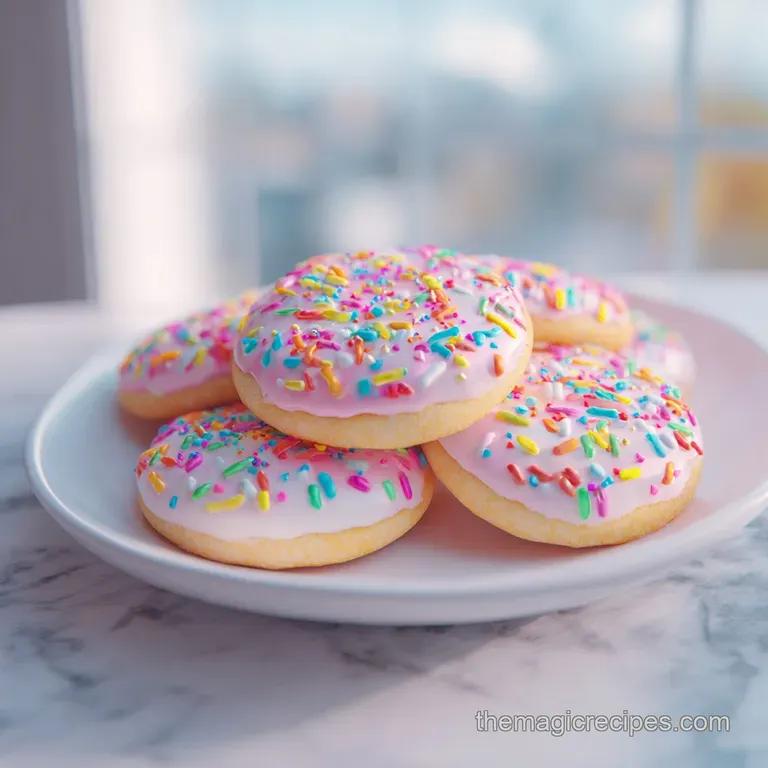
You don't need a professional kitchen, but a few tools make the process much smoother. A stand mixer (like a KitchenAid) is preferred because it can sustain the medium high speed needed to properly aerate the butter and sugar for three full minutes.
You can use a hand mixer, but be prepared to put in a little extra elbow grease to reach that pale, fluffy stage.
Chef's Tip: If you don't have a cookie scoop, use a rounded tablespoon. Consistency in size is the secret to ensuring every cookie in the batch finishes baking at the exact same second.
A set of heavy duty rimmed baking sheets is also vital. Thin, cheap pans often heat unevenly, leading to cookies with burnt bottoms and raw centers. I always line mine with parchment paper or a silicone mat.
This prevents sticking and acts as a buffer against the direct heat of the metal, helping the cookies remain pale and tender.
Detailed Instructions for Fluffy Cookies
- Preheat your oven to 350°F (180°C). Smell the air as it warms up—it should be neutral and clean, ready for the sweetness to come.
- In your stand mixer, combine 1 cup of room temperature butter and 1.5 cups of granulated sugar. Beat on medium high for 3 full minutes. Watch for the color change as the mixture turns from yellow to a pale ivory.
- Add the egg, 2 tsp vanilla, and 0.5 tsp almond extract. Beat until the yellow of the yolk disappears completely.
- Lower the mixer speed to the slowest setting. Gently fold in the 0.5 cup of sour cream. Note: Stop as soon as the white streaks vanish to keep the air in the butter.
- In a separate bowl, whisk 3 cups of flour, 1 tsp baking powder, 0.5 tsp baking soda, and 0.5 tsp sea salt. This ensures no lumps of leavening end up in a single cookie.
- Gradually add the dry ingredients to the wet. Mix until "just" combined. The dough should look soft and slightly tacky, like play dough.
- Use a 1.5 tablespoon scoop to portion the dough. Space them 2 inches apart on your parchment lined sheet. Note: Do not flatten them; the oven heat will do that naturally.
- Bake for 10 minutes. Watch for the matte finish on top. They should not be brown; they should look "set" and opaque.
- Let them rest on the hot pan for 2 minutes. This carryover heat finishes the center without drying out the edges.
- Transfer to a wire rack. As they cool, the aroma of almond will intensify, signaling they are ready to eat.
Fixing Common Cookie Baking Issues
Even with a foolproof recipe, sometimes things go sideways. The most common heartbreak with soft and chewy sugar cookies is overbaking. Because these stay pale, people often think they aren't done and leave them in for an extra three minutes. By then, the moisture has evaporated, and you've lost that super soft sugar cookies from scratch texture.
Preventing Excessive Spreading
If your cookies come out looking like thin pancakes, your butter was likely too warm. If the butter is near its melting point when it enters the mixer, it can't hold those tiny air bubbles. This results in a heavy dough that collapses the moment it hits the oven's heat. Always aim for "cool room temperature" butter.
| Problem | Root Cause | Solution |
|---|---|---|
| Cookies are dry/crumbly | Too much flour or overbaked | Spoon and level your flour; pull from oven when edges are barely set. |
| Bottoms are too dark | Oven rack too low or dark pan | Move rack to middle position; use light colored aluminum pans. |
| Dough is too sticky | Sour cream wasn't cold enough | Chill the dough for 15 mins before scooping if the kitchen is hot. |
Common Mistakes Checklist
- ✓ Avoid over mixing once the flour is added (prevents tough cookies).
- ✓ Never use "spread" or tub margarine; the water content is too high.
- ✓ Ensure your baking soda is fresh (do the bubble test with vinegar).
- ✓ Don't crowd the pan; give them space to breathe and set.
- ✓ Use a middle oven rack to ensure even heat distribution.
Smart Alternatives for Dietary Adjustments
If you need to tweak this for friends with dietary restrictions, it is surprisingly resilient. For a gluten-free super soft sugar cookies version, I highly recommend a 1 to-1 flour blend that includes xanthan gum (like King Arthur or Bob’s Red Mill). The sour cream actually helps gluten-free bakes stay moist, which is usually their biggest hurdle.
Swapping for dairy-free Needs
To make these dairy-free, replace the butter with a high-quality vegan butter stick (not a spread) and use a vegan sour cream or a thick, plain coconut yogurt. Note that the flavor will shift slightly toward the coconut side, but the texture remains remarkably similar.
For the egg, a commercial egg replacer works better than a flax egg in this specific delicate crumb.
Scaling this recipe is straightforward. If you want a smaller batch, you can easily halve everything just beat the egg in a small bowl first and use exactly half of it. If you're doubling it for a big party, keep the spices and leavening at 1.5x the original amount to avoid a metallic aftertaste, and always work in batches so the dough doesn't sit out and get too warm while the first tray is baking.
Storage Tips for Lasting Softness
To keep that easy super soft sugar cookies texture, you must store them in an airtight container as soon as they are completely cool. If you leave them out on the counter, the air will rob them of that precious moisture. I like to place a small piece of parchment paper between the layers if I've frosted them with buttercream.
- Fridge: They stay fresh for up to 5 days. The cold actually tightens the crumb, making them a bit fudgy.
- Freezer: These freeze beautifully. You can freeze the baked cookies for up to 3 months. To thaw, just leave them at room temperature for 30 minutes.
- Zero Waste: If you somehow end up with stale cookies, crumble them over vanilla bean ice cream or use them as a base for a decadent cheesecake crust.
Delightful Pairing and Serving Ideas
While these are incredible on their own, they are the ultimate "social" cookie. Because they are so soft, they make the perfect base for an ice cream sandwich. Unlike a hard cookie that squishes the ice cream out the sides when you bite down, these yield perfectly, creating a seamless dessert experience.
If you are a coffee lover, try pairing a soft sugar cookies with frosting treat with a bitter cold brew or a dark roast. The sweetness of the cookie cuts through the acidity of the coffee, while the almond notes in the bake are highlighted by the roasted beans. For a holiday vibe, a light glaze of lemon juice and powdered sugar adds a bright "pop" that makes the rich sour cream base feel incredibly light and sophisticated.
Myths About Soft Cookies
One common misconception is that you need to underbake cookies until they are raw to keep them soft. Truthfully, it's the ingredients (like our sour cream) and the proper "set" time that maintain softness. Another myth is that you must use shortening for a soft cookie.
While shortening stays soft at room temp, it lacks the incredible flavor profile of real butter. We get the best of both worlds by using sour cream to provide the moisture that shortening usually offers.
Recipe FAQs
What is the secret to soft cookies?
Beat the butter and sugar for a full 3 minutes. This aeration creates structure without needing extra flour, which keeps the crumb tender rather than tough.
What is the secret to making soft sugar cookies?
Fold in sour cream as the final step before dry ingredients. The acidity and fat content in sour cream inhibit gluten development, ensuring the cookies stay soft for days. If you enjoyed mastering this creamy, moisture locking technique, see how we apply a similar texture control principle in our citrus infused cookies.
Is it true I must bake these at 425°F?
No, this is a common misconception. You should bake these for exactly 10 minutes at the temperature specified in your recipe; raising it higher will dry out the edges before the center can set.
How to keep cookies soft after baking?
Place them in an airtight container immediately after they cool completely. Storing them while still warm will create condensation, which makes the cookies soggy rather than soft.
Can I use margarine instead of butter to save money?
How to avoid tough or rubbery cookies?
Mix the dry ingredients into the wet mixture until just combined. Over mixing after adding the flour develops gluten, which turns your tender dough into something chewy and rubbery.
Is the "321 cookie rule" applicable here?
No, this recipe does not follow the 3:2:1 ratio. This formula requires specific quantities of sour cream and liquid extracts to achieve the signature soft texture that basic 3:2:1 shortbread style ratios cannot provide.
Super Soft Sugar Cookies
Ingredients:
Instructions:
Nutrition Facts:
| Calories | 185 kcal |
|---|---|
| Protein | 2.1 g |
| Fat | 9.8 g |
| Carbs | 24.6 g |
| Fiber | 0.4 g |
| Sugar | 12.6 g |
| Sodium | 58 mg |
