Turkey Injection Marinade
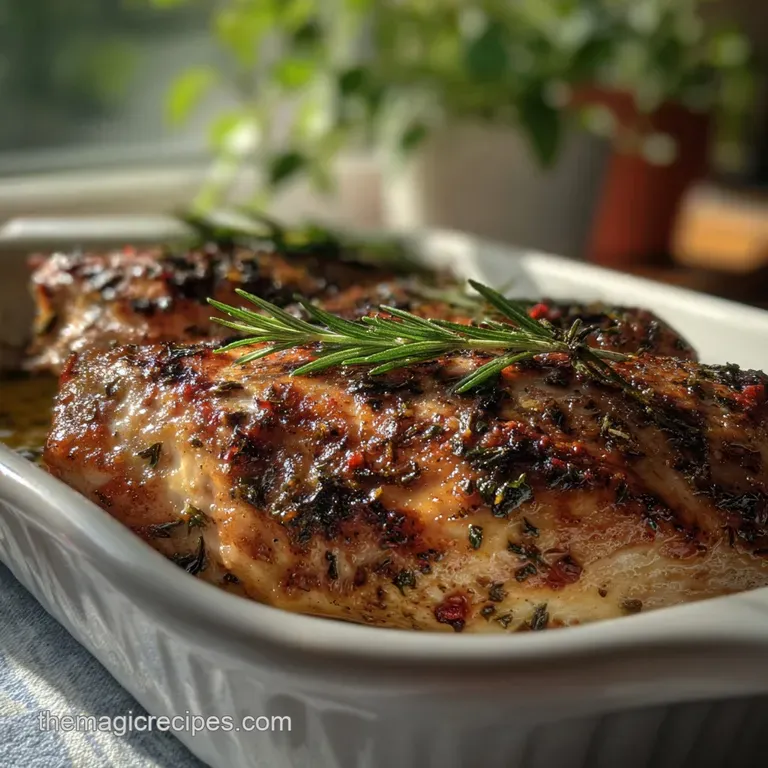
- Time: Active 10 minutes, Passive 5 minutes, Total 15 minutes
- Flavor/Texture Hook: Savory, buttery, and velvety
- Perfect for: Holiday dinners or big family gatherings
- Infuse Flavor with This Turkey Injection Marinade
- Understanding the Core Recipe Requirements
- Essential Ingredients for Savory Results
- Necessary Tools for Smooth Infusion
- Simple Steps for Perfect Injection
- Identifying Potential Cooking Obstacles
- Exploring Flavor Profiles and Alternatives
- Proper Storage and Waste Reduction
- Enhancing Presentation and Final Texture
- Correcting Common Kitchen Myths
- Recipe FAQs
- 📝 Recipe Card
Infuse Flavor with This Turkey Injection Marinade
Imagine pulling a golden brown turkey from the oven, the skin crackling with a satisfying snap. As you carve into the breast, there's no struggle, no dry, sawdust like texture. Instead, clear juices run across the cutting board, and every bite carries the rich aroma of smoked paprika and toasted garlic.
That's the difference a solid injection makes. I used to rely on overnight brines, but between the heavy buckets of salty water and the refrigerator Tetris, it was a mess. Now, I stick to this method because it works in minutes, not days.
We've all been there, staring at a massive bird and worrying about the "white meat trap." Turkey is notoriously lean, especially the breast. By the time the dark meat is safe to eat, the breast is often parched. This Turkey Injection Marinade acts like a safety net.
It deposits fat and salt exactly where the meat needs it most, ensuring a juicy result even if your oven runs a little hot. It's functional, fast, and honestly, a total lifesaver when you're juggling three different side dishes.
The beauty of this recipe is that it’s built for real life cooking. You don’t need rare ingredients or fancy techniques. We are using pantry staples like Worcestershire sauce and grass fed butter to create a deep, umami rich liquid.
Whether you’re a parent trying to get a stress free meal on the table or a home cook looking to improve your holiday game, this technique is the most efficient way to guarantee a bird that everyone actually wants to eat. Trust me, once you see the "plump" effect in the oven, you'll never go back to dry roasting.
Understanding the Core Recipe Requirements
Before we get to the stovetop, it helps to understand why we are doing this. When we inject, we are performing "intra muscular seasoning." This means we are bypassing the skin entirely to season the meat from the inside out.
This is particularly important if you are deep frying, as surface rubs often burn in the hot oil.
Osmotic Pressure: Salt in the marinade breaks down the tightly wound protein strands, allowing the muscle to hold onto more water during the cooking process.
Fat Distribution: The butter creates a velvety mouthfeel and mimics the marbled fat found in beef, which turkey naturally lacks.
Thermal Conductivity: The liquid inside the bird helps heat distribute more evenly, slightly speeding up the internal cooking time.
Maillard Reaction Support: Small amounts of sugars in the broth and Worcestershire help the meat develop a deeper savory flavor as it roasts.
| Meat Section | Internal Temp | Rest Time | Visual Cue |
|---|---|---|---|
| Turkey Breast | 165°F (Pull at 160°F) | 20 minutes | Juices run clear when pierced |
| Turkey Thigh | 175°F | 20 minutes | Joint moves easily in socket |
| Drumstick | 175°F | 15 minutes | Meat begins to pull back from bone |
When you pull your bird from the oven, remember that carryover cooking is real. I always pull my turkey at 160°F in the thickest part of the breast. During the 20 minute rest, the temperature will naturally climb to the safe 165°F mark without drying out. If you love big flavors, this technique pairs perfectly with a zesty side like my Chicken Wraps recipe during the meal prep week.
Essential Ingredients for Savory Results
The secret to a clog free injection is the texture of your spices. If you use coarse black pepper or dried rosemary needles, they will get stuck in the syringe, and you'll end up frustrated and covered in butter. Always opt for "fine" or "powdered" versions of your aromatics to keep the flow smooth and consistent.
| Ingredient | Science Role | Pro Secret |
|---|---|---|
| Grass fed Butter | Lipid delivery | Use unsalted to control the exact sodium level of the bird. |
| Chicken Bone Broth | Protein rich base | Bone broth has more gelatin, which creates a better "cling" inside. |
| Lemon Juice | Acid catalyst | The acid brightens the heavy fats and helps tenderize the meat fibers. |
| Smoked Paprika | Color and depth | Provides a subtle wood fired flavor even if you are using a standard oven. |
- - 1 tbsp fine sea salt (Substitute
- Table salt, use slightly less)
- - 1 tbsp fine garlic powder (Substitute
- Garlic juice)
- - 1 tsp fine onion powder (Substitute
- Shallot powder)
- - 1 tsp smoked paprika (Substitute
- Liquid smoke - 2 drops)
Necessary Tools for Smooth Infusion
Don't just grab any syringe from the kitchen drawer. For a successful Turkey Injection Marinade, you need a dedicated meat injector with a wide gauge needle. Look for one made of stainless steel; the plastic ones tend to crack when the hot butter hits them, or the plunger might stick mid push.
You will also need a fine mesh strainer. Even if you use powdered spices, tiny clumps can form. Pouring your finished liquid through a strainer into a glass jar ensures that your "plumbing" stays clear throughout the whole process.
I also recommend having a small saucepan with a heavy bottom to melt the butter slowly without scorching the milk solids, which can turn bitter.
Chef's Note: If your injector needle is getting stuck, dip the tip into a bit of warm olive oil before starting. It helps the needle slide through the skin and meat without tearing the fibers.
Simple Steps for Perfect Injection
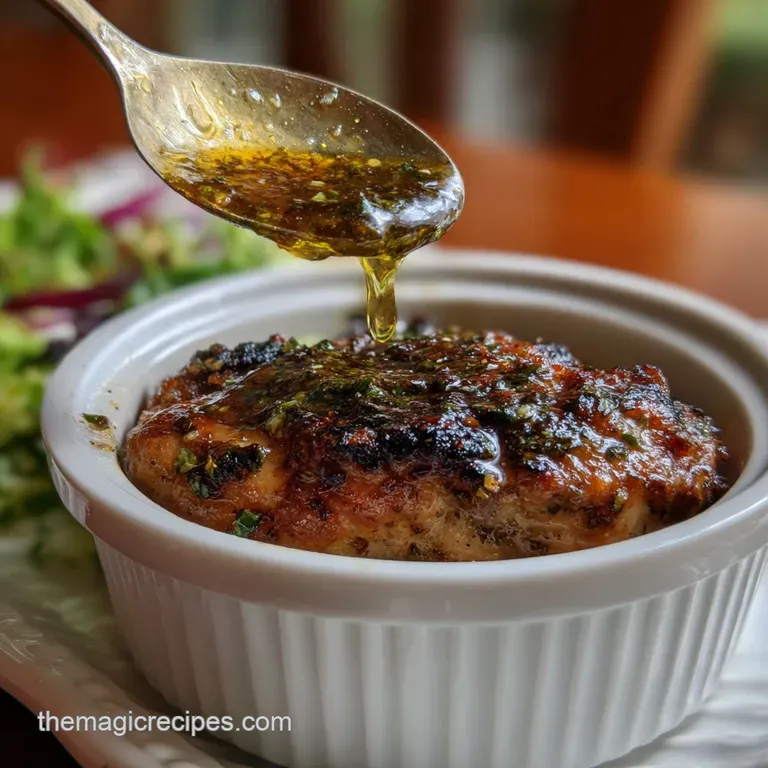
Step 1: Combine the Liquids
In a small saucepan over medium low heat, add 1 cup low sodium chicken bone broth and 1/2 cup unsalted grass fed butter. Stir gently as the butter melts to ensure it doesn't separate or boil.
Step 2: Add the Aromatics
Whisk in 1 tbsp Worcestershire sauce, 1 tbsp fine sea salt, and 2 tbsp fresh lemon juice. Note: Make sure the lemon juice is strained to remove any pulp that could clog the needle.
Step 3: Incorporate the Spices
Add 1 tbsp fine garlic powder, 1 tsp fine onion powder, 1 tsp smoked paprika, and 1/2 tsp finely ground dried thyme. Whisk vigorously until no clumps remain.
Step 4: Simmer and Meld
Allow the mixture to simmer for 2 to 3 minutes. Note: This heat activates the dried spices, releasing their oils into the butter base.
Step 5: The Cooling Phase
Remove the pan from the heat and let the liquid cool for about 5 minutes. It should be warm to the touch but not boiling, as extremely hot liquid can "cook" the meat prematurely and prevent the butter from staying emulsified.
Step 6: Straining the Marinade
Pour the mixture through a fine mesh strainer into a clean jar or bowl. Discard any solids left in the mesh. This step is the most important part of the whole process.
Step 7: Load the Injector
Draw the warm liquid into your meat injector syringe. Ensure there is no air trapped in the barrel by holding it needle side up and pushing the plunger slightly until a drop of liquid appears.
Step 8: The Injection Pattern
Starting with the breast, insert the needle at an angle. Push the plunger slowly while pulling the needle out. Watch for the meat to plump up significantly.
Step 9: Hit the Dark Meat
Repeat the process for the thighs and legs. Because the dark meat is more flavorful, you can use less liquid here, but it still helps with overall moisture.
Step 10: Wipe and Rest
Wipe away any excess liquid that has leaked out of the entry holes. Let the turkey sit for at least 30 minutes before roasting to allow the salt to begin its work on the proteins.
Identifying Potential Cooking Obstacles
Why Your Injector Keeps Clogging
If you find yourself pushing the plunger with all your might and nothing is happening, it’s almost always a spice issue. Even "fine" thyme can be too large for some needle holes.
The Fix: Use a coffee grinder to turn your dried herbs into a literal dust, or rely purely on liquid extracts and powders.
Why the Marinade Leaks Out
It’s frustrating to see half your hard work puddle at the bottom of the roasting pan. This usually happens when you inject too close to the surface or use the same hole too many times. The Fix: Aim for the center of the muscle and pull the needle out slowly as you depress the plunger.
This "trails" the liquid through the meat instead of creating a single pocket.
| Problem | Root Cause | Solution |
|---|---|---|
| Broken Injector | Plunger was too dry | Lubricate the rubber gasket with a drop of vegetable oil before use. |
| Oil Separation | Liquid cooled too much | Gently re warm the marinade if the butter starts to solidify in the jar. |
| Tough Meat | Over injection | Don't over fill; the meat should look plump, but not tight like a balloon. |
Common Mistakes Checklist: - ✓ Always strain the liquid through a fine mesh sieve (prevents needle clogs). - ✓ Inject the bird while it is still cool, but the marinade is warm (keeps the butter fluid).
- ✓ Move the needle to different angles from a single entry point (minimizes "leak holes" in the skin). - ✓ Pat the turkey skin completely dry after injecting (ensures the skin still gets crispy). - ✓ Never reuse leftover marinade that has touched raw meat (safety first).
Exploring Flavor Profiles and Alternatives
Adjusting your Turkey Injection Marinade is easy once you have the base down. If you're looking for a different vibe, you can swap the lemon juice for apple cider to get a sweeter, more autumnal flavor.
This works particularly well if you're using a smoker, as the fruit notes play beautifully with hickory or applewood smoke.
If you are cooking for a crowd and need to save on the grocery bill, you can easily tweak the ingredients without losing the moisture wicking benefits. For instance, swapping grass fed butter for a high-quality margarine or even a neutral oil can save a few dollars while still providing the necessary fat.
| Premium Ingredient | Budget Alternative | Flavor Impact |
|---|---|---|
| Grass fed Butter | Unsalted Margarine | Slightly less rich, but provides the same moisture level. |
| Bone Broth | Bouillon Base + Water | Higher sodium content; reduce the added sea salt by half. |
| Fresh Lemon Juice | Bottled Lemon Juice | Sharper acidity, but perfectly functional for meat tenderization. |
If you find yourself with extra savory sauces in the fridge, like a leftover Horseradish Sauce for recipe, don't be afraid to serve it on the side. The tanginess of horseradish is incredible against the buttery richness of an injected turkey.
Proper Storage and Waste Reduction
If you have leftover marinade that has not touched the raw turkey or the injector, you can store it in an airtight glass jar in the fridge for up to 5 days. Since it contains butter and broth, it will solidify into a paste. To reuse it, simply melt it back down on the stove.
I don't recommend freezing it, as the emulsion of the lemon and butter can break, leading to a grainy texture.
For zero waste cooking, take any leftover liquid (the stuff that didn't go into the bird) and whisk it into your gravy. It’s already seasoned with garlic, thyme, and onion, so it adds a massive boost of flavor to a standard flour and drippings gravy.
If you have the strained herb solids left in your mesh strainer, toss those into the cavity of the turkey before roasting they'll still release aromatics as the bird heats up.
Enhancing Presentation and Final Texture
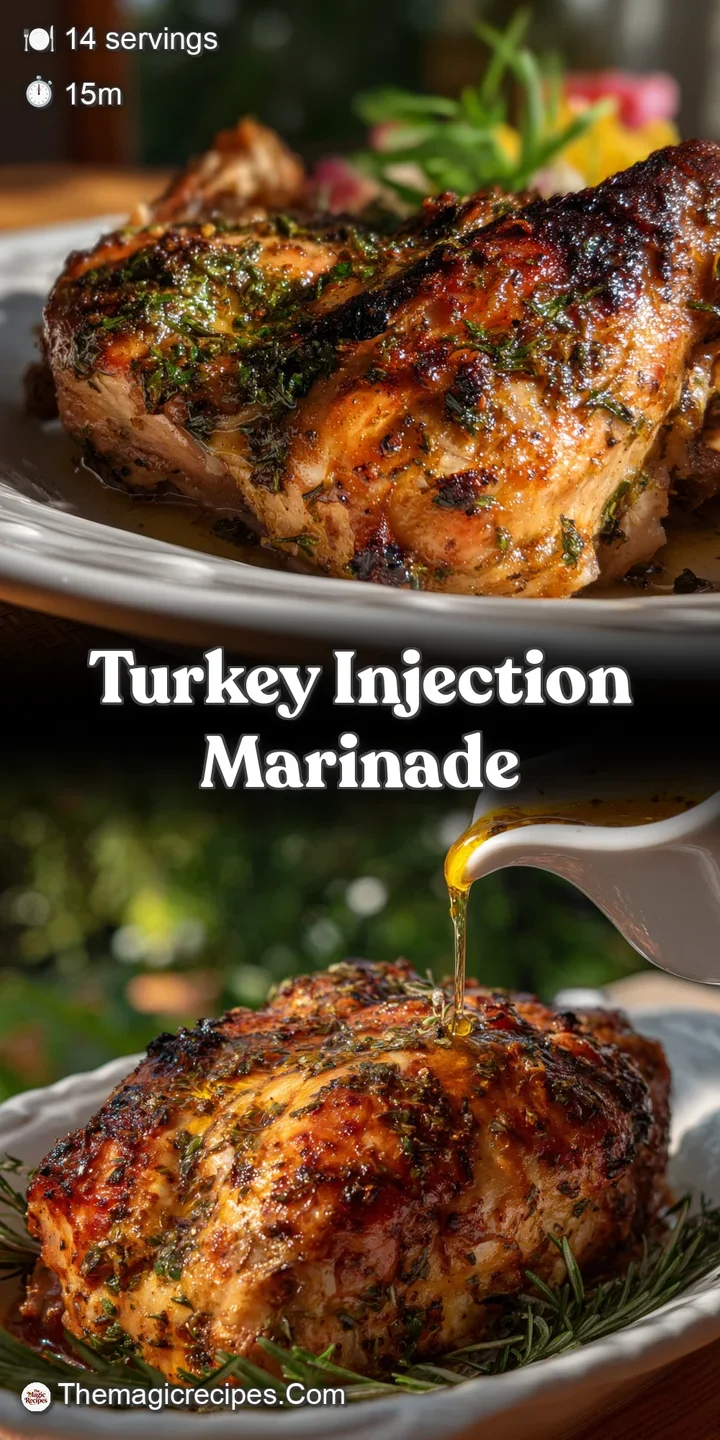
The visual appeal of an injected bird is usually superior because the meat stays "plumped," filling out the skin and preventing that shrunken, withered look. To make the most of this, I suggest brushing the outside of the turkey with a light coating of the same butter mixture (minus the broth) during the last 30 minutes of roasting.
This creates a glossy, lacquered finish that looks professional.
When it comes time to carve, you’ll notice the meat has a slight pinkish hue near the injection sites this is normal and is usually caused by the smoked paprika or the reaction of the salt with the proteins. Slice against the grain in thick, confident strokes.
Because the meat is so hydrated, it won't crumble or shred. Serve it alongside a hearty Broccoli Casserole recipe for a meal that feels complete and well balanced.
Correcting Common Kitchen Myths
Myth: You should inject the turkey right before it goes in the oven. Truth: While you can do this, the results are better if you wait 30 to 60 minutes. This gives the salt time to penetrate the cells and begin the brining process.
If you roast immediately, the liquid is more likely to just run out as the meat tightens from the heat.
Myth: Injection makes the skin soggy. Truth: Only if you're messy! If you wipe away any spills and pat the skin dry, the injection actually helps the skin get crispier because the fat from the butter can render out from underneath the skin, essentially "frying" it from both sides.
Myth: You need a different marinade for frying vs. roasting. Truth: This buttery base is universal. Because we use high smoke point fats like butter and broth, it won't burn in a deep fryer like a sugar heavy marinade might. It’s the perfect all rounder for any cooking method you choose.
Recipe FAQs
How long should I marinate an injected turkey?
Wait at least 30 to 60 minutes. This allows the salt in the marinade time to penetrate the meat fibers, initiating a mild brining effect that enhances moisture retention.
What do you inject a turkey with to make it juicy?
A mixture of fats, liquids, and seasonings. Typically, this includes butter or oil for richness, chicken broth or water as a base, and flavorings like garlic powder, onion powder, and salt.
What spices are good for turkey injections?
Garlic powder, onion powder, and smoked paprika. Finely ground herbs like thyme or sage also work well, but ensure they are powdered to prevent clogging the injector.
Is it better to inject a turkey or brine it?
Injection is often faster and more targeted. While brining seasons the whole bird externally, injection delivers moisture and flavor directly into the muscle, particularly beneficial for lean breast meat.
How long do you marinate injected turkey before cooking?
Aim for at least 30 minutes. Allowing the marinade to sit for this time lets the salt and seasonings begin to break down protein structures, enhancing tenderness and moisture.
What is the best liquid for injecting a turkey?
A combination of fat and broth is ideal. Butter or a high-quality oil provides richness, while chicken or turkey broth offers a savory base that carries seasonings deep into the meat fibers.
Can I inject a turkey the night before?
Yes, but with considerations. Injecting up to 24 hours in advance can further enhance flavor and tenderness, but ensure the turkey is stored properly refrigerated to prevent bacterial growth. This technique is similar to how we ensure tenderness in a Steak Fajita Recipe: Deeply Marinated & Grill Charred.
Turkey Injection Marinade
Ingredients:
Instructions:
Nutrition Facts:
| Calories | 68 kcal |
|---|---|
| Protein | 0.8 g |
| Fat | 6.7 g |
| Carbs | 0.9 g |
| Fiber | 0.1 g |
| Sugar | 0.3 g |
| Sodium | 432 mg |
