Hashbrown Casserole: Acid-Bound Perfection

- Effort/Time: Minimal prep; 1 hour total.
- Flavor Hook: Sharp cheddar umami paired with a shatter-crisp cornflake crust on your hashbrown casserole.
- Perfect for: Low-stress holiday brunches or high-volume make-ahead potlucks featuring this amazing hashbrown casserole.
- The Culinary Physics of Starch and Fat
- Operational Parameters: Servings and Timing
- The Alchemy of Comfort: Strategic Element Selection
- Precision Thermal Vessels and Tooling
- The Sequential Assembly Protocol
- Mitigating Texture Failures: Professional Diagnostics
- ⚗️ The Scaling Lab: The Physics of Quantity
- Structural Modifications and Component Swaps
- Post-Service Integrity and Thermal Recovery
- Curating the Final Presentation
- Recipe FAQs
- 📝 Recipe Card
There is nothing more demoralizing than investing forty dollars into a holiday spread only to pull a gray, watery slurry out of the oven. I’ve seen it happen at countless potlucks the hashbrown casserole that looks like potato soup in a pan because the starch didn't set and the fats broke into a greasy puddle.
It’s a waste of high-quality cheddar and, frankly, an insult to the humble potato. This is not how a true hashbrown casserole should present.
I’ll admit, I spent years making the classic "dump and bake" version until I realized why mine always felt heavy and one-dimensional. I used to skip the thawing process, throwing frozen blocks of potatoes directly into the bowl, which flooded the emulsion with excess ice crystals.
That mistake led to a gritty texture that no amount of extra cheese could fix; I had to learn the hard way that moisture is the enemy of a velvety crumb in any great hashbrown casserole.
The secret to a master level hashbrown casserole isn't adding more ingredients; it's managing the starch gelatinization and the moisture-to-fat ratio. By patting the potatoes dry and using full fat sour cream as a stabilizer, we ensure the sauce stays emulsified under high heat.
The result isn't just a side dish; it’s a mahogany topped, creamy centered structural triumph that holds its shape on the plate while offering a distinct, buttery sizzle in every bite of this perfect hashbrown casserole.
The Culinary Physics of Starch and Fat
- Starch Gelatinization: As the potatoes heat, the starch granules absorb the surrounding liquid from the cream of chicken soup and sour cream, swelling until they create a thick, stable matrix within the hashbrown casserole.
- Lipid Emulsification: The high fat content in the 2 cups of full fat sour cream prevents the proteins in the cheese from tightening into rubbery strands, ensuring a velvety mouthfeel for the finished hashbrown casserole.
- Maillard Reaction: The combination of melted butter and crushed cornflakes undergoes rapid browning at 300°F (150°C), creating a shatter crisp texture that contrasts the soft base of the hashbrown casserole.
- Hygroscopic Balancing: Diamond Crystal Kosher Salt draws out deep potato flavor while the garlic powder adds a sulfurous aromatic depth that cuts through the heavy lipids of this rich side.
Operational Parameters: Servings and Timing
To achieve the ideal textural contrast, the hashbrown casserole requires specific thermal exposure. Deviating from these times risks either a raw, crunchy potato center or a broken, oily sauce.
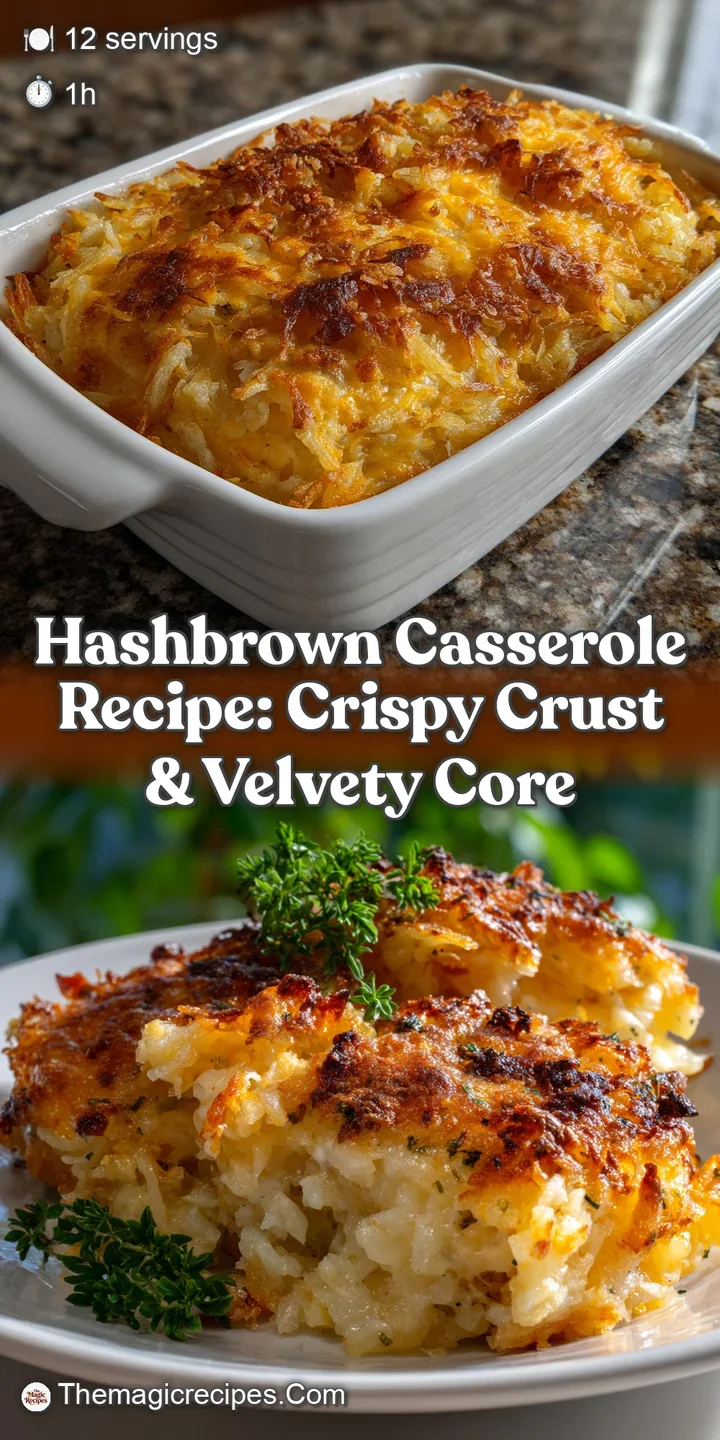
- Recipe Yield: 12 servings
- Preparation Time: 15 minutes
- Cooking Duration: 45 minutes
- Total Cycle Time: 1 hour
The Alchemy of Comfort: Strategic Element Selection
Choosing the right components is the difference between a generic bake and a professional grade side. While you might be tempted to use whatever is in the pantry, specific fat percentages and salt types dictate the final structural integrity of your hashbrown casserole.
- 30 oz Frozen Shredded Hash Browns: Ensure these are thawed slightly and patted dry. Why this? Excess moisture prevents the sauce from clinging to the potato shreds in your hashbrown casserole.
- 1/2 cup + 1/4 cup Unsalted Butter: Use a high-quality brand like Kerrygold for higher butterfat content.
- 2 cups Full Fat Sour Cream: Why this? low-fat versions contain stabilizers that can break and curdle at high temperatures.
- 2 cups Sharp Cheddar Cheese: Freshly shredded Tillamook is preferred. Why this? Pre-shredded cheese is coated in potato starch, which can make the sauce grainy.
- 10.5 oz Condensed Cream of Chicken Soup: Acts as the primary thickener and flavor base.
- 1/2 cup Yellow Onion: Finely diced to ensure even distribution and rapid softening.
- 1 tsp Diamond Crystal Kosher Salt: Why this? Lower salinity by volume allows for more precise seasoning control.
- 1/2 tsp Cracked Black Pepper: Provides a floral heat that cuts through the dairy fat.
- 1/2 tsp Garlic Powder: Adds a foundational umami layer without the moisture of fresh garlic.
- 2 cups Kellogg's Cornflakes: The gold standard for a glass like, shattering crust on a baked potato dish like this.
Ingredient Chemistry Breakdown
| Ingredient | Chemical/Physical Role (Science) | The Pro Secret (Why This Matters) |
|---|---|---|
| Sharp Cheddar | Casein protein network for structure | Freshly shredded cheese melts at a lower point, avoiding oil separation. |
| Sour Cream | Acidic stabilizer for the emulsion | The lactic acid provides a bright tang that balances the heavy lipids in the hashbrown casserole. |
| Cornflakes | Dehydrated starch for rapid browning | These stay crisp longer than breadcrumbs due to their low moisture content. |
Precision Thermal Vessels and Tooling
Using a heavy duty casserole dish is non-negotiable for even heat distribution. Thin glass pans can create "hot spots" where the edges burn before the center reaches the required 165°F (74°C) for food safety and starch set.
This specialized vessel is key to a successful hashbrown casserole.
- Lodge 9x13 Ceramic Casserole Dish: Superior thermal mass prevents the sauce from breaking during the final 10 minutes of baking.
- Pyrex Glass Mixing Bowls: Non-reactive surface ensures the acidity of the sour cream doesn't pick up metallic off-flavors.
- OXO Good Grips Box Grater: Essential for shredding the cheddar fresh to maximize meltability.
- Silicon Spatula: Best for folding the hashbrowns without breaking the individual potato strands.
The Sequential Assembly Protocol
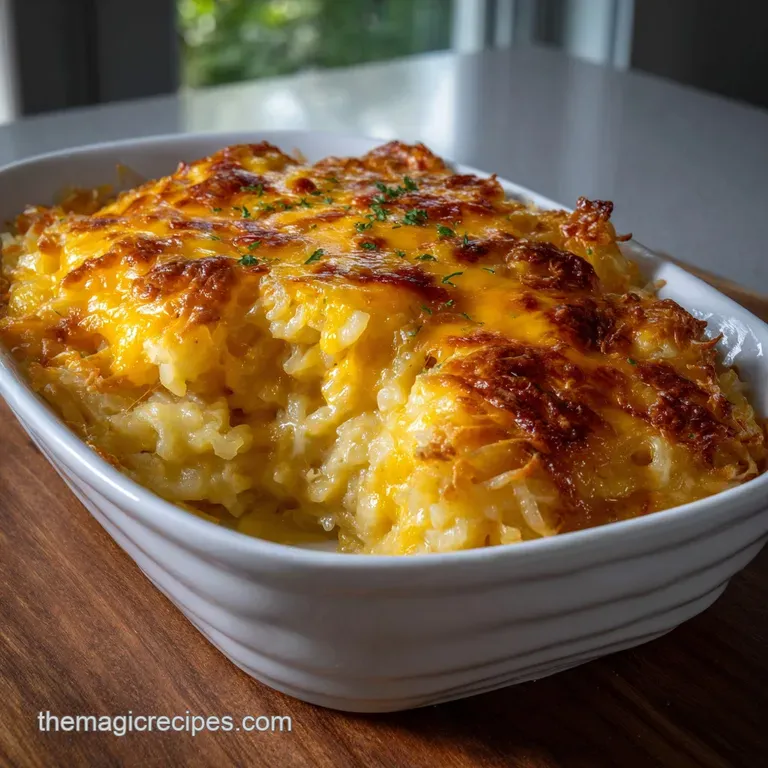
Follow these steps exactly to maintain the suspension of fats and starches. If you enjoy a more rustic texture, compare this method to our Hashbrowns recipe which focuses on individual strand crispness, rather than the layered comfort of a baked hashbrown casserole.
- Preheat oven to 350°F (175°C) to ensure immediate thermal impact.
- Melt 1/2 cup unsalted butter in a small saucepan until it stops hissing and smells nutty.
- Whisk the melted butter, cream of chicken soup, sour cream, diced onion, salt, pepper, and garlic powder in a large bowl until the mixture is completely smooth and pale yellow. Note: Creating a stable emulsion before adding solids prevents greasy pockets.
- Fold in 30 oz thawed hashbrowns and 2 cups shredded cheddar cheese until every strand is coated in the creamy binder.
- Transfer the mixture into the 9x13 dish, smoothing the top until the surface is level and reaches the corners.
- Crush 2 cups cornflakes by hand in a separate bowl until they are roughly the size of pea gravel.
- Combine crushed flakes with the remaining 1/4 cup melted butter until the flakes look glistening and mahogany colored.
- Scatter the topping evenly over the potatoes until no white sauce is visible beneath.
- Bake for 45 minutes until the edges are bubbling vigorously and the topping shatters under a light touch.
- Rest the casserole for 10 minutes until the bubbling subsides and the sauce sets firm. This resting period is crucial for the structural integrity of the hashbrown casserole.
Mitigating Texture Failures: Professional Diagnostics
Most issues with a hashbrown casserole stem from temperature fluctuations or moisture imbalances. If your bake looks more like a soup than a sliceable side, the root cause is likely the starch-to-liquid ratio.
Why Your Casserole is Watery or Mushy
When frozen potatoes are added without being patted dry, the ice crystals melt and dilute the condensed soup. This prevents the starch from gelatinizing properly, leaving you with a limp texture.
On top of that,, if the oven temperature is too low, the onion releases its water slowly rather than softening into the sauce.
| Problem | Root Cause | The Fix | Pro Protocol |
|---|---|---|---|
| Greasy Surface | Broken emulsion from overcooking | Use full fat dairy only | Pull the dish when edges hit 165°F (74°C). |
| Soggy Bottom | Excess moisture in frozen potatoes | Thaw and pat dry thoroughly | Press potatoes between paper towels before mixing to ensure a crisp bottom on your hashbrown casserole. |
| Burnt Topping | Sugar in cornflakes browning too fast | Move to lower oven rack | Tent loosely with foil for the last 15 minutes. |
⚗️ The Scaling Lab: The Physics of Quantity
When you decide to double this hashbrown casserole for a large crowd, you cannot simply double every metric. Physics dictates that as volume increases, the surface area-to-mass ratio changes.
- Flavor Saturation: Scale the salt and garlic powder to 1.5x (NOT 2x). Spices provide a cumulative aromatic effect; doubling them often results in a harsh, overly salty profile that masks the potato.
- Thermal Mass & Thermodynamics: A double batch in a deeper dish creates a massive core that takes significantly longer to heat. Drop the temperature to 325°F (163°C) and increase the cook time by 20 30 minutes. This prevents the edges from carbonizing while the center is still cold.
- The Evaporation Paradox: In a larger, deeper pan, less moisture escapes from the center. Reduce the sour cream by 2 tablespoons when doubling to ensure the center isn't runny.
- Pan Crowding: Do not try to fit two 9x13 dishes on the same oven rack. This blocks airflow and creates a "steaming" environment. Stagger the racks and rotate the pans halfway through for a uniform, golden crust.
Structural Modifications and Component Swaps
If you need to pivot based on dietary needs or pantry availability, these swaps maintain the necessary fat and protein levels for a successful bake. If you're looking for a more protein heavy morning option, our Breakfast Casserole recipe offers a similar comfort profile with added sausage, but it won't replicate the texture of this specific hashbrown casserole.
| Original Ingredient | Substitute | Why It Works |
|---|---|---|
| Cream of Chicken | Cream of Mushroom | Similar viscosity; provides an earthy, vegetarian friendly flavor profile. |
| Cornflakes | Panko Breadcrumbs | Adds a jagged, airy crunch. Note: Lacks the slight sweetness of cornflakes. |
| Sour Cream | Greek Yogurt (Full Fat) | High protein and acidity; results in a slightly tangier, denser crumb for the finished product. |
Chef's Tip: For an unconventional flavor boost, freeze your butter for 10 minutes before grating it into the cornflake topping rather than melting it. This creates tiny "steam pockets" that make the crust exponentially more flaky on the hashbrown casserole.
Post Service Integrity and Thermal Recovery
A hashbrown casserole actually tastes better the next day as the flavors undergo "flavor marriage," where aromatic compounds dissolve into the fats over time.
- Fridge Storage: Place in an airtight container for up to 4 days. The starch will firm up, making it easier to slice cold.
- Freezing: You can freeze the unbaked hashbrown casserole (minus the topping) for up to 3 months. Thaw in the fridge for 24 hours before adding the topping and baking.
- Reheating: Avoid the microwave, which turns the cornflakes into a damp paste. Reheat in a 350°F (175°C) oven for 15 minutes to revive the "shatter crisp" topping on your leftovers.
? ZERO WASTE PHILOSOPHY
Don't discard those leftover cornflake crumbs at the bottom of the bag. Transform: Use them as a crunch coating for oven fried chicken. Science: The pre-dehydrated corn starch in the flakes creates a superior moisture barrier compared to standard flour, keeping the meat juicier.
Curating the Final Presentation
Serve this alongside a high protein main to balance the heavy carbohydrates. It pairs excellently with the textures found in our Chicken Cordon Bleu Casserole recipe, which offers a similar crispy-to-creamy ratio to a well executed hashbrown casserole.
- Garnish: Add a flurry of fresh chives or scallions just before serving to provide a sharp, green contrast to the rich dairy.
- Acid Balance: A side of pickled red onions or a bright arugula salad helps cut through the 25.2g of fat per serving.
- Portioning: Use a serrated knife to cut through the topping first, then a flat spatula to lift the potato base to keep the layers intact when serving the hashbrown casserole.
Common Myths Debunked:Myth: You must rinse frozen hash browns. Truth: Rinsing removes the surface starch needed to thicken the sauce, leading to a watery mess in the final product. Myth: low-fat sour cream is a healthy 1:1 swap.
Truth: The lower fat content means more water and fillers, which will break under the high heat of a 45 minute bake, ruining the texture of your side dish.
By focusing on moisture control and the chemistry of the dairy emulsion, this hashbrown casserole moves from a basic potluck staple to a masterclass in texture and flavor. Trust the science, pat those potatoes dry, and wait for that signature sizzle.
Recipe FAQs
how to make hashbrown casserole?
Combine thawed, dried hash browns with a binder of cream of chicken soup, sour cream, and cheddar. Top with buttered cornflakes and bake at 350°F (175°C) until golden brown.
how to make hashbrown casserole from cracker barrel?
Mimic the texture using fresh ingredients. The Cracker Barrel version relies on high fat dairy and a quick bake time to achieve textural contrast. If you master controlling cookie spread here, see how the same fat ratio logic applies to developing a crisp structure in other baked goods.
how to make hashbrown casserole easy?
Use pre-shredded, slightly thawed potatoes. This minimizes prep time, but remember to pat them dry to prevent sauce dilution. This fast assembly method works well for high volume holiday preparation.
how to make hashbrown casserole from scratch?
Shred potatoes fresh for superior starch release. Freshly grated potatoes offer better water absorption capabilities when mixed into the sour cream emulsion. This technique avoids the gummy texture common when using pre-packaged, chemically treated potatoes.
how to make hashbrown casserole with corn flakes?
Crush them coarsely and toss with melted butter. The butter ensures the starch coating on the flakes browns evenly during the Maillard reaction. This creates a glass like crunch superior to standard breadcrumbs.
Can I skip the sour cream and use milk?
No. Full fat sour cream stabilizes the emulsion. The lactic acid in sour cream binds the fat and liquid, preventing oil separation when heated. low-fat dairy tends to break under high heat, yielding a watery, greasy result.
Myth: Freezing the mixture before baking improves flavor.
Myth: Freezing the mixture before baking improves flavor. Reality: Freezing introduces large ice crystals that rupture the starch structure upon thawing, guaranteeing a grainy texture rather than a creamy set.
Ultimate Hashbrown Casserole
Ingredients:
Instructions:
Nutrition Facts:
| Calories | 344 kcal |
|---|---|
| Protein | 7.9 g |
| Fat | 25.2 g |
| Carbs | 20.7 g |
| Fiber | 1.5 g |
| Sugar | 2.1 g |
| Sodium | 458 mg |
