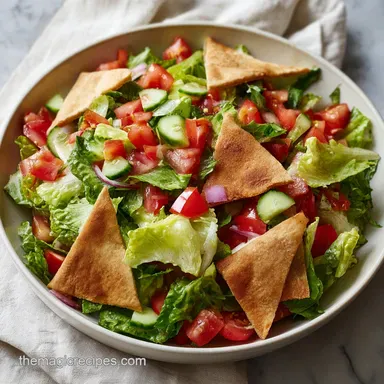
Authentic Lebanese Fattoush: Zesty and Fresh

- Time:20 minutes prep + 10 minutes cook = 30 minutes total
- Flavor/Texture Hook: Shatter crisp pita with a tangy, herb heavy punch
- Perfect for: Vibrant mezze platters or a refreshing summer side
Nailing the Perfect Fattoush Recipe
The sound of pita squares hitting hot oil is a specific kind of magic, that rapid sizzle that tells you you're about to get a serious crunch. I remember the first time I tried making this at home, I did the "healthy" thing and tossed the pita in with the vegetables immediately.
Within ten minutes, I didn't have a salad, I had a bowl of wet, chewy bread sponges. It was a disaster, and honestly, it's the most common mistake people make when they first try a fattoush recipe.
The trick is treating the pita like a prized crouton, not just another vegetable. When you get that mahogany color and that nutty aroma, you've hit the sweet spot. This isn't just a garden salad, it's a study in textures where the zing of sumac cuts right through the richness of the olive oil.
In this guide, I'm sharing the exact way to keep those pita chips shatter crisp while keeping the vegetables vibrant. We'll talk about the specific chop for the cucumbers and how to shake your dressing until it's perfectly opaque.
If you follow this fattoush recipe, you're getting a dish that's balanced, colorful, and authentically punchy.
Essential Recipe Specs
Before we get into the chopping, let's look at the logistics. This fattoush recipe is designed for a group, making enough to feed six people comfortably. It's a relatively fast process, but the "active" part is the prep, since there's a lot of knife work involved to get those consistent, bite-sized pieces.
The total time is 30 minutes, with 20 minutes spent on prep and 10 minutes for the stovetop frying. Because we're using fresh herbs like mint and parsley, the flavor is at its peak immediately after assembly.
Trust me, don't let this sit in the fridge for a day if you can help it, or you'll lose that signature crunch.
One thing to keep in mind is the " assembly window." The vegetables can be prepped and the dressing made ahead, but the pita and the final toss happen in the last 60 seconds. That's the golden rule of any authentic fattoush recipe.
Shopping List Essentials
For this fattoush recipe, the quality of your olive oil and the freshness of your sumac make a huge difference. Sumac is that deep red, tangy powder that gives the salad its soul, and if it's old, it loses its zest. Look for a vibrant, burgundy colored powder.
I prefer Persian cucumbers because they have thinner skins and fewer seeds, which means they stay crunchier and don't water down the dressing. For the tomatoes, go for firm ones, like Roma or vine ripened, so they hold their shape when diced.
The Herb Balance
The parsley and mint aren't just garnishes, they are core ingredients. I use a mix of both to get that classic Mediterranean profile. If you can't find fresh mint, don't swap it for dried, as the flavor profile changes completely. Just stick to the fresh stuff for the best fattoush recipe experience.
Component Analysis
| Ingredient | Science Role | Pro Secret |
|---|---|---|
| Sumac | Organic Acid | Use it as a dry rub on the pita too for extra tang |
| Lemon Juice | pH Lowering | Squeeze fresh; bottled juice has a metallic aftertaste |
| Olive Oil | Fat Carrier | Use extra virgin to carry the garlic flavor better |
| Garlic | Aromatic Base | Mash into a paste with salt to remove the "bite" |
Required Kitchen Tools
You don't need fancy gear for this fattoush recipe, but a few specific items make the process smoother. A heavy bottomed skillet, like a cast iron one, is best for frying the pita because it holds heat evenly, ensuring every square browns at the same rate.
A glass jar with a tight lid is my secret weapon for the dressing. Shaking it is far more effective than whisking for getting that opaque, emulsified texture. Also, make sure you have a very large mixing bowl, as tossing this amount of vegetables requires space to avoid bruising the romaine.
The step-by-step Process

Let's get into the flow. The goal here is to prep everything "dry" first, then "wet," and finally combine them in a way that preserves the texture of the fattoush recipe.
Phase 1: Preparing the Pita
First, heat 3 tbsp of olive oil in your skillet over medium high heat. Once it's shimmering, add your pita squares. Fry them for 2-3 minutes, tossing frequently. You're looking for a mahogany color and a nutty smell.
Immediately move the pita to paper towels to drain and sprinkle them with 1/2 tsp of fine sea salt while they're still hot. This ensures the salt sticks and enhances the flavor. If you're looking for other ways to add crunch to your meals, you might enjoy my homemade croutons for other types of salads.
Phase 2: Chopping the Vegetables
While the pita cools, prep the base. Chop your large romaine lettuce into bite-sized pieces. Dice the 3 firm tomatoes and 2 Persian cucumbers. Thinly slice the 4 radishes into translucent discs. Slice the 4 green onions.
Place all these in your large bowl. Fold in the 1/2 cup of chopped parsley and 1/4 cup of torn mint leaves. Be gentle here, as we want the herbs to stay intact and not turn into a paste. This fresh base is what makes this fattoush recipe so vibrant.
Phase 3: Emulsifying the Dressing
In your glass jar, combine 1/4 cup of olive oil, 3 tbsp of lemon juice, 2 tsp of sumac, 1 clove of minced garlic paste, 1/2 tsp salt, and 1/4 tsp black pepper.
Close the lid tightly and shake vigorously for 30 seconds. You'll see the mixture change from separate layers to a unified, opaque liquid. This emulsification is key for this fattoush recipe because it ensures the dressing clings to the vegetables instead of pooling at the bottom of the bowl.
Phase 4: Assembling for Maximum Crunch
Now, pour the dressing over the vegetable mixture. Toss gently until everything is coated in that velvety sumac dressing.
Right before you bring the bowl to the table, add the fried pita chips. Toss one last time and serve immediately. By adding the pita at the final second, you ensure they stay shatter crisp, which is the hallmark of a professional fattoush recipe.
Cook Method Comparison
| Method | Time | Texture | Best For |
|---|---|---|---|
| Stovetop | 10 min | Rich and Nutty | Authentic flavor |
| Oven | 15 min | Lighter, drier | Large batches |
Fixing Common Salad Issues
Even with a simple fattoush recipe, things can go sideways. The most common issue is the "soggy factor," but there are a few other pitfalls like overpowering garlic or a dressing that tastes too sharp.
Why Your Pita Goes Soft
If your pita loses its crunch too fast, it's usually because it was added too early or the dressing was too watery. To prevent this, always add the pita as the final step. If you've already added them and they're softening, you can't reverse it, but you can prevent it next time by ensuring the pita is fully drained of excess oil.
Taming Overpowering Garlic
Sometimes a garlic clove can be a bit too aggressive, masking the delicate mint and parsley. If your dressing tastes too "sharp," add a tiny pinch of sugar or a bit more olive oil to mellow out the raw garlic punch.
Balancing Excess Sourness
If the sumac and lemon combine to make the salad too tart, don't reach for more salt. Instead, add a few more pieces of cucumber or a bit more olive oil. The fats and the water content of the cucumbers will neutralize the acidity of this fattoush recipe.
| Problem | Root Cause | Solution |
|---|---|---|
| Soggy Pita | Added too early | Add pita seconds before serving |
| Bland Taste | Lack of salt/acid | Add a squeeze of fresh lemon |
| Oily Base | Too much olive oil | Add more chopped romaine |
Common Mistakes Checklist
- ✓ Fry pita until mahogany, not just golden (deeper color = more crunch)
- ✓ Use a jar to shake the dressing (better emulsification than whisking)
- ✓ Pat cucumbers dry after washing to prevent watering down the dressing
- ✓ Add the pita chips ONLY at the moment of serving
- ✓ Use a large bowl to avoid bruising the lettuce leaves
Dietary Adaptation Options
One of the best things about this fattoush recipe is how easy it is to tweak for different needs. Since the core is just vegetables and bread, you have a lot of room to play with.
Going gluten-free
If you need a gluten-free version, you can substitute the pita with gluten-free pita bread or even roasted chickpeas. Roasted chickpeas provide a similar nutty flavor and crunch, though the texture is a bit denser.
Note that the overall vibe of the fattoush recipe changes slightly, but the flavor profile remains intact.
Lowering the Calories
To make this a lighter option, you can bake the pita squares in the oven at 375°F (190°C) with a light spray of oil instead of frying them. You'll lose some of that rich, nutty depth, but you'll save a significant amount of fat.
You can also reduce the olive oil in the dressing by half and replace it with a tablespoon of water or a bit more lemon juice.
Increasing the Protein
While this is traditionally a side, you can turn this fattoush recipe into a main meal by adding grilled halloumi or chickpeas. Grilled halloumi adds a salty, chewy contrast that pairs beautifully with the tangy sumac.
| Original Ingredient | Substitute | Why It Works |
|---|---|---|
| Pita Bread (6 oz) | GF Pita or Chickpeas | Maintains crunch. Note: Chickpeas add more protein |
| Romaine Lettuce | Spinach or Kale | Similar base. Note: Kale requires more dressing to soften |
| Persian Cucumber | English Cucumber | Similar texture. Note: Remove seeds first to avoid sogginess |
Storage and Zero Waste
Since this is a fresh salad, storage is a bit tricky. If you've made a large batch of the fattoush recipe and have leftovers, keep the components separate.
Store the chopped vegetables in one airtight container and the dressing in a jar in the fridge for up to 2 days. The fried pita should be kept in a paper bag or a container with a paper towel to absorb any residual moisture. Mix everything together only when you're ready to eat.
Never store the assembled salad, as the pita will turn into mush.
Zero Waste Tips
Don't throw away those vegetable scraps! I use the cucumber ends and leftover parsley stems to make a quick infused water. The tomato seeds and pulp that cling to the cutting board can be scraped into a pan with a bit of oil and garlic to make a fast base for a pasta sauce.
Using every bit of your produce not only saves money but also honors the ingredients in this fattoush recipe.
Best Pairing Suggestions
A fattoush recipe is rarely served alone; it's usually part of a larger spread. The acidity of the salad makes it the perfect partner for rich, savory dishes.
I highly recommend serving this alongside some grilled lamb skewers or a creamy hummus with warm bread. If you're looking for another fresh contrast, my Arugula Fennel Apple Salad is a great alternative if you want something with a sweeter edge.
The Mezze Platter
For a true experience, build a mezze platter. Place the fattoush recipe in a central bowl and surround it with olives, feta cheese, and stuffed grape leaves. The tanginess of the sumac cleanses the palate between bites of the salty olives and creamy cheese, making every mouthful taste fresh.
Protein Pairings
If you want a heartier meal, try pairing this with a lemon garlic grilled chicken. The charred flavor of the chicken complements the zesty nature of the salad perfectly. Just ensure the chicken is rested for a few minutes before plating so the juices don't run into the salad and compromise the crunch of the pita.
This fattoush recipe is all about those vibrant colors and bold flavors. When you see the deep reds of the sumac and tomatoes against the bright greens of the parsley and mint, you know you've got something special on the table.
It's a dish that celebrates simplicity and fresh ingredients, and once you nail that pita crunch, you'll never go back to basic garden salads. Trust me, your friends will be asking for the secret to that perfect, zesty bite every time you serve it.
Recipe FAQs
What ingredients are in fattoush?
Pita bread, romaine lettuce, tomatoes, cucumbers, radishes, green onions, parsley, and mint. The flavor is completed with a dressing of olive oil, lemon juice, sumac, garlic paste, salt, and pepper.
What dressing is typically used on fattoush?
A tart emulsion of olive oil, lemon juice, and sumac. This combination provides the signature zesty profile, balanced with minced garlic paste.
Which is healthier, tabbouleh or fattoush?
Both are highly nutritious. Fattoush provides a wider variety of fresh vegetables like radishes and cucumbers, while tabbouleh is primarily focused on parsley.
What is the best season to make fattoush?
Summer is ideal. The recipe depends on peak-season, crisp produce like firm tomatoes and fresh romaine to achieve the best flavor.
How to keep the pita crispy?
Add the pita chips immediately before serving. Mixing them in too early allows the dressing to soak into the bread, turning it mushy.
Is it true I can store the assembled salad in the fridge?
No, this is a common misconception. You must store the chopped vegetables, dressing, and fried pita in separate containers to prevent the salad from becoming soggy.
How to get a perfectly emulsified dressing?
Combine ingredients in a glass jar and shake vigorously for 30 seconds. If you enjoyed mastering this emulsion here, see how the same principle works in our bright herb sauce.
Fattoush Recipe in 30 Minutes