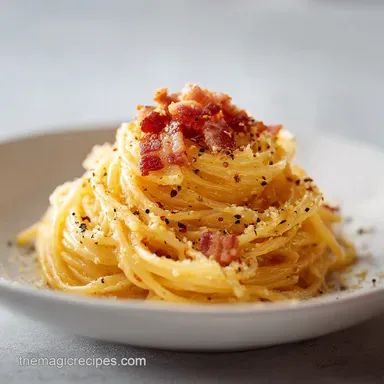
Authentic Pasta Carbonara: Creamy and Rich
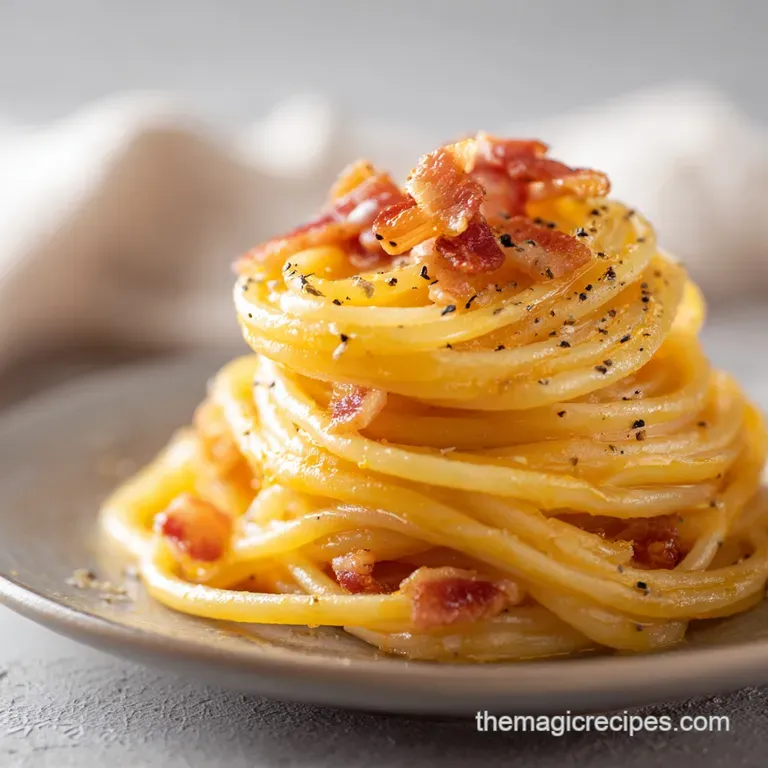
- Time:5 minutes active + 15 minutes cook = Total 20 minutes
- Flavor/Texture Hook: Velvety, salty sauce with shatter crisp pork
- Perfect for: An authentic Italian dinner that feels high end but uses few ingredients
- Authentic Italian Pasta Carbonara Made Easy
- Quick Timing and Yield Guide
- Essential Components and Smart Swaps
- The Right Tools for Success
- Step by Step Cooking Guide
- Fixing Common Cooking Errors
- Creative Variations and Ingredient Twists
- Storage and Zero Waste Tips
- Plating for Visual Impact
- High in Sodium
- Recipe FAQs
- 📝 Recipe Card
Authentic Italian Pasta Carbonara Made Easy
The first thing you'll notice is that smell. It is that deep, funky, salty aroma of guanciale hitting a hot pan, releasing fat that smells like a Roman street market. I remember the first time I tried to make this for a friend who lived in Italy.
I did what most people do - I added a splash of heavy cream because I was terrified the sauce would be too dry. He looked at me with genuine horror, as if I'd just put ketchup on a steak.
That was my wake up call. I realized that the "creaminess" in a real carbonara doesn't come from a carton, it comes from the magic of eggs and cheese emulsifying with starchy pasta water. It is a high wire act of temperature control, but once you get it, you'll never go back to the fake versions.
Trust me, once you taste the velvet texture of a proper emulsion, cream feels like a cheat that actually masks the flavor.
We are going to focus on the authentic path here. No cream, no garlic, no peas. Just the gold standard: eggs, hard cheese, cured pork, and black pepper. It is a dish that proves you don't need a long list of ingredients to create something that tastes complex and luxurious. Let's crack on.
Quick Timing and Yield Guide
Getting the timing right is everything with this dish. You aren't just cooking pasta; you are managing three different temperature zones simultaneously. If your pork is ready but your pasta is still hard, your fat will cool down too much.
If your pasta is done but your egg mixture isn't whisked, you'll overcook the noodles.
For this version, we are aiming for a tight 20 minute window. The prep is minimal, but the execution requires your full attention. You cannot walk away to check your phone once the pasta hits the pan, or you'll end up with breakfast pasta (scrambled eggs).
| Method | Time | Texture | Best For |
|---|---|---|---|
| Stovetop | 20 min | Velvety | Traditional dinner |
| Oven Finish | 30 min | Baked crust | Large crowds |
Essential Components and Smart Swaps
The beauty of this recipe is its simplicity, which means every ingredient has to pull its weight. I always tell my friends not to bother with pre grated cheese. Those bags have potato starch or cellulose to prevent clumping, which is the enemy of a smooth sauce.
Grate your own Pecorino; it melts differently and tastes sharper.
For the pork, guanciale is the authentic choice. It is cured pork jowl, and it has a higher fat content than pancetta, which is what gives the sauce its body. If you can't find it at your local ethnic market, pancetta is a solid second choice, but bacon is a different beast entirely because of the smoky flavor.
| Original Ingredient | Substitute | Why It Works |
|---|---|---|
| Guanciale (5 oz) | Pancetta (5 oz) | Similar cured pork. Note: Slightly less funky and fatty than jowl |
| Pecorino Romano (1 cup) | Parmesan (1 cup) | Both are hard Italian cheeses. Note: Milder and nuttier, less salty |
| Spaghetti (1 lb) | Rigatoni (1 lb) | Holds sauce in the ridges. Note: Changes the "slurp" factor |
| Large Eggs (3) | 2 Whole + 2 Yolks | Increases richness. Note: Makes the sauce a deeper yellow |
For those looking for something different, you might enjoy a Million Dollar Spaghetti recipe for a more indulgent, cheesy experience, but for this specific dish, we stick to the basics.
The Right Tools for Success
You don't need a professional kitchen, but a few specific tools make this much easier. I highly recommend a wide skillet rather than a deep pot for the final toss. The more surface area you have, the easier it is to stir the pasta rapidly, which is the only way to ensure the egg sauce coats every strand without clumping.
Tongs are non negotiable. Trying to stir carbonara with a spoon is a recipe for disaster. You need to be able to lift and swirl the pasta to create that velvety emulsion. Also, keep a heat proof mixing bowl handy for your egg and cheese paste; using a plastic bowl can sometimes lead to melting or uneven mixing.
Step by step Cooking Guide
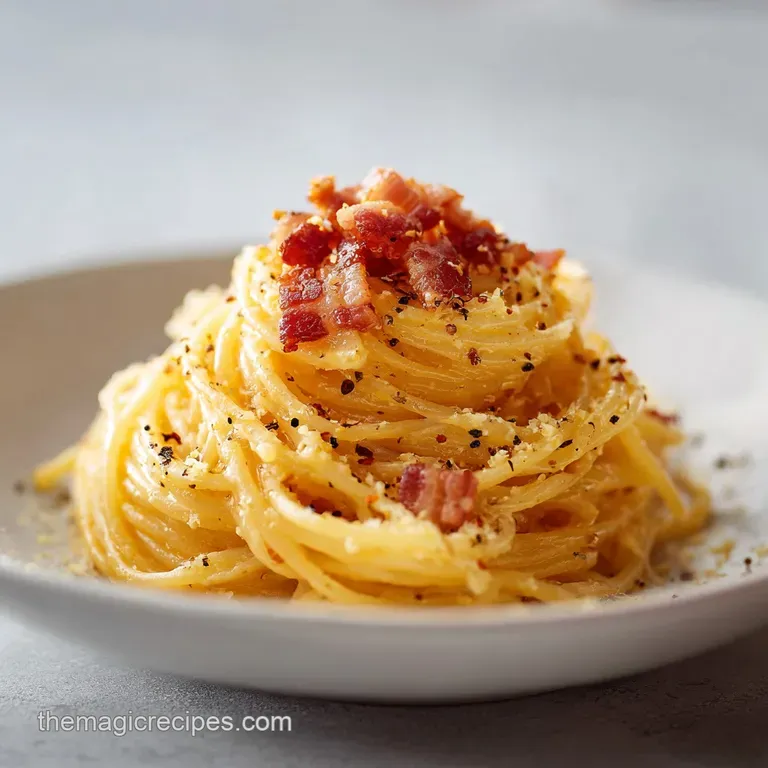
Right then, let's get into the actual process. The most important thing to remember is that the pan must be off the heat before the eggs go in.
Pasta and Pork
- Bring a large pot of salted water to a boil and cook the 1 lb of spaghetti according to package directions. Note: Keep it slightly under the "al dente" time as it will cook more in the pan.
- Place the 5 oz of cubed guanciale into a cold skillet. Note: Starting cold allows the fat to render slowly without burning the meat.
- Turn the heat to medium and cook until the pork is mahogany colored and crisp.
- Remove the pan from the heat immediately. Note: This prevents the pan from being too hot when the eggs arrive later.
The Carbonara Sauce
- In a mixing bowl, whisk together 3 large room temperature eggs and 1 cup of grated Pecorino Romano.
- Stir until a thick, pale paste forms, then stir in 1 tsp of cracked black pepper.
- Using tongs, transfer the spaghetti directly from the boiling water into the skillet.
- Toss the pasta in the pork fat for 30 seconds until every strand is glistening.
The Marriage
- Pour the egg cheese mixture over the pasta while stirring rapidly.
- Add 1/4 cup of starchy pasta water and toss continuously for 2 minutes until the sauce becomes velvety and clings to the pasta.
Chef: If the sauce looks too dry, add one more tablespoon of pasta water. If it looks too runny, keep tossing for another 30 seconds; the residual heat will thicken the eggs.
Fixing Common Cooking Errors
The most common frustration with this dish is the "scramble." If you see chunks of cooked egg, you've had a temperature spike. This usually happens because the pan was still on the burner or the pasta was too hot when the eggs were added.
Another issue is the "clump." This happens when the cheese isn't fully integrated into the eggs before hitting the pan, or when you use pre grated cheese that refuses to melt. The key is that initial paste.
Eggs Became Scrambled
This is usually a result of the pan being too hot. The eggs cook at a much lower temperature than the boiling pasta.
| Problem | Root Cause | Solution |
|---|---|---|
| Scrambled eggs | Pan temperature too high | Remove pan from heat entirely before adding eggs |
| Grainy sauce | Cheese not melted | Use finely grated fresh cheese and more pasta water |
| Watery sauce | Too much pasta water | Toss for another minute to let the eggs thicken |
Common Mistakes Checklist
- ✓ Start guanciale in a cold pan to render the fat properly.
- ✓ Use room temperature eggs to avoid shocking the sauce.
- ✓ Grate your own Pecorino Romano for a smoother melt.
- ✓ Remove the skillet from the heat before the egg mixture touches the pan.
- ✓ Reserve a cup of pasta water before draining the noodles.
Creative Variations and Ingredient Twists
While the authentic version is king, I love playing with flavors once I've mastered the base. If you want a bit more smoke, you can swap half the guanciale for smoked pancetta. It gives the dish a deeper, woodsy profile that pairs well with a glass of bold red wine.
For a vegetarian version, you can replace the pork with smoked sun dried tomatoes or sautéed mushrooms with a pinch of smoked paprika. You'll miss the pork fat, so add a tablespoon of olive oil or butter to the pan to help the emulsion.
The Smoky Upgrade
If you're feeling adventurous, add a pinch of smoked paprika to the guanciale as it finishes rendering. This bridges the gap between the funky jowl and a more traditional smoky bacon profile.
Dairy free Version
Since this is an egg based sauce, it is naturally cream free, but for a full dairy-free version, you can use a nutritional yeast and cashew cream blend. However, the texture will be closer to a Chicken Fettuccine Alfredo than a traditional carbonara.
Storage and Zero Waste Tips
Honestly, carbonara is a "eat it now" kind of dish. Because the sauce is an emulsion of eggs and cheese, it doesn't reheat well. If you put it in the microwave, the eggs will likely scramble, and the sauce will separate into a greasy mess.
If you must store it, keep it in an airtight container in the fridge for up to 3 days. To reheat, put it back in a pan over very low heat and add a splash of water or milk to loosen the sauce.
Zero Waste Ideas
Don't throw away the leftover rendered pork fat in your pan. I usually save it in a small jar in the fridge. It's incredible for roasting potatoes or sautéing kale. Even the ends of the Pecorino block can be tossed into a homemade vegetable stock to add a salty, umami depth.
Plating for Visual Impact
Carbonara can look a bit like a "yellow blob" if you aren't careful. To make it look like it came from a Roman trattoria, you need to focus on color balance. I use three specific accents to make the dish pop.
First, the mahogany colored pork. I make sure to save a few of the crispiest cubes to place on top of the pasta mound rather than stirring them all in. Second, the golden yellow hue of the sauce. This is achieved by using high-quality eggs with deep orange yolks.
Finally, the sharp black contrast of the pepper. I always add a final, aggressive crack of fresh black pepper over the top just before serving. The contrast of the black specs against the creamy yellow and deep brown pork makes the dish look vibrant and appetizing.
Use a carving fork to twirl the pasta into a high nest in the center of the bowl for that professional height.
High in Sodium
920 mg 920 mg of sodium per serving (40% 40% of daily value)
The American Heart Association recommends a limit of 2,300mg of sodium per day for most adults to maintain heart health.
Tips to Reduce Sodium
-
Swap Guanciale-25%
Replace guanciale with un-cured fresh pork belly and season it yourself to significantly lower the processed salt content.
-
Omit Added Salt-25%
Skip the kosher salt entirely; the cured meat and Pecorino Romano provide more than enough sodium for the dish.
-
Reduce Pecorino-15%
Use half the amount of Pecorino Romano and add a tablespoon of unsalted ricotta to maintain the creamy texture.
-
Enhance Aromatics
Increase the coarse black pepper or stir in fresh chopped parsley to add depth of flavor without adding sodium.
Recipe FAQs
What are the main ingredients in carbonara?
Spaghetti, guanciale, eggs, Pecorino Romano, and black pepper. These core components create the traditional flavor, while olive oil and salt are used during the cooking process.
What are the biggest carbonara mistakes?
Overheating the egg mixture. Adding eggs while the pan is still on the heat causes them to scramble rather than emulsify. Using pre-grated cheese is another common error that prevents a smooth melt.
What is the sauce in carbonara?
An emulsion of eggs, grated Pecorino Romano, and starchy pasta water. This combination creates a rich, velvety coating without the need for any heavy cream.
How to prevent the eggs from scrambling?
Remove the skillet from the heat immediately after tossing the pasta in the pork fat. Stir the egg and cheese mixture in rapidly with a splash of pasta water to maintain a smooth consistency.
Is it true that you must add cream to make carbonara creamy?
No, this is a common misconception. The creamy texture is achieved entirely through the emulsion of room temperature eggs and cheese combined with the starchy pasta water.
How to store and reheat leftover carbonara?
Store in an airtight container in the fridge for up to 3 days. Reheat in a pan over very low heat and add a splash of water to loosen the sauce.
What side dish pairs well with this richness?
A fresh, acidic salad is best. A light Mediterranean chickpea salad cuts through the heavy fats of the guanciale and cheese.
Pasta Carbonara in 20 Minutes: Authentic and Creamy Style