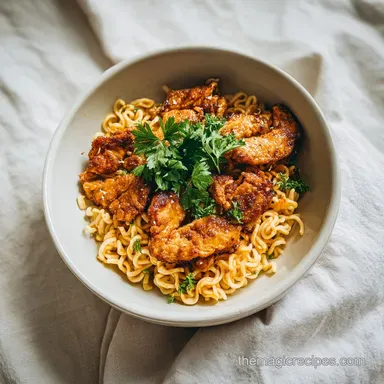
Fiery Chicken Ramen with Creamy Garlic Sauce
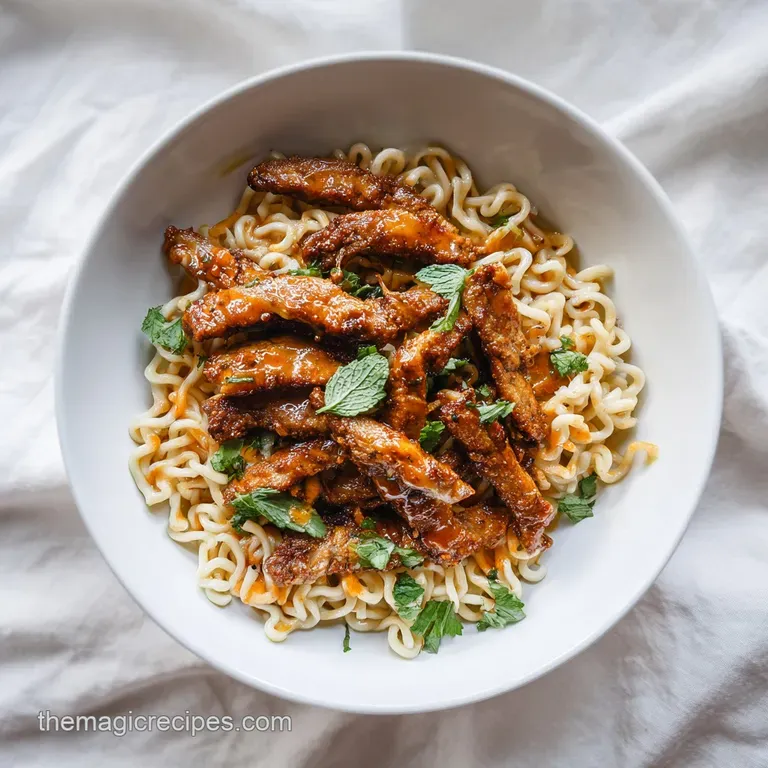
- Time: 10 min active + 25 min cook = Total 35 mins
- Flavor/Texture Hook: Velvety, spicy sauce with mahogany seared chicken
- Perfect for: An adventurous dinner that feels fancy but takes under an hour
- Fiery Chicken Ramen with Creamy Garlic Sauce
- Secrets to the Bold Flavor
- The Essential Component List
- Gear for the Job
- Step-by-Step Cooking Guide
- Fixes for Common Issues
- Troubleshooting Common Issues
- Creative Flavor Tweaks
- Storage and Scrap Tips
- Presentation and Pairings
- High in Sodium
- Recipe FAQs
- 📝 Recipe Card
That first sound is what gets me every time, the aggressive sizzle of chicken thighs hitting a shimmering pan of oil. Then comes the smell, a heady mix of smoked paprika and garlic that fills the kitchen and tells you exactly what's happening.
I remember the first time I tried to make a creamy ramen, I accidentally boiled the cream too hard and it split, leaving me with a greasy, broken mess that looked more like a science experiment than dinner.
But once I figured out the timing, everything changed. The way the deep red gochujang swirls into the white cream, turning the whole thing a gorgeous, glowing orange, is just satisfying to watch. Here is the ultimate recipe for Fiery Chicken Ramen with Creamy Garlic Sauce.
It's the kind of meal that makes you want to turn off your phone, grab a massive bowl, and just lean into the heat.
Fiery Chicken Ramen with Creamy Garlic Sauce
Right then, let's get into the heart of this. The goal here isn't just "spicy noodles," it's about balance. We're using chicken thighs because they don't dry out like breasts do, and the fat in the meat actually helps carry the spice across your palate without it just being a burn in your throat.
The garlic is the backbone. When you sauté it in butter, it creates this aromatic base that anchors the soy sauce and the chili paste. If you're looking for even more depth in your protein, you could experiment with some Homemade Meat Marinades before searing, though the smoked paprika rub in this version is already a winner.
The result is a bowl of creamy ramen noodles that feel luxurious, but the "fiery" part keeps it from feeling too heavy. It's a bit of a contradiction on a plate, and that's why it works. Trust me on this, don't skip the sear on the chicken, as that crust is where all the deep, savory notes live.
Secrets to the Bold Flavor
To understand why this dish hits different, you have to look at how the ingredients interact. I'm not talking like a textbook, just the stuff I've noticed after making this a dozen times.
The Fat Buffer: The heavy cream and butter act as a shield for your taste buds. They coat the tongue, which means the capsaicin from the chili paste doesn't hit you all at once, allowing you to taste the garlic and soy instead of just heat.
The Deglaze Effect: When we pour the chicken broth into the pan, it lifts all those browned, caramelized chicken bits (the fond) off the bottom. This essentially injects a concentrated dose of roasted chicken flavor directly into the sauce.
Starch Integration: By adding the noodles to the sauce at the end, a tiny bit of the noodle starch mixes in, which helps the velvety sauce stick to the pasta rather than sliding off to the bottom of the bowl.
Quick Decision: Fast vs. Classic
| Feature | Fast Method | Classic Method |
|---|---|---|
| Protein | Pre cut strips | Hand sliced thighs |
| Noodles | Instant packets | Fresh ramen noodles |
| Broth | Concentrated cube | Simmered chicken broth |
The Essential Component List
Let's talk about what you need. I've found that using high fat ingredients is non negotiable here, so honestly, don't even bother with low-fat cream or light butter. You'll lose the texture that makes this dish special.
For the Chicken
- 680 g boneless, skinless chicken thighs, sliced into bite sized stripsWhy this? Thighs stay juicy under high heat
- 30 ml neutral oil (canola or vegetable)Why this? High smoke point prevents burning
- 5 g smoked paprikaWhy this? Adds a woody, charred depth
- 3 g saltWhy this? Basic flavor enhancer
- 1 g black pepperWhy this? Adds a subtle, sharp bite
For the Creamy Garlic Sauce
- 15 g garlic, mincedWhy this? Provides the pungent, aromatic base
- 15 g unsalted butterWhy this? Adds richness and helps garlic brown
- 15 g Gochujang or red chili pasteWhy this? Fermented heat and umami
- 240 ml chicken brothWhy this? Savory liquid base
- 30 ml soy sauceWhy this? Adds salt and depth
- 240 ml heavy creamWhy this? Creates the velvety texture
For the Base & Garnish
- 400 g ramen noodlesWhy this? Chewy texture that holds sauce
- Green onions, sliced
- Toasted sesame seeds
Substitution Guide
| Original Ingredient | Substitute | Why It Works |
|---|---|---|
| Heavy Cream (240ml) | Full fat Coconut Milk (240ml) | Similar fat content. Note: Adds coconut flavor, making it more tropical |
| Gochujang (15g) | Sriracha + Miso paste (10g each) | Mimics the heat and fermented saltiness. Note: Less thick than Gochujang |
| Chicken Thighs | Shrimp or Tofu | Quick cook time. Note: Tofu needs pressing to get a good sear |
Gear for the Job
You don't need a professional kitchen for this, but a few specific tools make it a lot easier.
First, a large stainless steel or cast iron skillet is a must. You need something that can handle medium high heat and create a good crust on the chicken. Non stick is okay, but you won't get that same mahogany colored sear that a steel pan provides.
Then you'll need a whisk. When you're adding the cream and broth, a whisk helps you incorporate the chili paste and butter smoothly, ensuring you don't end up with clumps of paste floating in your sauce.
Finally, a large pot for the ramen. Make sure the pot is big enough that the noodles have room to dance; if they're too crowded, they tend to clump together and get mushy.
Step-by-step Cooking Guide
Let's crack on. Follow these steps and you'll have a bowl of Fiery Chicken Ramen with Creamy Garlic Sauce that looks and tastes like it came from a high end fusion spot.
- Season the chicken strips. Toss them in a bowl with the smoked paprika, salt, and pepper until every piece is coated.
- Heat the oil. Place your skillet over medium high heat and wait until the oil is shimmering.
- Sear the chicken. Add the strips in a single layer. Do not move them for 3-4 minutes until a deep, mahogany colored crust forms. Note: Moving them too early prevents the sear
- Finish the meat. Flip the chicken and cook for another 3 minutes until cooked through. Remove them from the pan and set them aside on a plate.
- Melt the butter. Use the same pan (don't wash it!) and melt the butter over medium heat.
- Sauté garlic. Add the minced garlic and cook for 1 minute until it smells fragrant and looks slightly golden.
- Bloom the spice. Stir in the chili paste, cooking for another 30 seconds until it darkens slightly.
- Build the broth. Slowly whisk in the chicken broth and soy sauce, scraping the bottom of the pan to lift the browned bits.
- Thicken the sauce. Reduce heat to low and pour in the heavy cream. Simmer gently for 3-5 minutes until the sauce is velvety and thick.
- Boil the noodles. While the sauce simmers, boil your ramen noodles according to the package, drain them well, and divide into four bowls.
- Assemble. Top the noodles with the seared chicken and pour the garlic sauce over everything.
- Garnish. Sprinkle with green onions and toasted sesame seeds.
Fixes for Common Issues
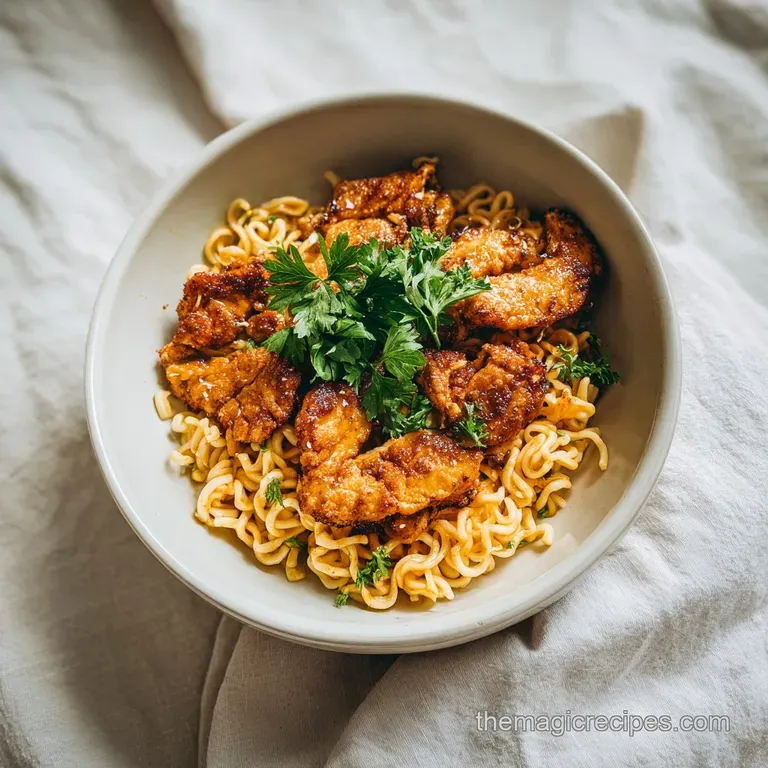
Even the best of us mess up sometimes. I've spent way too many nights staring at a pot of ramen wondering where I went wrong.
Troubleshooting Common Issues
| Issue | Solution |
|---|---|
| Why Your Sauce Separated | If your sauce looks curdled or has oil floating on top, you probably let the cream boil too aggressively. High heat can cause the fat in the cream to separate from the liquid. |
| Why Your Chicken is Steamed | If your chicken looks gray instead of mahogany, you likely crowded the pan. When too many pieces of meat touch, they release moisture that turns into steam, preventing the sear. |
| Why Your Noodles are Mushy | Overcooking ramen by even 30 seconds can ruin the chew. Always pull them out just before they reach the package's "perfect" time, as they'll continue to cook once the hot sauce hits them. Troublesho |
Common Mistakes Checklist
- ✓ Don't crowd the skillet; sear chicken in batches if needed.
- ✓ Never boil the cream on high; keep it at a gentle simmer.
- ✓ Drain noodles thoroughly to avoid watering down the sauce.
- ✓ Sauté garlic just until golden; burnt garlic tastes bitter.
Creative Flavor Tweaks
Once you've nailed the base, you can start playing with it. This recipe is a great canvas for different global flavors.
If you want a "nuclear" heat level, add a teaspoon of Gochugaru (Korean red chili flakes) or a drizzle of Szechuan peppercorn oil. This adds a numbing quality that contrasts with the creaminess.
For those who love a bit of a tang, a squeeze of fresh lime juice right before serving cuts through the fat of the cream and butter beautifully.
For a different side or a dip to go with the chicken, you might enjoy a Yum Yum Sauce recipe, which provides a sweet and creamy contrast to the fiery heat of the ramen.
Decision Shortcut
- If you want more veg, add baby spinach or bok choy during the final 2 minutes of simmering.
- If you want a different protein, use shrimp (sear for 2 mins per side).
- If you want a thicker sauce, whisk in 1 teaspoon of cornstarch dissolved in water.
Adjusting the Batch Size
When scaling this recipe, be careful with the salt and spice.
For a half batch, use a smaller skillet to keep the sauce from evaporating too quickly, and reduce the total simmering time by about 20%.
For a double or triple batch, do not just double the salt and soy sauce. Start with 1.5x the amount and taste as you go. Most importantly, sear the chicken in multiple batches. If you throw 1.3kg of chicken into one pan, you'll end up with a boiled chicken soup instead of a sear.
Storage and Scrap Tips
You can keep the leftovers in an airtight container in the fridge for up to 3 days. When you reheat it, the sauce might thicken up quite a bit. Just add a splash of water or broth and heat it slowly on the stove to bring that velvety texture back.
I don't recommend freezing this dish. The cream can separate and the noodles will turn into a sponge, losing all their chew.
To keep things zero waste, save your chicken broth bones or the stems of your green onions. You can toss those stems into your next stock pot or finely chop them and sauté them with the garlic for extra flavor.
If you have leftover noodles, they make a killer stir fry the next day when tossed with a bit of soy sauce and whatever veg is in your fridge.
Presentation and Pairings
How you serve this changes the whole experience. Whether it's a quick Tuesday dinner or a date night, you can adjust the plating.
Plating Levels
| Level | Layout | Key Add on | Vibe |
|---|---|---|---|
| Simple | All in-one bowl | Green onion | Homey |
| Polished | Folded noodles | Jammy egg | Date night |
| Restaurant | Sculpted mound | Nori + Sesame | High end |
For a simple look, just pour everything in a bowl and eat. For the polished version, use tongs to swirl the noodles into a neat mound in the center, place the chicken strips carefully on top, and add a soft boiled egg sliced in half.
For the restaurant style, add a sheet of toasted nori tucked into the side and a sprinkle of black sesame seeds for contrast. This Fiery Chicken Ramen with Creamy Garlic Sauce looks stunning when the orange sauce pops against the green onions and white egg.
Pair it with a cold cucumber salad or some steamed edamame to balance the heat.
High in Sodium
830 mg 830 mg of sodium per serving (36% 36% of daily value)
The American Heart Association recommends a daily limit of 2,300mg of sodium for most adults to lower the risk of heart disease and hypertension.
Tips to Reduce Sodium
-
Swap the Broth-30%
Replace regular chicken broth with low-sodium or no-salt added chicken broth to significantly cut down on hidden salt.
-
Reduce Added Salt-25%
Omit or reduce the 3g of salt; the soy sauce and gochujang already provide plenty of salinity for the dish.
-
Low-Sodium Soy Sauce-20%
Use low-sodium soy sauce or coconut aminos as a substitute for traditional soy sauce.
-
Adjust Chili Paste-15%
Use a smaller portion of Gochujang and add a pinch of red pepper flakes to keep the heat without the extra salt.
-
Enhance with Aromatics
Add freshly grated ginger, lime juice, or more black pepper to amplify the flavor profile without adding any sodium.
Recipe FAQs
What is creamy garlic sauce made of?
Heavy cream, chicken broth, soy sauce, butter, minced garlic, and red chili paste. These ingredients are simmered together until thickened to create a velvety texture.
Is ramen good for acid reflux?
No, it may trigger symptoms. The spicy red chili paste and rich heavy cream are common triggers for acid reflux.
Can I eat ramen with high blood pressure?
Consult your doctor, but be cautious. The soy sauce and salt contribute significant sodium, which can impact blood pressure.
What makes chicken ramen fiery?
The Gochujang or red chili paste. This fermented Korean paste provides the heat and deep red color.
Can I freeze the leftovers?
No, it is not recommended. The cream tends to separate and the noodles lose their chew, turning spongy after thawing.
Why did my chicken turn out gray instead of mahogany?
You likely crowded the pan. When too many strips touch, they release moisture that steams the meat instead of searing it.
How to prevent the sauce from separating?
Simmer the heavy cream gently over low heat. Boiling the cream too aggressively can cause the fat to separate from the liquid. If you enjoyed managing this creamy reduction, you'll find similar sauce consistency tips in our baked tortellini casserole.
Fiery Creamy Garlic Ramen