Mouthwatering Grazing Table Idea with Meat
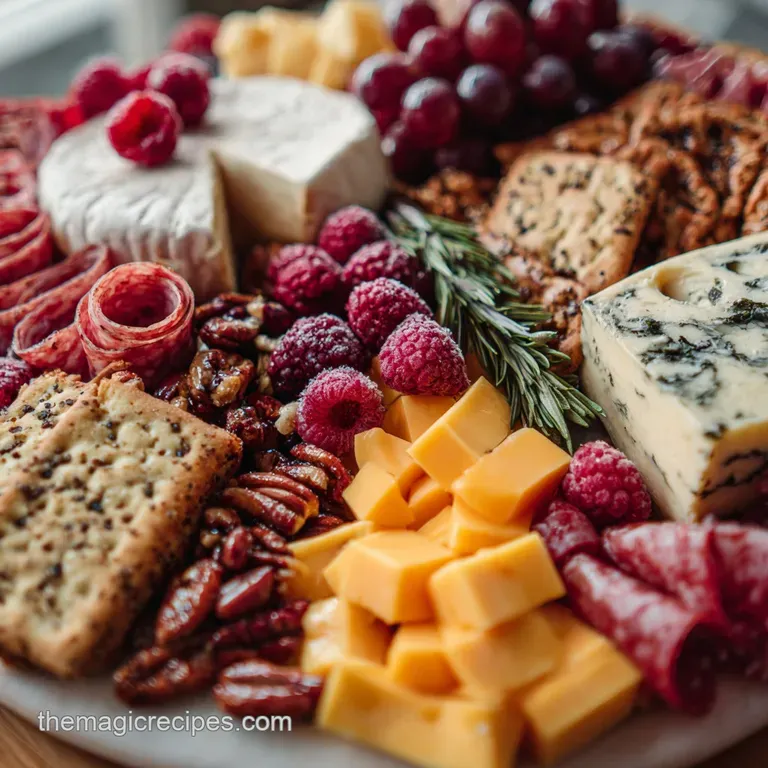
- Time: Active 30 minutes, Passive 0 minutes, Total 30 minutes
- Flavor/Texture Hook: Velvety prosciutto paired with shatter crisp crackers and sharp, crumbly cheddar.
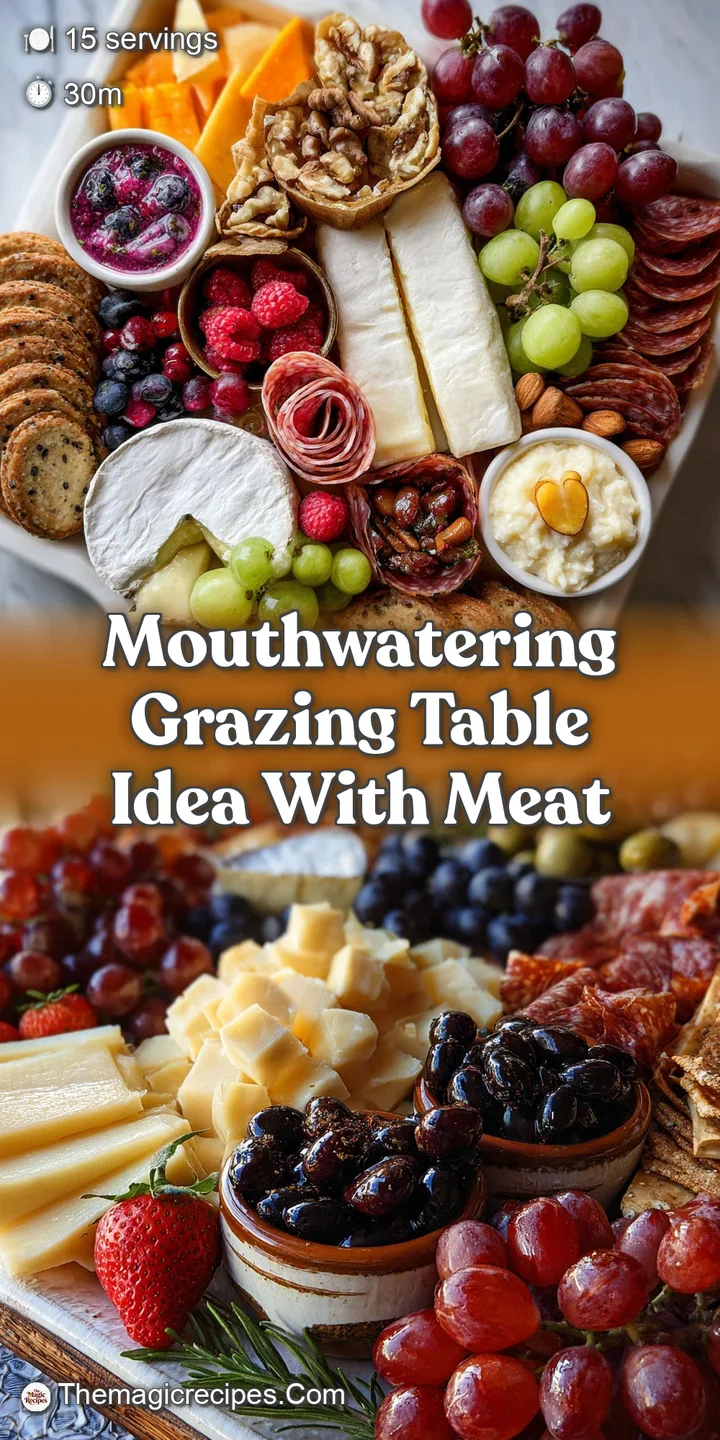
- Perfect for: Holiday gatherings, family reunions, or a quick weekend social.
- Create a Mouthwatering Grazing Table Idea with Meat
- The Physics of Flavor Contrast
- Component Analysis of Meat and Cheese
- Essential Specs for Party Success
- Ingredients & Substitutes
- Building Your Meat Focused Platter
- Avoiding Common Platter Disasters
- Customizing Your Meat Platter Themes
- Myths About Grazing Boards
- Storage and Prep Efficiency Tips
- Presentation and Serving Techniques
- Very High in Sodium
- Recipe FAQs
- 📝 Recipe Card
Create a Mouthwatering Grazing Table Idea with Meat
Picture the snap of a sourdough cracker as it hits a wedge of aged Manchego, or the way a paper thin slice of Prosciutto di Parma feels almost velvety as it hits your tongue. There's something truly special about a spread that looks like art but tastes like home.
This article shares a mouthwatering and easy meat and cheese grazing table recipe that’s sure to impress. I remember the first time I tried to build one of these for a family birthday; I basically just dumped bags of nuts and blocks of cheese on a board and hoped for the best.
It was a disaster because everything tasted the same, and the crackers got soggy within twenty minutes.
Since then, I’ve learned that a great table isn't about how much money you spend, but how you layer your textures and flavors. You want a mix of something sharp, something sweet, something salty, and something funky. It's about creating a little "choose your own adventure" for your friends.
They should be able to grab a slice of Salami, a smear of Gorgonzola, and a drop of honey and feel like a professional chef.
We are going to focus on a Mouthwatering Grazing Table Idea with Meat and Cheese that is Easy and Delicious because let's be honest, we don't always have four hours to prep. This plan is designed to be functional, quick, and healthy enough that you won't feel weighed down afterward.
We’ll use simple tricks to make the arrangement look professional without requiring a degree in fine arts. It's all about the "flow" of the board, and I’m going to show you exactly how to work it.
The Physics of Flavor Contrast
- Fat Emulsification: The high fat content in soft Brie coats the palate, allowing the sharp acidity of blackberries to cut through and refresh your taste buds.
- Tannic Interaction: Compounds in aged cheeses like Manchego interact with the salt in cured meats, creating a savory "umami" loop that makes the flavors linger longer.
- Osmotic Balance: Salt in the Salami and Bresaola draws out the subtle sweetness in honey, intensifying the flavor profile through contrast rather than addition.
- Hygroscopic Shielding: Placing crackers in separate clusters away from the wet olives prevents moisture transfer, keeping the starches crisp and preventing a floury, limp texture.
| Servings | Meat Adjustment | Cheese Adjustment | Board Size |
|---|---|---|---|
| 5 People | 8 oz total | 6 oz total | 12 inch round |
| 15 People | 25 oz total | 24 oz total | 24 inch rectangle |
| 30 People | 50 oz total | 48 oz total | 48 inch long runner |
When you are planning your Table Idea with Meat and Cheese that is Easy and Delicious, keep in mind that people eat with their eyes first. A crowded board looks abundant and inviting. If you have extra space, fill it with more fruit or extra crackers rather than leaving bare wooden spots.
Component Analysis of Meat and Cheese
| Ingredient | Science Role | Pro Secret |
|---|---|---|
| Prosciutto di Parma | Texture Anchor | Leave it at room temp for 15 minutes so the fat "melts" on the tongue. |
| Aged Manchego | Structural Contrast | Slice into triangles to create leading lines that guide the guest's eye. |
| Castelvetrano Olives | Acidic Reset | Use these specifically for their buttery texture; they bridge the gap between meat and fruit. |
| Gorgonzola Dolce | Pungent Depth | Serve with a dedicated spreader to prevent "flavor bleeding" into the milder Brie. |
Essential Specs for Party Success
Building a Grazing Table Idea with Meat and Cheese that is Easy and Delicious requires a few specific items to keep things organized. You don't need a million fancy bowls, but a few key pieces make the work much faster.
- Large Wooden Board or Kraft Paper: If you don't have a 2 foot board, just lay down food safe brown paper over your table.
- Small Ramekins: You need at least three for the honey, jam, and olives to keep liquids from running into the crackers.
- Cheese Knives: One for the soft Brie, one for the hard Manchego, and a spoon for the Gorgonzola.
- Small Tongs: These keep things hygienic so people aren't using their fingers for the Bresaola.
Ingredients & Substitutes
- 8 oz Prosciutto di Parma: Thinly sliced. Why this? The high fat to protein ratio provides a silky, luxurious mouthfeel.
- Substitute: Serrano Ham. It is slightly saltier and firmer but has a similar savory profile.
- 6 oz Hard Salami or Sopressata: Sliced into rounds. Why this? Provides a peppery, firm bite that stands up to sharp cheeses.
- Substitute: Summer Sausage. It's more mild and family friendly for younger guests.
- 5 oz Bresaola: Thinly sliced. Why this? This lean, air dried beef offers a deep, earthy contrast to pork meats.
- Substitute: Roast Beef (very thin). It’s a great Slow Cooker Corned Meat recipe alternative if you want a homemade touch.
- 6 oz Mortadella: Cubed or thinly sliced. Why this? The pistachios and fat cubes inside add a unique nutty flavor.
- Substitute: Bologna (high-quality). It has a similar silky texture but lacks the spice complexity.
- 7 oz Aged Manchego cheese: Sliced into wedges. Why this? The sheep's milk adds a nutty, slightly sweet finish.
- Substitute: Sharp White Cheddar. It provides a similar firm texture and acidic punch.
- 8 oz Soft Ripened Brie or Camembert: Whole wheel. Why this? Acts as a creamy "anchor" for jams and honey.
- Substitute: Goat Cheese log. It’s tangier but offers the same spreadable convenience.
- 5 oz Sharp White Cheddar: Crumbled. Why this? The crystals in aged cheddar provide a satisfying crunch.
- Substitute: Gouda. It's sweeter and melts beautifully if you decide to warm it.
- 4 oz Gorgonzola Dolce: Room temperature. Why this? Adds a creamy, pungent kick that pairs perfectly with honey.
- Substitute: Roquefort. It is much stronger, so use a little less if your guests are sensitive to blue cheese.
- 1 cup Castelvetrano Olives: Why this? Their mild, buttery flavor won't overpower the delicate meats.
- Substitute: Kalamata Olives. These are much saltier and more "vinegary."
- 0.5 cup Honey or Fig Jam: Why this? Essential for balancing the salt levels of the cured meats.
- Substitute: Maple Syrup. It’s thinner but provides that necessary hit of sugar.
- 2 cups Assorted Crackers: Sourdough and Seeded. Why this? Different shapes and grains add visual interest and varied "crunch" levels.
- Substitute: Sliced Baguette. It’s more filling but can get stale faster than crackers.
- 1 cup Fresh Blackberries or Grapes: Why this? Adds a pop of color and a fresh, juicy palate cleanser.
- Substitute: Dried Apricots. These provide a chewy texture and are easier to store.
Building Your Meat Focused Platter
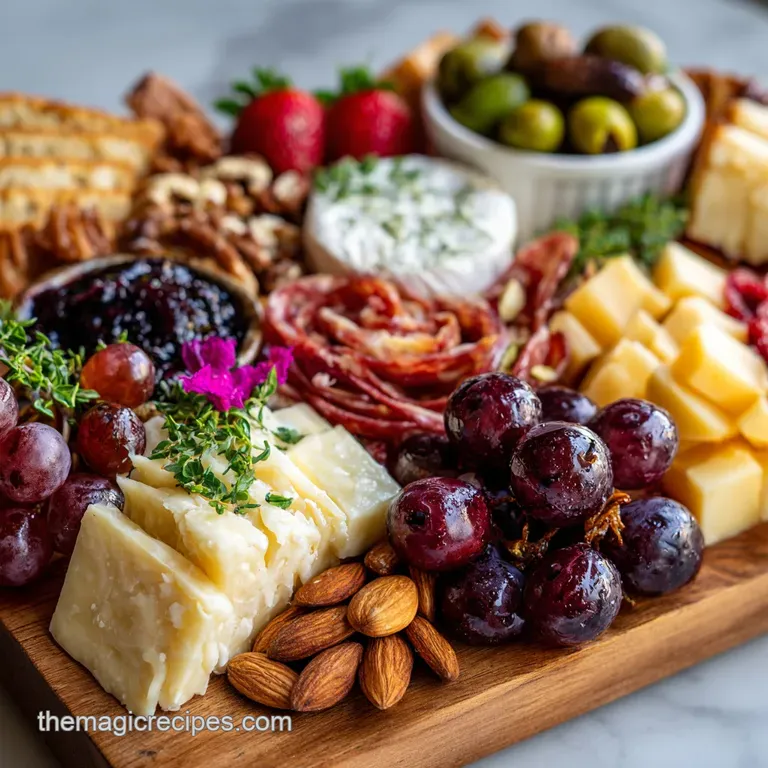
- Place the anchors. Set your whole wheel of 8 oz Brie and your 4 oz Gorgonzola at opposite ends of the board to create balance. Note: This gives you "gravity" to build the rest of the items around.
- Bowl the wet items. Fill small ramekins with 1 cup Castelvetrano Olives and 0.5 cup Honey or Fig Jam and place them near the cheeses.
- Fold the 8 oz Prosciutto. Take each slice and gently ribbon it or fold it into a "nest" shape rather than laying it flat. Cook until visual flow is achieved.
- Create meat rivers. Line up your 6 oz Salami rounds and 5 oz Bresaola in a curving line that snakes across the board. Note: This "S curve" is the secret to a professional looking Grazing Table Idea with Meat and Cheese that is Easy and Delicious.
- Fan the 7 oz Manchego. Arrange the wedges in a fan shape next to the Salami so the points all face the same direction.
- Crumble the 5 oz Cheddar. Use your hands to break the cheddar into natural chunks and pile them into any large empty gaps.
- Cluster the 2 cups Crackers. Place the sourdough crackers near the Brie and the seeded crackers near the Gorgonzola. Wait until the board looks full and vibrant.
- Tuck in the 1 cup Fruit. Use the blackberries and grapes to fill the tiny holes between the meat and cheese.
- Finish with the 6 oz Mortadella. Cubed mortadella works great as a "filler" in the corners of the board.
Avoiding Common Platter Disasters
Why Your Meat Gets Sweaty
If you take the meat out of the fridge too early and leave it in a warm room, the fat begins to render and separate. This creates a greasy film on the surface that looks unappealing.
| Problem | Root Cause | Solution |
|---|---|---|
| Greasy Meat | High ambient temp | Keep meats chilled until 10 minutes before the guests arrive. |
| Soggy Crackers | Moisture transfer | Place fruit and olives in bowls or keep them separated by a "wall" of hard cheese. |
| Dull Colors | Lack of contrast | Add bright greens (herbs) or deep reds (grapes) to break up the brown and yellow tones. |
Preventing Cracker Contamination
One of the biggest mistakes is putting the crackers right next to the juicy grapes or the honey bowl. The crackers will soak up any moisture and turn into a paste. I always use a "buffer" of hard meat like Salami to act as a dam between the crackers and the wetter items.
Also, make sure your honey has a dedicated dipper so people don't drip it all over the Bresaola.
Common Mistakes Checklist
- ✓ Don't slice the Brie wheel; let guests cut their own to keep it from drying out.
- ✓ Pat the olives dry with a paper towel before putting them on the board if not using a bowl.
- ✓ Avoid "over stacking" meat; keep layers thin so they are easy to grab with tongs.
- ✓ Leave the Gorgonzola out for 45 minutes to ensure it's spreadable.
- ✓ Use a variety of cracker shapes (round, square, long) to keep the visual interesting.
Customizing Your Meat Platter Themes
When scaling down for a small family dinner, you can reduce everything by half. Use a simple dinner plate and focus on just one meat and two cheeses. If you want a different protein vibe, you could even pair this with a Chicken Meatballs recipe served on the side.
For large crowds (30+ people), I suggest moving the crackers to a completely separate basket. This frees up space on the main table for more meat and cheese and prevents the "bottleneck" of people trying to reach the crackers.
Stick to 1.5x the salt and spices if you are making homemade jams or spreads for the table to avoid overwhelming the palate.
| Fresh Approach | Shortcut Method | Impact |
|---|---|---|
| Hand carved cheese | Pre sliced wedges | Saves 15 mins; slightly less "rustic" look. |
| Fresh honeycomb | Bottled honey | Saves money; missing the visual "wow" factor. |
| Homemade crostini | store-bought crackers | Better crunch; store-bought is much faster for large crowds. |
Chef's Tip: If you want your meat to look extra fancy, fold the salami in half and then in half again to create a "meat rose." Pin it with a toothpick if it won't stay, but usually, the fat will help it stick to itself.
Myths About Grazing Boards
Myth: You should never eat the rind on Brie. Truth: The rind is completely edible and actually provides a subtle earthy flavor that balances the creamy interior. Unless it's a wax rind (like on some Goudas), eat it!
Myth: Meat and cheese must be served ice cold. Truth: Cold temperatures actually mute the flavor of the fats. For the best Table Idea with Meat and Cheese that is Easy and Delicious experience, let the board sit at room temperature for about 20 minutes before serving.
Storage and Prep Efficiency Tips
Storage Guidelines: You can store the leftovers in the fridge for up to 3 days. However, do not store the crackers with the meat and cheese. Put the meats and cheeses in separate airtight containers or wrap them tightly in beeswax wrap.
I don't recommend freezing a finished grazing board, as the texture of the Brie and the fresh fruit will be ruined once thawed.
- Cheese Rinds
- Save the rinds from the Manchego or Parmesan and toss them into a soup or stew for a massive hit of flavor.
- Meat Scraps
- Any leftover bits of Salami or Prosciutto are amazing when diced up and tossed into an omelet or a Christmas Eve Dinner recipe hash.
- Olive Brine
- Don't dump the liquid from the Castelvetrano olives! It’s basically liquid gold for marinating chicken or adding to a dirty martini.
Presentation and Serving Techniques
When you are ready to serve this and Cheese that is Easy and Delicious spread, think about the height. If everything is flat, it looks boring. I like to use the Brie wheel as a pedestal or put the honey jar on a small overturned bowl to create different levels.
This makes the table look much more professional and "mouthwatering" to your guests.
If you are worried about people not knowing what's what, you can use small cardstock labels. But honestly, part of the fun of a grazing table is the discovery. Let people guess! Just make sure you have enough napkins nearby because things can get a little messy when honey and soft cheese are involved. This setup is truly one of the most flexible and Cheese that is Easy and Delicious ways to feed a crowd without spending all night in the kitchen. For a different dinner vibe later in the week, you might also enjoy an Idea Para Comida recipe which uses similar fresh vegetable components.
Very High in Sodium
1140 mg mg of sodium per serving (50% % of daily value)
American Heart Association recommends limiting sodium intake to approximately 2,300mg per day.
Tips to Reduce Sodium in Your Charcuterie Board
-
Reduce Processed Meats-25%
Prosciutto, salami, bresaola, and mortadella are very high in sodium. Halve the amount of these meats used and add some sliced cucumbers, bell peppers, or carrots to maintain the visual appeal of the tray.
-
Choose Lower Sodium Cheese-15%
Hard cheeses like Manchego and Sharp Cheddar contribute significantly to the sodium content. Substitute half the portion of these cheeses with fresh mozzarella or Swiss cheese.
-
Limit Olive Intake-10%
Castelvetrano olives, while delicious, are often cured in brine, making them high in sodium. Reduce the amount of olives to ½ cup, or rinse them thoroughly before serving to remove some of the sodium.
-
Opt for Unsalted Crackers-10%
Crackers can add a surprising amount of sodium. Choose unsalted crackers or a low-sodium variety and reduce the amount by half.
-
Control Honey/Jam-5%
While honey and fig jam themselves are low in sodium, using them excessively can mask the taste of the other ingredients. Reduce the amount used, allowing the natural flavors of the other elements to shine.
-
Boost Flavor with Herbs
Enhance the flavor of your charcuterie board with fresh or dried herbs and spices like rosemary, thyme, or black pepper, and vinegar instead of relying on salt.
Recipe FAQs
What are some unique grazing table ideas?
Include texture anchors and flavor bridges. Unique ideas focus on contrast, such as pairing creamy Brie with crunchy, salty aged Manchego, or using buttery Castelvetrano olives to reset the palate between fatty meats.
What is the 3 3 3 3 rule for charcuterie?
No, there is no standard 3 3 3 3 rule widely used for grazing tables. The principle is about balance: aim for roughly three types of meat, three types of cheese, three types of crunch (crackers/nuts), and three types of "sweet/acidic" (fruit/jam) to ensure variety.
What is the best meat for a meat and cheese platter?
Prosciutto di Parma is the standout choice for luxurious texture. Its high fat content melts beautifully on the tongue, making it feel more decadent than leaner options. For a deeper savory note, Bresaola offers an excellent, earthy contrast.
What to serve with a meat and cheese platter?
Serve items that offer sharp acidity and sweetness to cut the fat. Essential accompaniments include honey, fig jam, fresh grapes, and Castelvetrano olives. These elements refresh the palate between bites of rich meat and cheese.
How do I keep crackers from getting soggy on a large grazing table?
Cluster crackers away from wet items and use hard cheese as a buffer. Place crackers in separate groupings across the board, separated from olives or jams by a wedge of Manchego or a line of Salami. If you master this separation logic here, it translates well to managing moisture in any baked good, similar to how we control spread in our Christmas Morning Breakfast recipe.
Is it true I must slice all the meats thinly?
No, variety in texture is key to an exciting spread. While Prosciutto must be thin, you should cube or thickly slice a firm meat like Mortadella, and fold Salami into "nests" for visual height and easier grabbing.
How do I make my grazing table look abundant and professional?
Focus on strategic layering and high contrast color placement. Arrange items in curving "rivers" rather than straight lines, and ensure every gap is filled with a brightly colored fruit or crumbled cheese like Gorgonzola.
This technique makes the board look dense and inviting, providing a great visual anchor for your next party spread.
Mouthwatering Grazing Table Idea
Ingredients:
Instructions:
Nutrition Facts:
| Calories | 412 kcal |
|---|---|
| Protein | 23 g |
| Fat | 27 g |
| Carbs | 20 g |
| Fiber | 1.5 g |
| Sugar | 9 g |
| Sodium | 1140 mg |
