Prime Rib Side Dish with Garlic Mashed Potatoes

- Time: Active 30 minutes, Passive 2 hours 30 mins, Total 3 hours
- Flavor/Texture Hook: Shatter crisp herb crust paired with velvety, buttery garlic mash
- Perfect for: Stress free holiday hosting and special Sunday family dinners
- Best Prime Rib Side Dish with Garlic Mashed Potatoes
- Benchmarks for a Flawless Feast
- Sourcing the Best Raw Ingredients
- Required Tools for the Kitchen
- Step-by-Step Cooking and Prep
- Navigating Potential Kitchen Mishaps
- Fun Variations for Your Sides
- Storage and Safe Reheating Methods
- Plating Your Meal with Style
- Answers for Your Cooking Queries
- Recipe FAQs
- 📝 Recipe Card
Nothing beats the heavy, savory aroma of beef fat rendering in a hot oven while a pot of potatoes gently bubbles on the stove. It is the scent of a Sunday afternoon where the kitchen becomes the heart of the home. Today's focus is a delicious Prime Rib side dish featuring creamy garlic mashed potatoes.
I know how stressful it feels to manage a massive roast while trying to get your sides to hit the table at the exact same temperature, but we are going to fix that timing issue today.
We have all been there, hovering over a thermometer while the potatoes go cold or the sauce breaks because we rushed it. This plan is designed for the busy cook who wants that "wow" factor without the frantic energy.
We are going to use a specific workflow that lets the meat rest while the potatoes get their final, silky whip.
By the time you pull that 9 lb Bone in Prime Rib out of the oven, you will have a clear path to finishing the meal. There is no need for fancy gadgets or complicated French techniques here. We are leaning on high-quality ingredients and simple physics to do the heavy lifting for us.
Let's get into how we make this happen without breaking a sweat.
Best Prime Rib Side Dish with Garlic Mashed Potatoes
Infusing Flavors into Dairy
The secret to a deep, integrated garlic flavor is simmering the 8 cloves of smashed garlic directly in the 250ml of heavy cream. This allows the fat soluble compounds in the garlic to bond with the cream, ensuring every spoonful of potato is seasoned from within.
It prevents that sharp, raw bite that happens when you just toss garlic into the pot.
Managing the Starch Structure
Yukon Gold potatoes are the MVP here because they have a naturally buttery texture and medium starch content. When we boil these 2kg of peeled quarters, we want to cook them until they just begin to flake. If you overcook them, they absorb too much water, which leads to a soggy mess that no amount of butter can save.
Balancing Richness with Acidity
Prime rib is incredibly fatty, so your side dish needs a punch of acid to keep the palate refreshed. This is why we include 240ml of sour cream and 60g of prepared horseradish. The sharp tang cuts right through the richness of the 115g of European butter, making the whole meal feel balanced rather than heavy.
Benchmarks for a Flawless Feast
To get this right, you need to hit your marks. Cooking a 9 lb roast is a commitment, and guessing is the enemy of a good dinner. Stick to these three precision checkpoints to ensure everything comes out exactly how you want it.
| Checkpoint | Target Value | Why It Matters |
|---|---|---|
| Meat Internal Temp | 120°F (49°C) | Carryover cooking brings it to a perfect 130°F medium rare. |
| Potato Boil Time | 18-22 minutes | Ensures the center is soft without the outside dissolving into mush. |
| Resting Period | 30 minutes | Essential for juice redistribution; meat won't bleed out when sliced. |
Sourcing the Best Raw Ingredients
For the main event, ask your butcher for a 9 lb Bone in Prime Rib with 3 to 4 bones. The bones act as a natural roasting rack and add flavor to the drippings. I always look for a "Choice" or "Prime" grade with plenty of white marbling, as that fat is what makes the meat tender.
When shopping for the mash, grab the 2kg of Yukon Gold potatoes. Don't sub these for Russets unless you want a fluffier, drier texture. The Yukon Golds hold their shape better and provide that velvety mouthfeel we're after. For the butter, I highly recommend a high fat European butter like Kerrygold.
It has less water and more butterfat, which is a total lifesaver for creamy potatoes.
| Original Ingredient | Substitute | Why It Works |
|---|---|---|
| Heavy Cream (250ml) | Whole Milk (250ml) | Lighter result with less fat. Note: Potatoes won't be as velvety. |
| Sour Cream (240ml) | Greek Yogurt (240ml) | Adds a similar tang and thickness. Note: Slightly higher protein. |
| Dried Thyme (5g) | Fresh Thyme (15g) | Brighter, more herbal aroma. Note: Use triple the amount for fresh. |
Required Tools for the Kitchen
You don't need a professional kitchen, but a few specific tools make this much easier. A heavy duty roasting pan is a must for that 9 lb roast. If you don't have one, a large Lodge Cast Iron Skillet can work for smaller roasts, but for 9 lbs, you really want the space of a dedicated pan.
For the potatoes, a potato ricer is your best friend. It pushes the cooked potato through tiny holes, creating a uniform texture without overworking the starch. If you use a hand mixer, you risk turning your beautiful mash into wallpaper paste. Finally, an instant read thermometer like a Thermapen is non negotiable.
It's the only way to be 100% sure your meat is cooked through.
- KitchenAid Hand Mixer: Use only on the lowest speed for the final whip.
- Potato Ricer: The best way to get that professional, lump free texture.
- Heavy Bottomed Pot: Prevents the cream and garlic from scorching during the infusion.
step-by-step Cooking and Prep
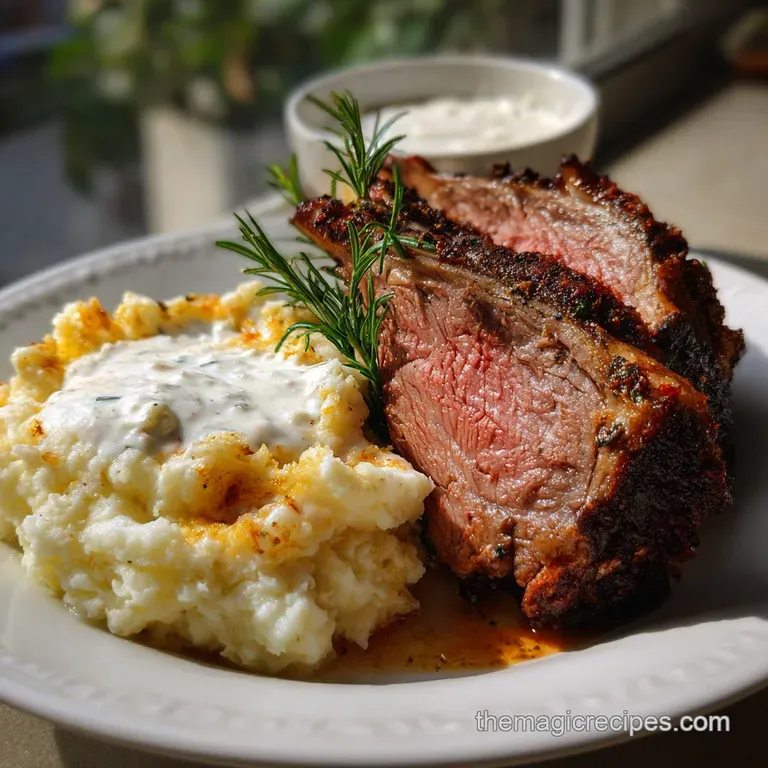
Preparing the Prime Rib Roast
- Season the meat. Rub the 9 lb roast with 30g Kosher salt, 15g black pepper, and 5g dried thyme. Why this? Salt needs time to penetrate the deep muscle fibers.
- Apply butter. Slather 40g of softened unsalted butter over the fat cap. Note: This helps the crust brown and sizzle in the high heat.
- Roast the beef. Place in a 325°F oven and cook until the internal temperature hits 120°F. Cook until the outside is mahogany and the fat has rendered.
Simmering the Infused Garlic
- Prep the potatoes. Boil the 2kg of peeled Yukon Golds in salted water until tender.
- Infuse the dairy. In a small saucepan, simmer the 250ml heavy cream with 8 smashed garlic cloves for 10 minutes. Simmer until the garlic is soft enough to smash with a fork.
- Drain and dry. Drain the potatoes and put them back in the hot pot for 2 minutes. Note: This evaporates excess moisture so they can absorb more butter.
Achieving Velvety Potato Texture
- Rice the potatoes. Pass the hot potatoes through a ricer into a large bowl.
- Combine. Slowly pour in the garlic infused cream and 115g of European butter. Stir until the butter has completely melted into the starch.
- Season. Add 10g fine sea salt and 5g white pepper.
Whisking the Horseradish Sauce
- Mix the sauce. Combine 240ml sour cream, 60g horseradish, 15ml Dijon, 5ml lemon juice, and a pinch of cayenne. Whisk until the sauce is smooth and slightly aerated.
Navigating Potential Kitchen Mishaps
Even the best cooks run into trouble. The key is knowing how to pivot when things don't go according to plan. Most potato issues come from over handling, while meat issues usually stem from inconsistent oven temperatures.
Preventing Gummy Potatoes
If your potatoes feel sticky or gluey, you likely worked them too hard while they were cold. Starch cells rupture when agitated, releasing a sticky substance. To avoid this, always process your potatoes while they are piping hot and stop mixing the moment the cream is incorporated. If you're looking for more inspiration, this side pairs beautifully with our Prime Rib recipe.
Correcting a Broken Sauce
If your horseradish sauce looks curdled, it’s usually because the lemon juice reacted poorly with the dairy or it got too warm. You can often fix this by whisking in a tablespoon of cold heavy cream. This helps re emulsify the fats and smooths out the texture.
| Problem | Cause | Fix | Pro Tip |
|---|---|---|---|
| Lumpy Mash | Under cooked potatoes | Boil for 5 more minutes | Test with a knife; it should slide in like butter |
| Dry Meat | No resting time | Rest for full 30 mins | Tent loosely with foil to keep it warm |
| Weak Flavor | Cold cream | Heat dairy before mixing | Infusing the garlic is the secret to depth |
Fun Variations for Your Sides
Adding a Smoky Twist
If you want to change the profile of this Prime Rib side dish with Garlic Mashed Potatoes, try adding 100g of crispy bacon bits and a teaspoon of smoked paprika to the potatoes. The smokiness complements the roasted flavor of the beef beautifully. It’s a small change that makes the dish feel completely different.
Swapping the Spice
Not a fan of horseradish? You can swap the horseradish sauce for a classic Bearnaise or even a simple red wine reduction. If you like the creamy vibe but want less "kick," use a mild stone ground mustard instead of the 60g of prepared horseradish. For another rich option, you might enjoy the flavors in our Chicken and Mushroom Dish recipe.
Storage and Safe Reheating Methods
Fridge Life: You can store the leftover potatoes and meat in airtight containers for up to 4 days. Keep the horseradish sauce in a separate jar; it actually tastes better on day two!
Freezing: I don't recommend freezing the mashed potatoes as the dairy can separate and become grainy. However, the cooked prime rib can be frozen for up to 2 months. Wrap it tightly in plastic wrap and then foil to prevent freezer burn.
Reheating: To reheat the potatoes, add a splash of milk and heat them slowly on the stove over low heat. For the meat, the best way to keep it medium rare is to heat it in a 250°F oven until just warm. Don't use the microwave unless you want rubbery beef!
Zero Waste Tip: Use the leftover rib bones to make a rich beef stock. Simmer them with onion skins and celery ends for 4 hours. It makes the best base for a French onion soup the next day.
Plating Your Meal with Style
When you’re ready to serve, don't just scoop everything onto a plate. Slice the prime rib into thick, 1 inch portions. Place a generous mound of the garlic mashed potatoes next to the meat, using the back of a spoon to create a small "well" in the center for the juices or sauce.
Drizzle the horseradish sauce over the meat or serve it in a small ramekin on the side. A sprinkle of fresh chives over the potatoes adds a pop of green that makes the whole plate look professional. Remember, we eat with our eyes first!
Answers for Your Cooking Queries
Avoiding Sticky Potato Texture
The number one reason potatoes turn into "glue" is over mixing. Use a ricer rather than a food processor. The blades of a processor move too fast and break the starch molecules. A ricer is gentle and keeps the texture light and fluffy.
Early Horseradish Sauce Prep
Yes, you should definitely make the sauce early. Making it at least 4 hours ahead allows the horseradish to mellow and blend with the sour cream and Dijon. It’s one less thing to do when the meat is coming out of the oven.
Managing Kitchen Timing Stress
If the roast finishes early, don't panic. A 9 lb roast can stay warm for up to an hour if wrapped tightly in foil and a couple of clean kitchen towels. This actually gives you more time to focus on getting the potatoes perfect.
Choosing Different Potato Varieties
While Yukon Golds are the standard, you can use red skinned potatoes for a "rustic" mash. Leave the skins on for extra texture and color. Just keep in mind they are slightly waxier, so they won't be quite as creamy as the Golds.
Checking Garlic Infusion Status
The garlic is ready when it is completely soft and translucent. If you press a clove against the side of the pot and it collapses without resistance, the flavor has successfully moved into the cream. Don't rush this part; the 10 minute simmer is vital.
Alternative Potato Mashing Tools
If you don't have a ricer, use a sturdy hand masher. It will take more elbow grease, but it keeps the starch intact. Avoid using a whisk until the very end, and even then, only for a few seconds to incorporate the last bit of cream.
Chef's Note: To get the most out of your garlic, smash the cloves with the flat side of your knife before putting them in the cream. This breaks the cells and releases the oils much faster than leaving them whole.
| Aspect | Fast (Box/Store) | Classic (This Recipe) |
|---|---|---|
| Texture | Often grainy or thin | Velvety and buttery |
| Flavor | Artificial or flat | Deep garlic infusion |
| Effort | 5 minutes | 45 minutes |
The science of why this works is simple: Protein Denaturation happens slowly at 325°F, keeping the meat tender, while Starch Gelatinization in the potatoes allows them to swell and absorb the garlic infused fats.
It's a functional meal that works because the components support each other. Now, let's get that roast in the oven and start peeling those potatoes. Trust me, the effort you put into the details will show in every bite.
Recipe FAQs
Can I use Russet potatoes instead of Yukon Golds for this recipe?
No, it is not recommended. Russets are high in starch and will result in a fluffier, drier texture, whereas Yukon Golds provide the velvety, buttery mouthfeel this recipe targets.
How far in advance can I prepare the horseradish sauce?
Yes, up to 2 days ahead. Preparing the sauce early allows the horseradish flavor to mellow and fully integrate with the sour cream and Dijon mustard.
What temperature should the prime rib reach before I take it out of the oven?
You should remove the roast at 120°F (49°C). This accounts for carryover cooking, which will bring the internal temperature up to the perfect medium rare 130°F while resting.
My mashed potatoes are gummy; what did I do wrong?
You likely over worked the starch, usually by using a mixer too vigorously. To avoid this stickiness, use a potato ricer for uniformity and stop mixing the moment the liquids are incorporated; if you enjoy mastering texture control, see how this principle applies to handling delicate doughs in our Slow Roasted Perfection recipe.
Can I substitute the heavy cream with regular milk?
Yes, but the texture will suffer significantly. Regular milk has less fat and will not yield the same velvety result; you should expect a thinner mash unless you increase the butter slightly.
How do I ensure the garlic flavor permeates the potatoes effectively?
Simmer the smashed garlic cloves directly in the heavy cream for 10 minutes. This allows the fat-soluble flavor compounds to infuse into the fat before you drain the solids away.
I don't have a roast pan large enough; what is an alternative vessel for a 9lb roast?
A very large, sturdy cast iron skillet can work for smaller roasts, but a dedicated pan is best for 9lbs. If you are looking for an alternative large roast approach entirely, consider the techniques used for our New Years Food Idea with Garlic Herb Beef Tenderloin which handles different cuts.
Prime Rib Mash Side Dish
Ingredients:
Instructions:
Nutrition Facts:
| Calories | 1185 kcal |
|---|---|
| Protein | 56g |
| Fat | 84g |
| Carbs | 48g |
| Fiber | 5g |
| Sugar | 4g |
| Sodium | 2140mg |
