Silky Roasted Vegetable Soup: Velvety and Nourishing
- Time: 10 min active + 40 min cooking = Total 50 min
- Flavor/Texture Hook: Velvety, mahogany roasted sweetness with a bright citrus finish
- Perfect for: Nourishing weeknight dinners or a vibrant starter for guests
- Silky Roasted Vegetable Soup Secrets
- The Secret to That Texture
- Component Analysis
- Everything You Need
- The Right Tools
- Step by Step Process
- Fixing Common Soup Issues
- Troubleshooting Common Issues
- Creative Flavor Twists
- Adjusting the Batch Size
- Soup Myths
- Keeping Your Soup Fresh
- Perfect Side Dish Pairings
- High in Sodium
- Recipe FAQs
- 📝 Recipe Card
Ever wondered why some vegetable soups taste like warm water while others taste like a concentrated hug? I used to think it was just about the broth, but the real secret is actually in the heat.
When you boil a carrot, you're basically just heating up its water content, but when you roast it, something happens to the sugars that changes the whole vibe of the pot.
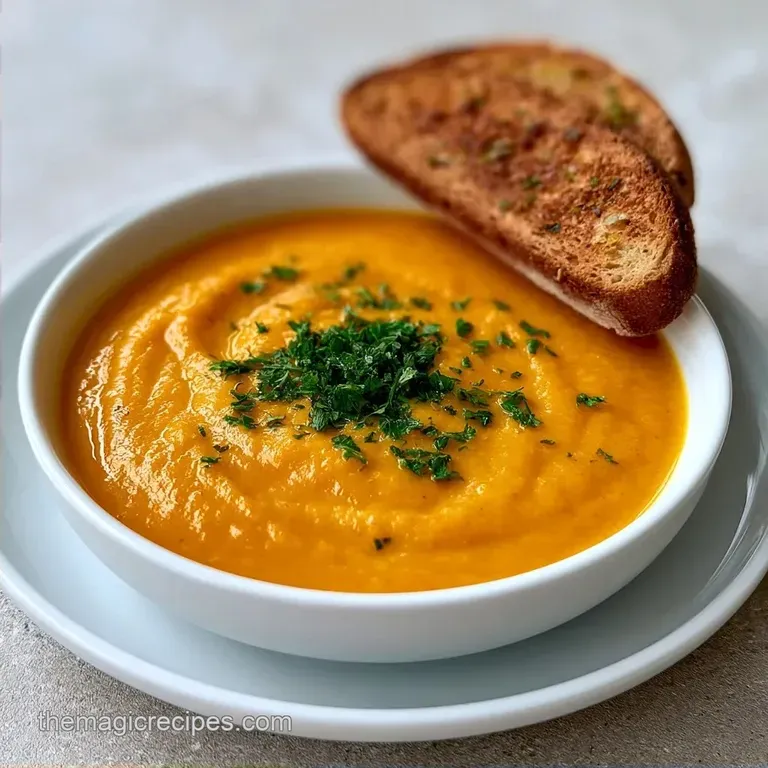
The first time I tried this, my kitchen smelled like a toasted autumn forest. There's this specific moment when the butternut squash edges turn a deep, dark brown and the onions start to smell like caramel. That's the scent of flavor being locked in, and it's exactly what makes this Silky Roasted Vegetable Soup stand out from every other blended soup I've ever made.
We're going for a texture that's almost like a sauce, but lighter. It's a plant forward dish that feels rich without needing a mountain of butter. Trust me, once you see that glossy sheen after blending, you'll never go back to the "dump everything in a pot and simmer" method.
Silky Roasted Vegetable Soup Secrets
The magic happens on the sheet pan. By roasting the vegetables at 400°F (200°C), we're forcing the water out and letting the natural sugars brown. This creates a depth of flavor that you just can't get from simmering alone. If you've ever used a Serious Eats guide for roasting, you know that high heat is the key to avoiding "mushy" vegetables.
But the real trick is how we finish it. Adding the coconut milk and lemon juice after the heat is turned off preserves the bright, zesty notes of the lemon and the creamy freshness of the coconut. If you boil the lemon juice, it can turn bitter, and the coconut milk can separate.
By stirring them in at the end, we maintain that velvety consistency.
This recipe is all about balance. You have the earthiness of the parsnips, the sweetness of the squash, and the acidity of the lemon to cut through the richness of the coconut. It's a vibrant, nourishing bowl that feels like a treat but is actually packed with root vegetables.
The Secret to That Texture
The Roast Effect: High heat breaks down the cell walls of the root vegetables and concentrates the sugars, which provides a thicker, more cohesive base.
Fat Emulsion: Coconut milk provides a stable fat source that binds with the vegetable fibers during high speed blending, creating a glossy finish.
Acid Brightening: The lemon juice doesn't just add flavor, it breaks down the perceived "heaviness" of the blended starch, making the soup feel lighter on the tongue.
Blending Duration: Processing for a full 60 seconds ensures that every tiny fiber is shattered, moving the texture from "pureed" to truly "silky".
| Method | Time | Texture | Best For |
|---|---|---|---|
| Boiling | 20 mins | Watery/Grainy | Quick lunch |
| Roasting | 50 mins | Velvety/Deep | Special dinner |
| Slow Cook | 6 hours | Soft/Uniform | Meal prep |
Component Analysis
| Ingredient | Science Role | Pro Secret |
|---|---|---|
| Butternut Squash | Starch Base | Roast until edges are mahogany for maximum sweetness |
| Coconut Milk | Emulsifier | Use full fat to get that professional glossy sheen |
| Lemon Juice | pH Balancer | Add at the very end to keep the citrus notes vibrant |
| Parsnips | Aromatic Depth | Leave a bit of skin on for a more rustic, earthy taste |
Everything You Need
For the roasting base, you'll need these specific items. I've found that using a mix of root vegetables gives the soup a much more complex profile than just using one type of squash.
- 1 lb butternut squash, cubed Why this? Provides the creamy, sweet foundation
- 3 large carrots, chopped Why this? Adds a vibrant orange hue and sweetness
- 2 medium parsnips, peeled and chopped Why this? Gives a subtle, peppery earthiness
- 1 large yellow onion, quartered Why this? Caramelizes to add savory depth
- 6 cloves garlic, peeled Why this? Roasting garlic removes the harsh bite
- 2 tbsp extra virgin olive oil Why this? High smoke point for roasting
- 1 tsp kosher salt Why this? Enhances all natural vegetable flavors
- 1/2 tsp cracked black pepper Why this? Adds a subtle, woody heat
For the simmer and blend, keep these handy:
- 4 cups vegetable broth Why this? Low sodium allows you to control the salt
- 1 tsp dried thyme Why this? Pairs perfectly with root vegetables
- 1 tbsp lemon juice Why this? Cuts through the richness
- 1/2 cup full fat coconut milk Why this? According to USDA FoodData, the high fat content creates a stable emulsion
| Original Ingredient | Substitute | Why It Works |
|---|---|---|
| Butternut Squash | Pumpkin | Similar starch content. Note: Slightly sweeter and less "nutty" |
| Coconut Milk | Heavy Cream | Same fat level. Note: Loses the tropical note, tastes more traditional |
| Vegetable Broth | Mushroom Broth | Adds more umami. Note: Makes the color a bit darker/browner |
| Parsnips | Celery Root | Similar earthiness. Note: Slightly more herbal, less sweet |
The Right Tools
You don't need a professional kitchen, but a few specific tools make this much easier. A large, rimmed sheet pan is non negotiable. If you crowd the vegetables, they'll steam instead of roast, and you'll lose those mahogany edges.
I highly recommend an immersion blender. Being able to blend directly in the pot saves you from cleaning a huge blender jar and avoids the danger of "blender explosions" caused by hot liquids. If you use a standard blender, just remember to leave the vent open and hold the lid down with a towel.
Step by step Process
Let's get into it. Remember to keep an eye on those smell cues - they're your best indicator of when to move to the next phase.
- Toss the cubed butternut squash, chopped carrots, peeled and chopped parsnips, quartered onion, and peeled garlic with olive oil, salt, and pepper on a large rimmed sheet pan. Note: Make sure every piece is glistening with oil to prevent sticking.
- Spread the vegetables in a single layer across the pan.
- Roast at 400°F (200°C) for 25-30 minutes until the edges are mahogany colored and the onions are translucent and charred at the tips.
- Transfer all roasted vegetables and any browned oil from the pan into a pot. Note: That browned oil is liquid gold, don't leave it behind.
- Pour in the vegetable broth and dried thyme.
- Bring the mixture to a gentle simmer for 5-10 minutes until the vegetables soften further into the broth.
- Remove the pot from heat completely.
- Stir in the lemon juice and coconut milk.
- Use an immersion blender directly in the pot, or transfer to a blender in batches.
- Process on high for 60 seconds until the soup has a completely smooth, glossy sheen.
Fixing Common Soup Issues
Even for experienced cooks, a few things can go sideways. Usually, it comes down to the heat or the blending time.
Troubleshooting Common Issues
| Issue | Solution |
|---|---|
| Why Your Soup Is Grainy | If you see tiny bits of vegetable, you haven't blended long enough. Root vegetables have tough fibers that need a full minute of high speed shearing to break down. |
| The Soup Is Too Thick | Depending on the water content of your squash, you might end up with a porridge like consistency. This is an easy fix. |
| Why Vegetables Burn Instead of Caramelizing | This usually happens if the oven is too hot or the pieces are cut too small. Ensure your squash and carrots are roughly the same size. |
Common Mistakes Checklist
- ✓ Did you spread the veg in a single layer? (Overcrowding = steaming)
- ✓ Did you scrape the browned bits off the pan? (That's where the flavor is)
- ✓ Did you blend for a full 60 seconds? (Prevents graininess)
- ✓ Did you add lemon juice at the end? (Prevents bitterness)
- ✓ Did you use full fat coconut milk? (Ensures the silky texture)
Creative Flavor Twists
Once you've mastered the basic Silky Roasted Vegetable Soup, you can really play with the flavor profiles. I love treating this as a canvas.
For a "Roasted Vegetable Glow Soup", stir in 1 tsp of ground turmeric and a tablespoon of freshly grated ginger during the simmering phase. The ginger adds a spicy zip that pairs beautifully with the sweetness of the carrots.
If you want something more autumnal, try a Maple Roasted Root Vegetable Soup. Toss the vegetables in 1 tbsp of maple syrup along with the olive oil before roasting. This intensifies the caramelization and gives the soup a rich, woody sweetness.
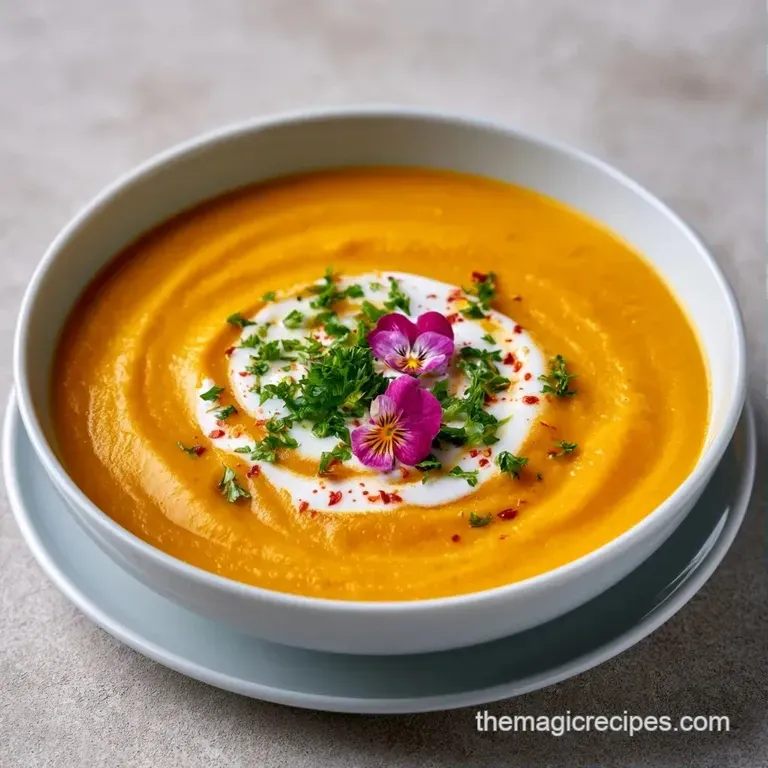
For those who love a bit of contrast, try topping the bowl with a swirl of Easy Chimichurri Sauce. The bright, garlicky herbs cut through the creamy coconut milk and make the dish feel like it came from a high end bistro.
Adjusting the Batch Size
Scaling this recipe is pretty straightforward, but you have to be careful with the roasting pan.
Scaling Down (Half Batch): Use a smaller sheet pan so the vegetables stay close enough to roast efficiently. Reduce the roasting time by about 20%, as smaller batches often cook faster. Use 1/2 the broth and 1/4 cup of coconut milk.
Scaling Up (Double Batch): This is where people mess up. Do NOT put twice the vegetables on one pan. Use two separate sheet pans to maintain that single layer. For the seasonings, I only increase the salt and thyme to 1.5x instead of 2x, then taste and adjust at the end.
Baking Adjustment: If you're doubling the recipe and using a deep roasting dish instead of a pan, lower the oven temp to 375°F (190°C) and extend the time by 10-15 minutes to ensure the middle gets cooked through.
| Goal | Action | Expected Result |
|---|---|---|
| More Depth | Add 1 tbsp Tomato Paste | Richer, redder, more umami |
| Lighter Feel | Swap Coconut for Almond Milk | Less creamy, lower calorie |
| Extra Spice | Add 1/2 tsp Cayenne | Subtle back of-throat heat |
Soup Myths
You'll often hear that boiling vegetables is "healthier" because it's faster. That's actually a myth. While some vitamins are heat sensitive, roasting concentrates the flavor and makes the nutrients more palatable.
Plus, the fat from the olive oil helps your body absorb the fat soluble vitamins in the carrots and squash.
Another common misconception is that you need a professional Vitamix to get a "silky" texture. While high end blenders are great, a standard immersion blender works perfectly if you just give it enough time. The secret isn't the brand of the blender, it's the duration of the blend.
Keeping Your Soup Fresh
This soup actually tastes better the next day because the thyme and roasted flavors have more time to meld.
Fridge Storage: Store in an airtight glass container for up to 5 days. The coconut milk might cause the soup to thicken slightly in the cold, which is normal.
Freezer Storage: This freezes beautifully. Store in freezer safe bags or containers for up to 3 months. Note: If you plan to freeze it, I recommend omitting the coconut milk and adding it fresh when you reheat.
Reheating: Heat on the stovetop over medium low. Avoid the microwave if possible, as it can cause the coconut milk to separate. Stir in a splash of water or broth to loosen it up.
Zero Waste Tip: Don't throw away your vegetable peels! Toss the carrot and parsnip peels on a separate small tray with a bit of oil and roast them until crisp. They make amazing, nutrient dense croutons for the top of your soup.
Perfect Side Dish Pairings
Since this soup is so velvety and rich, you want sides that provide a bit of crunch or a sharp contrast.
A crusty sourdough baguette toasted with garlic butter is the classic choice. The crunch of the bread against the silkiness of the soup is just a dream. You could also pair it with a fresh arugula salad with a lemon vinaigrette to echo the citrus notes in the soup.
If you're looking for a more substantial meal, this soup pairs surprisingly well with a protein. I often serve it alongside some Baked Chicken Tenders for a cozy, comforting dinner. The savory, breaded chicken provides a great textural contrast to the smooth vegetable puree.
Right then, you've got everything you need to make a bowl of Silky Roasted Vegetable Soup that actually tastes like it took hours, even though it only took 50 minutes. Just remember: roast hard, blend long, and add that lemon at the very end.
Trust me on this, and you'll never go back to boiled soup again. Let's crack on!
High in Sodium
980 mg 980 mg of sodium per serving (43% 43% of daily value)
The American Heart Association recommends a daily sodium limit of no more than 2,300 mg, and ideally closer to 1,500 mg for most adults to reduce the risk of cardiovascular disease.
Tips to Reduce Sodium
-
Swap the Broth-30%
Replace regular vegetable broth with low-sodium or no-sodium broth to drastically lower the base salt content.
-
Reduce Added Salt-25%
Decrease the kosher salt to 1/4 tsp or omit it entirely, allowing the natural sweetness of the root vegetables to shine.
-
Amplify the Acid-10%
Increase the lemon juice or add a teaspoon of apple cider vinegar to provide a 'bright' flavor that mimics the effect of salt.
-
Enhance with Herbs
Add more dried thyme or incorporate fresh sage and rosemary to build complexity and flavor without adding sodium.
Recipe FAQs
Does roasting vegetables make soup taste better?
Yes, significantly. Roasting creates mahogany colored edges through caramelization, adding a deep, savory sweetness that boiling cannot achieve.
How to make a quick vegetable soup recipe?
Toss cubed butternut squash, carrots, parsnips, onion, and garlic with olive oil. Roast at 400°F (200°C) for 25-30 minutes, simmer with broth and thyme, and blend with coconut milk and lemon juice.
How to make a vegetable soup and make it taste good?
Roast your vegetables until charred at the tips. Combine them with vegetable broth and dried thyme, then finish with lemon juice and coconut milk for balance. This pairs beautifully with a side of baked tortellini.
What is the secret ingredient in this vegetable soup?
Full fat coconut milk. It provides a professional, glossy sheen and a rich creaminess that balances the roasted root vegetables.
How to make a carrot and parsnip soup?
Roast carrots and parsnips at 400°F (200°C) alongside butternut squash and onion. Simmer the roasted vegetables in broth, then blend until completely smooth.
How to make carrot soup without a blender or food processor?
Mash the roasted vegetables manually using a potato masher. While you lose the silky texture, you get a rustic, chunky consistency.
Is it true that vegetables must be boiled before roasting for a silky texture?
No, this is a common misconception. Roasting at 400°F (200°C) followed by 60 seconds of high speed blending is what creates the glossy, smooth finish.
Silky Roasted Vegetable Soup